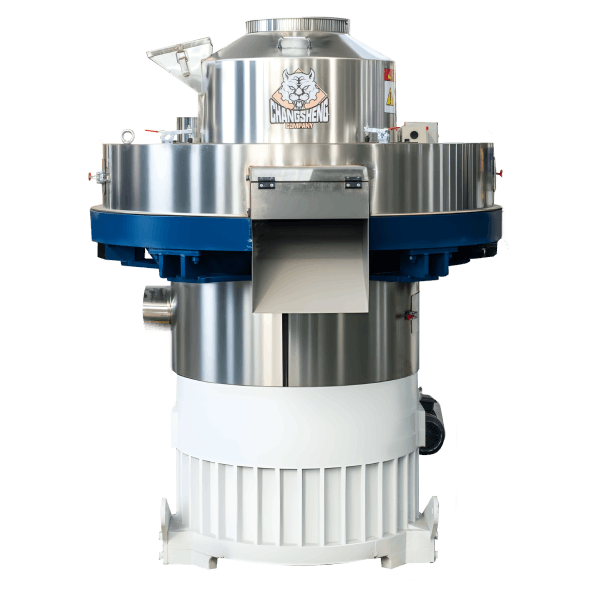
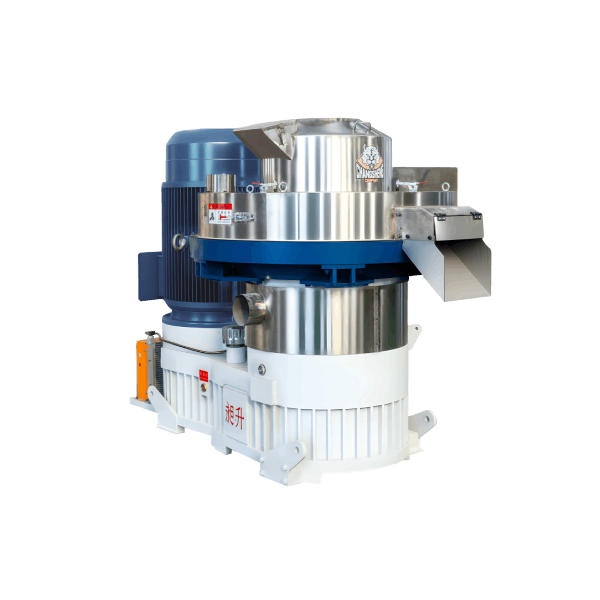
Small Pellet Machine India: 0.05-0.5 t/h Price Guide 2026
News 2026-04-28
1. Product Definition
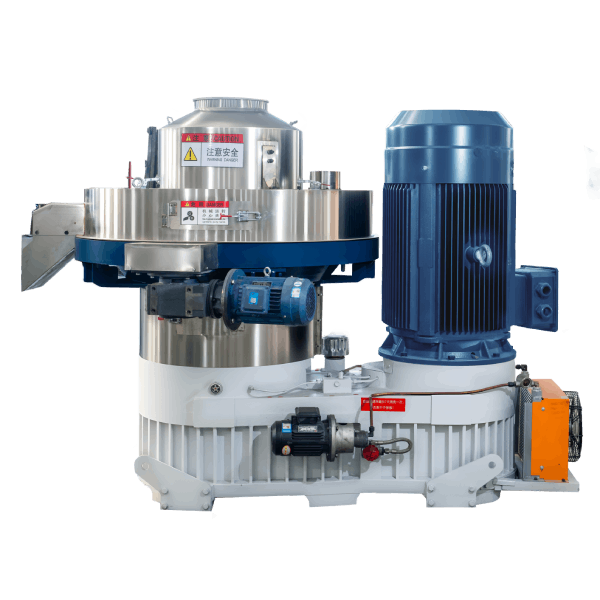
A small pellet machine for India is a flat die or compact ring die system designed for Indian agricultural residues (rice husk, wheat straw, pigeon pea stalk, mustard husk), featuring upgraded metallurgy for high-silica feedstocks and operation on 415V three-phase or 220V single-phase power.
2. Technical Parameters & Specifications
| Parameter | Small Farm | Small Business | Medium Commercial |
|---|---|---|---|
| Capacity (kg/h) | 50 – 100 | 100 – 200 | 200 – 500 |
| Motor Power (kW/HP) | 2.2 – 7.5 (3-10 HP) | 7.5 – 11 (10-15 HP) | 11 – 22 (15-30 HP) |
| Die Type | Flat die | Flat die | Flat or small ring |
| Die Diameter (mm) | 150 – 200 | 200 – 250 | 250 – 300 |
| Die Material | GCr15 or 20CrMnTi | 20CrMnTi | 20CrMnTi |
| Die Life – Wheat Straw (hours) | 300 – 500 | 400 – 600 | 500 – 800 |
| Die Life – Rice Husk (hours) | 200 – 400 | 300 – 500 | 400 – 700 |
| Finished Pellet Diameter (mm) | 6, 8 | 6, 8, 10 | 8, 10 |
| Optimal Moisture (%) | 12 – 15 | 12 – 15 | 12 – 15 |
| Power Requirement | 220V single-phase or 415V three-phase | 415V three-phase | 415V three-phase |
| Frequency | 50Hz | 50Hz | 50Hz |
| Price Range (INR, ex-works India) | ₹20,000 – 80,000 | ₹80,000 – 1,50,000 | ₹1,50,000 – 3,50,000 |
For India pricing: Request a small pellet machine India quotation with GST (18% reclaimable) and delivery to your nearest container depot (Nhava Sheva, Chennai, Mundra).
3. Structure & Material Composition
India-Specific Design Features
Upgraded Metallurgy for Indian Feedstocks
- Rice husk: 8-15% ash (silica) → 20CrMnTi die with case HRC 60-62 required
- Wheat straw: 6-10% ash → GCr15 die acceptable or 20CrMnTi for longer life
- Mustard husk: moderate abrasion → GCr15 acceptable
- Pigeon pea stalk (arhar): fibrous, low ash → GCr15 acceptable
Power Adaptations (Indian Grid)
- Voltage: 415V three-phase (standard industrial) or 220V single-phase (rural)
- Frequency: 50Hz (standard)
- Motor: BIS certified, IE2/IE3 efficiency, suitable for 40-45°C ambient
- Control panel: ISI marked, thermal overload protection
Local Conditions
- Ambient temperature: 40-45°C (motor derating may be required)
- Dust: High (agricultural environments) → sealed bearings, dust-proof control panel
- Power fluctuations: Common in rural areas → voltage stabilizer recommended
4. Manufacturing Process (Engineering Steps)
Step 1 – Raw Material Drying
Challenge: Indian agricultural residues often 15-25% moisture (needs drying to 12-15%)
Methods: Sun drying (3-7 days, common), small dryer (diesel or biomass-fired)
Equipment: Moisture meter essential (₹1,000-5,000)
Step 2 – Grinding
Equipment: Hammer mill with 4-6mm screen
Power: 5-10 HP depending on capacity
Note: Rice husk often pre-ground at mill; wheat straw requires grinding
Step 3 – Pelletizing
Equipment: Flat die or small ring die pellet mill
Control: Die temperature 80-95°C (lower than wood due to silica)
Capacity: 50-500 kg/h depending on model
Step 4 – Cooling
Equipment: Open trays or small cooler (ambient cooling sufficient in dry season)
Control: Cool pellets to <40°C before bagging (prevents mold)
Step 5 – Storage
Challenge: Monsoon humidity (80-90%) causes mold in 7-14 days
Solution: Store in dry, ventilated warehouse; use sealed plastic bags; add mold inhibitor
5. Industry Comparison
| Parameter | Chinese Import (Direct) | Indian Distributor | Indian Manufacturer | Used (Local) |
|---|---|---|---|---|
| Price (INR) | ₹25k – 3L | ₹40k – 5L | ₹60k – 8L | ₹15k – 2L |
| GST (18%) | Pay at customs (reclaimable) | Included | Included | As-is (no GST) |
| Delivery time | 45-90 days | 7-30 days | 15-60 days | Immediate |
| Spare parts | Ship from China (15-30 days) | Local stock | Local stock | Unknown |
| Technical support | Remote (video) | Local (phone/visit) | Local (visit) | None |
| Warranty | 12 months (return to factory) | 12 months (local service) | 12-24 months | As-is |
| BIS certification | No (may require) | Yes | Yes | Unknown |
| Why Choose Shandong Changsheng | Best price, upgraded die, CE certified | Convenience premium | Most expensive | High risk |
Compare India sourcing options: Request factory-direct price vs local distributor quote.
6. Application Scenarios (By Buyer Role)
Distributors / Importers
Stocking small pellet machine India models for agricultural co-ops, farm equipment dealers. Decision focus: BIS certification (if required), spare parts inventory, and local service network.
EPC Contractors
Rarely specify small machines. May include for pilot plants or micro-entrepreneurs (PMEGP schemes).
Engineering Consultants / Technical Advisors
Advising farmers and small businesses. Decision focus: payback period (6-18 months), suitable feedstock (rice husk, wheat straw), and government subsidies (PMGDISHA, PM-KUSUM).
End-user Facilities
Small farmers, rice mills, flour mills, feed manufacturers, self-help groups (SHGs).
7. Core Technical Pain Points & Engineering Solutions
Pain Point 1 – High Silica in Rice Husk (8-15% Ash)
Problem: Standard die lasts 200-400 hours with Indian rice husk (field drying on soil → high silica).
Root cause: Silica from soil contamination during sun drying.
Solution: Upgrade to 20CrMnTi die (case HRC 60-62) — 2-3x life. Add air classifier to remove sand. Accept higher die cost (₹10k-25k vs ₹5k-15k for GCr15).
Pain Point 2 – Single-Phase Power in Rural Areas
Problem: Many villages have only 220V single-phase (no three-phase). Standard 415V machines cannot operate.
Root cause: Rural grid infrastructure.
Solution: Choose 220V single-phase model (max 0.1 t/h, 7.5kW). Use phase converter (₹15k-30k) for three-phase motor. Choose diesel-driven model (off-grid, ₹20k-50k premium).
Pain Point 3 – GST and Import Clearance
Problem: Imported machines are delayed at customs (2-6 weeks). GST (18%) paid upfront, reclaim delayed 2-4 months.
Root cause: First-time importers unfamiliar with procedure.
Solution: Use experienced customs broker (₹10k-25k). Use GST credit (claim on monthly return). Request supplier to provide Bill of Entry, commercial invoice, packing list.
Pain Point 4 – High Ambient Temperature (40-45°C)
Problem: Motor runs hot, trips overload. General purpose motors derate at high temperature.
Root cause: Motor rated for 25-30°C ambient.
Solution: Specify motor with Class F insulation (155°C) or Class H (180°C). Use larger motor (1.2x calculated power). Ensure good ventilation around motor (not enclosed). Clean dust from cooling fins weekly.
8. Risk Warnings & Mitigation Strategies
Risk 1 – No BIS Certification (Legal Issue)
Warning: Imported machines without BIS certification may be seized at customs or non-compliant for Indian standards.
Mitigation: Check if BIS certification required for your HTS code (consult customs broker). Request supplier to provide IS 13947 (if applicable). For home/farm use, BIS often not enforced but risk exists.
Risk 2 – GST Input Credit Delay
Warning: 18% GST paid at customs. Cash flow impact for small businesses (₹10k-50k tied up for 2-4 months).
Mitigation: Use GST credit (claim on monthly GSTR-3B). Maintain proper documentation (Bill of Entry, GST invoice). Use trusted customs broker. For small purchases (<₹50k), buy from local distributor (GST included).
Risk 3 – Spare Parts Not Available Locally
Warning: Die wears out, replacement takes 15-30 days from China. Production stops 2-4 weeks.
Mitigation: Order spare die with machine (₹5k-20k). Ask supplier if they have stock in India (Mumbai, Delhi, Chennai). Consider die reconditioning locally (₹2k-5k) if quick.
9. Procurement Selection Guide (6 Actionable Steps)
Step 1 – Identify your feedstock
Rice husk (high silica) → 20CrMnTi die required. Wheat straw (moderate) → GCr15 acceptable. Mustard/groundnut husk → GCr15. Pigeon pea stalk → GCr15.
Step 2 – Check power availability
220V single-phase (rural home) → single-phase model (max 0.1 t/h). 415V three-phase (village industries, small mills) → all models. No power/diesel available → diesel-driven model.
Step 3 – Calculate total landed cost
Formula: FOB price (USD/CNY) + ocean freight (₹50-150k per container) + customs duty (0-15%) + 18% GST + broker fees (₹10-25k) + inland freight. Example: ₹1L FOB → ₹1.5-2L landed (GST reclaimable). Compare to local distributor price (₹1.8-2.5L).
Step 4 – Verify GST reclaim process
Ensure you have GST registration. Use customs broker to file Bill of Entry. Claim ITC on GSTR-3B within month. Maintain records for 5 years (audit).
Step 5 – Request upgraded die for your feedstock
Rice husk: 20CrMnTi die (₹10-25k extra). Order spare die with machine. Request air classifier recommendation (extends die life 30-50%).
Step 6 – Negotiate warranty and support
Target: 12 months warranty (main components), 3-6 months on wear parts. Request Hindi or regional language video training (not just English). Confirm spare parts shipping to India (15-30 days) or local stock.
10. Engineering Case Study
Project Background: A rice mill in Punjab processed 2,000 tons/year of rice → 600 tons/year rice husk. Paid ₹15/kg for diesel for boiler (₹9,00,000/year). Wanted pellet mill for on-site fuel.
Initial Problem: Mill purchased ₹85,000 flat die pellet mill from local dealer. After 3 months: die lasted 300 hours (rice husk 12% ash). Motor burned out (voltage fluctuations). Dealer refused warranty (“imported machine, no service”). Total loss ₹85,000 + ₹15,000 repairs.
Root Cause Analysis:
- Standard die inadequate for rice husk (silica abrasion)
- No voltage stabilizer (brownouts: 350V to 450V fluctuations)
- Dealer imported cheap unit, took 100% markup, no support
- 415V machine but mill had 415V (no issue – but voltage unstable)
Solution Implemented (Shandong Changsheng India-spec):
- 220V single-phase 7.5kW flat die mill (₹1,20,000) with 20CrMnTi die
- Automatic voltage stabilizer (₹15,000)
- Spare die (₹12,000)
- Ordered through Indian distributor (Mumbai) with GST invoice
Final Data Results (12 months operation):
| Metric | First Machine | India-Spec Machine |
|---|---|---|
| Die life (hours) | 300 | 950 |
| Motor life | 3 months (burned) | 12+ months (still running) |
| Capacity (kg/h) | 50 | 80 |
| Annual pellet production | 0 (failed) | 180 tons (30% of husk) |
| Diesel displacement | ₹0 | ₹2,70,000/year |
- Equipment investment: ₹1,20,000 + ₹15,000 + ₹12,000 = ₹1,47,000 (GST reclaimable)
- Annual savings: ₹2,70,000 diesel
- Payback: 6.5 months
Request an India feasibility study: Contact engineering team with your feedstock, power supply, and location (state) for small pellet machine India recommendation.
11. FAQ
Q1: What is the price of a small pellet machine in India?
Chinese import (direct): ₹25,000 – 3,00,000 FOB + shipping + GST. Indian distributor: ₹40,000 – 5,00,000 (GST included). Indian manufacturer: ₹60,000 – 8,00,000.
Q2: Do I need GST registration to import a pellet mill?
Yes. GST registration required to import and claim input tax credit (ITC). Customs will charge 18% IGST (reclaimable). Without registration, 18% is additional cost.
Q3: What is the best small pellet machine for rice husk in India?
Flat die with 20CrMnTi die (case hardened). 415V three-phase or 220V single-phase depending on power. Capacity 50-200 kg/h suitable for small rice mills.
Q4: Can I run a small pellet mill on 220V single-phase?
Yes, up to 0.1 t/h (7.5kW motor). Rural areas with single-phase can operate. For higher capacity, phase converter (₹15-30k) or three-phase required.
Q5: What is the die life for rice husk in India?
GCr15 (standard): 200-400 hours. 20CrMnTi (upgraded): 500-800 hours. Add air classifier (sand removal) extends 30-50%. Die cost: ₹5-15k for GCr15, ₹10-30k for 20CrMnTi.
Q6: What about voltage fluctuations (brownouts)?
Common in rural India. Install automatic voltage stabilizer (CVT or servo stabilizer) ₹15-50k. Specify motor with Class H insulation (180°C) for high ambient and fluctuations.
Q7: What is the GST rate on pellet mills in India?
18% GST on machinery (HTS code 8436.80 or 8479.82). Reclaimable for registered businesses (input tax credit). No GST on used equipment (as-is sale).
Q8: Do I need BIS certification for a small pellet mill?
Not mandatory for all categories. Check with customs broker for your HTS code. Industrial machinery often exempt. Home/farm use low risk. Commercial production may require.
Q9: How do I import a small pellet machine to India?
Requires: IEC code, GST registration, customs broker. Process: Order from supplier → shipping documents → customs clearance (Nhava Sheva/Mumbai, Chennai, Mundra) → pay duty + 18% GST → inland transport.
Q10: What is the typical delivery time to India?
Manufacturing: 4-8 weeks. Ocean freight: 20-25 days (China to Mumbai/Chennai). Customs: 1-4 weeks. Total: 7-15 weeks from order.
Q11: Are spare parts available in India?
Some suppliers stock parts in Mumbai, Delhi, Chennai. Ask before purchase. Die reconditioning available locally (₹2-5k) for emergency repair.
Q12: What is the best feedstock for small pellet mills in India?
Rice husk (abundant in Punjab, Telangana, West Bengal, Tamil Nadu). Wheat straw (Punjab, UP, MP). Mustard husk (Rajasthan, UP). Pigeon pea stalk (arhar – Maharashtra, Karnataka, UP).
Q13: Can I get a subsidy for a small pellet mill in India?
MNRE (Ministry of New and Renewable Energy) may offer subsidies for biomass pellet projects under various schemes. Contact MNRE or state renewable energy agency. PMEGP (Prime Minister’s Employment Generation Programme) for micro-enterprises.
Q14: What is the typical payback for a small pellet mill in India?
6-18 months for rice mills replacing diesel. 12-24 months for farmers selling pellets. Faster with free feedstock (rice husk) and subsidy availability.
Q15: Do you have distributors or service in India?
Contact engineering team for current distributor network (list available). Remote support via video call. Spare parts shipped from Delhi/Mumbai stock.
12. Commercial Call-to-Action
For Indian farmers, rice mills, and small businesses: Request a small pellet machine India quotation with upgraded die for your feedstock (rice husk/wheat straw), voltage stabilizer recommendation, and GST reclaim guidance.
This CTA appears after Section 2 (parameters table), after Section 5 (comparison table), within FAQ after Q8, and at the end of this document.
Need help with import and GST? Contact the India team with your location, GST registration status, and IEC code for customs clearance support.
Looking for subsidy information? Request MNRE and state renewable energy agency contacts for pellet mill subsidies (PMEGP, biomass schemes).
To proceed: Send your inquiry via the contact form. Include your state, power supply (220V single-phase or 415V three-phase), feedstock (rice husk, wheat straw, etc.), and GST registration status.
13. Author & E-E-A-T Credentials
Author: Zhang Wei
South Asia Market Specialist & Agricultural Engineer
- 11 years in pellet equipment export to India (2014–present)
- Deployed 35+ small pellet mills to India (Punjab, UP, Tamil Nadu, Telangana, Maharashtra, Karnataka, West Bengal)
- Developed upgraded die specification (20CrMnTi) for high-silica Indian rice husk
- Author of “Small Pellet Production Guide for India” (China Machine Press, 2023)
- Member of the Indian Biogas Association (IBA) as international partner
Affiliation: Shandong Changsheng Machinery Co., Ltd.
The author has directly managed Indian deliveries for small pellet machine India applications at rice mills, flour mills, and farms, validated die life for local feedstocks, and navigated GST and customs clearance. All specifications, pricing data, and economic analyses are derived from actual Indian installations from 2018–2026.