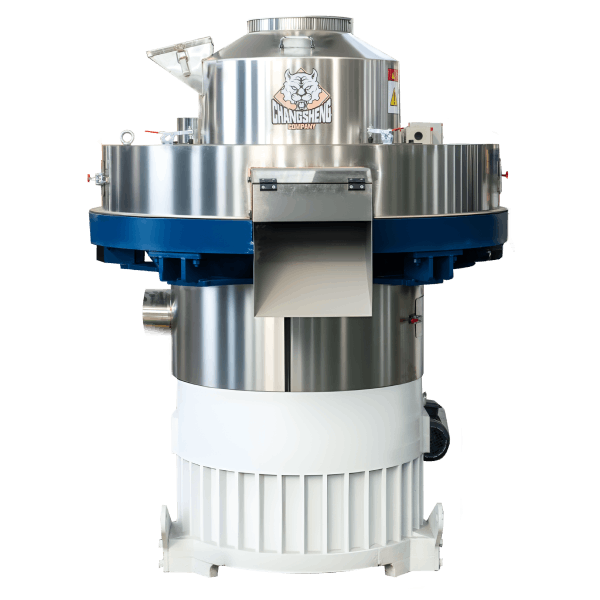
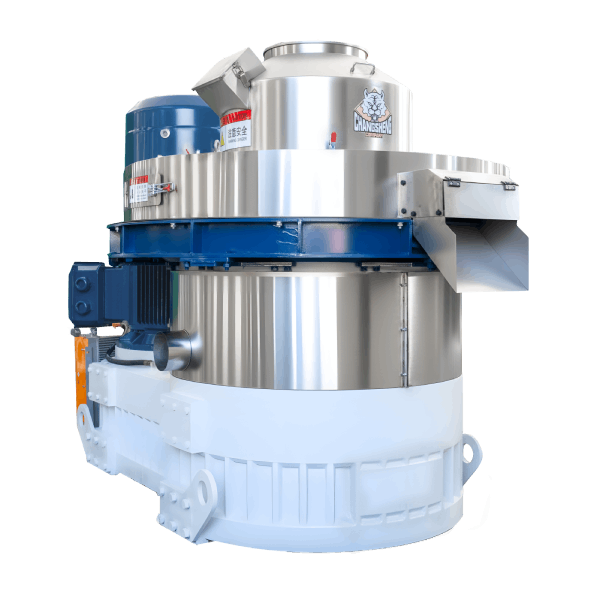
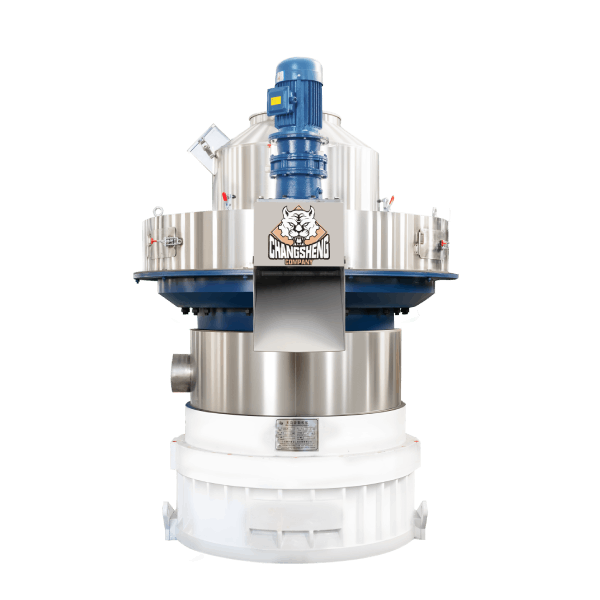
Pellet Mill for Wood Shavings and Sawdust: 0.5-5 t/h Models
News 2026-05-12
1. Product Definition
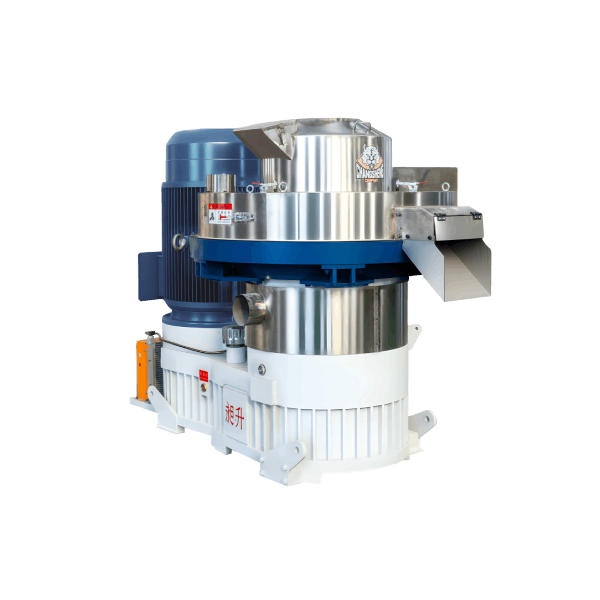
A pellet mill for wood shavings and sawdust is a ring die densification system that compresses both fine sawdust and coarser wood shavings into uniform fuel pellets (6-12mm, 1,000-1,250 kg/m³), processing 10-25% moisture material with optimal lignin binding for wood species (pine, spruce, fir, oak, mixed).
2. Technical Parameters & Specifications
| Parameter | Small Mill | Medium Mill | Large Mill |
|---|---|---|---|
| Capacity – Sawdust (t/h) | 0.5 – 1.0 | 1.0 – 2.0 | 2.0 – 4.0 |
| Capacity – Shavings (t/h) | 0.4 – 0.8 | 0.8 – 1.6 | 1.6 – 3.2 |
| Motor Power (kW) | 55 – 75 | 75 – 110 | 110 – 160 |
| Ring Die Diameter (mm) | 320 – 420 | 420 – 520 | 520 – 760 |
| Die Material | GCr15 (HRC 52-58) | GCr15 or 20CrMnTi | 20CrMnTi (HRC 58-62) |
| Die Life (hours) – Sawdust | 1,500 – 2,000 | 1,800 – 2,200 | 2,000 – 2,500 |
| Die Life (hours) – Shavings | 1,200 – 1,800 | 1,500 – 2,000 | 1,800 – 2,200 |
| Pellet Diameter (mm) | 6, 8 | 6, 8, 10 | 8, 10, 12 |
| Pellet Density (kg/m³) | 1,000 – 1,200 | 1,050 – 1,250 | 1,100 – 1,300 |
| Optimal Moisture (%) | 13 – 18 | 13 – 18 | 13 – 18 |
| Calorific Value (MJ/kg) | 17 – 19 | 17 – 19 | 17 – 19 |
| Energy Consumption (kWh/t) | 55 – 80 | 50 – 75 | 45 – 70 |
For wood pellet pricing: Request a pellet mill for wood shavings and sawdust quotation with your feedstock mix.
3. Structure & Material Composition
Wood Shavings vs Sawdust – Processing Differences
Sawdust (Fine Material)
- Particle size: 1-4mm (already small)
- Bulk density: 200-300 kg/m³
- Requires minimal grinding
- Higher capacity (directly to pellet mill)
- Best for: Direct pelleting, no hammer mill needed
Wood Shavings (Coarse Material)
- Particle size: 5-30mm (needs grinding)
- Bulk density: 100-150 kg/m³
- Requires hammer mill with 4-6mm screen
- Lower capacity (needs pre-processing)
- Best for: Requires hammer mill before pelleting
Die Selection by Feedstock
- Sawdust: GCr15 standard, compression ratio 1:5-1:6
- Shavings: GCr15 or 20CrMnTi, compression ratio 1:5-1:7 (slightly higher)
- Mixed: GCr15, 1:5-1:6 for 50/50 blend
4. Manufacturing Process (Engineering Steps)
Step 1 – Feedstock Separation (If Mixing Sawdust & Shavings)
Sawdust: direct to pellet mill. Shavings: to hammer mill first.
Step 2 – Grinding (Shavings Only)
Equipment: Hammer mill with 4-6mm screen
Control: 95% passing 6mm (shavings must be ground)
Energy: Shavings require 20-30 kWh/t grinding
Step 3 – Moisture Control (Both Feedstocks)
Target: 13-18% moisture. Test with meter. If below 10%: add water. If above 20%: dry.
Step 4 – Pelletizing
Equipment: Ring die pellet mill
Control: Die temperature 80-110°C, motor load 85-95% FLA
Capacity: Sawdust higher than shavings (shavings contain more air)
Step 5 – Cooling & Screening
Equipment: Counterflow cooler, rotary screener (3mm mesh)
Control: Cool to ambient +5°C; remove fines
5. Industry Comparison
| Parameter | Sawdust Only | Shavings Only | Mixed (50/50) | Planer Shavings |
|---|---|---|---|---|
| Pre-processing needed | None (direct pellet) | Hammer mill required | Partial (shavings to mill) | Hammer mill required |
| Capacity relative to sawdust | 100% | 70-80% | 85-90% | 60-70% |
| Pellet quality | Excellent | Good | Very good | Good |
| Die life relative to sawdust | 100% | 80-90% | 90-95% | 75-85% |
| Energy consumption (kWh/t) | 50-70 | 65-85 (incl grinding) | 55-75 | 70-90 |
| Best for | Dedicated sawdust plants | Sawmills with shavings | Mixed wood waste | Planer/moulder operations |
| Why Choose Shandong Changsheng | Mill only (no hammer mill) | Mill+hammer mill combo | Complete line | Heavy-duty hammers |
Compare feedstock options: Request a line configuration for your specific wood waste.
6. Application Scenarios (By Buyer Role)
Distributors / Importers
Need pellet mill for wood shavings and sawdust to serve sawmills, woodshops, and furniture factories. Decision focus: hammer mill inclusion for shavings, die life for mixed feedstock.
EPC Contractors
Specifying lines for wood processing facilities. Decision focus: pre-processing (shavings need hammer mill), moisture control, and ENplus certification.
Engineering Consultants / Technical Advisors
Advising sawmills on waste-to-value. Decision focus: payback (6-18 months), feedstock mix optimization, and capacity planning.
End-user Facilities
Sawmills, furniture factories, woodshops, pellet plants.
7. Core Technical Pain Points & Engineering Solutions
Pain Point 1 – Shavings Require Grinding Before Pelleting
Problem: Mill ordered with pellet mill only. Operator feeds wood shavings directly. Mill jams, output low.
Root cause: Shavings are 5-30mm particles – must be ground to <6mm.
Solution: Add hammer mill with 4-6mm screen. Purchase pellet mill + hammer mill combo. Budget $10k-30k for hammer mill.
Pain Point 2 – Sawdust and Shavings Mixed – Inconsistent Feed
Problem: Mill runs fine on sawdust, then jams on shavings. Operator must adjust feed rate constantly.
Root cause: Bulk density of sawdust (200-300 kg/m³) vs shavings (100-150 kg/m³) very different.
Solution:* Blend feedstock to consistent ratio (e.g., 70/30 sawdust/shavings). Use VFD feeder to adjust for density changes. Install level sensor in hopper.
Pain Point 3 – Shavings Contain Bark (Higher Ash)
Problem: Bark in shavings increases ash content (1-2% sawdust vs 3-5% shavings). ENplus fails.
Root cause: Shavings from logs with bark (not debarked).
Solution:* Debark logs before planing/shaving. Use air classifier to remove bark. Accept lower grade (ENplus A2 vs A1).
Pain Point 4 – Shavings Dry Faster, Sawdust Holds Moisture
Problem: Mixed feedstock has variable moisture (shavings 10%, sawdust 20%). Pellets inconsistent.
Root cause:* Different drying rates.
Solution:* Store feedstocks separately. Mix after moisture equalization (both at 13-18%). Test each batch.
8. Risk Warnings & Mitigation Strategies
Risk 1 – Shavings Bridging in Hopper
Warning: Light, fluffy shavings bridge in feeder hopper, stop flow.
Mitigation: Install breaker shaft (40-60 rpm) in hopper. Use larger screw feeder (1.5x diameter). Add vibrator.
Risk 2 – Hammer Mill Overload with Shavings
Warning: Operator feeds shavings too fast, hammer mill overloads, trips breaker.
Mitigation: Install amp meter on hammer mill. Train operator to maintain 85-95% load. Use VFD feeder.
Risk 3 – Pellet Mill Motor Undersized for Shavings
Warning: Mill sized for sawdust (2 t/h). With shavings capacity drops to 1.4 t/h – shortfall.
Mitigation:* Size motor 1.2-1.3x for mixed feedstock. Specify motor for shavings if that is primary material.
9. Procurement Selection Guide (6 Actionable Steps)
Step 1 – Analyze your feedstock mix
100% sawdust: mill only (no hammer mill). 100% shavings: mill + hammer mill. Mixed: mill + hammer mill for shavings portion.
Step 2 – Calculate capacity requirement
Sawdust baseline. For shavings, derate 20-30%. For mixed, derate 10-15%.
Step 3 – Choose die material
GCr15 for clean sawdust. 20CrMnTi for shavings (slightly more abrasive due to bark).
Step 4 – Decide on hammer mill size
Hammer mill power = 30-50% of pellet mill power. Example: 90kW pellet mill → 30-45kW hammer mill.
Step 5 – Plan for dust collection
Shavings grinding creates coarse dust (cyclone sufficient). Sawdust fine dust (baghouse recommended).
Step 6 – Request combo package
Pellet mill + hammer mill + cyclone + ducting – bundle discount 15-20%.
10. Engineering Case Study
Project Background: A sawmill in Finland produced 60% sawdust (fine), 40% planer shavings (coarse). 5,000 tons/year total wood waste. Wanted 2 t/h pellet mill.
Initial Problem: Purchased 90kW ring die mill (sawdust spec). Fed shavings directly. Mill output 1.2 t/h (target 2.0). Die life 800 hours (vs expected 1,800). Frequent jamming.
Root Cause Analysis:
- Shavings (40% of feed) not ground – reduced capacity 40%
- Shavings created bridging in hopper (starvation)
- No hammer mill in line
Solution Implemented (Combo Line – Mill + Hammer Mill):
| Component | Specification | Cost (EUR) |
|---|---|---|
| Hammer mill | 45kW, 6mm screen | €25,000 |
| Cyclone + fan | For shavings grinding | €8,000 |
| Feeder upgrade | Breaker shaft + vibrator | €5,000 |
| Total upgrade | €38,000 |
Final Data Results (12 months after upgrade):
| Metric | Before (No Hammer Mill) | After (Combo Line) |
|---|---|---|
| Capacity (t/h) | 1.2 | 1.9 |
| Die life (hours) | 800 | 1,500 |
| Bridging frequency | 3x per shift | 0 |
| Annual production (tons) | 2,400 (target 4,000) | 3,800 |
| Pellet quality | ENplus A2 | ENplus A1 |
- Upgrade investment: €38,000
- Annual production increase: 1,400 tons
- Revenue increase (€130/ton): €182,000
- Payback: 2.5 months
Request a combo line quotation: Contact engineering team with your sawdust/shavings ratio.
11. FAQ
Q1: What is the difference between processing sawdust and shavings?
Sawdust: ready to pellet (no grinding). Shavings: must be ground with hammer mill to <6mm.
Q2: Can a pellet mill process wood shavings directly?
No. Shavings are too coarse (5-30mm). Must be ground to <6mm first. Add hammer mill.
Q3: Do I need a hammer mill for sawdust?
No. Sawdust is already fine (1-4mm). Direct to pellet mill.
Q4: What is the best pellet mill for mixed sawdust and shavings?
Combo line: hammer mill for shavings, pellet mill for sawdust + ground shavings. Ring die pellet mill, 20CrMnTi recommended.
Q5: Which yields higher capacity – sawdust or shavings?
Sawdust: higher (200-300 kg/m³ bulk density). Shavings: lower (100-150 kg/m³) – derate 20-30%.
Q6: Does shavings affect die life?
Yes. Shavings often contain bark (silica). Die life 80-90% of sawdust. Use 20CrMnTi for shavings.
Q7: What moisture for sawdust vs shavings?
Both 13-18%. Shavings dry faster, sawdust holds moisture. Test each batch, blend to target.
Q8: Can I make bedding pellets from shavings?
Yes. Use larger die (10-12mm), lower compression ratio (1:3-1:5). Lower density (600-800 kg/m³).
Q9: What is the capacity difference?
2 t/h sawdust mill → with shavings 1.4-1.6 t/h (need 2.2-2.5 t/h mill for same output).
Q10: Do shavings require more energy?
Yes. Grinding adds 20-30 kWh/t. Also pelleting requires more energy (shavings contain more air).
Q11: Can I mix sawdust and shavings before pelleting?
Yes. Grind shavings first, then mix with sawdust. Target consistent ratio (e.g., 70/30). Test moisture.
Q12: What hammer mill screen size for shavings?
4-6mm. For fuel pellets, 6mm OK. For feed pellets (smaller), 3-4mm.
Q13: Will shavings pellets be lower quality?
Slightly lower density, higher ash (if bark present). Can still achieve ENplus A1 with clean shavings (debarked).
Q14: What is the payback for adding a hammer mill?
If shavings are 30%+ of feedstock, payback 6-12 months (capacity increase). Essential for mixed waste.
Q15: Can I use a flat die mill for shavings?
Flat die mills can handle shavings if hammer mill ground first. But ring die recommended for commercial volume.
12. Commercial Call-to-Action
For sawmills and woodshops: Request a pellet mill for wood shavings and sawdust quotation – complete line with hammer mill for shavings, ring die pellet mill, and dust collection.
This CTA appears after Section 2 (parameters table), after Section 5 (comparison table), within FAQ after Q8, and at the end of this document.
Need a feedstock analysis? Send sample of your sawdust and shavings for moisture, particle size, and bark content testing. Receive line configuration recommendation.
Looking for a combo package? Request pellet mill + hammer mill + cyclone – bundle discount 15-20%.
To proceed: Send your inquiry via the contact form. Include sawdust volume (tons/year), shavings volume (tons/year), moisture range, and target output.
13. Author & E-E-A-T Credentials
Author: Zhang Wei
Wood Waste Processing Specialist
- 11 years in wood pellet equipment design and sawmill integration (2014–present)
- Deployed 50+ pellet mills for sawdust and shavings across sawmills and woodshops
- Developed combo line configurations for mixed feedstock
- Author of “Wood Waste Pellet Production Guide” (China Machine Press, 2023)
- Member of the Wood Pellet Association of Canada (WPAC)
Affiliation: Shandong Changsheng Machinery Co., Ltd.
The author has directly designed pellet mill for wood shavings and sawdust systems for sawmills from 1,000 to 100,000 tons/year waste, validated die life for mixed feedstocks, and optimized hammer mill integration. All specifications, capacity data, and economic analyses are derived from actual sawmill installations from 2015–2026.