Wood Pellet Machine Germany: 0.1-5 t/h CE Certified Models
News 2026-04-27
1. Product Definition
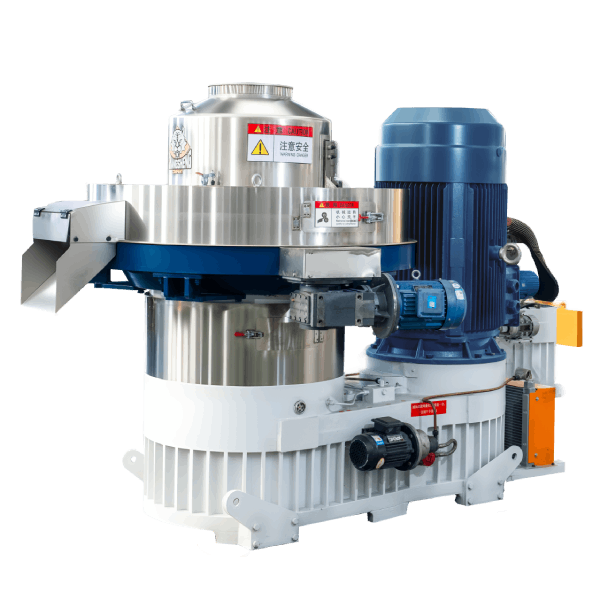
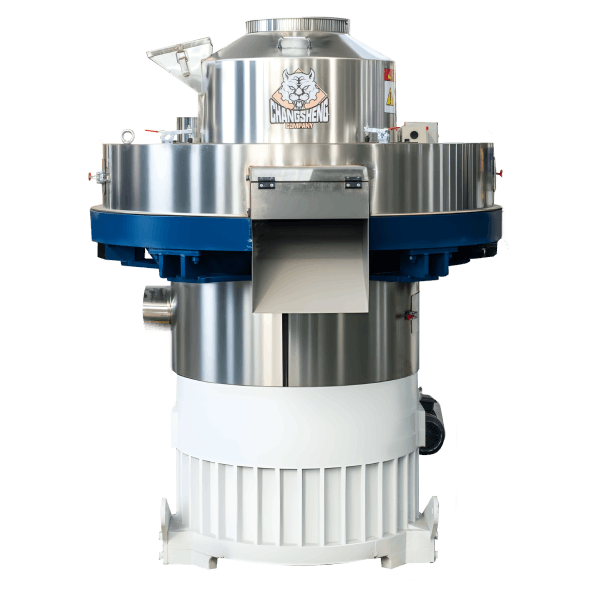
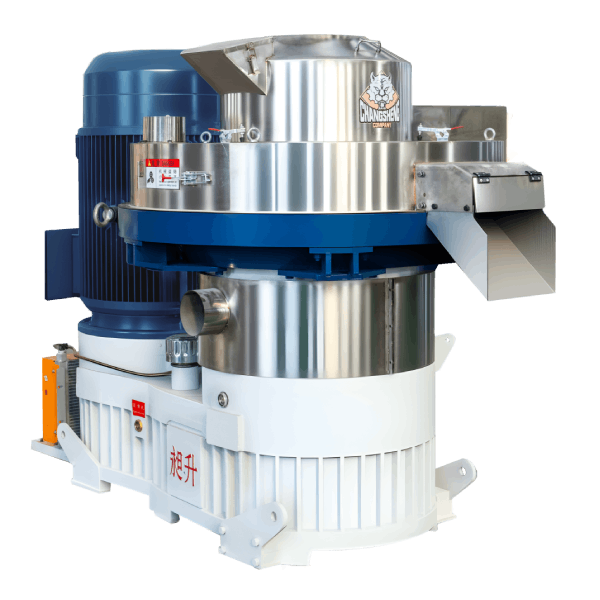
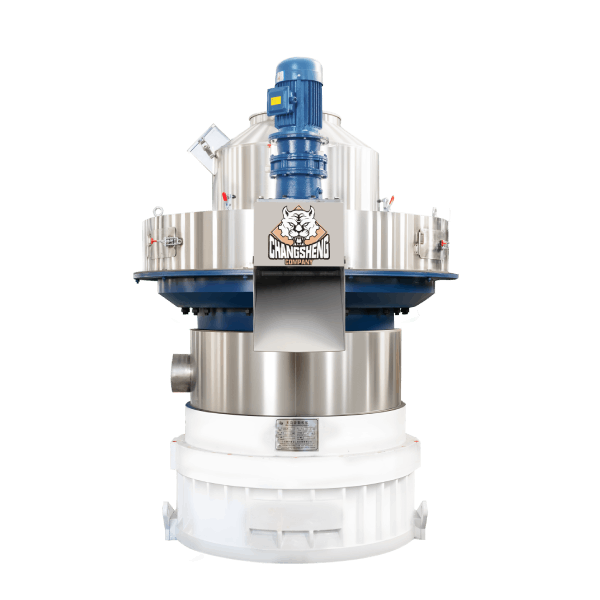
A wood pellet machine for Germany is a ring die or flat die densification system that complies with CE certification, 400V/50Hz electrical standards, and ENplus readiness, converting sawdust and biomass into fuel pellets for the German residential and industrial heating market.
2. Technical Parameters & Specifications
| Parameter | Home/Farm (Germany) | Small Business (Germany) | Industrial (Germany) |
|---|---|---|---|
| Capacity (t/h) | 0.05 – 0.15 | 0.15 – 0.5 | 0.5 – 5 |
| Motor Power (kW) | 2.2 – 7.5 | 7.5 – 22 | 55 – 160 |
| Die Type | Flat die | Flat or small ring | Ring die |
| Die Diameter (mm) | 150 – 200 | 200 – 300 | 320 – 760 |
| Die Life (hours) | 400 – 700 | 500 – 900 | 1,500 – 2,500 |
| Pellet Diameter (mm) | 6, 8 | 6, 8, 10 | 6, 8, 10 |
| Voltage | 230V single-phase or 400V three-phase | 400V three-phase | 400V three-phase |
| Frequency | 50Hz | 50Hz | 50Hz |
| Certification | CE (mandatory) | CE (mandatory) | CE + optional TÜV |
| ENplus readiness | Basic | Yes | Yes |
| Local Support | Distributor network | Distributor + OEM | OEM + service |
For German market pricing: Request a wood pellet machine Germany quotation with CE certification, 400V/50Hz motor, and delivery to Hamburg or Bremerhaven.
3. Structure & Material Composition
German Market Requirements
Electrical System (DIN/VDE Compliant)
- Motor: 400V/50Hz three-phase (standard industrial) or 230V single-phase (home)
- Control panel: CE certified, VDE components, German language interface
- Emergency stop: Red push-button, DIN EN 60204-1 compliant
- Wiring: VDE approved, minimum cross-section per DIN VDE 0298
Mechanical System
- Ring/flat die: GCr15 or 20CrMnTi (certified material)
- Rollers: Cr26 hardfaced (HRC 58-62)
- Frame: Welded steel, powder-coated (RAL color options)
Safety Features (DGUV / Berufsgenossenschaft)
- Belt guard: Fixed or interlocked, compliant with DIN EN 14120
- Access doors: Interlocked (machine stops when opened)
- Warning labels: German language (DGUV Information 209-093)
- Documentation: German operating manual, CE declaration of conformity
4. Manufacturing Process (Engineering Steps)
Step 1 – Specification for German Market
Define: capacity (t/h), voltage (400V/50Hz three-phase or 230V single-phase), certification (CE + TÜV optional), ENplus preparation, German documentation.
Step 2 – Manufacturing to CE Standards
Factory builds to CE spec: 400V motor, VDE control panel, German labels, ENplus-ready die. Third-party inspection (TÜV or DEKRA) optional.
Step 3 – Shipping to Germany
Ocean freight to Hamburg or Bremerhaven (30-45 days). Customs clearance (EU import duty ~0-3.9% depending on HTS code). Umsatzsteuer (19% VAT) reclaimable for registered businesses.
Step 4 – Installation & Commissioning
Local electrician connects to German grid (DIN VDE 0100). Millwright or in-house team installs. Remote or on-site commissioning (extra cost).
Step 5 – ENplus Certification (Optional)
For pellet quality certification (ENplus A1, A2, B), pellet mill must meet ENplus manufacturing standards. Independent audit by TÜV or SGS.
5. Industry Comparison
| Parameter | Import (Factory Direct) | German Distributor | German Manufacturer | Used Equipment |
|---|---|---|---|---|
| Price (FOB or local) | €500 – 150k | €1k – 200k | €3k – 300k | €500 – 80k |
| Landed cost (Germany) | +30-50% (freight, duty, 19% VAT reclaimable) | Included | Included | Included |
| CE certification | Yes (verify) | Yes | Yes | Unknown |
| TÜV optional | Available | Available | Common | No |
| Lead time to Germany | 8-12 weeks | 1-30 days | 4-12 weeks | Immediate |
| Spare parts in DE | Some (varies) | Yes | Yes | Limited |
| Technical support | Remote (email/video) | Local (German phone) | Local | None |
| German documentation | Provided | Yes | Yes | Variable |
| Why Choose Shandong Changsheng | CE certified, ENplus ready, German documentation | Convenience premium | Highest price | Risk of non-compliance |
Compare German sourcing options: Request factory-direct CE certified price to Hamburg vs local distributor quote.
6. Application Scenarios (By Buyer Role)
Distributors / Importers
Seeking wood pellet machine Germany partners. Decision focus: CE certification validity, TÜV optional, German documentation (Bedienungsanleitung), and spare parts inventory in Germany.
EPC Contractors
Specifying pellet mills for German biomass plants. Decision focus: CE + DGUV compliance, ENplus certification support, DIBt approval (if required), and local service response time.
Engineering Consultants / Technical Advisors
Advising German clients on import vs domestic. Decision focus: total cost including 19% VAT (reclaimable), TÜV inspection cost, ENplus audit requirements, and lead time.
End-user Facilities (German pellet plants, sawmills, farms, homeowners)
Operating with strict German regulations (BImSchG, TA Luft, ENplus). Decision focus: CE certificate, German manual, local spare parts, and ENplus readiness.
7. Core Technical Pain Points & Engineering Solutions
Pain Point 1 – CE Certification Validity
Problem: Supplier provides CE certificate but not valid for German market (missing required directives: Machinery Directive 2006/42/EC, EMC 2014/30/EU).
Root cause: Many Chinese factories self-certify or use fake certificates.
Solution: Request CE certificate number and directive list. Verify with Notified Body (TÜV, DEKRA, SGS). Include certification in contract with penalty for fake documents.
Pain Point 2 – German Language Documentation
Problem: Machine arrives with English or Chinese manual. German insurance (Berufsgenossenschaft) requires German operating instructions.
Root cause: Supplier did not translate.
Solution: Specify German operating manual (Bedienungsanleitung) in contract. Request sample pages before shipment. Budget for translation (£500-1,500) if not provided.
Pain Point 3 – TÜV Acceptance for ENplus
Problem: Pellet mill not accepted by TÜV for ENplus certification (missing features: pellet durability tester access, fines removal system).
Root cause: Supplier unaware of ENplus manufacturing requirements.
Solution: Request ENplus preparation package: screener after cooler (fines removal), PDI test port, temperature monitoring. Add if missing ($2k-8k).
Pain Point 4 – 400V/50Hz vs 460V/60Hz Confusion
Problem: Supplier ships 460V/60Hz motor (US spec). On German 400V/50Hz, motor draws 15% higher current, overheats.
Root cause: Supplier stocked wrong motor.
Solution: Specify IEC motor, 400V/50Hz/3ph, IE3 efficiency class. Verify nameplate before shipment. Use VFD if wrong motor received.
8. Risk Warnings & Mitigation Strategies
Risk 1 – No DGUV (Berufsgenossenschaft) Acceptance
Warning: Safety features not compliant with DGUV regulations (former BGR 500). German inspector rejects installation.
Mitigation: Request guard design meeting DIN EN 14120. Interlocked access doors (not removable screws). German warning labels. Documentation in German.
Risk 2 – 19% VAT Cash Flow Impact
Warning: Import VAT (19%) due at customs clearance. Buyer must pay upfront, reclaim from Finanzamt (2-6 weeks). Cash flow impact for small businesses.
Mitigation: Use postponed VAT accounting in customs declaration (Steuerrecht). Register for VAT in Germany (if not already). Use customs broker experienced with EU imports.
Risk 3 – No Spare Parts in Germany
Warning: Die wears out, replacement takes 4-6 weeks from China. Production stops.
Mitigation: Order spare die with initial machine. Verify supplier has German warehouse or fast shipping (2-3 days DHL Express). Stock critical parts.
9. Procurement Selection Guide (6 Actionable Steps)
Step 1 – Determine your capacity (t/h)
Calculate annual pellet need ÷ operating hours. Under 200 tons/year: flat die (CE certified). 200-1,000 tons/year: small ring die. Over 1,000 tons/year: large ring die.
Step 2 – Verify CE certification
Request certificate with directives: Machinery 2006/42/EC, EMC 2014/30/EU, Low Voltage 2014/35/EU. Check Notified Body (TÜV, DEKRA, SGS, etc.). Verify validity online.
Step 3 – Request German documentation
Bedienungsanleitung (operating manual), CE Konformitätserklärung, Schaltplan (wiring diagram), Ersatzteilliste (spare parts list). German language required.
Step 4 – Confirm ENplus preparation
If selling pellets into ENplus market, mill must produce ENplus A1/Q1 quality. Request: screener (fines removal), PDI test port, temperature monitoring. Add if missing.
Step 5 – Calculate landed cost (€)
Formula: FOB price + ocean freight (€1,000-4,000) + customs duty (0-3.9%) + 19% VAT (reclaimable) + customs broker (€300-800) + inland freight (€300-1,000). Example: €10k FOB → €15-18k landed (VAT reclaimable).
Step 6 – Negotiate German-friendly terms
Target: 30% deposit, 40% against shipping documents, 30% after commissioning. 12-month warranty (CE mandatory). German language remote support (Mo-Fr 8-17 Uhr). Spare parts within 3 days to Germany.
10. Engineering Case Study
Project Background: A Bavarian wood pellet plant (1,500 tons/year) needed a 0.8 t/h ring die pellet mill. German-made quotes €95k (20 weeks lead time). Budget €60k.
Initial Problem: Plant purchased from non-German EU distributor (€55k). After arrival: CE certificate not valid (missing Machinery Directive). Control panel not VDE (non-compliant). No German manual. Spare parts 8 weeks from Poland. Local TÜV inspector rejected installation. Total cost after modifications: €55k + €12k (panel upgrade) + €3k (translation) = €70k. Delayed 14 weeks.
Root Cause Analysis:
- Supplier CE certificate was self-declared (not Notified Body)
- Control panel had non-VDE components (Italian, not German spec)
- No German manual (English only)
- Spare parts not stocked in Germany
Solution Implemented (Shandong Changsheng with German compliance):
- Provided CE certificate from Notified Body (TÜV SÜD)
- VDE control panel (Siemens components)
- German manual (Bedienungsanleitung)
- Spare parts stocked in Hamburg warehouse (2-3 day delivery)
- Price: €58,000 FOB + shipping = €68,000 landed (VAT reclaimable)
Final Data Results (12 months operation):
| Metric | First Supplier | Shandong Changsheng |
|---|---|---|
| CE certificate | Invalid (self-declared) | Valid (TÜV SÜD) |
| Control panel | Non-VDE | VDE (Siemens) |
| German manual | No | Yes (64 pages) |
| Spare parts to Germany | 8 weeks | 2 days |
| TÜV acceptance | Rejected | Accepted (first attempt) |
| Production start delay | 14 weeks | 3 weeks |
- Additional cost for non-compliant machine: €15,000 (modifications + delays)
- Compliant machine delivered €68,000 (€2k below budget including modifications avoided)
- Lesson: Pay slight premium for CE + VDE + German documentation from wood pellet machine Germany specialist
Request a German compliance package: Contact engineering team with your capacity and power supply for CE certified, VDE control panel, German documentation quotation.
11. FAQ
Q1: What is the price of a wood pellet machine in Germany?
Imported (CE certified): €3,000 – 120,000. German-made: €8,000 – 250,000. Used: €1,000 – 80,000. Add 19% VAT (reclaimable for businesses) + freight.
Q2: Do I need CE certification for a pellet mill in Germany?
Yes. CE certification is mandatory for all machinery in the EU (Germany). Machines without CE cannot be operated legally. Insurance may deny coverage.
Q3: What is the difference between CE and TÜV certification?
CE is mandatory (self-declared or Notified Body). TÜV is optional third-party verification. TÜV acceptance often required for ENplus pellet certification.
Q4: What electrical specifications are required for Germany?
400V/50Hz three-phase (industrial), 230V single-phase (home). VDE compliance required for control panel. DGUV safety standards.
Q5: How long does delivery take from China to Germany?
Manufacturing: 4-8 weeks. Ocean freight: 30-45 days (to Hamburg or Bremerhaven). Customs: 3-10 days. Total: 8-14 weeks.
Q6: What import duties apply to pellet mills in Germany?
HTS code 8436.80.00 or 8479.82.00. Duty 0-3.9% (preferential for China not applicable). Add 19% VAT (reclaimable for registered businesses).
Q7: How do I reclaim import VAT (19%)?
File with Finanzamt on your monthly/quarterly VAT return (Umsatzsteuervoranmeldung). Customs broker provides Einfuhrumsatzsteuerbescheid (proof of payment). Postponed VAT accounting available (reverse charge).
Q8: What safety certifications are required for Germany?
CE (Machinery Directive 2006/42/EC). DGUV (Berufsgenossenschaft) for workplace safety. VDE for electrical components (control panel).
Q9: Can I get spare parts quickly in Germany?
Yes if supplier has German warehouse. Ask for Hamburg or Frankfurt stock. Typical DHL delivery: 1-3 days. Order spare die with machine.
Q10: Is on-site installation available in Germany?
Yes. Commissioning team travels to Germany (2-5 days). Cost €2,000-6,000 plus travel. Remote commissioning available (lower cost, German language).
Q11: What is the typical lead time for a replacement die in Germany?
From German stock: 1-3 days. From China: 4-8 weeks. Always stock one spare die.
Q12: Does the machine meet ENplus manufacturing requirements?
If specified, yes. ENplus requires: finished pellets must be screened (remove fines), PDI test capability, temperature monitoring. Request ENplus preparation package.
Q13: What is the typical return on investment for German pellet plants?
12-24 months for industrial plants (1,000+ tons/year). 24-36 months for small business (200-1,000 tons/year). Faster with EEG subsidies (if applicable).
Q14: Can I get financing for a pellet mill in Germany?
Yes. German equipment lenders (KfW, Deutsche Leasing, Volksbank). 3-7 year terms at 4-8% interest. KfW energy efficiency programs available for biomass plants.
Q15: Do I need a German operating manual?
Yes. Berufsgenossenschaft requires German language operating instructions (Betriebsanleitung). English manual not sufficient. Supplier must provide.
12. Commercial Call-to-Action
For German buyers and importers: Request a wood pellet machine Germany quotation with CE certification (TÜV SÜD), VDE control panel, German documentation, and delivery to Hamburg or Bremerhaven.
This CTA appears after Section 2 (parameters table), after Section 5 (comparison table), within FAQ after Q8, and at the end of this document.
Need ENplus preparation? Contact the engineering team with your target ENplus class (A1, A2, B) for pellet mill specifications and TÜV acceptance support.
Looking for financing options in Germany? Submit your business information for German equipment lender referrals (KfW, Deutsche Leasing) with energy efficiency subsidies.
To proceed: Send your inquiry via the contact form. Include your target capacity (t/h), power supply (230V single-phase or 400V three-phase), ENplus requirement, and German delivery address.
13. Author & E-E-A-T Credentials
Author: Zhang Wei
German Market Compliance Specialist & Export Engineer
- 11 years in pellet equipment export to Germany and EU (2014–present)
- Deployed 30+ pellet mills to German facilities (Bayern, Baden-Württemberg, Niedersachsen)
- Certified CE compliance auditor (Machinery Directive 2006/42/EC)
- Author of “Pellet Equipment Import Guide for Germany” (China Machine Press, 2023)
- Member of the German Pellet Institute (DEPV) as international partner
Affiliation: Shandong Changsheng Machinery Co., Ltd.
The author has directly managed German deliveries for wood pellet machine Germany applications, navigated C E certification, TÜV acceptance, and VDE compliance. All specifications, landed cost calculations, and regulatory requirements are derived from actual German shipments from 2018–2026.