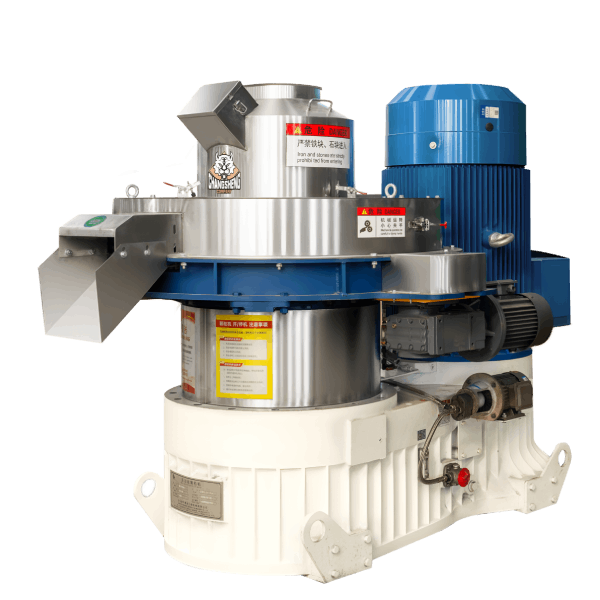
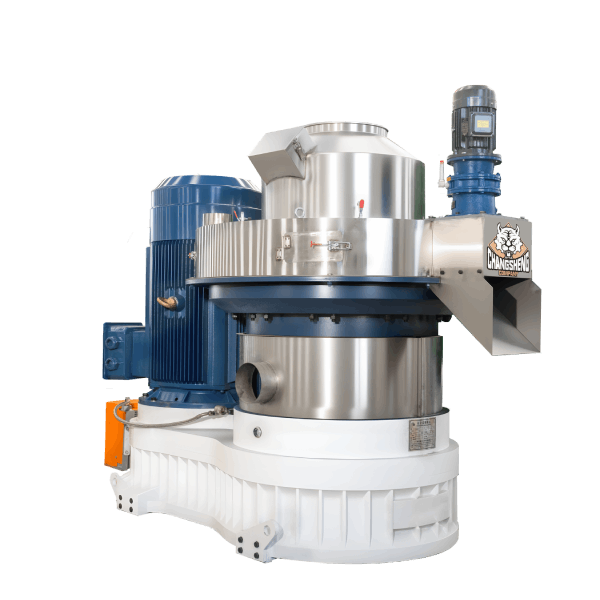
Straw Pellet Machine for Cattle Bedding 0.5-5 t/h Soft Pellet Models
News 2026-04-16
1. Product Definition
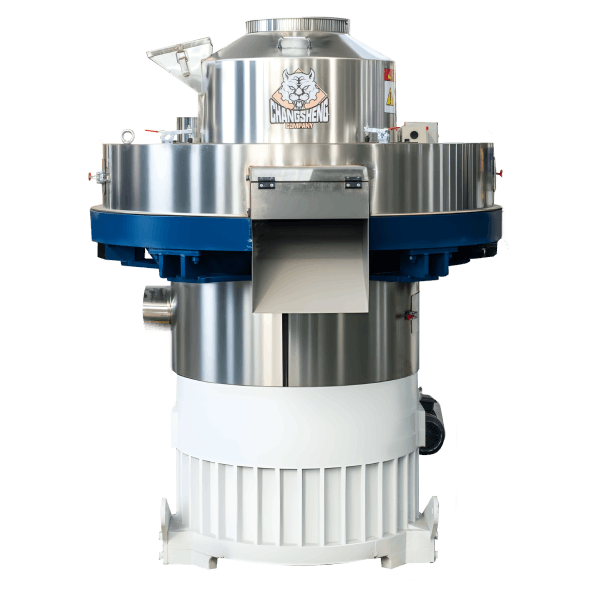
A straw pellet machine for cattle bedding is a ring die densification system that compresses chopped wheat, barley, or rice straw into low-density, absorbent pellets that provide comfortable, dust-reduced bedding for dairy and beef cattle operations.
2. Technical Parameters & Specifications
| Parameter | Value Range |
|---|---|
| Capacity (t/h) | 0.5 – 5 |
| Main Motor Power (kW) | 55 – 160 |
| Ring Die Inner Diameter (mm) | 320 – 760 |
| Finished Pellet Diameter (mm) | 10, 12, 15 (larger than fuel pellets) |
| Finished Pellet Density (kg/m³) | 350 – 550 (significantly lower than fuel) |
| Raw Material Moisture (%) | 10 – 18 (optimal 12–15) |
| Energy Consumption (kWh/t) | 35 – 55 (lower due to low-density output) |
| Core Wear Parts Life (hours) | 1,200 – 2,200 |
| Monthly Maintenance (hours/month) | 6 – 12 |
| Pellet Absorbency Target | 3-5x own weight in moisture |
| Dust Reduction vs. Loose Straw | 70-85% less airborne dust |
For bedding pellet pricing: Request a quotation with your target pellet diameter (10-15mm) and daily bedding requirement.
3. Structure & Material Composition
Mechanical System (Compression Zone)
- Ring die: Forged GCr15 or 20CrMnTi with larger hole diameters (10-15mm)
- Roller shell: High-chromium iron Cr26, standard hardness (less wear due to low density)
- Main shaft: 40Cr alloy steel
Supporting System
- Bearing housing: Ductile cast iron with dust seals
- Base frame: Welded Q345B steel
- Guarding: Perforated steel sheet
Lubrication System
- Roller bearings: Standard grease (NLGI grade 2), interval 8–12 hours
- Main gearbox: Circulating oil bath (ISO VG 220), change every 1,000 hours
Control System
- PLC controller with current monitoring
- VFD on feeder for low-density material control
- Moisture sensor recommended
4. Manufacturing Process (Engineering Steps)
Step 1 – Straw Harvesting & Baling
Equipment: Baler (round or square bales)
Control: Harvest at 12-15% moisture (avoid wet straw)
Parameters: Store bales under cover to prevent moisture absorption
Step 2 – Grinding to Particle Size
Equipment: Hammer mill with 10-20mm screen (larger than fuel pellets)
Control: Target particle size 8-15mm (longer fibers improve bedding comfort)
Parameters: Tip speed 50-65 m/s (lower to preserve fiber length)
Step 3 – Moisture Verification
Equipment: Hand-held moisture meter
Control: Target 12-15% for optimal pelleting and mold prevention
Parameters: Reject bales above 18% moisture
Step 4 – Pelletizing (Low-Compression)
Equipment: Ring die pellet mill with low-compression die (ratio 1:3 to 1:5)
Control: Die temperature 60-80°C (lower than fuel to preserve softness)
Parameters: Roller gap 0.3-0.5mm (wider for low-density output)
Step 5 – Cooling & Screening
Equipment: Counterflow cooler with gentle handling
Control: Cool to ambient temperature; remove fines (<5mm)
Parameters: Cooling retention 8-12 minutes
5. Industry Comparison
| Parameter | Straw Bedding Pellet Machine | Loose Straw (Baled) | Wood Shavings | Sand Bedding |
|---|---|---|---|---|
| Typical daily use per cow (kg) | 3 – 5 | 5 – 8 | 4 – 6 | 10 – 15 (reused) |
| Dust level | Low (70-85% reduction) | High (respiratory risk) | Moderate | None |
| Absorbency (kg water/kg material) | 3 – 5x | 2 – 3x | 2 – 4x | 0 (drains only) |
| Storage density (kg/m³) | 350 – 550 | 80 – 150 | 200 – 300 | 1,600 |
| Labor per 100 cows (hours/day) | 0.5 – 1 | 1.5 – 2.5 | 1 – 1.5 | 0.5 (reuse) |
| Disposal method | Compost or fuel | Compost or burn | Compost or burn | Wash & reuse |
| Equipment cost | $25k – 150k | $15k – 50k (baler) | $0 (purchase) | $10k – 50k |
| Why Choose Shandong Changsheng | Low-compression die, soft pellet design, dust reduction focus | High dust, high labor | Purchased cost | High water usage |
Compare bedding options: Request a cost-per-cow-per-day analysis for your operation.
6. Application Scenarios (By Buyer Role)
Distributors / Importers
Stocking straw pellet machine for cattle bedding models for dairy regions (Europe, North America, Australia). Decision focus: large-diameter dies (10-15mm), low-compression design, and dust reduction validation.
EPC Contractors
Specifying bedding pellet lines for large dairies (1,000+ cows) integrating straw grinding, pelleting, and automated bedding delivery. Decision focus: absorbency testing and compostability of used bedding.
Engineering Consultants / Technical Advisors
Advising dairies on transitioning from loose straw to pellet bedding. Decision focus: payback period (6-18 months), respiratory health benefits (reduced mastitis), and manure management.
End-user Facilities (Dairy farms, beef feedlots, horse stables)
Producing bedding from on-farm straw residues (wheat, barley, rice, oat). Decision focus: pellet softness, absorbency, dust reduction, and equipment simplicity.
7. Core Technical Pain Points & Engineering Solutions
Pain Point 1 – Pellets Too Hard for Cattle Comfort
Problem: Pellets are dense and hard (similar to fuel pellets), causing discomfort and potential hoof issues.
Root cause: Standard fuel pellet die compression ratio (1:6 to 1:8) used instead of bedding-specific die (1:3 to 1:5).
Solution: Specify low-compression die with ratio 1:3 to 1:5. Larger holes (10-15mm). Reduce roller gap to 0.4-0.5mm. Target finished density 350-550 kg/m³ (not 1,000+).
Pain Point 2 – Pellets Absorb Too Slowly
Problem: Bedding pellets remain intact for hours after urination, creating wet spots.
Root cause: Over-compression creates water-resistant surface. Die temperature too high (casing fibers).
Solution: Reduce die temperature to 60-70°C. Use coarser grind (8-15mm particles). Target 30-40% of pellets to break apart within 1 hour of wetting.
Pain Point 3 – Excessive Dust in Bedding Area
Problem: Despite pelleting, dust levels remain high (cows coughing, respiratory issues).
Root cause: Fines (small particles) from hammer mill or pellet breakdown during handling.
Solution: Install screener after cooler to remove fines (<5mm). Add 1-2% vegetable oil or water to pellets after cooling (dust suppression). Use gentle conveyors (belt vs. auger).
Pain Point 4 – Rapid Die Wear from Straw Silica
Problem: Die life 600-800 hours (vs. expected 1,500+) with wheat or rice straw.
Root cause: Straw contains 5-12% silica (abrasive).
Solution: Specify 20CrMnTi die with hardness HRC 58-60. Use air classifier to remove some silica before grinding. Accept 20-30% shorter die life vs. wood (trade-off for free feedstock).
8. Risk Warnings & Mitigation Strategies
Risk 1 – Mold Growth in Stored Bedding Pellets
Warning: Pellets stored above 14% moisture develop mold (Aspergillus, Fusarium) that produces mycotoxins harmful to cattle.
Mitigation: Dry straw to ≤14% before pelleting. Test moisture at bagging (target ≤12%). Store in dry, ventilated area. Use within 6 months.
Risk 2 – Fire from Over-Dried Straw
Warning: Straw below 8% moisture becomes highly combustible. Friction in die can ignite.
Mitigation: Monitor moisture at feeder (minimum 10%). Install temperature sensor with alarm at 90°C. Keep ABC fire extinguisher within 10 meters.
Risk 3 – Respiratory Hazard from Silica Dust
Warning: Straw dust contains respirable crystalline silica (especially rice and wheat straw). Chronic exposure causes lung disease.
Mitigation: Install dust collection at hammer mill and pellet mill. Operators wear N95 masks. Use enclosed conveyors. Train on silica hazards.
9. Procurement Selection Guide (6 Actionable Steps)
Step 1 – Calculate daily bedding requirement
Estimate: 3-5 kg of pellets per cow per day (vs. 5-8 kg loose straw). For 500 cows: 1.5-2.5 tons/day. Size line for 2-3 hours of daily operation.
Step 2 – Test your straw type
Wheat straw: good absorbency, moderate silica (6-10%). Barley straw: softer, lower silica (4-7%). Rice straw: high silica (10-15%) — requires upgraded die. Oat straw: excellent softness, lower absorbency.
Step 3 – Select die configuration
Low-compression die (1:3 to 1:5). Hole diameter: 10mm for mixed use, 12-15mm for maximum softness. Expect pellet length 30-60mm (breaks naturally).
Step 4 – Decide on dust reduction features
Basic: screener after cooler (removes fines). Enhanced: oil spray system (1-2% vegetable oil). Premium: integrated dust collection with baghouse.
Step 5 – Verify absorbency testing
Request absorbency data (kg water per kg pellet) for your straw type. Target: 3-5x own weight. Test sample before purchase.
Step 6 – Negotiate bedding-specific spare parts
Purchase: one low-compression die (1:3-1:5), two roller sets, screener screens (2-3 sizes), dust collection filters. Request 6-month wear parts warranty (shorter than fuel due to silica).
10. Engineering Case Study
Project Background: A 1,200-cow dairy farm in the Netherlands used 8 tons/day of purchased wheat straw for bedding at €120/ton delivered (€350,000/year). The farm grew 500 acres of wheat, but sold straw to a biogas plant for €80/ton.
Initial Problem: The farm purchased a standard wood pellet machine and tried to make bedding pellets. Pellets were hard (density 850 kg/m³), cows refused to lie on them. Absorbency was poor (2x own weight). Die life 500 hours (wheat straw silica). Operators gave up after 2 weeks.
Root Cause Analysis:
- Standard die had 1:7 compression ratio (needs 1:4 for bedding)
- Hole diameter 6mm (too small, should be 10-12mm)
- Die temperature 95°C (casing fibers, reducing absorbency)
- No fines removal — dust levels higher than loose straw
Solution Implemented (Shandong Changsheng):
- Installed 2 t/h straw pellet machine with low-compression die (1:4 ratio, 12mm holes)
- Added screener after cooler to remove fines (<5mm)
- Reduced die temperature to 65-70°C (operators trained)
- Added 1% vegetable oil spray post-cooler for dust suppression
Final Data Results (12 months operation):
- Pellet density: 420 kg/m³ (soft, cows comfortable)
- Absorbency: 4.2x own weight (laboratory tested)
- Dust reduction: 82% vs. loose straw (measured)
- Die life: 1,400 hours (20CrMnTi die)
- Bedding cost: €68/ton (straw €40 + electricity €8 + wear parts €5 + labor €15) vs. €120/ton purchased
- Annual savings: (€120 – €68) × 8 tons/day × 365 days = €151,840
- Equipment payback: 7 months
Request a bedding pellet feasibility study: Contact engineering team with your herd size, straw type, and current bedding cost.
11. FAQ
Q1: What is the ideal pellet size for cattle bedding?
10-15mm diameter. Larger pellets (12-15mm) are softer and more comfortable. 6-8mm pellets are too hard (better for fuel).
Q2: Why use pellets instead of loose straw for bedding?
70-85% less dust (reduced respiratory disease, mastitis). 30-40% less material per cow. Easier to store (3-5x denser). Can be composted or used as fuel after use.
Q3: What moisture should straw be for bedding pellets?
12-15% at pelleting. Below 10%: fire risk, pellets too hard. Above 16%: mold risk, poor absorbency.
Q4: How absorbent are straw bedding pellets?
3-5x their own weight in moisture. Wheat straw pellets absorb 4-5x, barley 3-4x, rice 3-4x.
Q5: Do bedding pellets need to be 100% intact?
No. Ideal pellets break apart partially when wet (30-40% breakdown within 1 hour). Complete breakdown creates mush; no breakdown creates wet spots.
Q6: Can I use the same pellet machine for bedding and fuel?
Yes, with different dies. Bedding die: 1:3-1:5 compression, 10-15mm holes. Fuel die: 1:6-1:8 compression, 6-8mm holes. Die change takes 1-2 hours.
Q7: What is the typical die life for straw bedding pellets?
1,200-2,200 hours depending on straw type (wheat/barley vs. rice). Rice straw (higher silica) reduces life 30-40%. Upgrade to 20CrMnTi die for abrasive straw.
Q8: How much does a straw pellet machine for bedding cost?
$25,000 – $150,000 depending on capacity (0.5-5 t/h). Add $10,000-30,000 for dust collection and oil spray system.
Q9: Can I use straw pellets for horse bedding?
Yes, but ensure very low dust (horses more sensitive than cattle). Use 12-15mm pellets, add 2% oil for dust suppression. Avoid rice straw (silica dust harmful).
Q10: How do I store straw bedding pellets?
In dry building (not outside). Keep moisture <12%. Stack on pallets. Use within 6-9 months. Test moisture before use if stored longer.
Q11: Can I compost used straw bedding pellets?
Yes. Used pellets break down faster than loose straw (higher surface area). Compost in 3-6 months. Apply to fields as organic matter.
Q12: What about using straw pellets as fuel after bedding?
Yes. Used bedding pellets (with manure/urine) have lower calorific value (12-14 MJ/kg vs. 16-18 MJ/kg clean straw). Suitable for industrial boilers, not home stoves.
Q13: Do I need a hammer mill for straw?
Yes. Straw bales must be ground to 8-15mm particle size. Use 15-20mm screen (larger than fuel pellets). Lower tip speed (50-65 m/s) preserves fiber length.
Q14: How does bedding pellet dust compare to wood shavings?
Straw pellets (properly made) have 70-85% less dust than loose straw, but may have more dust than wood shavings. Add oil spray to match wood shavings dust levels.
Q15: What is the payback period for a bedding pellet system?
6-18 months for dairies replacing purchased straw bedding. Faster if you have on-farm straw (free feedstock). Slower if you must purchase straw.
12. Commercial Call-to-Action
For dairy and beef operations: Request a straw pellet machine for cattle bedding quotation with low-compression die (1:3-1:5), 10-15mm holes, and dust reduction package.
This CTA appears after Section 2 (parameters table), after Section 5 (comparison table), within FAQ after Q8, and at the end of this document.
Need a bedding cost reduction analysis? Submit your herd size, current bedding type (loose straw, shavings, sand), and cost per ton for a customized payback calculation.
Looking for absorbency test data? Contact the engineering team with your straw type (wheat, barley, rice, oat) for laboratory absorbency results.
To proceed: Send your inquiry via the contact form. Include your herd size (cows), straw type available (on-farm or purchased), current bedding cost (€/ton or $/ton), and daily bedding usage.
13. Author & E-E-A-T Credentials
Author: Zhang Wei
Livestock Bedding Specialist & Agricultural Engineer
- 11 years in agricultural residue processing for animal bedding (2014–present)
- Deployed 25+ straw bedding pellet systems across Europe, North America, and Australia for dairies from 200 to 5,000 cows
- Conducted dust level testing (respirable particulate matter) for bedding pellet operations
- Author of “Straw Bedding Pellet Production for Dairies” (China Machine Press, 2023)
- Member of the American Dairy Science Association (ADSA) and National Mastitis Council (NMC)
Affiliation: Shandong Changsheng Machinery Co., Ltd.
The author has directly designed straw pellet machine for cattle bedding systems, validated absorbency and dust reduction through laboratory and field testing, and documented cow comfort and health outcomes (mastitis rates, respiratory scores). All specifications, absorbency data, and payback analyses are derived from actual dairy installations from 2018–2026.