Straw Pellet Machine for Biomass Fuel Production
News 2026-03-30
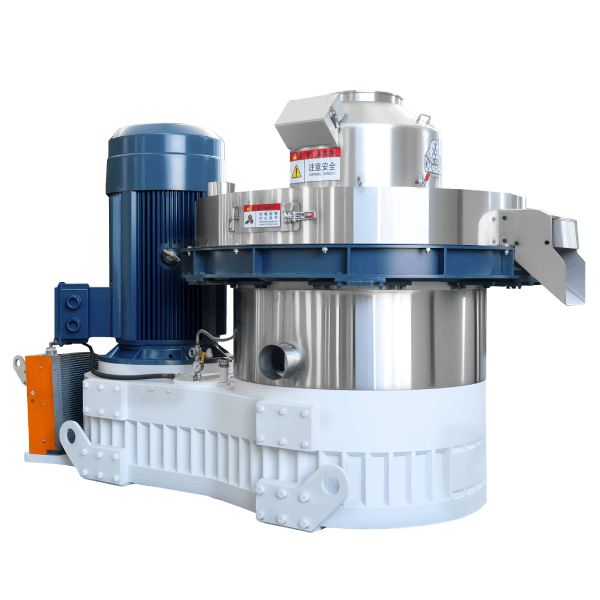
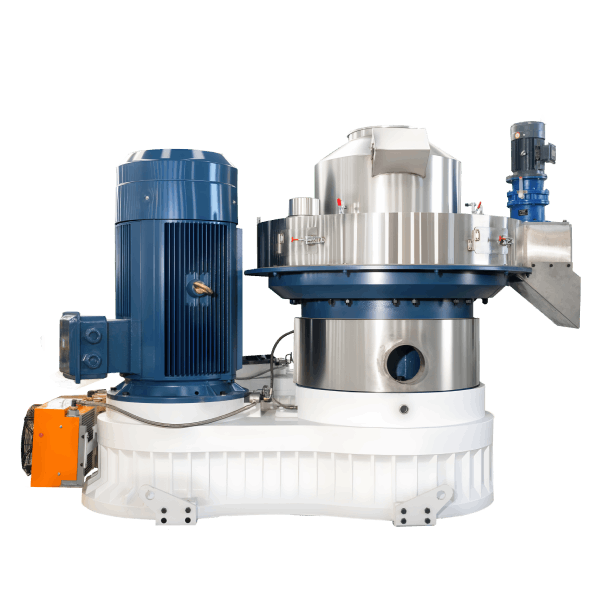
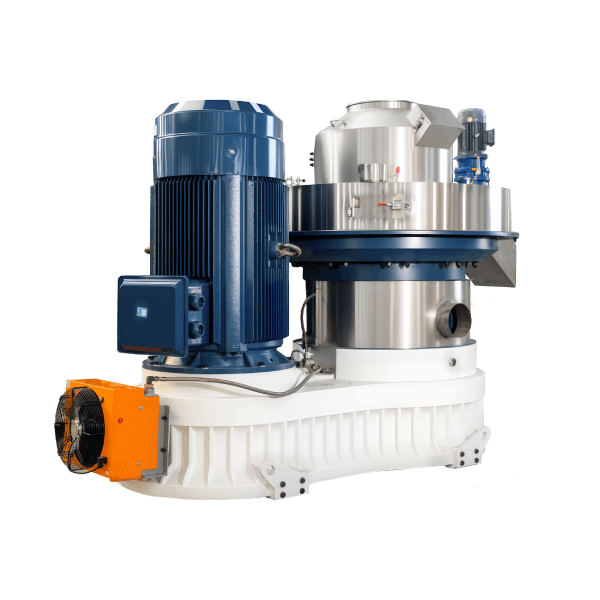
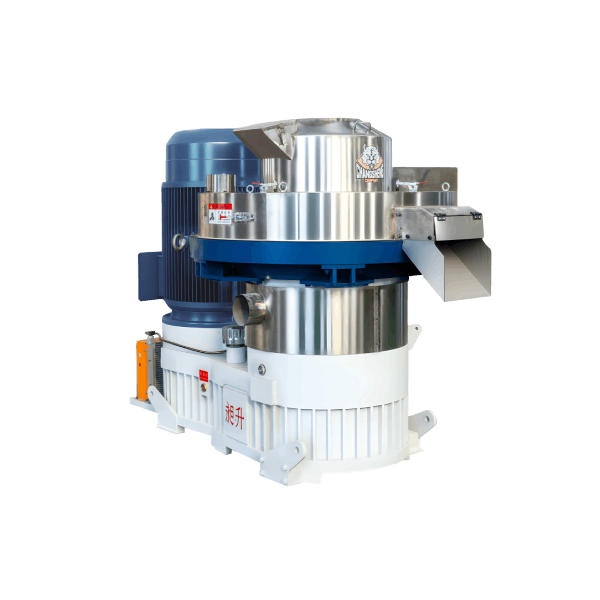
A straw pellet machine is an industrial biomass processing system designed to compress agricultural residues such as wheat straw, rice straw, corn stalks, and hay into high-density cylindrical fuel pellets. The machine uses mechanical pressure and heat generated during compression to form uniform biomass pellets suitable for energy production and industrial fuel applications.
Technical Parameters and Specifications
Typical technical specifications of an industrial straw pellet machine used in biomass pellet plants:
| Parameter | Specification Range |
|---|---|
| Production capacity | 0.8 – 6 tons/hour |
| Pellet diameter | 6 mm / 8 mm / 10 mm |
| Main motor power | 90 – 160 kW |
| Raw material moisture | 12% – 18% |
| Pellet density | 1.1 – 1.35 g/cm³ |
| Pellet length | 10 – 35 mm |
| Die type | Ring die |
| Compression ratio | 1:6 – 1:8 |
| Raw material size | ≤5 mm |
| Machine weight | 4 – 7 tons |
These parameters are typical for industrial biomass pellet production lines used in agricultural residue processing.
Structure and Material Composition
A typical straw pellet machine consists of several critical mechanical and structural components.
Main Components
1. Feeding System
- Variable-speed screw feeder
- Magnetic metal separator
- Anti-blocking design
2. Pelletizing Chamber
- Ring die (alloy steel)
- Compression rollers
- Die holder assembly
3. Drive System
- High-power electric motor
- Gearbox transmission
- Safety coupling
4. Lubrication System
- Automatic grease lubrication
- Bearing protection unit
5. Cooling System
- Air cooling fan
- Heat dissipation housing
6. Control System
- PLC electrical cabinet
- Overload protection
- Temperature monitoring
The ring die and roller assembly are typically manufactured using wear-resistant alloy steel to handle high-fiber agricultural biomass materials.
Manufacturing Process (Engineering Workflow)
Production of straw biomass pellets involves several engineered process steps.
Step 1 – Raw Material Preparation
Equipment:
- Straw crusher
- Hammer mill
Process:
Agricultural straw is crushed into particles smaller than 5 mm to ensure uniform pelletizing.
Step 2 – Drying Process
Equipment:
- Rotary drum dryer
- Biomass burner
Process requirement:
Moisture content must be adjusted to 12–18% for stable pellet formation.
Step 3 – Pelletizing
Equipment:
- Straw pellet machine
Process principle:
The ring die and rollers compress biomass under high pressure. Friction heat softens lignin, which acts as a natural binder during pellet formation.
Step 4 – Pellet Cooling
Equipment:
- Counterflow pellet cooler
Process:
Pellets are cooled from about 90°C to near ambient temperature to stabilize structure.
Step 5 – Screening and Packaging
Equipment:
- Vibrating screen
- Automatic bagging machine
Process:
Broken particles are removed and pellets are packed for storage or transport.
Industry Comparison
| Factor | Straw Pellet Machine | Briquette Machine | Coal Briquetting |
|---|---|---|---|
| Raw material | Agricultural straw | Wood waste | Coal powder |
| Binder requirement | No binder needed | Sometimes required | Often required |
| Pellet size | 6–10 mm | 30–80 mm | 20–50 mm |
| Fuel application | Biomass energy | Industrial heating | Traditional fuel |
| Carbon emissions | Low | Low | High |
Straw pellet machines provide a renewable energy solution compared to traditional fossil fuel briquetting systems.
Application Scenarios
Industrial straw pellet machine equipment is used by multiple industry stakeholders.
Biomass Fuel Producers
Convert agricultural residues into commercial biomass fuel pellets.
EPC Contractors
Install complete pellet production lines for biomass energy projects.
Distributors and Importers
Supply pellet equipment to regional biomass fuel producers.
Agricultural Waste Recycling Plants
Process crop residues into value-added renewable fuel products.
Core Pain Points and Engineering Solutions
1. High Fiber Content of Straw
Problem: Straw fibers reduce pellet formation efficiency.
Solution: Use a high compression ratio ring die and pre-crushing system.
2. Raw Material Moisture Fluctuation
Problem: Improper moisture causes pellet cracking.
Solution: Install rotary drum dryers with moisture monitoring.
3. Die and Roller Wear
Problem: Straw silica content accelerates die wear.
Solution: Use alloy steel dies with heat treatment.
4. Pellet Density Instability
Problem: Inconsistent compression pressure affects pellet quality.
Solution: Use PLC-controlled feed rate systems.
Risk Warnings and Avoidance Strategies
Raw material contamination
Stones or metal fragments can damage the pelletizing chamber. Install magnetic separators and pre-screening equipment.
Improper moisture control
Moisture above 20% significantly reduces pellet quality and machine efficiency.
Incorrect die selection
Different biomass materials require different compression ratios.
Insufficient cooling
Pellets must be cooled before storage to avoid deformation and breakage.
Procurement and Selection Guide
Professional buyers should evaluate several engineering factors when selecting a straw pellet machine.
Step 1 – Evaluate raw material type
Different agricultural residues require different die compression ratios.
Step 2 – Determine production capacity
Typical industrial plants require capacities from 1–5 tons per hour.
Step 3 – Verify die material quality
High-quality alloy steel dies increase service life.
Step 4 – Assess energy consumption
Check motor power efficiency and transmission system design.
Step 5 – Confirm spare parts availability
Rollers, dies, and bearings must be readily available.
Step 6 – Evaluate manufacturer engineering capability
Manufacturers should provide full production line design and technical support.
Engineering Application Case
Project: Agricultural Biomass Pellet Plant
Location: Southeast Asia
Raw Material: Rice straw and corn stalks
Project configuration:
- 2 × straw pellet machines (3 t/h each)
- Rotary dryer system
- Hammer mill crushing system
- Counterflow cooler
- Automatic packaging system
Total plant capacity: 6 tons/hour
The system converts agricultural waste into commercial biomass fuel pellets used for industrial boilers and power generation.
FAQ
1. What raw materials can a straw pellet machine process?
Rice straw, wheat straw, corn stalks, and other agricultural residues.
2. What moisture level is required for pelletizing?
Typically 12%–18%.
3. What pellet diameter is commonly produced?
6 mm and 8 mm are the most common sizes.
4. Does pellet production require additives?
No. Natural lignin acts as a binder.
5. What is the lifespan of a ring die?
Typically 800–1500 working hours depending on material.
6. How much energy does the machine consume?
Approximately 90–160 kW depending on model.
7. Can straw pellets replace coal?
Yes, in many biomass boiler systems.
8. What is the bulk density of straw pellets?
Usually 600–700 kg/m³.
9. Is a drying system always required?
Yes, when raw material moisture exceeds 18%.
10. Can the machine be integrated into a full pellet line?
Yes, it is typically installed as part of a complete biomass pellet production line.
Request Technical Information or Quotation
For detailed engineering specifications, project consultation, or pricing information regarding straw pellet machine equipment, contact Shandong Changsheng Machinery.
Available support includes:
- Biomass pellet production line design
- Equipment technical documentation
- Project feasibility consultation
- Equipment quotations and engineering samples
Author Expertise (E-E-A-T Statement)
This article was prepared by the engineering team of Shandong Changsheng Machinery, a manufacturer specializing in biomass pellet equipment and pellet production line engineering. The company has extensive experience in pellet machine manufacturing, biomass fuel processing technology, and industrial pellet plant installation.