Corn Stalk Pellet Machine for Biomass Pellet Production
News 2026-03-31
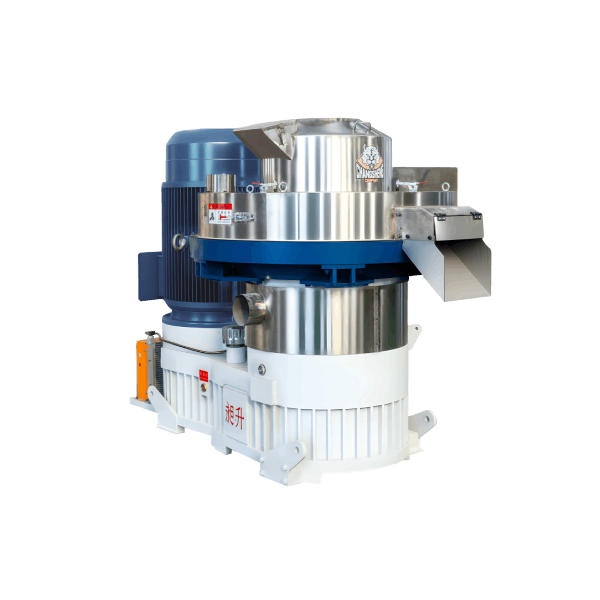
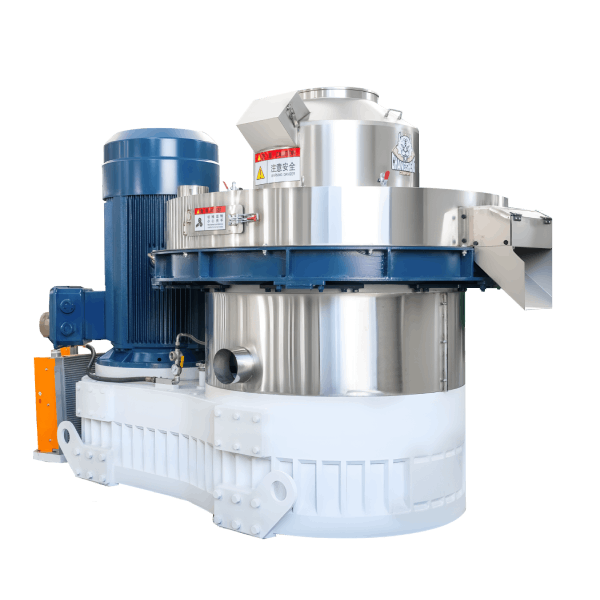
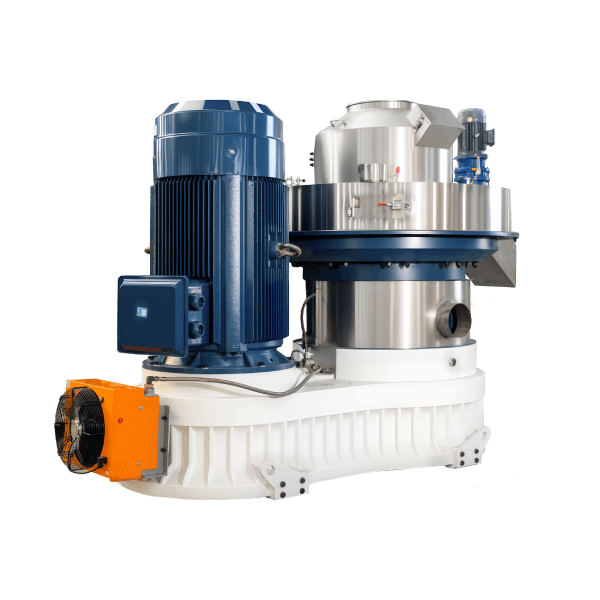
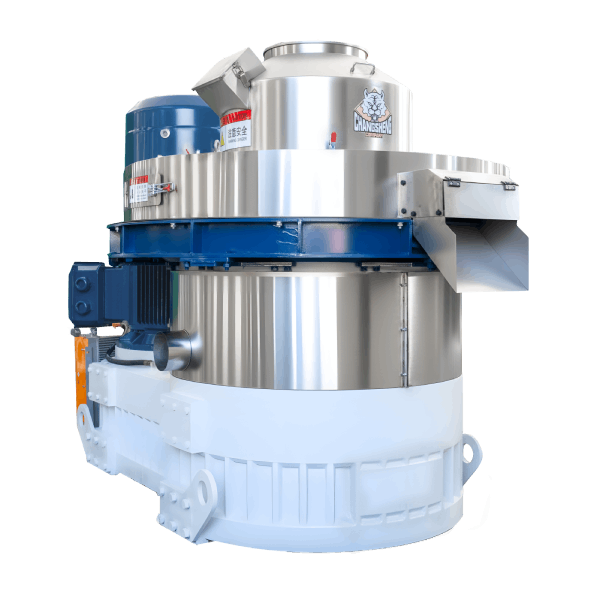
A corn stalk pellet machine is an industrial biomass densification system designed to compress shredded corn stalk residues into high-density cylindrical fuel pellets. Through ring-die compression technology, loose agricultural biomass is converted into standardized pellets suitable for biomass boilers, power plants, and renewable energy fuel supply chains.
Technical Parameters and Specifications
Industrial corn stalk pellet machine systems are engineered to process fibrous agricultural residues efficiently while maintaining stable pellet quality.
| Parameter | Typical Range |
|---|---|
| Production capacity | 1 – 5 tons/hour |
| Pellet diameter | 6 mm / 8 mm |
| Main motor power | 90 – 160 kW |
| Ring die diameter | 420 – 560 mm |
| Raw material moisture | 10% – 15% |
| Pellet density | 1.0 – 1.25 g/cm³ |
| Pellet length | 10 – 30 mm |
| Raw material particle size | ≤5 mm |
| Compression ratio | 1:6 – 1:8 |
| Machine weight | 4 – 7 tons |
These technical parameters ensure stable pellet formation and long-term operation in biomass pellet production facilities.
Structure and Material Composition
A modern corn stalk pellet machine integrates multiple mechanical subsystems to achieve continuous industrial production.
Main Structural Components
1. Feeding System
- Forced screw feeder
- Frequency-controlled feeding motor
- Anti-blocking hopper
2. Pelletizing Chamber
- Ring die made of high-strength alloy steel
- Hardened compression rollers
- Adjustable roller clearance mechanism
3. Drive Transmission System
- High-efficiency electric motor
- Heavy-duty gearbox
- Flexible coupling protection
4. Lubrication System
- Automatic centralized lubrication
- Bearing temperature monitoring
5. Discharge System
- Pellet cutter assembly
- Stainless steel discharge chute
6. Electrical Control System
- PLC control cabinet
- Load monitoring and overload protection
- Emergency stop and safety interlock
The ring die and rollers are typically manufactured from wear-resistant alloy steel to withstand continuous biomass compression.
Manufacturing Process (Engineering Workflow)
Industrial corn stalk pellet production follows a multi-stage biomass processing workflow.
Step 1 – Raw Material Collection and Preprocessing
Equipment:
- Straw crusher
- Metal separator
- Screening equipment
Process objective:
Remove impurities such as stones, soil, and metal fragments before crushing.
Step 2 – Crushing Process
Equipment:
- Hammer mill or straw crusher
Process requirement:
Corn stalk material must be reduced to ≤5 mm particle size to ensure efficient pelletizing.
Step 3 – Drying Process
Equipment:
- Rotary drum dryer
- Hot air furnace
Process requirement:
Raw material moisture must be controlled between 10–15%.
Excess moisture will reduce pellet density and increase machine load.
Step 4 – Pelletizing
Equipment:
- Corn stalk pellet machine
Process principle:
Compression rollers press biomass material through the ring die. Friction heat softens lignin inside plant fibers, allowing pellets to form without chemical binders.
Step 5 – Cooling and Screening
Equipment:
- Counterflow pellet cooler
- Vibrating screening machine
Process objective:
Reduce pellet temperature to ambient levels and remove fines before storage.
Step 6 – Packaging and Storage
Equipment:
- Automatic bagging machine
- Pellet storage silos
Pellets are then prepared for bulk transportation or industrial fuel supply.
Industry Comparison
| Feature | Corn Stalk Pellet Machine | Wood Pellet Machine | Biomass Briquette Machine |
|---|---|---|---|
| Raw material | Corn stalk residue | Sawdust / wood chips | Mixed biomass |
| Pellet size | 6–8 mm | 6–10 mm | 30–70 mm |
| Binder requirement | None | None | Sometimes required |
| Energy density | Medium | High | Medium |
| Raw material preparation | High | Medium | Medium |
| Wear rate | Medium | Low | Low |
Corn stalk pellet machines require more preprocessing due to the fibrous structure of agricultural straw materials.
Application Scenarios
Industrial corn stalk pellet machine systems serve a wide range of biomass fuel supply markets.
Biomass Fuel Producers
Convert agricultural waste into renewable energy pellets.
EPC Contractors
Design and build complete biomass pellet plants for energy projects.
Equipment Distributors and Importers
Supply pellet equipment to agricultural regions with abundant corn residues.
Industrial Boiler Operators
Use corn stalk pellets as alternative fuel to reduce fossil energy consumption.
Core Pain Points and Engineering Solutions
1. Fibrous Raw Material Structure
Problem: Corn stalk fibers can cause feeding instability.
Solution:
Use forced screw feeders and pre-cutting systems to stabilize material flow.
2. Large Raw Material Volume
Problem: Corn stalk residues have low bulk density.
Solution:
Install efficient crushing systems and optimized feeding mechanisms.
3. Moisture Variability
Problem: Agricultural residues often contain unstable moisture levels.
Solution:
Use rotary drying systems and moisture monitoring equipment.
4. Dust Generation During Processing
Problem: Crushing straw materials generates dust.
Solution:
Install industrial dust collection systems to maintain safe plant operation.
Risk Warnings and Avoidance Strategies
Foreign object contamination
Metal fragments can damage pellet machine dies and rollers. Magnetic separation equipment is recommended.
Improper crushing
Oversized raw material particles can block die holes and reduce production efficiency.
Uncontrolled moisture
Moisture above 15% can cause pellet cracking and machine overload.
Inadequate cooling
Pellets must be cooled before storage to prevent deformation and moisture condensation.
Procurement and Selection Guide
Professional buyers evaluating a corn stalk pellet machine should follow structured procurement steps.
Step 1 – Evaluate raw material characteristics
Assess fiber length, moisture levels, and available supply volume.
Step 2 – Determine required production capacity
Industrial pellet plants typically require 1–5 tons/hour per pellet machine.
Step 3 – Evaluate die compression ratio
Straw materials require optimized compression ratios for stable pellet formation.
Step 4 – Assess energy consumption
Ensure the motor power configuration matches plant production capacity.
Step 5 – Confirm spare parts availability
Key components such as dies, rollers, and bearings must be readily available.
Step 6 – Select an experienced equipment manufacturer
Manufacturers should be able to provide full pellet production line engineering and installation guidance.
Engineering Application Case
Project: Agricultural Biomass Pellet Fuel Plant
Location: Northeast China
Raw material:
- Corn stalk residues from large-scale farming operations
Project configuration:
- 4 × corn stalk pellet machines (2 t/h each)
- Straw crushing system
- Rotary drum drying system
- Counterflow cooling system
- Automated pellet packaging line
Total plant capacity: 8 tons/hour
The facility converts agricultural waste into biomass pellets used by regional industrial boilers and heating plants.
FAQ
1. What raw materials can a corn stalk pellet machine process?
Primarily corn stalk residues and other agricultural straw materials.
2. What pellet size is typically produced?
Standard biomass pellet sizes are 6 mm and 8 mm.
3. Is binder required during pellet production?
No. Natural lignin in biomass acts as a binding agent.
4. What moisture content is required?
Optimal moisture range is 10–15%.
5. What is the typical pellet density?
Around 1.0–1.25 g/cm³.
6. How long does a ring die last?
Generally 800–1200 operating hours depending on raw material conditions.
7. Can corn stalk pellets replace coal?
Yes, in biomass-compatible boilers and heating systems.
8. Is drying equipment always required?
Drying is required if raw material moisture exceeds recommended levels.
9. What industries use corn stalk pellets?
Biomass power plants, industrial boilers, and heating facilities.
10. Can pellet machines operate continuously?
Industrial pellet machines support continuous 24-hour operation with scheduled maintenance.
Request Technical Documentation or Quotation
For technical specifications, engineering consultation, or pricing for corn stalk pellet machine systems, contact Shandong Changsheng Machinery.
Available support includes:
- Biomass pellet production line engineering design
- Equipment technical documentation
- Feasibility analysis for biomass fuel projects
- Equipment quotations and pilot testing samples
Author Expertise (E-E-A-T Statement)
This technical guide was prepared by the engineering team at Shandong Changsheng Machinery, a manufacturer specializing in biomass pellet equipment and agricultural biomass processing solutions. The company has extensive experience in pellet machine design, pellet plant engineering, and biomass fuel production technology for global industrial clients.