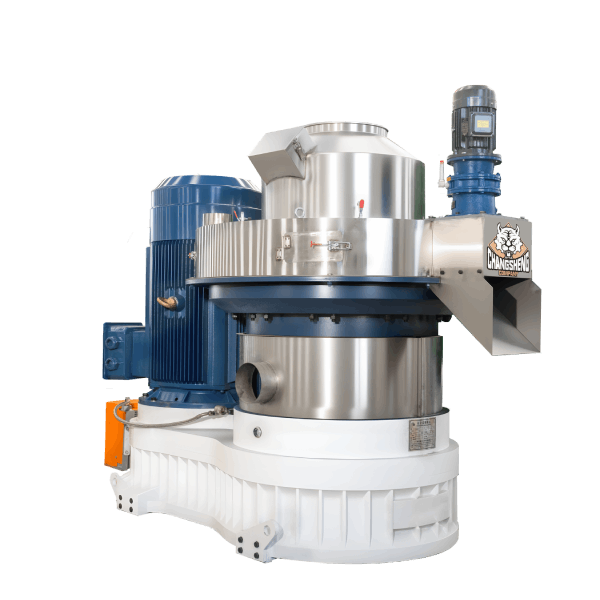
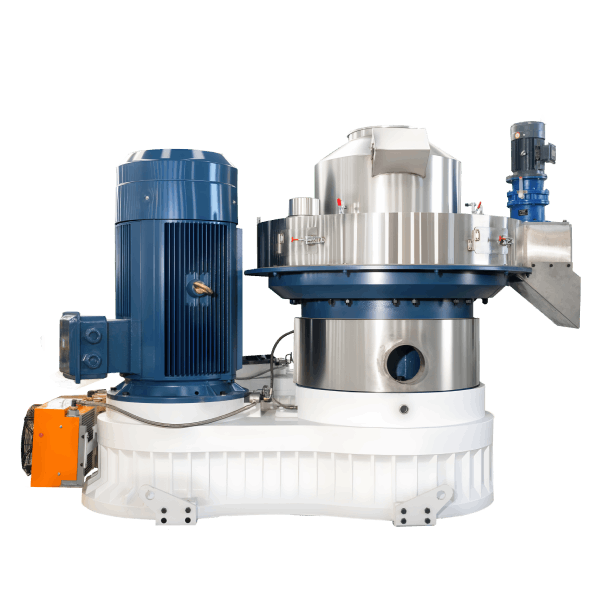
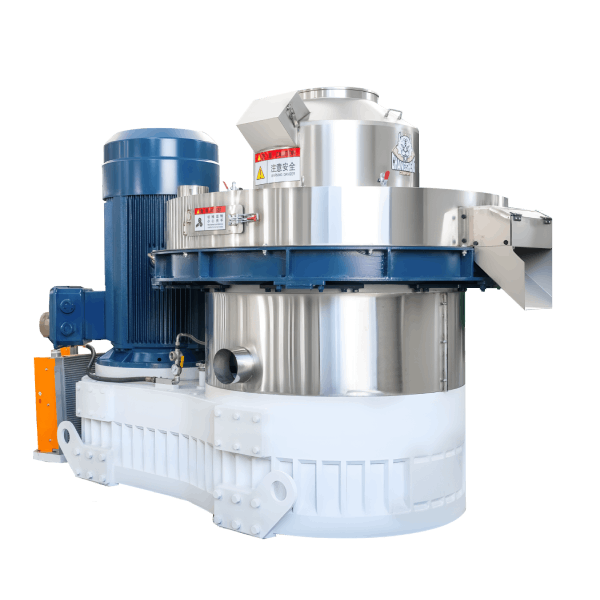
Industrial Wood Pellet Mill for Sale: Models and Specifications
News 2026-03-13
Changsheng supplies industrial wood pellet mills for biomass fuel production and wood-processing applications. The right model depends on the available raw material, target output, pellet specifications and required operating configuration. Buyers can compare the available machine models, review verified technical parameters and discuss material testing before selecting equipment for a production project. For a complete line, the required crushing, drying, conveying, cooling and packaging systems should also be assessed.
Two actions are usually the first step for a buyer: compare available pellet mill models, and request technical specifications for the models that fit the intended feedstock and output. For a comparison of price factors and project budget, see the wood pellet mill price page on this site.
Available Models and Technical Specifications
The following table describes the specification fields that should be confirmed for each model. Actual values are model-specific and depend on the feedstock and the test conditions.
Product Information: Model
What to Confirm: Actual model number and product detail page
Product Information: Rated capacity
What to Confirm: Capacity with stated feedstock and test conditions
Product Information: Main motor power
What to Confirm: Actual motor configuration
Product Information: Ring die
What to Confirm: Actual die size and available options
Product Information: Pellet diameter
What to Confirm: Supported pellet diameter range
Product Information: Raw materials
What to Confirm: Verified compatible feedstock
Product Information: Required pretreatment
What to Confirm: Required particle size and moisture range
Product Information: Drive system
What to Confirm: Actual drive configuration
Product Information: Machine dimensions and weight
What to Confirm: Actual product data
Product Information: Optional configuration
What to Confirm: Actual available options
Product Information: Documents available
What to Confirm: Available drawings, manuals, and test records
Model names, model-specific specifications, and product detail links should be provided directly on the page or in the product catalogue. A rated capacity figure is only meaningful when the feedstock, moisture, particle size, and die specification are stated.
How to Compare Rated Capacity Across Models
Three capacity figures should be kept separate when comparing models.
Rated capacity is the capacity stated by the manufacturer under specified test conditions. It should always be quoted together with the feedstock, moisture, particle size, pellet diameter, and die specification used in the test.
Tested capacity on a specific feedstock is the output measured in a factory test or in a trial run using a defined feedstock. It is usually lower than the rated capacity when the feedstock is harder, wetter, or more fibrous than the reference material.
Actual line output is the output of the whole line, limited by the smallest stage. A model with a high rated capacity can still produce lower line output if the dryer, cooler, or screener is undersized.
A simple comparison method is to list the three figures side by side for each candidate model, together with the feedstock and moisture conditions. Without this comparison, model selection is based on assumption rather than on data.
How to Choose the Right Industrial Wood Pellet Mill
Model selection depends on five purchase conditions. Each condition should be confirmed before a model is recommended.
First, feedstock type. Sawdust, wood chips, rice husk, and straw have different fiber characteristics, moisture behavior, and contamination levels. A configuration that works for one feedstock may not run another at the same output or pellet quality.
Second, target output. Rated capacity, tested capacity on a specific feedstock, and actual line output are three different figures. Buyers should confirm the feedstock conditions under which the supplier’s capacity figure was measured.
Third, pellet specification. Target pellet diameter, density, and durability affect die selection and process configuration.
Fourth, feedstock pretreatment. Buyers should confirm whether crushing, drying, screening, and conveying equipment are required, and whether the upstream equipment matches the pellet mill.
Fifth, maintenance. Buyers should confirm how die and roller replacement is performed, the supply lead time for wear parts, and the availability of maintenance support.
Ring Die Configuration and Machine Components
The ring die and roller assembly are the parts that determine pellet formation. The main selection factors are die hole diameter, die hole taper, compression ratio, die material, and roller material.
Die hole diameter determines pellet diameter. Die hole taper and compression ratio determine how the material is compressed inside the die. Die material and heat treatment determine wear resistance. Roller material and hardness determine how well the roller grips the material and how long the roller lasts.
Die hole taper and compression ratio are not the same thing, and they should be matched to the feedstock separately. A die with a gentle taper and a high compression ratio compresses material gradually and holds it longer in the die, which is often suitable for low-lignin feedstocks. A die with a steeper taper and a lower compression ratio compresses material more quickly, which is often suitable for high-lignin feedstocks. The correct combination should be confirmed with a pelletizing test on the actual feedstock.
Roller material and hardness should be matched to the die and to the feedstock. Harder roller surfaces resist abrasive wear but may slip on soft material. Softer roller surfaces grip better but wear faster on abrasive feedstock. The correct roller specification should be confirmed with the die supplier and with the equipment manufacturer.
Different models may use different die sizes, roller configurations, drive systems, and lubrication systems. The correct configuration for a project depends on the feedstock and on the target pellet specification, and should be confirmed with a pelletizing test where possible.
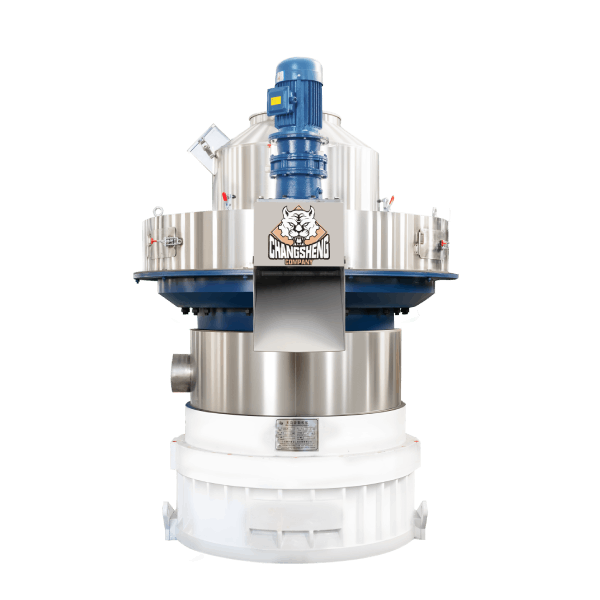
Manufacturing, Quality Checks and Performance Testing
Buyers should be able to verify the machine’s quality before shipment. The information that matters includes:
Photos of the factory or production site.
Machining or inspection records for the die, roller, and main shaft.
Photos of the assembled machine.
Video or record of the factory test run.
Capacity test records with stated feedstock and moisture conditions.
Packing, marking, and inspection records before shipment.
A factory test run should be documented with the feedstock type, moisture, particle size, pellet diameter, running hours, output, pellet durability or fines, and motor current. The test record should show whether the machine reached the stated output under those conditions. Without these details, a test run video cannot be used to verify capacity.
Capacity test records should include the same fields, together with the die specification used in the test. Inspection records before shipment should cover the machine body, the die and roller assembly, the electrical panel, the lubrication system, the safety devices, and the packing condition.
Generic claims such as heavy-duty or high-efficiency are not a substitute for verifiable records. Where a performance figure is provided, the test conditions should be provided with it.
Raw Material Compatibility and Pretreatment Requirements
Sawdust is usually the easiest wood feedstock to pelletize because of consistent particle size and relatively high lignin content. Wood chips and offcuts require grinding. Fresh wood waste often requires drying. Bark increases ash and wear. Mixed wood waste requires a consistent mix ratio.
Different feedstocks require different pretreatment. Before ordering, confirm whether crushing, drying, and screening are required, and whether the upstream equipment matches the pellet mill’s rated capacity. A common mismatch is a pellet mill sized for a certain output with an upstream crusher or dryer sized for a lower output. The line output is then limited by the upstream stage, not by the pellet mill.
The correct pretreatment scope should be confirmed with a pelletizing test on the actual feedstock.
Applications by Buyer and Project Type
Biomass fuel plants should confirm feedstock supply, target output, pellet specification, and continuous operating hours.
Wood processing factories should assess the actual volume, particle size, and moisture of sawdust and other by-products.
Equipment distributors should review model coverage, spare parts supply, technical documents, and after-sales cooperation.
EPC contractors should confirm equipment interfaces, system configuration, drawings, control method, and project delivery requirements.
Expansion projects should assess whether existing crushing, drying, conveying, and packing equipment can match the new pellet mill.
Purchasing, Delivery and After-Sales Support
A typical equipment purchase process follows these steps.
Submit a feedstock sample or complete feedstock parameters.
Confirm the target output and pellet specification.
Confirm the recommended model and actual configuration.
Review the technical specifications, auxiliary equipment, and scope of supply.
Confirm the test run, acceptance criteria, and related documents.
Confirm the delivery time, packing, and shipping arrangements.
Confirm spare parts, installation, commissioning, and after-sales support scope.
Feedstock samples are usually submitted as a representative sample of the actual material, with the moisture and particle size recorded. The test period depends on the feedstock and on the supplier’s test schedule, and should be confirmed in advance.
The focus at this stage is model selection and delivery conditions, not price comparison.
Frequently Asked Questions
What capacity options are available for industrial wood pellet mills?
Capacity options depend on the model and on the feedstock. Industrial models are commonly available across a range of capacities from around 1 t/h to several tons per hour, but the actual capacity for a specific project depends on feedstock type, moisture, particle size, and die specification. Buyers should confirm the rated capacity together with the feedstock conditions used to define it.
Which wood pellet mill is suitable for sawdust?
Sawdust is usually the easiest wood feedstock to pelletize. The suitable model depends on sawdust moisture, particle size, target output, and pellet specification. A pelletizing test with the actual sawdust is the most reliable method for model selection.
Can the machine process different biomass materials?
Yes, but the configuration is not identical. Die compression ratio, feeder design, and wear-resistant components may differ by feedstock. For multiple feedstocks, a fixed mix ratio or a dual die configuration is usually required.
How is the ring die configuration selected?
Die selection depends on feedstock density, fiber content, moisture, and target pellet quality. Die hole diameter, taper, and compression ratio should be confirmed with a pelletizing test on the actual feedstock.
Can buyers test their own raw materials before purchase?
A pelletizing test with the actual feedstock is the most reliable method for confirming die selection, output, and pellet quality. Buyers should provide a representative feedstock sample and the target pellet specification.
What technical documents are available?
Technical documents typically include the equipment drawing, foundation drawing, electrical diagram, operation manual, wear parts list, and test records where available. The exact document list should be confirmed with the supplier.
Which spare parts need regular replacement?
Die, roller shell, bearings, belts, and seals are the main wear parts. Buyers should confirm part numbers, unit prices, and recommended first order quantity.
What information is needed to recommend a model?
Feedstock type, moisture, particle size, target output, pellet diameter, operating hours, power supply conditions, and whether a complete line is required. This allows the supplier to recommend a suitable model and to state capacity with conditions.
Can the pellet mill be supplied as part of a complete production line?
Yes. A complete line may include crushing, drying, conveying, cooling, screening, packing, and dust collection. The exact scope depends on feedstock condition and target pellet quality.
What installation and after-sales support is available?
Installation supervision, commissioning support, operator training, remote technical guidance, and spare parts supply can be arranged. The exact scope should be confirmed in the contract before shipment.
Request a Model Recommendation and Technical Quotation
If you are selecting an industrial wood pellet mill, provide the following information to receive a model recommendation and technical quotation.
Feedstock type and moisture.
Target output in t/h.
Target pellet specification.
Country of installation.
Whether a complete production line is required.
Whether material testing, technical drawings, or a spare parts list is required.
A model recommendation based on the actual feedstock and target output is more useful than a general product list.