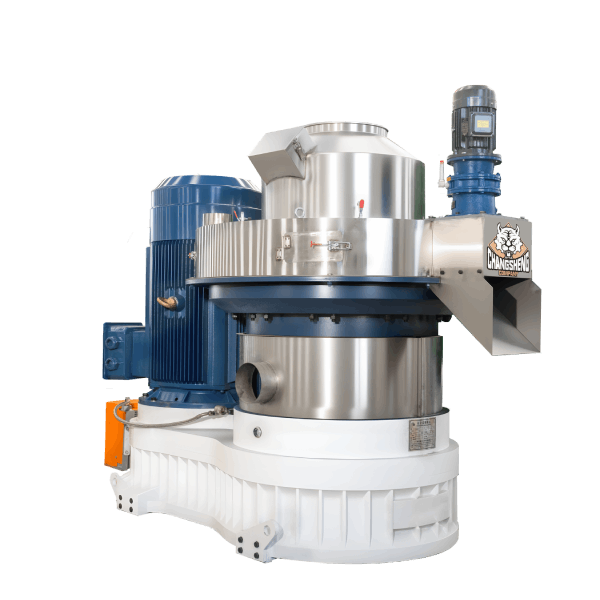
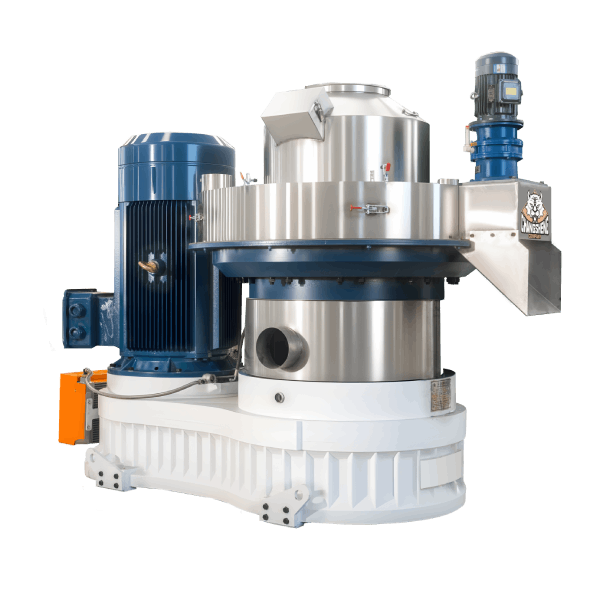
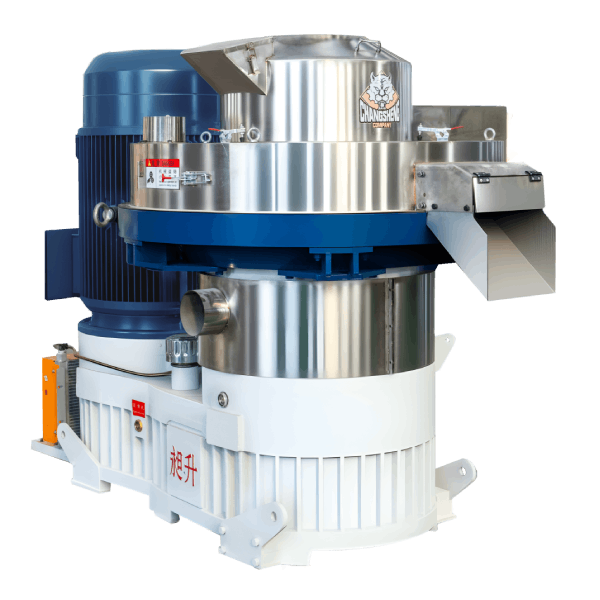
feed vs wood pellet production line comparison
News 2026-02-07
Feed vs Wood Pellet Production Line Comparison: Engineering and Procurement Analysis
Product Definition (40–60 words)
Feed vs wood pellet production line comparison refers to the technical, structural, and operational differences between pelletizing systems designed for animal feed materials and those engineered for woody biomass, focusing on raw material behavior, equipment specifications, process control, and long-term industrial performance.
Technical Parameters and Design Specifications
A feed vs wood pellet production line comparison must begin with quantifiable engineering parameters, as the two systems are designed for fundamentally different material characteristics.
Raw Material Properties
Feed materials (corn, soybean meal, wheat bran)
Moisture before pelletizing: 12–18%
Fiber content: low to medium
Bulk density: 400–600 kg/m³
Wood materials (sawdust, chips, shavings)
Moisture before pelletizing: 10–15%
Fiber content: high (lignocellulosic)
Bulk density: 150–350 kg/m³
Pellet Specifications
Feed pellets
Diameter: 2–8 mm
Durability index: ≥90%
Fat and additive tolerance: high
Wood pellets
Diameter: 6–12 mm
Durability index: ≥95%
Ash content control: critical
Energy and Power
Feed pellet mill motor power: 55–250 kW
Wood pellet mill motor power: 90–450 kW
Specific energy consumption (feed): 60–90 kWh/ton
Specific energy consumption (wood): 90–120 kWh/ton
Structural and Material Composition
Feed vs wood pellet production line comparison clearly shows differences in structural strength and wear protection.
Feed Pellet Line Structure
Carbon steel frames with moderate thickness
Pellet mills optimized for high throughput
Lower die compression ratios
Standard alloy steel dies and rollers
Wood Pellet Line Structure
Heavy-duty carbon steel structures
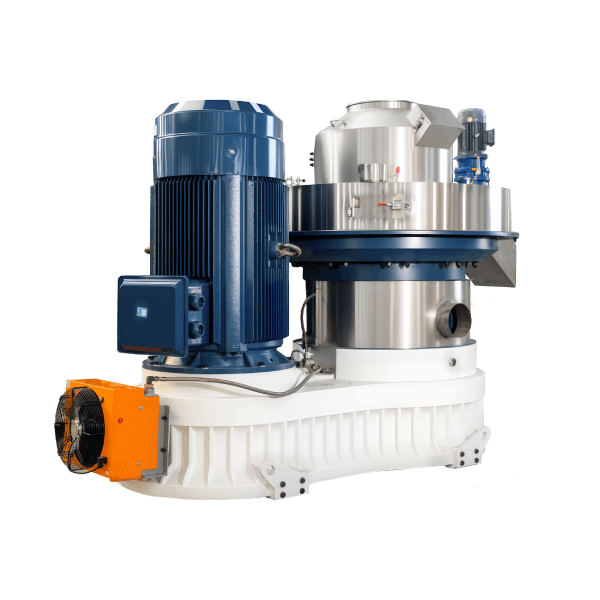
Reinforced pellet mill housings
High compression ratio ring dies
Wear parts made from 42CrMo or equivalent alloy steel
Auxiliary Systems
Feed lines prioritize mixing and dosing accuracy
Wood lines prioritize drying, dust control, and abrasion resistance
Manufacturing Process Comparison
Feed vs wood pellet production line comparison highlights different engineering priorities at each process step.
Feed Pellet Production Process
- Raw material dosing and batching
- Grinding to controlled particle size
- Mixing with additives and fats
- Steam conditioning for starch gelatinization
- Pelletizing at moderate pressure
- Cooling and crumbling if required
Wood Pellet Production Process
- Raw material reception and storage
- Contaminant removal and screening
- Size reduction of chips or residues
- Thermal drying to pelletizing moisture
- Fine milling for uniform particle size
- Pelletizing under high pressure
- Cooling and fines recycling
Industry Comparison Table
Feed vs Wood Pellet Production Line
Parameter | Feed Pellet Line | Wood Pellet Line
Primary Material | Agricultural feedstock | Woody biomass
Drying Requirement | Usually minimal | Essential
Die Compression Ratio | Low to medium | High
Wear Rate | Moderate | High
Automation Focus | Formulation accuracy | Process stability
Capital Cost | Medium | High
Application Scenarios
Feed vs wood pellet production line comparison is relevant for the following users:
Distributors evaluating diversified pellet markets
EPC contractors bidding agricultural or biomass projects
Engineering consultants preparing feasibility studies
Importers sourcing pellet equipment for resale
Industrial operators planning feed or energy pellet plants
Core Pain Points and Engineering Solutions
Using Feed Equipment for Wood Materials
Pain point: excessive wear and low output
Solution: dedicated wood pellet mill design
Underestimating Drying Requirements
Pain point: unstable wood pellet quality
Solution: properly sized rotary or belt dryers
Over-Compressing Feed Pellets
Pain point: poor digestibility
Solution: feed-specific die compression selection
Dust and Explosion Risks
Pain point: inadequate safety systems
Solution: explosion vents and dust extraction design
Risk Warnings and Mitigation Strategies
Incorrect Line Selection
Risk: production failure and equipment damage
Mitigation: material testing and specification matching
Ignoring Regulatory Differences
Risk: non-compliance
Mitigation: confirm feed or fuel standards early
Underestimating Maintenance Load
Risk: downtime escalation
Mitigation: spare parts planning and duty-rated components
Assuming One-Line-Fits-All
Risk: compromised product quality
Mitigation: application-specific line design
Procurement and Selection Guide
- Clearly define target pellet type: feed or wood
- Analyze raw material moisture, fiber, and ash content
- Confirm required pellet standards and certifications
- Request feed vs wood pellet production line comparison data from suppliers
- Evaluate equipment duty ratings and wear materials
- Review process flow and energy balance
- Assess installation and commissioning scope
- Compare lifecycle cost, not only initial price
Engineering Case Scenario
An EPC contractor evaluated a feed vs wood pellet production line comparison for a regional processing facility. The project adopted separate lines: a 4-ton-per-hour feed pellet line with advanced mixing and a 6-ton-per-hour wood pellet line with rotary drying and heavy-duty pellet mills. Segregated designs achieved stable output and reduced maintenance costs by over 25%.
Frequently Asked Questions (FAQ)
Can a feed pellet mill produce wood pellets?
Not reliably for industrial-scale production.
Why do wood pellets require higher compression?
To activate lignin as a natural binder.
Is drying mandatory for feed pellets?
Usually no, unless moisture exceeds limits.
Which line has higher maintenance cost?
Wood pellet production lines.
Are safety requirements different?
Yes, wood lines require stricter dust control.
Can automation systems be shared?
Control philosophy differs significantly.
Which line has higher capital investment?
Wood pellet production lines.
Is pellet quality measured differently?
Yes, feed focuses on nutrition, wood on durability.
Can one plant operate both lines?
Yes, with separate systems and layouts.
What is the main decision factor?
Raw material type and end-use market.
Call to Action
For a project-specific feed vs wood pellet production line comparison, procurement teams may request detailed technical specifications, process flow diagrams, or material testing to support equipment selection and investment decisions.
E-E-A-T Author Credentials
This article is prepared by an industrial process engineer with over 15 years of experience in feed processing systems, biomass pellet plant design, and EPC project execution for commercial-scale pellet production facilities.