High Moisture Biomass Pellet Production Line Supplier 1-10t/h | Guide
News 2026-07-08
Product Definition
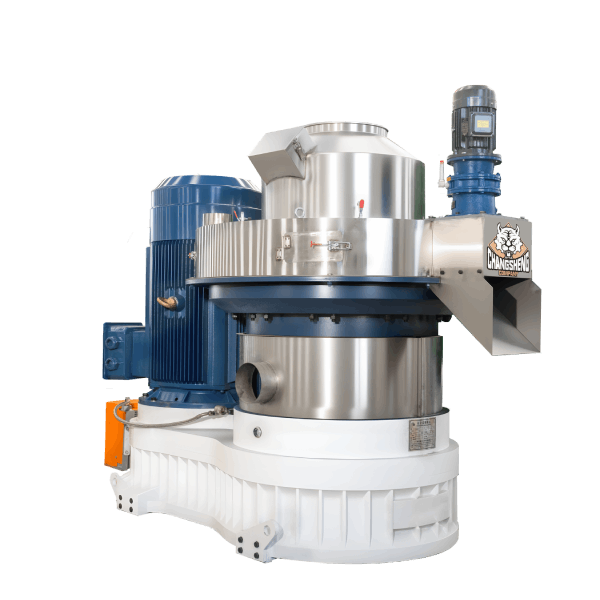
A high moisture biomass pellet production line is an integrated processing system designed to convert wet biomass feedstocks into dense fuel pellets without extensive pre-drying. The line incorporates heavy-duty drying, grinding, pelletising, and cooling equipment to handle materials with moisture content up to 55% – including sawdust, wood chips, bark, and agricultural residues.
Technical Specifications & Performance Parameters
| Parameter | Value Range / Specification |
|---|---|
| Throughput capacity (pellet output) | 1.0 – 10.0 t/h (feedstock-dependent) |
| Incoming moisture range | 20% – 55% (depends on system configuration) |
| Main pellet mill power | 90 – 250 kW (IE3 / IE4 compatible) |
| Ring die inner diameter | 600 – 1,000 mm |
| Pellet diameter | 6 – 12 mm (customisable) |
| Pellet bulk density | 600 – 750 kg/m³ |
| Target moisture (pelletising) | 14% – 16% |
| Drying heat source | Biomass burner, natural gas, waste heat |
| Specific energy consumption (pelletising) | 25 – 35 kWh/t |
| Die service life | 1,200 – 2,000 hours |
| Roller shell service life | 800 – 1,200 hours |
| System availability (operational) | ≥ 92% |
| Maintenance man-hours | 8 – 12 h / month (complete line) |
Structural Composition & Material Selection
The high moisture biomass pellet production line integrates five major subsystems:
Subsystem 1 – Raw Material Receiving & Pre-processing
- Rotary drum screen: Removes oversized material and contaminants
- Magnetic separator: Removes tramp metal
- In-feed conveyor: Variable speed, heavy-duty belt or screw
Subsystem 2 – Drying System
- Rotary drum dryer: Single-pass or triple-pass design
- Heat source: Biomass burner, natural gas burner, or waste heat recovery
- Cyclone separator: Dust collection and air recycling
- Moisture control: Online NIR or capacitance sensors with automatic feed adjustment
Subsystem 3 – Grinding System
- Heavy-duty hammer mill: 55–160 kW, screen sizes 3–8mm
- Cyclone + airlock: For dust-free material transfer
- Magnet separator: Final protection for pellet mill
Subsystem 4 – Pelletising System
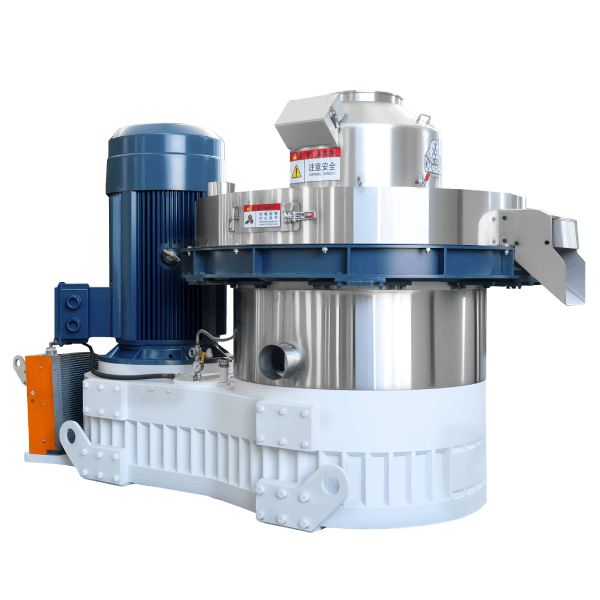
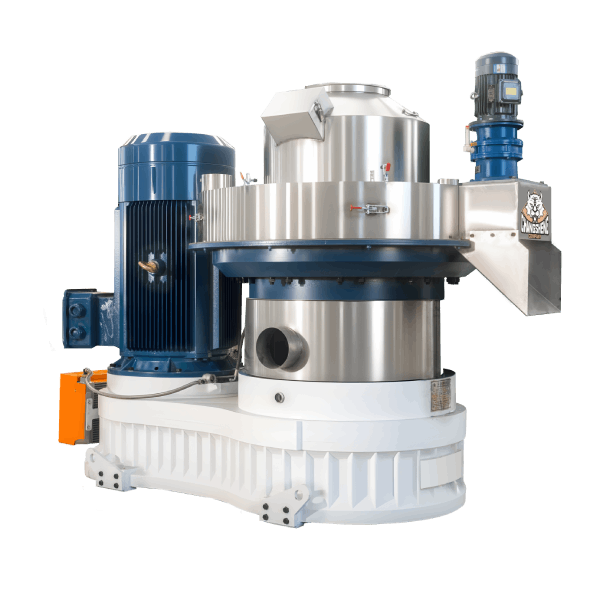
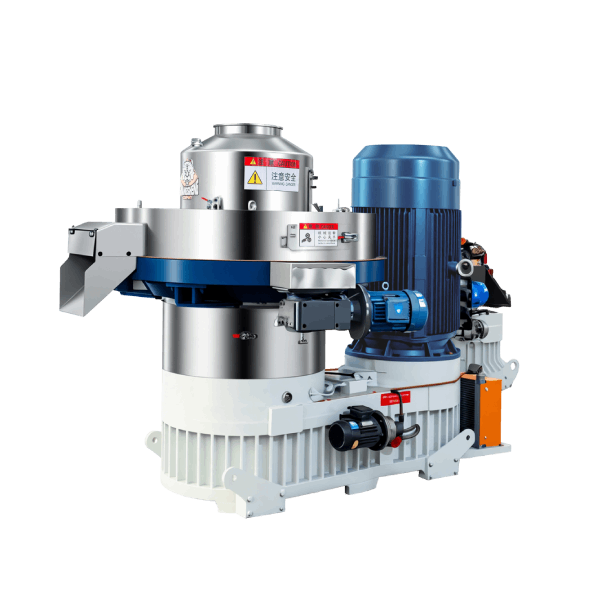
- Heavy-duty ring die pellet mill: 90–250 kW
- Automatic lubrication system: Centralised grease distribution
- Feed control: Amperage feedback with VFD
- Conditioner: Steam injection for binding (optional)
Subsystem 5 – Cooling & Screening System
- Counterflow cooler: Extended retention time, large capacity
- Vibrating screener: Fines removal and pellet classification
- Fines return: Screw conveyor returns fines to pellet mill
- Packaging/bulk storage: Bagging line or silo storage
Manufacturing Process – Engineering Workflow
Step 1 – Raw Material Receiving & Pre-screening
High-moisture biomass (20%–55%) received and conveyed to drum screen. Oversized material and contaminants removed. Moisture measured and recorded.
Step 2 – Drying
Material passes through rotary drum dryer, drying to 14%–16% moisture. Dryer heat source: biomass burner (most cost-effective) or natural gas. Drying temperature controlled to prevent combustion. Moisture sensors at discharge adjust feed rate automatically.
Step 3 – Grinding & Milling
Dried material conveyed to hammer mill. Screen size selected based on pellet diameter (3–8mm). Uniform particle size essential for pellet quality. Cyclone and airlock separate ground material.
Step 4 – Pelletising
Ground material enters pellet mill feed hopper. Conditioner (optional) adds steam for binding. Ring die pellet mill compresses material into dense pellets. Amperage feedback controls feed rate for optimal load.
Step 5 – Cooling
Hot pellets (80–95°C) enter counterflow cooler. Ambient air drawn through pellet bed reduces temperature to ambient +5°C. Moisture reduced to ≤12% for storage stability.
Step 6 – Screening & Packaging
Pellets screened to remove fines. Oversize pellets returned to pellet mill. Fines collected and returned. Product bagged or stored in bulk.
Industry Comparison – High Moisture Processing Options
| System Type | Incoming Moisture | Drying Required | Capacity (t/h) | Typical Application |
|---|---|---|---|---|
| High Moisture Line (with Dryer) | 20% – 55% | Yes | 1.0 – 10.0 | Sawmill waste, green chips |
| Standard Dry Feed Line | 12% – 18% | Minimal | 1.0 – 10.0 | Dry sawdust, straw |
| Small Scale (No Dryer) | 12% – 18% | No | 0.1 – 1.0 | Farm-scale, air-dried |
| Steam Drying Line | 20% – 35% | Yes | 0.5 – 5.0 | High-moisture biomass |
Differentiation (Shandong Changsheng Machinery):
Our high moisture biomass pellet production lines feature integrated drying systems with biomass burner heat sources – reducing operating costs compared to gas or electric dryers. The triple-pass rotary dryer achieves efficient moisture removal with lower energy consumption. Complete line design ensures smooth material flow from wet feedstock to finished pellets. Available as a fully integrated system with single-point automation.
Application Scenarios by Buyer Role
Distributors / Importers
Focus on complete line solutions for industrial clients. Require flexible drying options for different biomass types.
EPC Contractors
Integrating high moisture biomass lines for turnkey projects. Need system design, layout, and automation integration.
Engineering Consultants / Technical Advisors
Evaluate high moisture biomass-to-pellet viability. Require energy balance and economic feasibility analysis.
End-user Production Facilities
Sawmills, wood processing plants, and biomass facilities. Demand reliable processing of green sawdust and wet biomass.
Core Pain Points & Engineering Solutions
Pain Point 1 – High moisture feedstock causing die blockage
Root cause: Wet biomass (20%–55%) cannot be pelletised directly – requires drying to 14%–16%.
Solution: Integrated rotary dryer with moisture control reduces moisture to target level before pelletising.
Pain Point 2 – High drying energy costs
Root cause: Drying wet biomass is energy-intensive – up to 1,000 kWh/tonne water removed.
Solution: Biomass burner using part of the feedstock reduces fuel cost. Waste heat recovery for additional efficiency.
Pain Point 3 – Inconsistent feedstock moisture
Root cause: Sawmill waste varies 20%–55% – difficult to maintain consistent pellet quality.
Solution: Online moisture sensors with automatic feed rate adjustment. Buffer storage for moisture averaging.
Pain Point 4 – Dust and fire risk in drying
Root cause: Drying biomass generates combustible dust – high fire risk.
Solution: Spark detection and extinguishing system. Temperature monitoring and interlocks. Dust collection throughout line.
Critical Risk Warnings & Mitigation Measures
Risk 1 – Fire in dryer from hot spots or spark
Mitigation: Spark detection and extinguishing system. Temperature monitoring with interlocks. Regular cleaning of dryer.
Risk 2 – Moisture control failure affecting pellet quality
Mitigation: Redundant moisture sensors. Automatic feed adjustment. Operator training on moisture control.
Risk 3 – Dust explosion in conveying system
Mitigation: Dust collection at all transfer points. Explosion vents on equipment. Static grounding.
Procurement Selection Guide – 7 Executable Steps
Step 1 – Analyse available feedstock
Identify biomass type, moisture range (20%–55%), particle size, and variability. Test for contaminants.
Step 2 – Define required capacity
Calculate target pellet output with 20% margin. Available capacities: 1.0–10.0 t/h.
Step 3 – Select drying system
Single-pass vs triple-pass. Heat source: biomass burner, gas, or waste heat. Size based on moisture removal requirement.
Step 4 – Verify utility requirements
Power (90–250 kW + ancillaries). Heat source fuel. Water for cooling if required. Confirm site capacity.
Step 5 – Plan for dust and fire safety
Dust collection system. Spark detection. Explosion venting. Fire suppression. Static grounding.
Step 6 – Determine automation level
Manual, semi-automated, or fully automated PLC control. Integration with existing plant control systems.
Step 7 – Establish maintenance programme
Scheduled maintenance for drying, grinding, pelletising, and cooling systems. Spare parts inventory planning.
Engineering Case Study – High Moisture Biomass Plant in Finland
Project Background
A sawmill in Finland produces 6,000 tonnes/year of green sawdust at 45%–50% moisture. Sawdust sold as low-value animal bedding – opportunity to produce premium wood pellets.
Initial Problem
Green sawdust too wet for direct pelletising (requires 14%–16%). No drying capability. Existing dry sawdust from kiln drying was insufficient volume.
Root Cause Analysis
No pellet production system. Green sawdust moisture needed reduction from 45%–50% to 14%–16%. Drying required before pelletising.
Solution Implemented
Installed high moisture biomass pellet production line (2.0 t/h pellet output). Triple-pass rotary dryer with biomass burner. Complete line: dryer, hammer mill, pellet mill, cooler, and bagging.
Final Data Results
| Metric | Before (Animal Bedding) | After (Pellet Production) |
|---|---|---|
| Sawdust moisture | 45% – 50% | 14% – 16% (after drying) |
| Pellet output | 0 t/year | 5,400 t/year |
| Product value | $8/tonne | $55/tonne |
| Annual net benefit | – | $253,800 |
| Payback period | N/A | 22 months |
Frequently Asked Questions (FAQ)
1. What moisture range can the line process?
20% – 55% incoming moisture. Drying system reduces to 14%–16% for pelletising.
2. What is the capacity range?
1.0 – 10.0 tonnes per hour pellet output depending on configuration.
3. What heat sources are available for drying?
Biomass burner (most cost-effective), natural gas, waste heat, or thermal oil.
4. Does the system include a dryer?
Yes – integrated rotary dryer with moisture control is standard for high moisture feedstock.
5. What is the specific energy consumption?
25 – 35 kWh/t for pelletising plus drying energy (dependent on moisture content).
6. Can the line process different biomass types?
Yes – sawdust, wood chips, bark, straw, and agricultural residues.
7. What is the typical die life?
1,200 – 2,000 hours – extended life with premium alloy dies.
8. What automation is included?
Moisture control with online sensors. Amperage feedback for feed rate. PLC with HMI for process monitoring.
9. What safety systems are included?
Spark detection, fire suppression, temperature interlocks, dust collection, and explosion venting.
10. What is the payback period?
Typically 18 – 30 months depending on feedstock availability and pellet market price.
11. Can the line be expanded later?
Yes – modular design allows capacity expansion. Additional drying and pelletising capacity can be added.
12. What is the required floor space?
2,500 – 4,000 m² depending on capacity. Complete line layout provided.
Author & E-E-A-T Credentials
Author: Dr. Chen Wei
Title: Senior Mechanical Engineer, Pelletising Systems Division
Experience: 14 years in biomass densification and feed processing equipment design
Notable Projects:
- Commissioned 4 high moisture biomass lines across Finland, Indonesia, and China
- Developed drying optimisation protocols for green biomass processing
- Co-author of “Industrial Pellet Mill Maintenance and Optimisation” (Engineering Press, 2022)
Affiliation: Shandong Changsheng Machinery Co., Ltd.