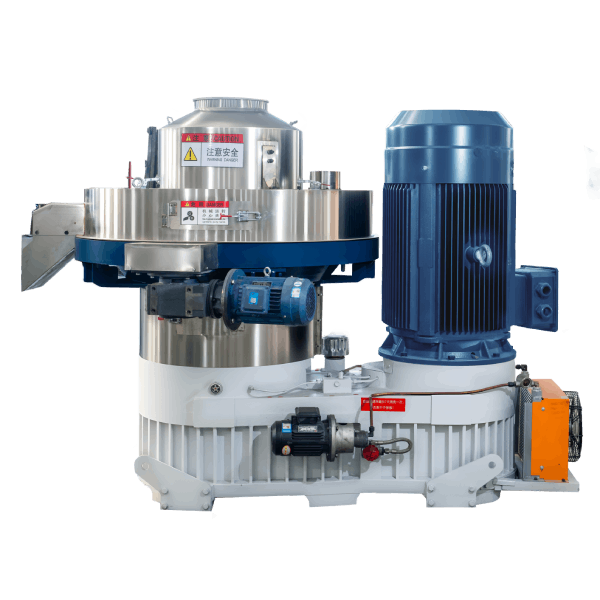
Pellet Machine Operating Cost Per Ton Analysis Guide
News 2026-02-26
Pellet Machine Operating Cost Per Ton: Engineering Analysis for Biomass Plants
Product Definition
Pellet machine operating cost per ton refers to the total variable and semi-fixed production expense required to manufacture one metric ton of biomass pellets. It includes electricity consumption, labor, wear parts, maintenance, conditioning additives, and plant utilities, providing a measurable benchmark for evaluating biomass plant efficiency and profitability.
Understanding Pellet Machine Operating Cost Per Ton
For biomass producers, pellet machine operating cost per ton is a decisive KPI. While capital expenditure determines entry barriers, long-term competitiveness depends on how efficiently each ton is produced. In industrial-scale facilities (1–20 t/h), operating cost directly influences contract pricing, export margins, and payback periods.
A properly engineered pellet line typically achieves a pellet machine operating cost per ton between USD 18 and USD 45, depending on raw material type, electricity tariff, plant automation level, and die lifespan.
Technical Parameters and Specifications
Typical industrial ring die pellet plant reference data:
Capacity Range
1–10 tons/hour (single line)
10–40 tons/hour (multi-line plant)
Main Motor Power
90–315 kW per pellet mill
Specific Power Consumption
75–110 kWh per ton (wood residues)
55–85 kWh per ton (agro biomass)
Die Diameter
350–560 mm industrial ring die
Pellet Diameter
6–10 mm (export standard: 6 or 8 mm)
Raw Material Moisture (before pelletizing)
10%–15%
Bulk Density (finished pellet)
600–700 kg/m³
These parameters directly affect pellet machine operating cost per ton. Higher specific energy consumption or shorter die life increases production cost significantly.
Operating Cost Breakdown Per Ton
Electricity
Typical industrial electricity usage: 80–100 kWh/ton
If tariff = USD 0.10/kWh → USD 8–10 per ton
Labor
2–4 operators per shift for automated line
USD 3–8 per ton (depending on country)
Wear Parts (Die & Rollers)
Die lifespan: 800–1,500 hours
Cost allocation: USD 3–7 per ton
Maintenance & Lubrication
USD 1.5–3 per ton
Cooling & Screening Energy
USD 1–2 per ton
Total Estimated Pellet Machine Operating Cost Per Ton
USD 18–30 (optimized wood pellet line)
USD 30–45 (high fiber, abrasive materials)
Structure and Material Composition
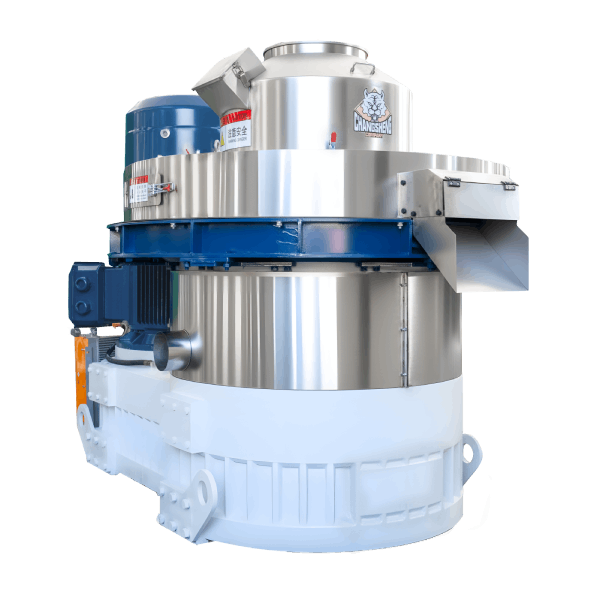
A pellet production line affecting pellet machine operating cost per ton consists of:
Raw Material Handling System
• Belt conveyors
• Magnetic separator
• Storage silos
Size Reduction System
• Drum chipper (for logs)
• Hammer mill (final ≤3 mm particle size)
Drying System
• Rotary drum dryer
• Hot air furnace
Pelletizing Section
• Ring die pellet mill
• Forced feeder
• Steam conditioner
Cooling & Screening
• Counterflow cooler
• Vibrating screen
Packing System
• Automatic weighing scale
• Sewing or heat sealing system
Material of critical parts:
Ring die: 4Cr13 or alloy steel with vacuum heat treatment
Rollers: carburized bearing steel
Main shaft: forged alloy steel
Bearings: heavy-duty spherical roller bearings
Durability of these components directly impacts pellet machine operating cost per ton.
Manufacturing Process – Engineering Workflow
Step 1: Raw Material Preparation
Moisture control and impurity removal. Target size ≤3 mm.
Step 2: Drying
Reduce moisture to 10–15%. Control outlet temperature to prevent fiber degradation.
Step 3: Fine Grinding
Uniform particle distribution improves die life and reduces power consumption.
Step 4: Conditioning
Steam injection (optional for agro biomass) enhances binding and lowers energy load.
Step 5: Pelletizing
Compression ratio selection (1:6–1:8 for wood). Correct die configuration reduces pellet machine operating cost per ton.
Step 6: Cooling & Stabilization
Reduce pellet temperature to near ambient (±5°C). Prevent cracks.
Step 7: Screening & Packaging
Remove fines; ensure export-grade durability ≥95%.
Process optimization reduces downtime and improves energy efficiency.
Industry Comparison (Cost Perspective)
| Production Method | Energy Cost | Wear Cost | Labor Intensity | Cost Stability |
|---|---|---|---|---|
| Ring Die Pellet Mill | Medium | Medium | Low | High |
| Flat Die Pellet Mill | Higher | High | Medium | Medium |
| Briquetting Machine | Lower | Low | Low | High |
| Manual Fuel Processing | Low | Low | High | Unstable |
Ring die systems show better cost stability at industrial scale, improving predictability of pellet machine operating cost per ton.
Application Scenarios
For Distributors
Evaluate pellet machine operating cost per ton to determine resale pricing margin.
For EPC Contractors
Incorporate operating cost modeling into feasibility studies.
For Industrial Developers
Use cost per ton benchmarks to forecast ROI and plant expansion.
For Importers
Assess competitiveness in export markets (Japan, Korea, EU).
Core Pain Points and Solutions
- High Electricity Consumption
Solution: Install VFD drives and optimize die compression ratio. - Short Die Lifespan
Solution: Use high-hardness alloy dies with proper heat treatment. - Frequent Blockages
Solution: Control raw material moisture and fiber length. - High Maintenance Downtime
Solution: Implement predictive maintenance and spare parts planning.
Each factor directly influences pellet machine operating cost per ton.
Risk Warnings and Mitigation
Moisture Variability Risk
Install online moisture sensors.
Overload Risk
Use automatic load monitoring to prevent motor damage.
Improper Die Selection
Conduct raw material testing before bulk production.
Underestimating Auxiliary Energy
Include dryer fuel consumption in total cost calculation.
Procurement and Selection Guide (Actionable Steps)
- Define target annual capacity (e.g., 50,000 tons/year).
- Measure local electricity tariff and labor rate.
- Conduct raw material fiber analysis and ash content test.
- Compare specific power consumption between suppliers.
- Calculate projected pellet machine operating cost per ton.
- Review die material and heat treatment specification.
- Inspect automation level and PLC system.
- Request reference plant data and real operation logs.
Engineering Case Example
Project Location: Southeast Asia
Capacity: 5 t/h wood pellet line
Electricity tariff: USD 0.09/kWh
Measured power consumption: 85 kWh/ton
Actual Operating Cost Breakdown
Electricity: USD 7.65
Labor: USD 4.20
Wear parts: USD 4.50
Maintenance: USD 2.00
Utilities: USD 1.20
Final Pellet Machine Operating Cost Per Ton: USD 19.55
Plant achieved ROI within 24 months under export contract pricing.
FAQ
- What is average pellet machine operating cost per ton?
Typically USD 18–45 depending on raw material and energy price. - What factor impacts cost most?
Electricity consumption and die lifespan. - Does automation reduce cost?
Yes, lower labor and stable operation reduce variability. - How long does a ring die last?
800–1,500 operating hours depending on material. - Is steam conditioning necessary?
For agro biomass, yes; for dry wood, optional. - Can operating cost be reduced below USD 15/ton?
Only in regions with very low electricity and labor rates. - Does dryer fuel count in cost per ton?
Yes, for full plant cost calculation. - What is acceptable power consumption benchmark?
75–95 kWh/ton for optimized wood pellet production. - How to reduce wear cost?
Proper raw material screening and die maintenance. - Is flat die cheaper to operate?
Not at industrial scale above 2 t/h capacity.
Call to Action
For detailed pellet machine operating cost per ton modeling, request a technical feasibility report, power consumption sheet, and wear part lifecycle analysis. Engineering drawings and real production logs are available upon formal inquiry.
Authoritative Industry Statement (E-E-A-T)
This article is prepared by a biomass process engineer with over 15 years of experience in industrial pellet plant design, commissioning, and cost optimization across Asia, Europe, and the Middle East. Data presented is derived from operational industrial references and engineering benchmarks used in commercial feasibility studies.