Pellet Mill Feed Inlet Clogged: Causes, Diagnosis and Safe Clearing
News 2026-11-13
A clogged feed inlet stops a biomass pellet mill from feeding material and cuts output. It is rarely one single fault. Material condition, feeder setting and inlet design usually combine to cause it.
The short answer: check material moisture and flowability first, then the feeder and feed rate, then the feed bin and inlet geometry. Clear the blockage only with the feeder and main motor stopped and locked out. If the inlet clogs repeatedly with material that should be suitable, treat it as a feed system or selection problem, not an operator error.
What “Feed Inlet Clogged” Actually Means
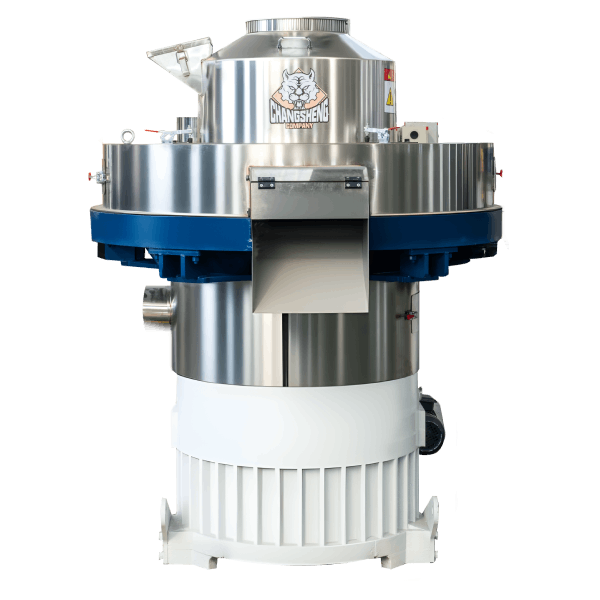
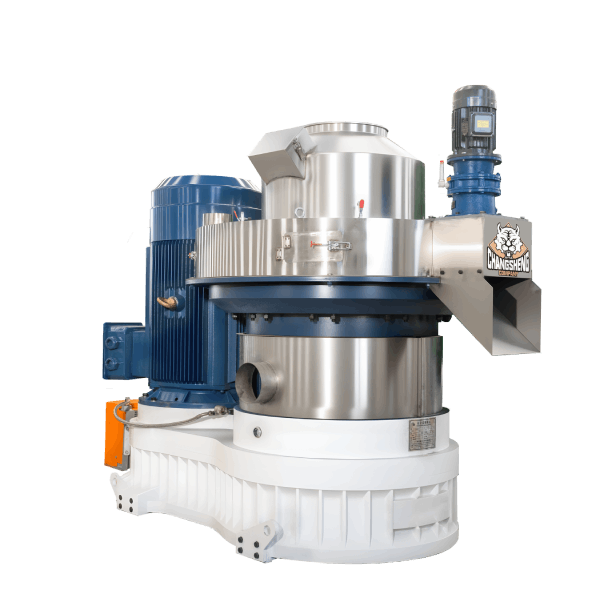
The feed inlet is where material moves from the feed bin or feeder into the pelletizing chamber. When it clogs, material stops reaching the die. The mill may keep running, but it runs without load, and output drops.
This is not the same as a packed die. A packed die happens inside the chamber, where material jams between the rollers and the die. It shows up as high, steady main motor load and a laboring motor. Feed inlet clogging usually shows up as low or uneven main motor load while the feeder is still turning, plus visible material buildup at the inlet or in the bin.
The two problems have different causes and different fixes. Clearing the inlet will not free a packed die, and changing feeder speed will not clear a blocked inlet.
Signs that point to the inlet:
- Material backs up in the bin or chute instead of flowing down
- The feeder turns but the die receives little material
- Main motor load stays low or fluctuates while the feeder runs
- Material forms an arch or bridge above the inlet
- The feeder motor strains or stalls against a blockage
The Most Common Causes, in Order of Likelihood
Raw material moisture and stickiness
Moisture is the most frequent cause. Wet material becomes sticky and cohesive. It adheres to inlet walls, forms lumps and bridges across openings.
The moisture level that causes trouble depends on the material. Fine sawdust can flow well at one level and bridge at a slightly higher one. Fibrous material and material with a high fines content is more sensitive. A quick field check is useful: material that feels damp, clumps in the hand, or sticks to metal is a clogging risk. That check is only a screening step. It does not replace a moisture measurement, and it does not tell you the correct target for your material. The correct target depends on material type, feed system and pelletizing conditions, and should be confirmed by testing rather than copied from a general table.
Particle size and foreign matter
Very fine material packs and bridges. Very coarse or long fibrous material wraps around the feeder screw or hangs at the inlet. A particle size distribution outside the feed system’s intended range raises clogging risk.
Foreign matter is a separate and very common cause. Stones, metal, string, plastic and hard lumps lodge at the inlet or jam the feeder. Upstream screening and magnet protection reduce this risk but do not remove it. When a clog appears suddenly after a long period of normal running, check for foreign matter early.
Material bridging in the feed bin
Bridging, or arching, happens when material forms a stable arch above the inlet and holds back the material above it. The inlet is not physically blocked. Material simply is not reaching it.
Bridging is common with fine, cohesive or moist material, and with bins that have narrow outlets. Symptoms include the feeder running with no material reaching it and a visible cavity or arch inside the bin. Breaking the arch from above or from a proper access point restores flow, but the material condition still needs correcting.
Feeder speed and feed rate mismatch
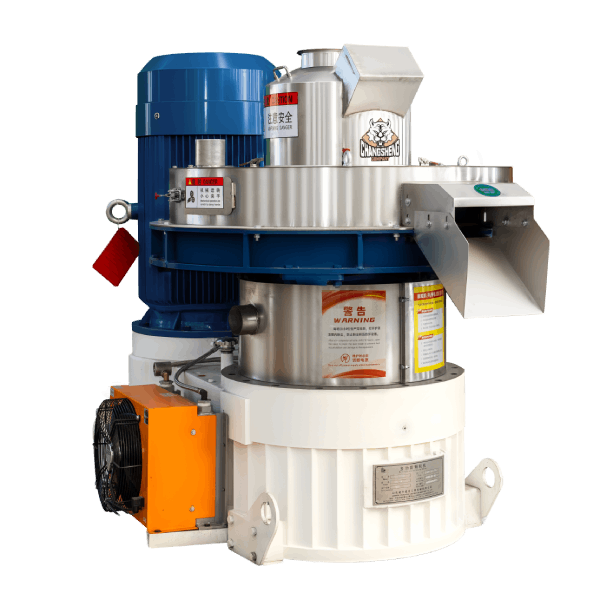
If the feeder delivers material faster than the mill consumes it, material backs up at the inlet and eventually blocks it. This often follows a raw material change, because a feeder setting that suited a dense material delivers too much volume of a lighter one. Too low a feed rate can also cause uneven flow and localized buildup. Feeder speed should be matched to the material and to mill load, and readjusted whenever the material changes.
Inlet and chute design
Sharp transitions, narrow throats, long horizontal runs and poorly placed inspection openings create places where material hangs. A smooth, adequately sized transition from feeder to chamber reduces clogging risk. This becomes relevant when clogging persists despite correct material and operating conditions.
A Step-by-Step Diagnosis Sequence
Work through these steps in order and stop when you find the cause.
- Confirm it is the inlet, not the die. Read main motor load together with feeder behavior. Low or fluctuating load with a turning feeder points to the inlet. High, steady load points to the die. On some machines the no-load main motor current is already high, and fluctuation can come from supply voltage or the drive, so confirm the reading against visible buildup at the inlet before concluding.
- Check the feeder side. A feeder that strains or stalls while main motor load stays low points to a blockage or jam at the feeder or inlet. A feeder that turns freely with low current while the die receives nothing points to bridging or starvation in the bin. Compare feeder current with its normal running value for the same material.
- Check the material. Take a sample. Look for dampness, clumping, excessive fines, oversize particles and foreign matter. Compare it with the material the mill ran when it last performed well.
- Check the feed bin. Look for bridging, arching or a cavity above the inlet. Confirm material actually reaches the feeder.
- Check the inlet and chute. Look for wall buildup, narrow sections and hanging material.
- Check recent changes. A new material batch, a changed feeder setting, a new operator or a modified upstream process is often the real cause.
If all of these check out and clogging continues, the problem is likely a mismatch between feed system design and material, and equipment selection or modification should be reviewed.
How to Clear a Clogged Feed Inlet Safely
Clearing the inlet means opening equipment that normally contains moving parts and stored material.
Before clearing:
- Stop the feeder and the main mill motor. Never clear an inlet with either running.
- Isolate and lock out the drives, and confirm zero energy before opening any access point.
- Expect residual material. Material above the blockage can drop suddenly when it releases. Stand clear, and do not reach upward into a bridged bin from below.
- Use non-sparking tools where dust is present, and follow site dust and hot-work rules.
Clearing procedure:
- Locate the blockage before opening anything: bin, chute or inlet transition.
- For a bridge in the bin, break the arch from above or from a side access point, never by reaching up from the outlet. A vibrator or rubber mallet on the bin wall is often enough. Do not strike the inlet housing or the feeder.
- For a blockage in the chute or inlet, remove material from the access point in the direction of flow. Do not force material down into the chamber.
- For a jammed feeder, do not reverse or force it under load. Isolate, free it by hand or with a suitable tool, confirm it turns freely, then run it briefly with no material.
- Inspect for the cause before restarting. Foreign matter, wet material or a worn component is usually still present.
- Restart in sequence: start the mill, confirm normal no-load condition, then start the feeder at reduced rate and raise it gradually while watching main motor and feeder current.
If the inlet clogs again within the same shift, stop clearing and start diagnosing. Clearing cannot fix a material, design or operating cause.
What Running Through a Clog Does to the Machine
Many operators keep the mill running briefly to see whether a partial blockage clears itself. This is where damage happens.
- A starved die runs with uneven load, and rollers can chatter against the die surface. Repeated dry running accelerates roller and die wear.
- A feeder pushing against a blockage loads its screw, coupling and drive. Forced clearing can shear a coupling or bend a screw.
- Material packed hard at the inlet can set and require more force to remove later.
- Running a mill with a partially blocked inlet produces unstable pellet quality, because the die receives material at an uneven rate.
Stopping and clearing correctly is faster and cheaper than running through a clog.
Why It Keeps Happening: Process or Equipment
Repeated clogging raises a decision: adjust the process or change the equipment.
Treat it as a process issue when:
- The problem started after a change in raw material or moisture
- It appears only with certain material batches
- Feeder settings have not been adjusted for the current material
- Bridging is visible and linked to fines or moisture
Treat it as a design or selection issue when:
- Clogging occurs with material that is within the mill’s stated capability
- The inlet or chute has narrow sections or sharp transitions where material consistently hangs
- The feeder is consistently undersized for the material’s bulk density and required throughput
- The same problem occurred with a previous material that should have been suitable
In the second case, continuing to clear the inlet treats the symptom. The feed system or the upstream material preparation needs review.
Prevention: What to Control Day to Day
- Control material moisture before it reaches the mill, and verify it whenever raw material batches change.
- Screen material and use magnet protection to keep foreign matter out of the feed system.
- Match feeder speed to the material and to mill load, and readjust it whenever the raw material changes.
- Inspect the bin, chute and inlet regularly for buildup, and clean before buildup becomes a blockage.
- Keep access points clear so inspection does not require improvised tools.
- Train operators to recognize the difference between inlet clogging and die clogging.
What to Confirm When Buying or Upgrading
Feed inlet performance is partly a purchasing decision. When evaluating a pellet mill or a complete line, confirm:
- The feeder type and size are matched to the intended raw material and its bulk density, not only to the rated output.
- The inlet and chute geometry has smooth transitions and adequate access for inspection and cleaning.
- Anti-bridging provisions, such as bin vibrators or agitators, are available where the material requires them.
- The supplier can explain how the feed system handles the specific material you intend to process, including moisture range and particle size.
- Spare parts for the feeder and inlet area, such as screws, wear plates and couplings, are available and reasonably priced.
- Acceptance testing includes running the mill with your material or a representative sample at the intended feed rate.
A feed system matched to the material prevents clogging far more effectively than any adjustment made after the problem appears.