Pellet Mill Run-In Procedure: Start-Up, Loading and the First Production
News 2026-11-09
A pellet mill run-in procedure is the sequence that turns a new die into a die that produces saleable pellets, and it is the step that most commissioning problems can be traced back to. A new die has hole surfaces that are rougher and entry edges that are less polished than a run-in die, the die body has to be heated by friction before the lignin softens, and the roller gap has to be set and checked before the load is applied. Skipping the run-in and feeding production material into a cold, new die is the most common reason a new die blinds in the first hours and the operator concludes that the die or the machine is defective.
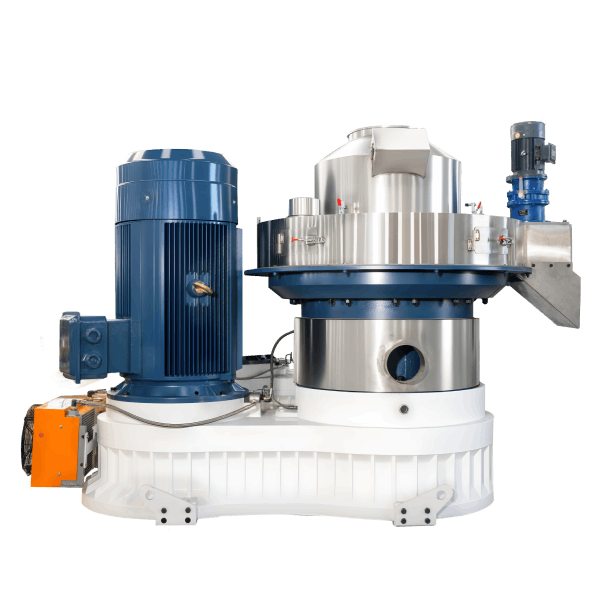
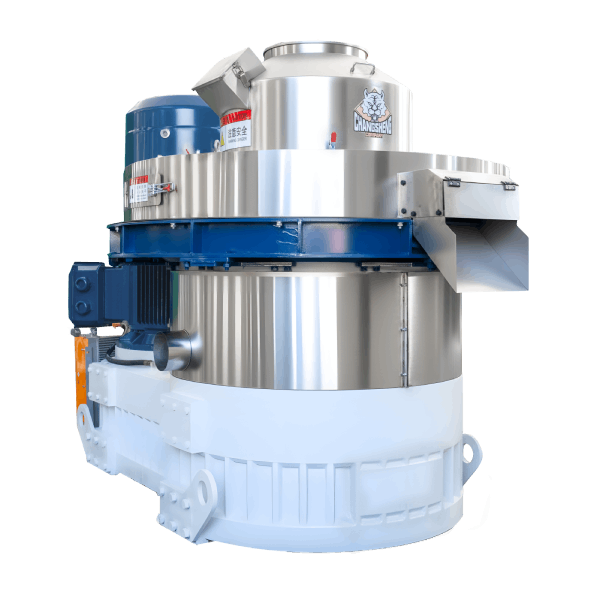
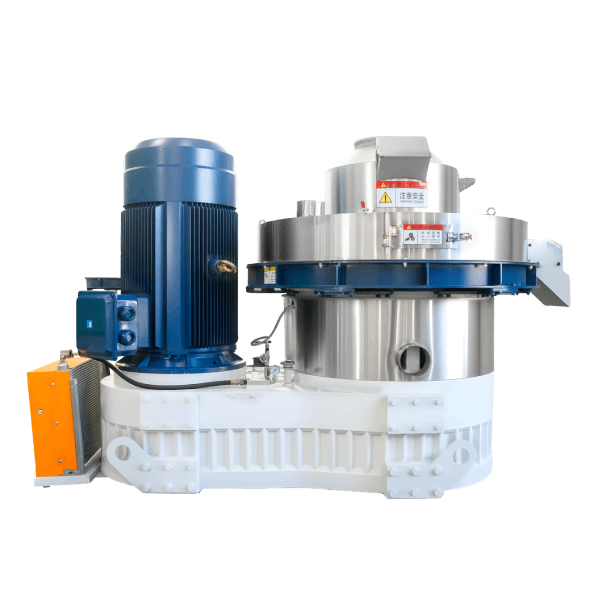
This page sets out the run-in procedure for an industrial ring die pellet mill: the pre-start checks, the loading material and the loading steps, the roller gap and the temperature, the transition to production material, the checks after the first production shift, and the return to the regular maintenance schedule. It is written for the commissioning engineer and the operator, not for the buyer who is comparing models.
The short answer
The run-in procedure has four phases: the pre-start checks, the die loading with a prepared material, the warm-up to the operating temperature, and the transition to production material in steps. The loading is the phase that most operators rush, and it is the phase that decides whether the first production shift runs steadily or ends with a blinded die.
The practical rule: load the die with a prepared material at a low feed rate, bring it to the operating temperature, stabilize the current within the band the manufacturer specifies, and only then change to the production material and bring the feed up in steps. A die that forms poorly after a proper run-in and a correct roller gap is a different problem, and it should be diagnosed as a fault rather than as a run-in symptom.
Pre-start checks before the run-in
The run-in starts with the machine stopped, and the checks below are the minimum before the first load is applied.
The die and the rollers should be checked for condition and fit. The die should be seated correctly, the roller gap should be set to the manufacturer’s specification for the new die, and the roller assembly should turn freely by hand.
The lubrication and the drive should be checked against the maintenance schedule, and the gearbox oil level, the lubrication points, and the belt tension should be confirmed, and any alarm from the control system should be cleared.
The feed system and the loading material should be ready. The feeder should be empty and able to turn, the loading material should be prepared in the quantity the run-in needs, and the moisture of the loading material should be measured rather than assumed.
The cooler, the screen, and the packing downstream should be ready to receive the pellets, so that the mill is not stopped shortly after the start because the downstream cannot keep up.
Loading material and loading steps
The loading material is normally a dry material of the same family as the production material, prepared so that it slides through the die holes, and mixed with a small amount of oil or water where the manufacturer recommends it. The oil or water is added in a small amount relative to the material weight, typically enough to make the material slide through the die holes without dripping, and the exact amount should follow the manufacturer’s recommendation for the die and the material. The purpose is not to make saleable pellets, but to fill the holes gradually, lubricate the die, and bring the die up to temperature through the friction of the material passing through the holes. Production material should not be used to load a cold die, because it is the material the die is not yet warm enough to press, and it is the material most likely to block the holes during the start-up.
The loading runs in steps. Start the mill with the feeder at a low rate, and feed the loading material in, watching the die temperature, the main motor current, and the discharge. The current rises as the die fills and should rise steadily rather than jump. A current that rises sharply, or a die temperature that does not rise within the time the manufacturer specifies for the loading stage, indicates that the die is not filling evenly, or that the feed, the moisture, or the roller gap has changed, and the feed rate should be reduced while the cause is checked rather than increased.
The loading continues until the die is producing pellets steadily at the operating temperature and the current has stabilized. The loading is complete when the current fluctuation is within the band the manufacturer specifies, the pellets come out as a continuous strand rather than as a broken or dusty discharge, and the die temperature has reached the operating range recorded in the trial. The loading stage typically takes from about one hour to several hours depending on the die size, the material, and the heating rate, and the manufacturer’s procedure should set the expected duration for the specific machine. Only then is the feed changed to the production material.
Roller gap and die temperature during the run-in
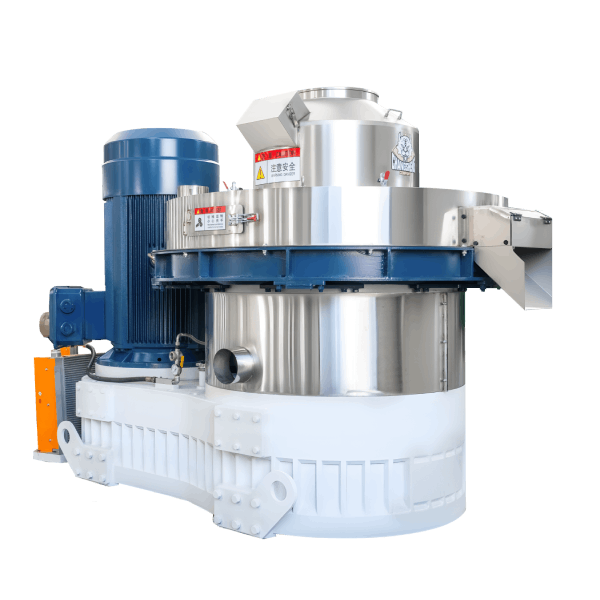
The roller gap should be set on every roller before the loading starts, and it should be checked again after the first hours of running, because the new parts settle under the initial load. A gap that is too wide leaves the material unpressed and the pellet light, and a gap that is too tight overloads the motor and blinds the die.
The die temperature is the signal that the die is ready. A cold die does not soften the lignin enough to bind the pellet, and a die that is below the operating range produces soft, dusty pellets even when the material and the gap are correct. The temperature should be monitored during the loading and the first production, and the feed rate should be adjusted to bring the temperature into the range rather than to force the output.
Transition to production material
The transition is where the run-in becomes production, and it should be made in steps rather than in a single jump.
The feed is changed from the loading material to the production material at the same low rate, and the current and the temperature are watched for the change. If the current rises or the temperature falls outside the range, the feed rate is reduced and the cause is checked before the rate is raised again.
The feed rate is then brought up in steps, and each step is held long enough to see the current and the temperature settle. The target rate is reached when the current and the temperature are stable and the pellet quality is within the specification, not when the feeder is at the maximum.
Checks after the first production shift and return to the regular schedule
After the first production shift, the die and the rollers should be inspected, the current and the temperature records should be reviewed against the run-in record, and the roller gap should be re-checked, because the new parts settle.
The pellet quality should be measured on a sample taken after the cooler and after the screen, and the moisture, the durability, and the fines should be compared with the specification.
After the run-in, the roller gap, the die, and the rollers return to the regular maintenance schedule, and the readings from the run-in become the baseline for the regular checks. The die hole diameter and the roller surface should be checked at the intervals the manual specifies, and the replacement should be planned on the wear signal rather than on a fixed hour count.
The records from the run-in and the first shift should be kept, because a die that performs differently on the next shift is a die that has changed, and the change should be traced to the cause rather than to a general suspicion.
Common mistakes in the run-in
Starting with production material at full feed. The die is cold and the holes are empty, and the material blocks or slips instead of filling the die evenly.
Raising the feed faster than the die can accept. The current and the temperature rise, the die blocks, and the operator reduces the feed, which then cools the die and produces soft pellets.
Judging the moisture from the dryer outlet. The material changes between the dryer and the die, and the mill runs on a moisture the die was not set for.
Setting the roller gap on one roller only. The die wears unevenly and the pellet quality varies around the die face.
Skipping the roller gap re-check after the first hours. The new parts settle, the gap opens, and the formation rate falls without an obvious cause.
What to specify before buying a line
Before the line is specified, the run-in procedure should be addressed in the commissioning plan and in the quotation. The quotation should state the die specification matched to the feedstock, the roller gap setting, the loading material recommendation, the expected loading duration, and the acceptance test on the actual material. A line that is specified without the run-in procedure is a line that can blind its first die and be judged on the first day’s output rather than on the steady state.
If you are commissioning a new pellet mill and need the run-in procedure set for your machine and your feedstock, send the machine model, the die specification, the feedstock and moisture, and the loading material available, and the Shandong Changsheng Machinery team can review the run-in plan and propose the settings and the acceptance test for that machine.
Bottom line
The pellet mill run-in procedure has four phases: the pre-start checks, the die loading with a prepared material, the warm-up to the operating temperature, and the transition to production material in steps. Load the die with a prepared material at a low feed rate, bring it to the operating temperature, stabilize the current within the band the manufacturer specifies, and only then change to the production material and bring the feed up in steps. Set the roller gap on every roller and re-check it after the first hours, monitor the die temperature rather than forcing the output, and keep the records from the run-in and the first shift, because they are the baseline for the regular checks after the run-in. A die that forms poorly after a proper run-in and a correct roller gap is a fault rather than a run-in symptom, and it should be diagnosed as a fault rather than by repeating the loading.