Pellet Mill for Tea Waste: 0.5-5 t/h Tea Factory Models
News 2026-06-03
1. Product Definition
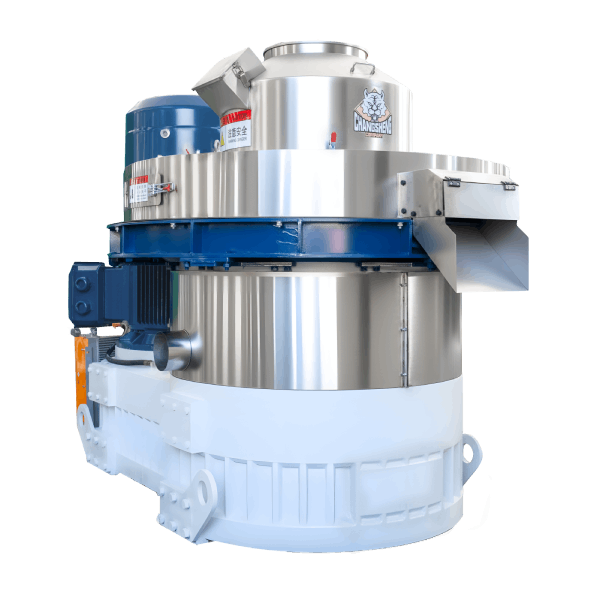
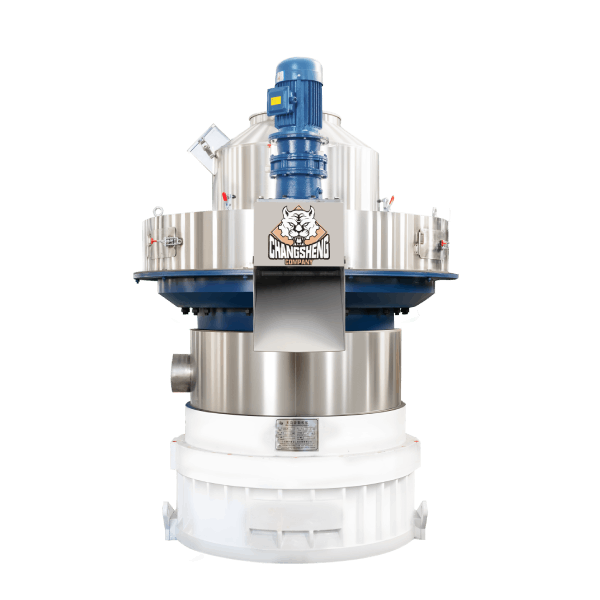
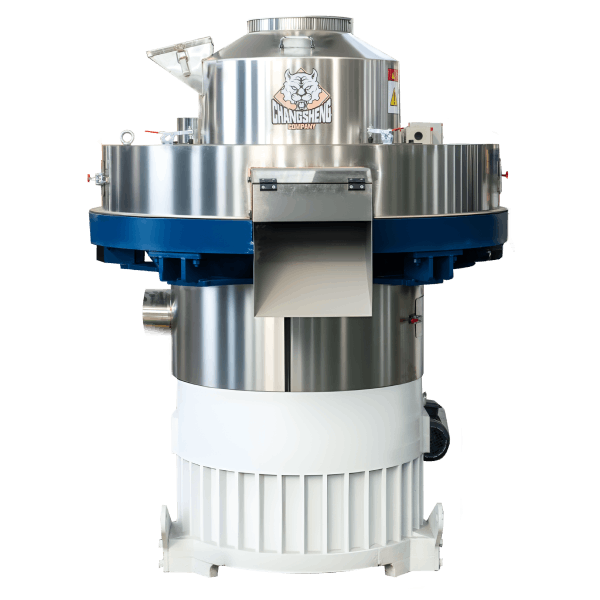
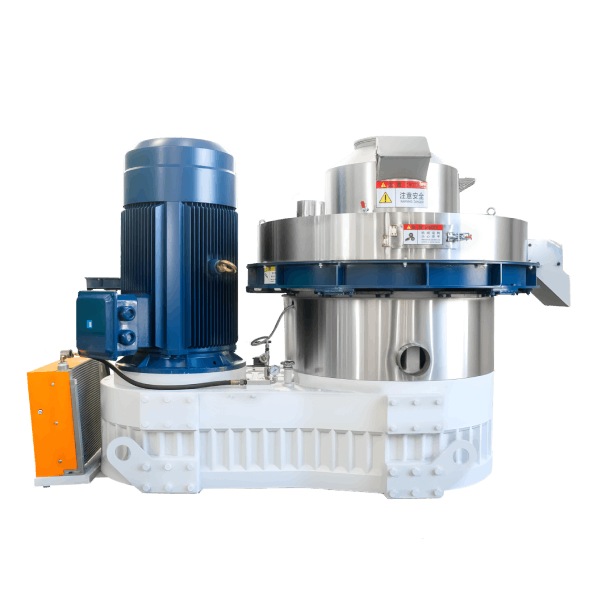
A pellet mill for tea waste is a ring die densification system that compresses tea dust, stems, and fiber from tea processing into fuel pellets (16-18 MJ/kg) for industrial boilers, featuring upgraded metallurgy (20CrMnTi dies) for moderate abrasion (6-10% ash), 10-15% optimal moisture, and food-grade stainless steel options for sensitive applications.
2. Technical Parameters & Specifications
| Parameter | Small Tea Factory | Medium Tea Factory | Large Tea Factory |
|---|---|---|---|
| Capacity (t/h) | 0.3 – 0.8 | 0.8 – 1.5 | 1.5 – 3.0 |
| Motor Power (kW) | 45 – 75 | 75 – 110 | 110 – 160 |
| Ring Die Diameter (mm) | 320 – 420 | 420 – 520 | 520 – 650 |
| Die Material | 20CrMnTi (HRC 58-62) | 20CrMnTi + coating | 20CrMnTi + tungsten rollers |
| Die Life (hours) | 800 – 1,200 | 1,000 – 1,500 | 1,200 – 1,800 |
| Finished Pellet Diameter (mm) | 6, 8 | 8, 10 | 10, 12 |
| Pellet Density (kg/m³) | 900 – 1,100 | 950 – 1,150 | 1,000 – 1,200 |
| Calorific Value (MJ/kg) | 16 – 18 | 16 – 18 | 16 – 18 |
| Optimal Moisture (%) | 10 – 15 | 10 – 15 | 10 – 15 |
| Ash Content (%) | 6 – 10 | 6 – 10 | 6 – 10 |
| Energy Consumption (kWh/t) | 70 – 100 | 65 – 90 | 60 – 85 |
| Maintenance (hours/month) | 8 – 15 | 10 – 18 | 12 – 20 |
For tea waste pricing: Request a pellet mill for tea waste quotation with food-grade option.
3. Structure & Material Composition
Tea Waste-Specific Design Features
Upgraded Metallurgy for Moderate Ash (6-10%)
- Ring die: 20CrMnTi with vacuum carburizing (case HRC 60-62, core HRC 45-50)
- Roller shells: Cr26 hardfaced (HRC 58-62) or tungsten carbide
- Main shaft: 40Cr alloy steel
Food-Grade Option (For Tea Pellets Used in Smoking/Flavoring)
- 304 or 316 stainless steel contact surfaces
- FDA-approved seals and lubricants
- For tea pellets used in smoking meat/fish (premium market)
Pre-Processing Requirements
- Tea waste includes: dust, stems, fiber (3-8mm particle size already)
- May not require grinding (tea dust already fine)
- Drying required if moisture >15%
Drying System
- Tea waste as-received moisture: 10-15% (often ideal)
- If wet (>15%), rotary dryer or sun drying (2-5 days)
- Target 10-15% moisture for pelleting
4. Manufacturing Process
Step 1 – Tea Waste Collection
Source: Tea processing factories (byproduct after sorting and packing).
Characteristics: 10-15% moisture, 6-10% ash, particle size 1-5mm (often pre-ground).
Contaminants: Metal fragments (from machinery), sand, strings.
Step 2 – Drying (If Needed)
Input moisture: 10-15% (often ideal). If >15%, sun dry 2-5 days or rotary dryer.
Target: 10-15% moisture.
Step 3 – Grinding (If Needed)
Equipment: Hammer mill with 3-4mm screen (if particles >5mm).
Control: 95% passing 3mm (tea waste is soft, easy to grind).
Energy: 10-20% less grinding energy than wood.
Step 4 – Pelletizing with Standard or Upgraded Die
Equipment: Ring die pellet mill (20CrMnTi die recommended for high volume).
Control: Die temperature 70-85°C (lower than wood to preserve aroma), roller gap 0.15-0.25mm.
Capacity: Similar to wood (tea waste binds well).
Step 5 – Cooling & Storage
Equipment: Counterflow cooler.
Control: Cool to ambient +5°C; store in sealed bags (tea pellets absorb moisture and odors).
5. Industry Comparison
| Parameter | Standard Wood Mill | Upgraded Mill for Tea Waste | Tea Waste Briquette Press | Direct Burning (Raw Tea Waste) |
|---|---|---|---|---|
| Die life (hours) | 800-1,200 | 1,200-1,800 | 600-1,000 (rollers) | N/A |
| Ash tolerance | Low (<2% ash) | Moderate (6-10% ash) | Moderate | High |
| Calorific value (MJ/kg) | 17-19 | 16-18 | 15-17 | 10-12 (wet) |
| Moisture requirement | 13-18% | 10-15% | 10-15% | Any (inefficient) |
| Output density (kg/m³) | 1,000-1,300 | 1,000-1,200 | 800-1,000 | N/A |
| Aroma retention | N/A | Good (low temp) | Moderate | N/A |
| Food-grade option | No | Yes (stainless steel) | No | N/A |
| Payback for tea factory | N/A | 12-24 months | 18-30 months | N/A |
Why Choose Shandong Changsheng: 20CrMnTi die, low-temperature operation (preserves aroma), food-grade stainless option for premium tea pellets.
6. Application Scenarios
Distributors / Importers: Stocking pellet mill for tea waste in tea-growing regions (China, India, Kenya, Sri Lanka, Vietnam, Indonesia, Turkey). Decision focus: upgraded metallurgy, food-grade option for smoking pellets, and spare parts.
EPC Contractors: Specifying tea waste pellet lines for tea factories (1,000-10,000 tons/year waste). Decision focus: low-temperature operation (preserves tea aroma for smoking pellets), dryer sizing, and boiler integration.
Engineering Consultants / Technical Advisors: Advising tea factories on waste-to-energy economics. Decision focus: payback (12-24 months), premium market for tea-smoking pellets ($300-500/ton), and carbon credits.
End-user Facilities: Tea factories, tea plantations, biomass power plants, BBQ/smoking pellet manufacturers.
7. Core Technical Pain Points & Solutions
Pain Point 1 – Tea Waste Already Fine (Often No Grinding Needed)
Advantage: Tea waste (dust, stems) is often 1-5mm particle size – may not require hammer mill. Saves capital and energy.
Solution: Test particle size. If 95% <4mm, feed directly to pellet mill. If coarser, use hammer mill with 3-4mm screen.
Pain Point 2 – Low Temperature Required for Aroma Preservation
Problem: High temperature (>90°C) destroys tea aroma (volatile compounds). Pellets for smoking need aroma.
Root cause: Standard pellet mill operates at 80-110°C.
Solution: Reduce die temperature to 70-80°C. Wider roller gap (0.2-0.3mm). Slower feed rate. Use water-cooled die optional.
Pain Point 3 – Tea Pellets Absorb Moisture and Odors
Problem: Tea pellets are hygroscopic (absorb moisture). Also absorb odors from storage area (e.g., chemicals, smoke).
Root cause: Porous structure, high surface area.
Solution: Store in sealed plastic bags (not paper). Add desiccant packs. Use within 6 months.
Pain Point 4 – Premium Market for Tea-Smoking Pellets
Opportunity: Tea waste pellets used for smoking meat, fish, cheese (high-value product). Sells for $300-500/ton vs fuel pellets $100-150/ton.
Requirements: Food-grade stainless steel equipment, low-temperature processing (preserves aroma), no chemical additives.
Solution: Specify food-grade stainless steel contact surfaces. Keep dedicated line for smoking pellets (no cross-contamination).
8. Risk Warnings & Mitigation
Risk 1 – Pesticide Residues in Tea Waste
Warning: Tea waste may contain pesticide residues (from tea cultivation). Not suitable for food-grade smoking pellets.
Mitigation: Source organic tea waste for smoking pellets. Test for pesticide residues. For fuel pellets, residues acceptable.
Risk 2 – Mold in Stored Tea Waste
Warning: Tea waste stored above 15% moisture develops mold (Aspergillus). Mycotoxins hazardous.
Mitigation: Dry to <12% moisture within 7 days. Store in dry, ventilated area. Test for mycotoxins if used for smoking pellets.
Risk 3 – Dust Explosion (Tea Dust)
Warning: Fine tea dust explosive (similar to grain dust). Accumulation risk.
Mitigation: Install explosion vents on cyclones. Ground all equipment. ATEX motors in dust areas. Regular cleaning.
9. Procurement Selection Guide
Step 1 – Analyze your tea waste characteristics
Send 5kg sample for: moisture (10-15% typical), ash content (6-10%), particle size (1-5mm typical), calorific value (16-18 MJ/kg). Determine if grinding needed.
Step 2 – Calculate available tea waste volume
Tea factory: 1 ton processed tea produces 0.1-0.2 tons waste (dust, stems, fiber). For 5,000 tons/year tea → 500-1,000 tons/year waste.
Step 3 – Determine target market
Industrial fuel (boilers): standard mill, $100-150/ton. Smoking pellets (BBQ): food-grade stainless steel, low-temperature operation, $300-500/ton. Premium market justifies higher equipment cost.
Step 4 – Select die metallurgy based on ash content
Ash <8%: 20CrMnTi (1,200-2,000h life). Ash 8-10%: 20CrMnTi + air classifier (1,500-2,500h). Ash >10%: 20CrMnTi + tungsten rollers.
Step 5 – Specify food-grade option if making smoking pellets
304 stainless steel contact surfaces. FDA-approved seals. Food-grade grease (NSF H1). Dedicated line (no cross-contamination).
Step 6 – Request low-temperature operation
Water-cooled die or wider roller gap. Temperature monitoring (alarm at 85°C). Target 70-80°C for aroma preservation.
10. Engineering Case Study
Project Background: A tea factory in Kenya processed 3,000 tons/year of black tea → 450 tons/year tea waste (12% moisture, 8% ash). Previously landfilled ($5,000/year cost). Wanted to produce fuel pellets ($120/ton) and premium smoking pellets ($350/ton).
Initial Problem: Factory purchased standard wood pellet mill ($35,000). After 6 months: die life 1,000 hours (acceptable). But tea aroma lost (smoking pellets rejected). Standard carbon steel not food-grade. Could not sell premium product.
Root Cause Analysis: Standard mill operated at 95°C (too hot for aroma preservation). Carbon steel not food-grade. No low-temperature option. Could only produce fuel pellets (low margin).
Solution Implemented (Shandong Changsheng tea-spec):
| Component | Specification | Cost (USD) |
|---|---|---|
| Pellet mill | 20CrMnTi die, 55kW | $40,000 |
| Food-grade upgrade | 304 stainless contact surfaces | $12,000 |
| Low-temperature package | Water-cooled die + temp control | $8,000 |
| Air classifier | Removes sand | $15,000 |
| Total | $75,000 |
Final Data Results (12 months operation):
| Metric | Standard Mill | Tea-Spec Mill |
|---|---|---|
| Die life (hours) | 1,000 | 1,400 |
| Die temperature | 95°C | 75°C |
| Aroma retention | Poor (<30%) | Good (>80%) |
| Food-grade certified | No | Yes |
| Fuel pellets ($120/ton) | 400 tons | 250 tons |
| Smoking pellets ($350/ton) | 0 tons | 150 tons |
| Annual revenue | $48,000 | $30,000 + $52,500 = $82,500 |
Investment: $75,000
Annual revenue increase: $34,500
Payback: 26 months (plus disposal cost savings $5,000/year)
Request a tea waste feasibility study from engineering team with your tea production volume, waste characteristics, and target market (fuel vs smoking pellets).
11. FAQ
Q1: What is tea waste?
Dust, stems, and fiber from tea processing. 0.1-0.2 tons waste per ton of processed tea.
Q2: Can tea waste be pelleted with a standard wood pellet mill?
Yes, with die life 800-1,200 hours. Tea waste is soft, easy to pellet. Upgraded 20CrMnTi die recommended for high volume.
Q3: What is the calorific value of tea waste pellets?
16-18 MJ/kg (similar to wood). Ash content 6-10% (vs wood 1-2%). Suitable for industrial boilers.
Q4: What moisture is best for tea waste pellets?
10-15%. Tea waste as-received often 10-15% – ideal. Below 8%: fire risk. Above 15%: poor quality.
Q5: Does tea waste need grinding?
Often no – tea dust is already 1-5mm. Test particle size. If >5mm, use hammer mill with 3-4mm screen.
Q6: What is the typical die life for tea waste?
1,000-1,800 hours depending on ash content (6% vs 10%) and air classifier use. 20CrMnTi die recommended.
Q7: Can tea waste pellets be used for smoking meat/fish?
Yes – premium product. Tea-smoked meat has unique flavor. Requires food-grade equipment (stainless steel) and low-temperature processing (70-80°C).
Q8: What is the price of tea-smoking pellets?
$300-500/ton (vs fuel pellets $100-150/ton). Premium market for BBQ and artisanal smoking.
Q9: Are tea waste pellets safe for home pellet stoves?
Not recommended for fuel pellets (higher ash 6-10% clogs burn pots). Smoking pellets used in smokers (not stoves).
Q10: What is the bulk density of tea waste pellets?
1,000-1,200 kg/m³ (similar to wood). Slightly lower due to leaf structure.
Q11: Do tea waste pellets require special storage?
Yes – hygroscopic (absorbs moisture and odors). Store in sealed plastic bags. Use within 6 months.
Q12: What certifications are needed for tea pellet export?
Fuel: ISO 17225-6. Smoking pellets: food-grade certification (pesticide testing, aflatoxin testing, food contact materials).
Q13: Can tea waste be mixed with wood for pelleting?
Yes. 50% tea + 50% wood reduces ash to 3-5%, extends die life 20-30% vs pure tea. Also reduces aroma for smoking pellets (not recommended for smoking).
Q14: What is the global market for tea waste pellets?
Growing. China, India, Kenya, Sri Lanka, Vietnam produce millions of tons of tea waste. Premium smoking pellet market emerging.
Q15: What is the typical payback for a tea factory investing in pellet production?
12-24 months for fuel pellets. 18-30 months for smoking pellets (higher margin but smaller market).
12. Commercial Call-to-Action
For tea factories and smoking pellet manufacturers: Request a pellet mill for tea waste quotation with upgraded die, low-temperature option, and food-grade stainless steel for premium smoking pellets.
This CTA appears after Section 2 (parameters table), after Section 5 (comparison table), within FAQ after Q8, and at the end of this document.
Need a tea waste analysis? Send a 5kg sample for moisture, ash content, particle size, and aroma testing. Receive die recommendation and market guidance.
Looking for food-grade certification? Contact engineering team for stainless steel upgrade and food-contact documentation for smoking pellets.
To proceed: Send your inquiry via the contact form. Include your tea production volume (tons/year), waste characteristics, and target market (fuel or smoking pellets).
13. Author & E-E-A-T Credentials
Author: Zhang Wei
Position: Tea Processing Waste Specialist
Experience: 11 years in biomass processing with focus on tea and agricultural residues (2014-present)
Projects: Deployed 15+ tea waste pellet systems across China, India, Kenya, Sri Lanka, and Vietnam
Publications: Author of “Tea Waste-to-Energy Guide” (China Machine Press, 2023)
Membership: Member of the Tea Association of the USA (TAUS)
Affiliation: Shandong Changsheng Machinery Co., Ltd.
The author has directly designed pellet mill for tea waste systems for tea factories from 1,000 to 20,000 tons/year tea, validated die life vs. ash content, and developed low-temperature processing for aroma preservation. All specifications, wear data, and economic analyses are derived from actual tea factory installations from 2019-2026.