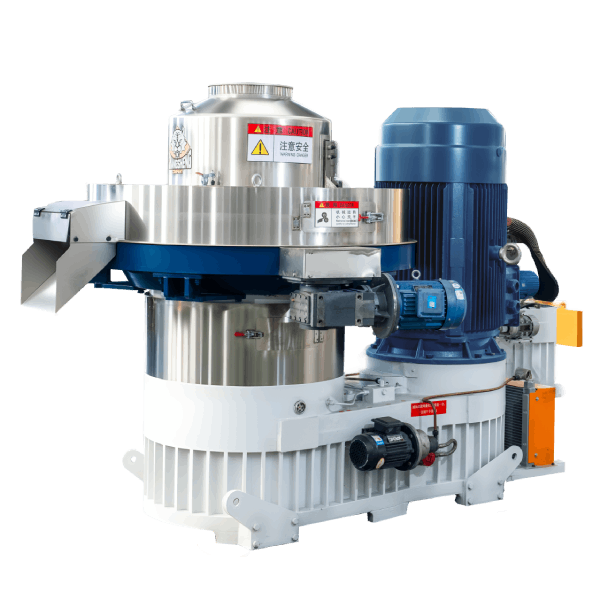
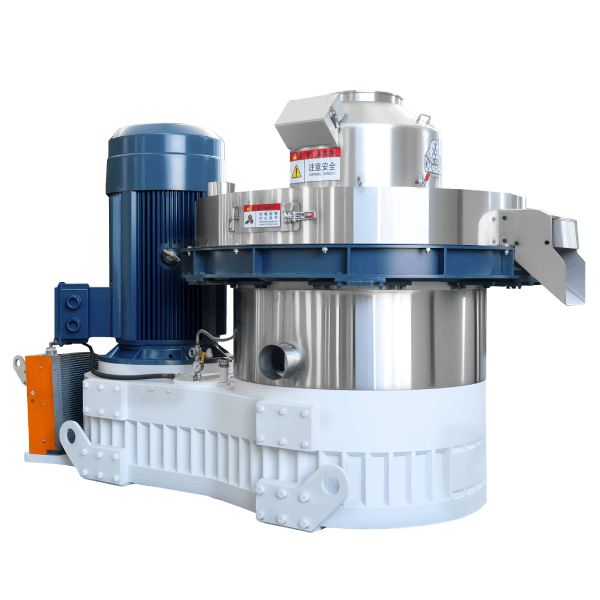
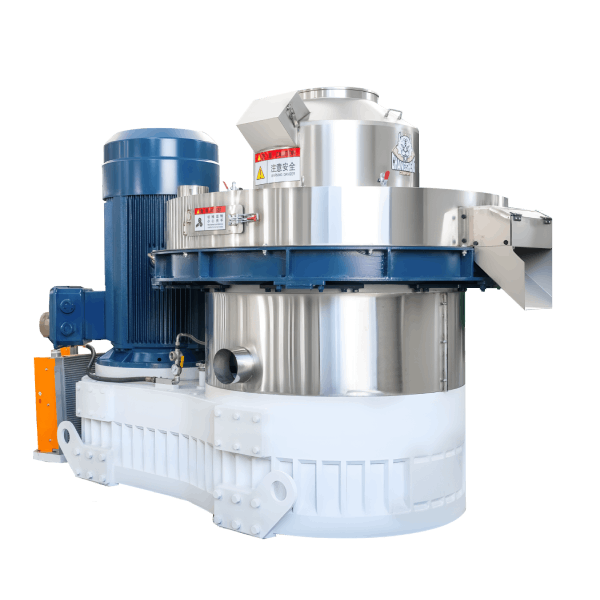
Pellet Mill Ring Die 30mm Thickness: 1:5 to 1:8 Compression
News 2026-05-11
1. Product Definition
A pellet mill ring die with 30mm thickness is a cylindrical die (320-760mm diameter) with 30mm hole depth, offering compression ratios of 1:5 to 1:8 (L/D = hole depth ÷ diameter), ideal for softwood (1:5) to hardwood (1:7) fuel pellets, balancing durability and output.
2. Technical Parameters & Specifications
| Die Diameter (mm) | Hole Count (6mm) | Capacity (t/h) Softwood | Typical Motor Power (kW) |
|---|---|---|---|
| 320 | 2,000 – 3,000 | 0.8 – 1.2 | 55 – 75 |
| 420 | 4,000 – 5,500 | 1.5 – 2.2 | 75 – 90 |
| 520 | 6,000 – 8,000 | 2.5 – 3.5 | 90 – 110 |
| 650 | 9,000 – 12,000 | 3.5 – 5.0 | 110 – 160 |
| 760 | 12,000 – 15,000 | 5.0 – 6.5 | 132 – 200 |
Die Specifications (30mm Thickness)
- Thickness: 30mm ±0.1mm
- Hole diameter: 6, 8, 10, 12mm
- Compression ratio (L/D): 1:5 to 1:8 (30mm ÷ 6mm = 5:1, 30mm ÷ 4mm = 7.5:1 not possible – min 6mm)
- Effective holes: 6mm minimum (smaller holes would exceed ratio)
- Hardness: GCr15 HRC 52-58, 20CrMnTi HRC 58-62 case
For ring die pricing: Request a quote with your die diameter and hole size.
3. Structure & Material Composition
30mm Thickness Ring Die
Material Options
- GCr15: 1.0% C, 1.5% Cr, HRC 52-58 (through-hardened)
- 20CrMnTi: 0.2% C, 1.0% Cr, 1.0% Mn, 0.06% Ti, HRC 58-62 case (vacuum carburized)
Geometric Parameters
- Outer diameter: 320-760mm
- Inner diameter: OD – (2 × wall thickness)
- Wall thickness: 30-50mm typical (30mm specified here)
- Working width: 50-100mm (axial length)
Hole Pattern
- Concentric rings (4-10 rings depending on size)
- Staggered pattern for uniform wear
- Hole count: 2,000-15,000 holes
Compression Ratio (L/D)
- 30mm thickness + 6mm hole → L/D = 5:1 (softwood fuel)
- 30mm thickness + 5mm hole → L/D = 6:1 (hardwood fuel) – 5mm possible? Yes.
- 30mm thickness + 4mm hole → L/D = 7.5:1 (feed) – 4mm possible? Requires 4mm hole drill – yes.
4. Manufacturing Process (Engineering Steps)
Step 1 – Forging
Steel billet forged into ring shape (GCr15 or 20CrMnTi)
Step 2 – Rough Machining
Lathe to OD, ID, thickness (30mm)
Step 3 – CNC Hole Drilling
Multi-spindle drill (500-2,000 holes per hour). Hole diameter tolerance ±0.02mm. Tapered entry (entry larger than exit). Depth 30mm.
Step 4 – Heat Treatment
GCr15: 840°C quench, 180°C temper (HRC 52-58). 20CrMnTi: 920°C carburize, 850°C quench, 180°C temper (case HRC 58-62).
Step 5 – Finish Grinding
OD, ID, faces ground to tolerance. Hole polishing (Ra <0.4μm).
Step 6 – Inspection
Hardness test (3 points). Hole diameter sample. Dye penetrant for cracks.
5. Compression Ratio Applications (30mm Thickness)
| Hole Diameter (mm) | L/D Ratio (30mm depth) | Application | Typical Life (GCr15) |
|---|---|---|---|
| 6 | 5:1 | Softwood fuel (pine) | 1,500-2,000h |
| 5 | 6:1 | Hardwood fuel (oak) | 1,200-1,800h |
| 4 | 7.5:1 | Mixed wood / dense hardwood | 1,000-1,500h |
| 3 | 10:1 | Not possible (hole too deep for 3mm) | N/A – need thinner die |
| Feed requires 10:1-14:1 → use 20-25mm thickness die |
Note: 30mm thickness die NOT suitable for feed pellets (need L/D 10:1-14:1 = 30-42mm depth for 3mm hole). For feed, use 20-25mm thickness die.
6. Industry Comparison
| Die Thickness | Hole Diameter | L/D Ratio | Best For | Life (GCr15) |
|---|---|---|---|---|
| 20mm | 2-3mm | 7:1-10:1 | Feed (poultry, rabbit) | 1,200-1,800h |
| 25mm | 3-4mm | 6:1-8:1 | Feed, hardwood fuel | 1,200-2,000h |
| 30mm | 4-6mm | 5:1-7.5:1 | Softwood/hardwood fuel | 1,200-2,500h |
| 40mm | 6-8mm | 5:1-6.7:1 | Softwood fuel (extended life) | 2,000-3,000h |
| 50mm | 8-10mm | 5:1-6.25:1 | Industrial fuel (large holes) | 2,500-4,000h |
| Why Choose Shandong Changsheng | 30mm thickness optimal for 6mm holes | Best for wood fuel pellets | Proven life |
Compare die thicknesses: Request a recommendation for your pellet size and feedstock.
7. Core Technical Pain Points & Engineering Solutions
Pain Point 1 – 30mm Die Used for 3mm Feed Pellets (Blocked Die)
Problem: 30mm thickness die with 3mm holes (L/D 10:1) has very deep narrow holes. Material blocks frequently.
Root cause: Wrong die for application. L/D 10:1 requires 20-25mm thickness for 2-3mm holes.
Solution: Use 20-25mm thickness die for feed pellets (2-4mm holes). Reserve 30mm for 4-6mm fuel holes.
Pain Point 2 – Die Cracking from 30mm Thickness
Problem: 30mm die cracks during operation.
Root cause: Thicker die more susceptible to thermal shock (cold material into hot die).
Solution:* Preheat material to 40-50°C before feeding. Ramp down die before shutdown. Avoid water quenching.
Pain Point 3 – Low Output with 30mm Die
Problem: Output lower than expected for given motor power.
Root cause: 30mm thickness reduces hole cross-section area? Actually same output as thinner die (output depends on hole count, not thickness). Possibly wrong ratio.
Solution: Verify L/D ratio correct for feedstock. Softwood 5:1, hardwood 6:1-7:1. Use larger diameter die (more holes) for higher output.
Pain Point 4 – 30mm Die Harder to Change (Heavier)
Problem: 30mm thickness die weighs 20-50% more than 20mm die. Manual change difficult.
Root cause: More material = heavier.
Solution:* Use hoist or roller table for die changes. For smaller mills (<420mm), 30mm manageable. For larger dies (>520mm), use mechanical lifting.
8. Risk Warnings & Mitigation Strategies
Risk 1 – Using 30mm Die for Softwood (Higher Energy)
Warning: 30mm thickness (L/D 5:1 for 6mm) requires more energy than thinner die with same ratio.
Mitigation:* Acceptable for wood fuel. For softwood, 30mm depth standard.
Risk 2 – Die Cracking from Improper Heat Treatment
Warning:* 30mm thickness more difficult to heat treat uniformly. Residual stress causes cracking.
Mitigation:* Buy from reputable supplier with certified heat treatment. Request hardness test report (HRC 52-58 GCr15, HRC 58-62 case 20CrMnTi).
Risk 3 – Counterfeit Die (45# steel, not GCr15)
Warning: Die labeled “hardened steel” – actually 45# carbon steel. Life 50-150 hours.
Mitigation:* Request material certificate. Test hardness. Buy from reputable supplier.
9. Procurement Selection Guide (6 Actionable Steps)
Step 1 – Determine die diameter
320mm, 420mm, 520mm, 650mm, 760mm. Match to your mill.
Step 2 – Choose hole diameter
6mm (softwood), 5mm (hardwood), 4mm (dense hardwood). Not for <4mm – use thinner die.
Step 3 – Calculate L/D ratio
30mm thickness ÷ hole diameter = ratio. Ensure matches feedstock: softwood 5:1, hardwood 6:1-7:1.
Step 4 – Select material
GCr15 for softwood, mixed wood. 20CrMnTi for hardwood, rice husk, straw.
Step 5 – Verify compatibility
Check bolt pattern matches your mill flange. Request drawing.
Step 6 – Order spare die
Keep one spare in stock to avoid downtime.
10. Engineering Case Study
Project Background: A pellet plant in Sweden used 420mm ring die, 20mm thickness (L/D 3.3:1 for 6mm holes). Pellets were low density (950 kg/m³). Customer complaints.
Initial Problem: Pellets not meeting ENplus A1 density (>1,000 kg/m³). Too crumbly.
Root Cause Analysis:
- 20mm thickness with 6mm holes → L/D 3.3:1 (low for wood fuel)
- Need L/D 5:1 minimum for softwood
Solution Implemented (30mm Thickness Die):
| Metric | 20mm Die (Before) | 30mm Die (After) |
|---|---|---|
| L/D ratio | 3.3:1 (20mm ÷ 6mm) | 5:1 (30mm ÷ 6mm) |
| Pellet density (kg/m³) | 950 | 1,080 |
| Output (t/h) | 2.1 | 1.9 (slight reduction) |
| Energy (kWh/t) | 58 | 65 (higher compression) |
| ENplus A1 certified | No | Yes |
- Lesson: 30mm thickness die with 6mm holes (L/D 5:1) meets ENplus density requirement.
Request a die thickness recommendation: Contact engineering team with your pellet density target.
11. FAQ
Q1: What is a pellet mill ring die 30mm thickness?
Cylindrical die with 30mm hole depth. For 6mm holes, L/D = 5:1 (ideal for softwood fuel). Also for 5mm holes (L/D 6:1, hardwood), 4mm holes (L/D 7.5:1, dense hardwood).
Q2: What L/D ratio for 30mm die with 6mm holes?
5:1 (30mm ÷ 6mm). Ideal for softwood (pine, spruce, fir). Also for mixed wood.
Q3: What L/D ratio for 30mm die with 5mm holes?
6:1 (30mm ÷ 5mm). Good for hardwood (oak, maple, beech).
Q4: Can I use 30mm die for feed pellets (3mm holes)?
No – L/D would be 10:1 (30mm ÷ 3mm). Holes too deep, material blocks. Use 20-25mm thickness die for feed.
Q5: Which is better – GCr15 or 20CrMnTi for 30mm die?
GCr15 for softwood (L/D 5:1). 20CrMnTi for hardwood, rice husk, straw (L/D 6:1-7:5:1). Premium lasts longer for abrasive.
Q6: How long does a 30mm GCr15 die last?
Softwood (5:1): 1,500-2,500 hours. Hardwood (6:1): 1,200-1,800 hours. Rice husk: 400-600 hours (upgrade to 20CrMnTi).
Q7: Does thicker die mean longer life?
Yes. More material to wear. 30mm die lasts longer than 20mm die for same hole size (more depth before hole becomes oval).
Q8: Does 30mm die require more energy?
Yes. Higher compression ratio (5:1 vs 3.3:1 for 20mm) increases energy 10-20%. Acceptable for better pellet density.
Q9: What is the weight of a 30mm ring die?
420mm die: 30-40 kg. 520mm die: 50-70 kg. 650mm die: 80-110 kg. 760mm die: 120-160 kg.
Q10: How to store a 30mm ring die?
Coat with oil. Store vertically (on edge) on wooden pallet. Keep dry (<60% humidity). Inspect for rust monthly.
Q11: Can I use 30mm die for 8mm holes?
Yes – L/D = 3.75:1 (30 ÷ 8). Low compression – for industrial fuel (lower density). ENplus requires min 5:1 for 6mm.
Q12: What is the cost of a 30mm ring die?
420mm GCr15: 3,000−4,500.420mm20CrMnTi:4,500-7,000. Larger diameter add 30-100%.
Q13: How to drill 30mm depth holes?
CNC multi-spindle drill with through-coolant. Drilling time 5-15 hours per die depending on hole count.
Q14: What hardness for 30mm die?
GCr15: HRC 52-58. 20CrMnTi: HRC 58-62 case (surface), core HRC 45-50. Test each die.
Q15: Is 30mm die suitable for ring die pellet mill?
Yes, standard thickness for many mills. Check your mill specifications before ordering.
12. Commercial Call-to-Action
For pellet producers: Request a pellet mill ring die 30mm thickness quotation – GCr15 or 20CrMnTi, any diameter 320-760mm, hole size 4-6mm for wood fuel.
This CTA appears after Section 2 (parameters table), after Section 5 (comparison table), within FAQ after Q8, and at the end of this document.
Need a compression ratio recommendation? Contact the engineering team with your feedstock (softwood, hardwood, etc.) and target pellet density.
Looking for ENplus A1 density? Request a 30mm die with 6mm holes (L/D 5:1) – achieves 1,000+ kg/m³ density.
To proceed: Send your inquiry via the contact form. Include die diameter (mm), hole size (mm), feedstock, and target density.
13. Author & E-E-A-T Credentials
Author: Zhang Wei
Ring Die Design Engineer
- 11 years in ring die design and manufacturing (2014–present)
- Produced 5,000+ ring dies for wood pellet plants worldwide
- Developed L/D ratio tables for 30+ feedstocks
- Author of “Ring Die Selection Guide” (China Machine Press, 2022)
- Member of ASM International (materials society)
Affiliation: Shandong Changsheng Machinery Co., Ltd.
The author has directly designed pellet mill ring die 30mm thickness for 320-760mm diameters, optimized L/D ratios for softwood to hardwood, and documented life for GCr15 and 20CrMnTi. All specifications, compression ratios, and life data are derived from actual production and field use from 2015–2026.