Pellet Mill Making Soft Pellets: How to Diagnose and Fix Weak Pellet Formation Step by Step
News 2026-10-13
A pellet mill making soft pellets is a quality problem, not a mechanical breakdown. The machine runs, material passes through the die, and pellets come out. But the pellets deform easily, break during handling, and produce excessive fines. Soft pellets reduce product value, increase transport loss, and usually point to a specific process condition that is out of range.
The practical question for an operator or maintenance engineer is not which part is broken. The real question is which condition is preventing the material from binding tightly inside the die. This guide answers that question in order.
This page is written for plant operators, maintenance engineers, and procurement managers who need to diagnose soft pellet formation and correct it without replacing the die. It covers the definition of soft pellets, the difference between soft pellets and powder, the causes, a step-by-step diagnosis, the difference between flat die and ring die behavior, feed pellet versus biomass pellet behavior, cold climate and humid climate effects, and the operating and design changes that improve pellet hardness. For the powder problem, see the pellet mill makes powder not pellets page on this site. For jamming, see the pellet machine keeps jamming page on this site. For general machine maintenance, see the pellet mill page on this site.
What “Soft Pellets” Actually Means
Soft pellets can appear in several different forms, and each form points to a different cause.
Pellets that deform when squeezed lightly.
Pellets that break during conveying, screening, or bagging.
Pellets with a rough or cracked surface.
Pellets that start hard at the die and become soft after cooling.
Pellets that are soft in some sections of the die but hard in others.
Pellets that were hard in an earlier production run and are now soft at the same settings.
Soft pellets are not the same as powder. Powder means the material did not form pellets at all. Soft pellets mean the material formed pellets, but the binding is weak. The two problems have different causes and different corrective actions, and should be diagnosed separately.
The Pellet Binding Chain
Pellet hardness depends on several conditions acting together inside the die.
Feedstock moisture.
Feedstock particle size and fiber content.
Lignin content in biomass, or starch and protein content in feed.
Die compression ratio and die hole taper.
Die temperature and friction heat.
Residence time in the die.
Roller pressure and roller clearance.
Cooling and moisture stabilization after pelletizing.
If any of these conditions is outside the correct range, pellets form but are soft. The diagnosis should follow this chain in order.
Flat Die vs Ring Die Soft Pellet Behavior
Soft pellet behavior differs between flat die and ring die machines.
A flat die machine uses a flat plate die. The die chamber is open, and material distribution depends on gravity and roller rotation. Flat die machines are more sensitive to uneven material distribution and to roller pressure. If roller clearance is too large, the roller does not press the material with enough force, and pellets come out soft even when the die is correct.
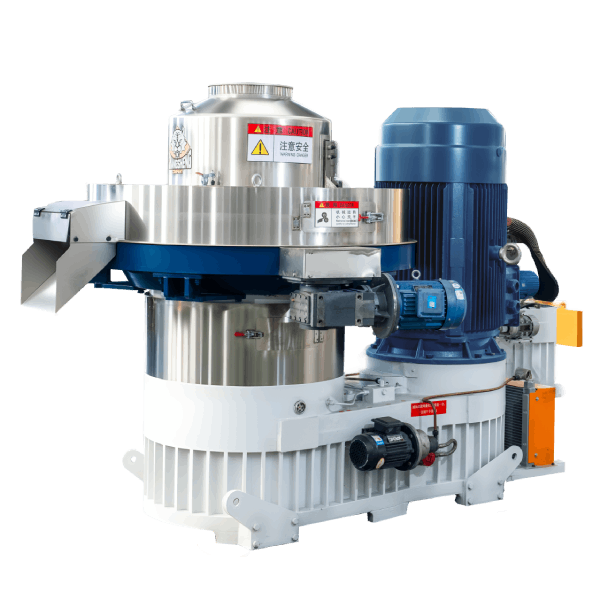
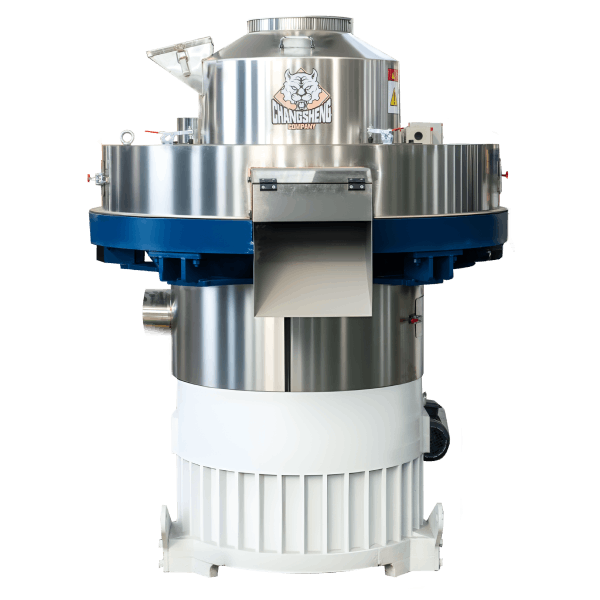
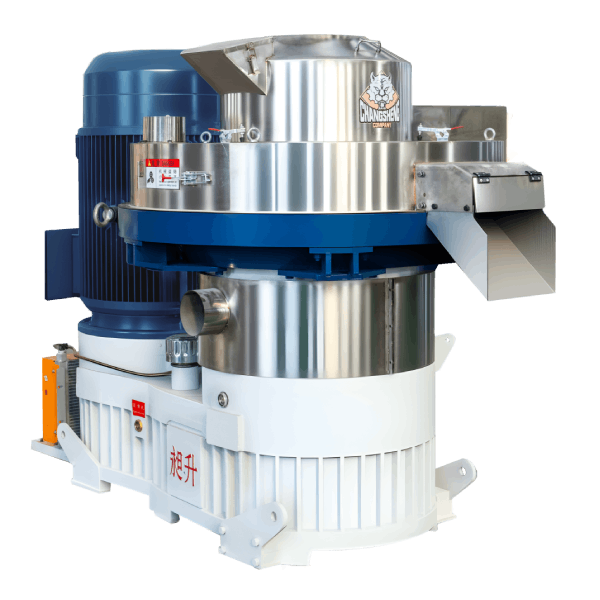
A ring die machine uses a vertical ring die. Material is fed into the center of the ring, and rollers press it outward against the die. Ring die machines are more sensitive to die compression ratio, die temperature, and residence time. If die temperature is too low, the material does not soften enough in the die holes, and pellets come out soft even when the feed rate is correct.
In practice, the same soft pellet symptom may have different causes on flat die and ring die machines. The diagnosis should start by confirming which machine type is in use.
Feed Pellet vs Biomass Pellet Soft Pellet Behavior
Soft pellet behavior also differs between feed pellet and biomass pellet production.
Feed pellets usually use steam conditioning. Binding depends on starch gelatinization and protein denaturation, both of which are driven by temperature and moisture. If conditioner temperature or moisture is out of range, pellets form but are soft. Feed pellet hardness is also affected by formulation, fat content, and particle size. Formulations high in fat or low in starch tend to produce softer pellets, and some formulations require added binder to reach the target durability.
Biomass pellets usually rely on lignin softening, which is driven by friction heat in the die. Binding depends on die temperature, compression ratio, and moisture. If die temperature is too low, lignin does not soften fully, and pellets come out soft. Biomass pellet hardness is also affected by feedstock species, bark content, and moisture variation. Softwood sawdust usually produces harder pellets than straw or rice husk under the same conditions, because softwood has higher lignin content.
A configuration that works for feed pellets may not work for biomass pellets, and vice versa.
Cold Climate and Humid Climate Effects
Climate affects pellet hardness.
In cold climate, feedstock enters the die chamber cold, and the die must generate more friction heat to reach the binding range. If the die is not warmed up before production, pellets come out soft. Frozen lumps also pass through the die without softening.
In humid climate, feedstock absorbs moisture from the air. High moisture reduces friction in the die, lowers die temperature, and reduces binding. Pellets come out soft even when the feed rate appears correct. After cooling, pellets can also absorb moisture again from humid air, which reduces hardness over time.
In both climates, moisture should be checked at the feeder inlet, not only at storage, because material conditions can change between storage and feeding.
Common Causes of Soft Pellets
Moisture Too High
High moisture is the most common cause of soft pellets in biomass pelletizing. Wet material reduces friction in the die, which lowers die temperature, prevents full lignin softening, and weakens binding. In feed pelletizing, high moisture can also dilute the formulation and reduce starch gelatinization.
Moisture Too Low
Very dry material can also cause soft pellets. Low moisture increases friction, which raises die temperature, but it also reduces the natural binding of lignin or starch. In some cases the die overheats and the material scorches, which destroys binding. Pellets may look hard at the surface but break easily.
Particle Size Out of Range
Particle size affects binding and pellet density. Fine material tends to compact unevenly and can produce soft spots. Coarse material tends to leave voids between particles, which reduces pellet density and hardness. Particle size should be consistent and within the range suitable for the die.
Die Compression Ratio Too Low
If the die compression ratio is too low, material passes through the die too easily and residence time is too short. Lignin or starch does not have enough time to soften and bind. Pellets form but are soft. Compression ratio should be matched to feedstock density, fiber content, and moisture.
Die Compression Ratio Too High
If the die compression ratio is too high, material cannot pass through the die at the required rate. The die chamber fills up, die temperature rises above the target range, and material can scorch. Scorched material loses binding properties, and pellets come out soft or brittle with a burned appearance.
Die Hole Taper and Soft Pellets
Die hole taper and die compression ratio are two different parameters, and both affect pellet hardness. Compression ratio is the ratio of die hole length to die hole diameter. Taper describes how the die hole narrows from entry to exit. A die with a gentle taper holds the material longer in the die, which gives more time for lignin or starch to bind. A die with a steeper taper compresses the material more quickly, which can shorten the binding time. In some cases a die with an appropriate compression ratio can still produce soft pellets if the taper is not matched to the feedstock. Taper and compression ratio should be confirmed together with the supplier and with a pelletizing test.
Die Temperature Too Low
Die temperature is generated by friction during pelletizing. If die temperature is too low, lignin does not soften fully or starch does not gelatinize, and pellets form but are soft. This is the most common cause of soft pellets during startup, before the die is warmed up. It is also common in cold climate, in wet material, and in low feed rate operation.
Die Temperature Too High
If die temperature is too high, material can scorch. Scorched material loses binding properties, and pellets come out soft or brittle. High die temperature is usually caused by low feed rate, high compression ratio, dry material, or worn die.
Lignin Content in Biomass Feedstock
Lignin content varies significantly across biomass feedstocks, and this affects pellet hardness directly.
Softwood sawdust usually has high lignin content and produces hard pellets.
Hardwood sawdust has lower lignin content than softwood and may require a higher compression ratio to reach the same hardness.
Straw and rice husk have low lignin content and tend to produce softer pellets under the same conditions.
Palm fiber and EFB have moderate lignin content but higher oil content, which affects binding differently.
Coffee husk and peanut shell have variable lignin content and require specific die selection.
Because of these differences, the same die and process settings cannot be expected to produce the same pellet hardness across all feedstocks.
Starch and Fat Content in Feed Formulations
Feed pellet hardness depends on starch and fat content in the formulation.
Corn and wheat contain high starch, which gelatinizes under steam conditioning and improves pellet hardness.
Soybean meal contributes protein, which also contributes to binding when conditioned correctly.
High fat content reduces friction in the die, which lowers die temperature and reduces pellet hardness. Formulations with high fat usually require a different die or a binder to reach the target durability.
The correct formulation and conditioning parameters should be confirmed with the feed formulation specialist and with a pelletizing test.
Particle Hardness and Binder Behavior
Pellet hardness depends on the binder system. In biomass, lignin is the natural binder. Feedstocks with low lignin content, such as straw and rice husk, produce softer pellets than softwood sawdust under the same conditions. In feed, starch and protein are the binders. Formulations with low starch or high fat produce softer pellets.
Binder can be added to improve hardness in low-lignin or low-starch formulations. Common binders include lignosulfonate and starch-based binders. The correct binder type and addition ratio depend on feedstock and on target pellet quality, and should be confirmed with a pelletizing test. Adding too much binder increases cost and can reduce pellet quality; adding too little binder does not solve the hardness problem.
Roller Clearance Out of Adjustment
If roller clearance is too large, rollers do not press material into the die with sufficient force, and pellets form but are soft. If clearance is too small, rollers and die wear faster and motor load rises, but pellet hardness is not necessarily improved. Roller clearance should be set according to the supplier procedure.
Feed Rate Too High or Too Low
If feed rate is too high, material passes through the die before reaching the binding temperature, and pellets come out soft. If feed rate is too low, die temperature may rise above the target range and scorch the material, which also produces soft or brittle pellets. Feed rate should be matched to the current moisture and die temperature.
Worn Die or Worn Rollers
A worn die has enlarged or polished die holes, which reduce compression. A worn roller has a worn surface, which reduces gripping force. Both conditions reduce pellet hardness and increase fines.
Cooling and Moisture Stabilization
If cooling is insufficient, pellets remain soft and deform during conveying or bagging. If cooling is excessive, pellets become brittle and produce more fines. Cooling should be matched to pellet diameter and production rate.
Cooling time depends on pellet diameter. Larger pellets hold more heat and require longer cooling time than smaller pellets. The correct cooling time should be confirmed with the cooler supplier and with the pellet diameter.
After cooling, pellets can absorb moisture from ambient air if the storage environment is humid. This is called moisture regain. Moisture regain reduces pellet hardness, increases fines, and can cause mold in storage. Moisture regain can be checked by measuring pellet moisture after cooling and again after a period in storage, and comparing the two values.
Wrong Startup Procedure
Starting the mill with a cold die, running at full feed rate before the die reaches the binding temperature, or skipping the die warm-up procedure all cause soft pellets during startup.
Step-by-Step Diagnosis
The diagnosis should follow the pellet binding chain in order.
Step 1: Confirm the Pattern
Record exactly what happens. Are pellets soft from the start, or do they become soft after a period of operation? Does it happen at startup, at steady state, or after a feedstock change? Write down the sequence, because the sequence points to the cause.
Step 2: Check Feedstock Conditions
Check moisture at the feeder inlet, not only at storage. Check particle size distribution. Check fiber content and binder behavior. Check for contamination. If the feedstock changed recently, this is the first place to look.
Step 3: Check Die Temperature
Check die temperature during production. Compare against the normal operating range for the current feedstock. If die temperature is too low, moisture or feed rate may be too high, or the die compression ratio may be too low. If die temperature is too high, feed rate may be too low, or the die compression ratio may be too high.
Step 4: Check Die Compression Ratio and Die Hole Taper
Compare the current die compression ratio against the supplier recommendation for the feedstock. If the feedstock changed and the die did not change, the compression ratio may now be wrong. Check die hole taper as well, because a die with an appropriate compression ratio can still produce soft pellets if the taper is not matched to the feedstock.
Step 5: Check Particle Size and Moisture
Check particle size distribution. Check whether the material is too fine or too coarse. Check moisture at the feeder inlet. Both conditions affect pellet hardness and should be corrected before adjusting the mill.
Step 6: Check Roller Clearance and Roller Condition
Stop the mill and lock out the power. Open the die chamber. Check roller clearance against the supplier specification. Check roller condition and die hole condition. Check for worn die surfaces or polished die holes.
Step 7: Check Feed Rate and Operating Procedure
Review the startup procedure, the feed rate ramp-up, and the shutdown procedure. Check whether the operator is running at the correct feed rate for the current moisture and die temperature. Check whether the die is being warmed up before full rate is applied.
Step 8: Check Cooling and Pellet Handling
Check cooler performance. Check whether pellets are cool and stable before screening and packing. Check for moisture regain after cooling. Check for excessive fines in the finished product.
Step 9: Check Pellet Durability and Fines
Measure pellet durability and fines content. Pellet durability is usually checked with a standard durability test. In feed applications this is often the pellet durability index test, in which a sample of pellets is tumbled under controlled conditions and the percentage of intact pellets is measured. Fines content is usually measured by screening a sample through a specified screen and weighing the fines fraction. Both measurements should be recorded against the target for the current application, and the test method should be the same each time so that results can be compared.
Decision Guide: What to Do Next
If die temperature is too low, reduce moisture, reduce feed rate, or switch to a die with a lower compression ratio.
If die temperature is too high, increase feed rate, increase moisture, or switch to a die with a higher compression ratio.
If moisture is out of range, correct moisture before adjusting the mill.
If particle size is out of range, adjust grinding or screening.
If compression ratio is wrong, replace the die with the correct specification for the current feedstock.
If die hole taper is not matched to the feedstock, confirm the correct taper with the die supplier and with a pelletizing test.
If a binder is required, confirm binder type and addition ratio with a pelletizing test.
If roller clearance is wrong, adjust clearance according to the supplier procedure.
If cooling is insufficient, adjust cooling time or airflow.
If the operating procedure is wrong, retrain operators and update the startup and shutdown procedure.
Preventive Measures
Soft pellet output can be prevented with a few routine practices.
Test feedstock moisture and particle size before every production run, or at least at each feedstock change.
Match the die compression ratio and die hole taper to the actual feedstock.
Warm up the die before applying full feed rate.
Keep a log of feedstock, moisture, feed rate, die temperature, motor current, pellet durability, and fines, so that changes are visible before they become failures.
Check roller clearance and die condition at planned intervals.
Keep spare die and roller components on site for quick replacement.
Review the cooling and screening stages when pellet quality drops.
In cold climate, warm up the die and the material before full load. In humid climate, check moisture regain and storage protection more frequently.
Effect on Energy Consumption, Die Life and Pellet Quality
Soft pellets increase cost per ton in several ways. Soft pellets break during handling, which increases fines and reduces usable product. If the cause is low die temperature or high moisture, the mill may run at reduced output, which increases fixed cost per ton. If the cause is compression ratio mismatch or die wear, the die may wear faster than necessary, which increases die replacement cost.
Soft pellets also affect downstream equipment. The screener receives more fines, the packing line receives a lower proportion of usable pellets, and the dust collection system handles a higher dust load. When output is soft, the downstream equipment works harder for the same finished output, which increases energy consumption and maintenance frequency.
For these reasons, soft pellets should be treated as a process problem, not as a minor quality issue.
When to Call the Supplier
Contact the supplier if die temperature cannot be stabilized, if compression ratio appears wrong for the feedstock, if die holes are polished or enlarged, if die hole taper appears wrong for the feedstock, if roller clearance cannot be adjusted to the correct value, if pellets remain soft even with correct moisture and die temperature, or if the problem returns after corrective action. These conditions require technical support, and often require a new die or a different operating procedure.
Frequently Asked Questions
Why is my pellet mill making soft pellets?
The most common causes are moisture out of range, die compression ratio mismatch, die temperature out of range, particle size out of range, roller clearance out of adjustment, worn die or rollers, feed rate out of range, wrong startup procedure, insufficient binder for low-lignin or low-starch feedstock, or moisture regain after cooling. Diagnosis should follow the pellet binding chain from feedstock to die chamber.
What is the difference between soft pellets and powder?
Powder means the material did not form pellets at all. Soft pellets mean the material formed pellets but the binding is weak. The two problems have different causes and different corrective actions, and should be diagnosed separately.
Can moisture cause soft pellets?
Yes. Moisture out of range is one of the most common causes. High moisture reduces friction and die temperature, which prevents full binding. Very low moisture can cause scorching and destroy binding. The correct moisture range depends on feedstock and die specification, and should be confirmed with a pelletizing test.
Can die temperature cause soft pellets?
Yes. If die temperature is too low, lignin does not soften fully or starch does not gelatinize, and pellets come out soft. If die temperature is too high, material can scorch and lose binding. Die temperature should be monitored during production, and feed rate should be adjusted in small steps to keep it within the target range.
How do I check if the die compression ratio is the problem?
Compare the current die compression ratio against the supplier recommendation for the feedstock. If the feedstock changed and the die did not change, the compression ratio may now be wrong. Check die hole taper as well, because a die with an appropriate compression ratio can still produce soft pellets if the taper is not matched to the feedstock. In many cases, compression ratio mismatch shows up first as soft pellets, and only later as jamming. The correct die selection should be confirmed with a pelletizing test.
Should I use a binder to improve pellet hardness?
Binder is usually considered for low-lignin or low-starch feedstocks, such as straw and rice husk in biomass, or certain feed formulations with low starch or high fat. For feedstocks with sufficient lignin, such as softwood sawdust, binder is usually not required. Common binders include lignosulfonate and starch-based binders. The correct binder type and addition ratio depend on feedstock and target pellet quality, and should be confirmed with a pelletizing test.
How can I prevent soft pellets in the future?
Test feedstock moisture and particle size before each run, match the die compression ratio and die hole taper to the feedstock, warm up the die before full rate, check roller clearance and die condition at planned intervals, review cooling and screening, check for moisture regain after cooling, and keep a log of feedstock, feed rate, die temperature, motor current, pellet durability, and fines.