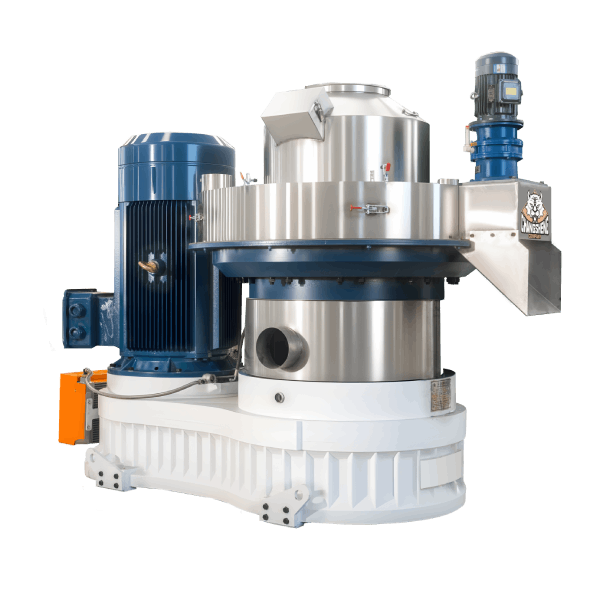
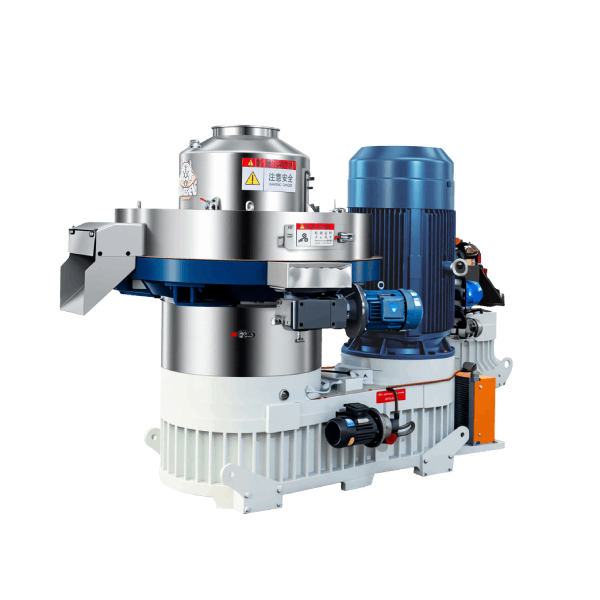
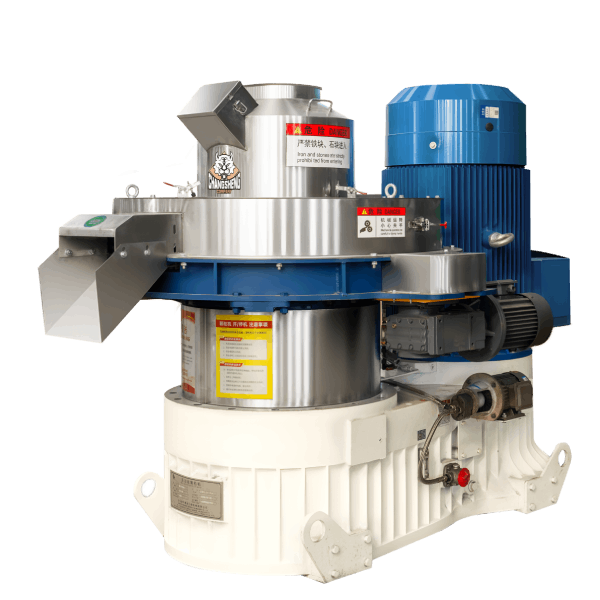
Wood Pellet Machine UK: How to Choose the Right Machine for Your Project
News 2026-08-06
The UK wood pellet market has grown steadily, driven by demand for renewable heating, small-scale commercial production, and the need to convert wood waste into a usable fuel. For UK buyers—whether you are a sawmill owner, woodworking business, farmer, or small commercial producer—choosing the right wood pellet machine depends on your material, output target, power supply, and project timeline.
This guide is written for UK buyers who need to make a practical equipment decision. It covers machine type selection, capacity options, UK-specific electrical requirements, import considerations, compliance documentation, and the questions you should ask before purchase.
Wood Pellet Machine Applications in the UK
Wood pellet machines in the UK are used across a range of applications, each with different requirements.
| Application | Typical Material | Typical Capacity | Machine Type |
|---|---|---|---|
| Wood pellet production | Sawdust, shavings | 100 kg/h – 2 t/h | Flat die or ring die |
| Sawmill waste processing | Sawdust, wood chips | 500 kg/h – 2 t/h | Ring die; crushing and drying required |
| Woodworking waste processing | Sawdust, shavings | 100–500 kg/h | Flat die or small ring die |
| Agricultural biomass | Straw, miscanthus, agricultural residues | 200 kg/h – 1 t/h | Ring die with wear-resistant die |
| Heating fuel production | Sawdust, wood chips | 100–500 kg/h | Flat die or small ring die |
| Small commercial production | Mixed wood waste | 500 kg/h – 1 t/h | Ring die; complete line |
| Industrial pellet production | Wood chips, forestry residues | 2–5 t/h+ | Ring die; fully automated line |
The correct configuration depends on the material, the target output, and the intended end use. A machine designed for dry sawdust will not perform well with wet wood chips or long-fiber agricultural material. Material testing is essential before purchase.
Material Considerations for UK Projects
UK wood pellet producers typically work with:
- Softwood sawdust and shavings (pine, spruce, fir)
- Hardwood sawdust (oak, ash, birch)
- Wood chips and forestry residues
- Agricultural residues (straw, miscanthus)
- Woodworking waste (mixed sawdust and shavings)
Each material affects moisture requirements, grinding needs, die selection, and pellet quality. Confirm your material characteristics with the supplier before selecting equipment.
What Type of Wood Pellet Machine Do You Need?
Wood pellet machines fall into two main categories: flat die and ring die. The choice depends on your production scale, operating pattern, and pellet quality requirements.
Flat Die Pellet Machine
Flat die pellet machines are suitable for:
- Small-scale production
- Farm or workshop use
- Trial or pilot production
- Low output requirements (typically 30–500 kg/h)
Flat die machines offer lower capital cost, simpler construction, and easier maintenance. They are a practical choice for first-time buyers, small woodworking operations, and pilot projects.
Limitations: shorter die life (typically 300–600 hours), more variable pellet quality, and higher energy consumption per tonne at higher output.
Ring Die Pellet Mill
Ring die pellet mills are suitable for:
- Continuous production
- Commercial production
- Larger output requirements (typically 500 kg/h – 5 t/h+)
- Industrial production
Ring die machines offer higher capacity, better pellet quality and density, longer die life (typically 800–1,500 hours), and lower specific energy consumption at scale. They are the standard choice for commercial and industrial wood pellet production.
Limitations: higher capital cost, more complex maintenance, and greater power requirements.
Do Not Select by Machine Price Alone
Machine price is only one factor in the total cost of ownership. A lower-priced machine may have shorter die life, higher energy consumption, or inadequate capacity for your material. Consider:
- Actual output with your material
- Power consumption per tonne
- Die and roller life
- Spare parts availability and cost
- Technical support and commissioning
- Compliance documentation
A machine that appears cheaper at purchase may cost more over its operating life. Evaluate total cost, not just machine price.
If the machine price is significantly lower than comparable offers, verify the die material, motor brand, and actual output with your material before proceeding.
Comparison Table
| Factor | Flat Die | Ring Die |
|---|---|---|
| Typical capacity | 30–500 kg/h | 500 kg/h – 5 t/h+ |
| Pellet quality | Moderate, variable | High, consistent |
| Die life | 300–600 hours | 800–1,500 hours |
| Specific energy | Higher per tonne | Lower at scale |
| Capital cost | Lower | Higher |
| Maintenance complexity | Low | Moderate |
| Best for | Small-scale, trial, farm | Commercial, industrial |
Capacity Selection for UK Projects
Capacity selection should be based on your actual material supply and operating hours, not on a generic price table.
| Application | Typical Capacity | Operating Hours | Line Configuration |
|---|---|---|---|
| Small workshop / trial | 30–100 kg/h | 2–6 hours/day | Flat die; manual |
| Small farm / craft production | 100–300 kg/h | 4–8 hours/day | Flat die; semi-auto |
| Small commercial | 500 kg/h | 8–16 hours/day | Flat die or small ring die |
| Commercial production | 1 t/h | 8–20 hours/day | Ring die; complete line |
| Commercial production (large) | 2 t/h | 16–20 hours/day | Ring die; automated line |
| Industrial production | 3–5 t/h+ | 20+ hours/day | Ring die; fully automated line |
Actual output depends on raw material characteristics, moisture content, and target pellet quality. Confirm capacity with the supplier based on your specific material and operating conditions.
Matching Capacity to Feedstock
Do not size the machine larger than your reliable feedstock supply. Intermittent operation wastes energy and accelerates wear. A machine running consistently at 70–80% of rated capacity typically achieves better die life and pellet quality than one running intermittently at full capacity.
For UK sawmills and woodworking operations, feedstock supply is often the limiting factor. Measure your actual waste generation over a representative period before selecting equipment.
Buying a Wood Pellet Machine From China for a UK Project
UK buyers often compare local suppliers, European suppliers, and direct import from Chinese manufacturers. Direct import can offer advantages in machine cost and customization, but requires careful project management. The following factors should be evaluated before choosing direct import.
Machine Configuration
Specify the machine configuration to match your material, capacity target, and pellet quality requirements. Do not accept a generic specification. Confirm:
- Die type and compression ratio for your material
- Motor power and rated output
- Actual output with your material (request test data)
- Pellet diameter and density
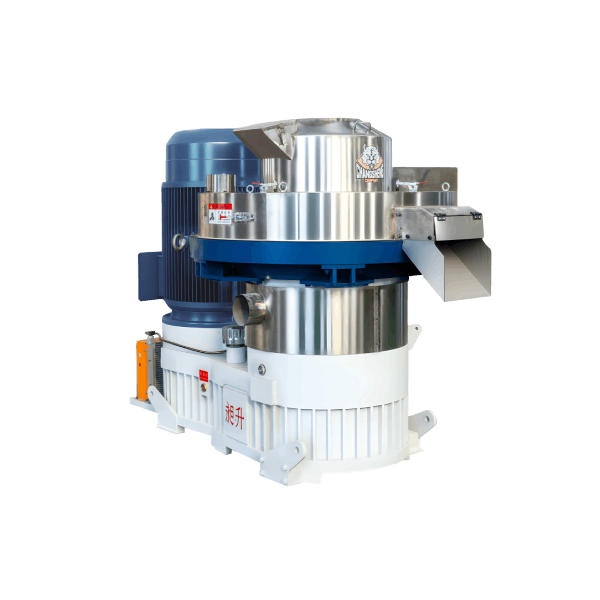
UK Electrical Requirements
UK industrial power is typically 400V/50Hz three-phase, with 230V/50Hz single-phase for smaller equipment. Industrial sites may also use 690V or other voltages for large equipment. Confirm the actual supply at your site before specifying motors.
Confirm before ordering:
- Voltage and phase at your site
- Frequency (50 Hz in the UK)
- Motor control and starter compatibility
- Compliance documentation for electrical components
Shipping and Customs
Direct import from China involves ocean freight, port charges, customs clearance, and inland transport. Confirm Incoterms (FOB, CIF, DDP), duty rates, and customs procedures before ordering. The total delivered cost includes all of these factors, not just machine price.
Installation and Remote Commissioning
If local installation support is not available, remote commissioning is increasingly common. Confirm:
- Remote support availability and time zone coverage
- Pre-commissioning checklist and preparation requirements
- Video call schedule for installation and start-up
- Local third-party support options if needed
Spare Parts and Warranty
Confirm spare parts availability, lead time, and cost before purchase. Critical spares—die, roller, bearings—should be identified and a plan established for replacement. Clarify warranty terms, including what is covered, for how long, and how claims are handled internationally.
Technical Documents
Request the technical documentation required for UK compliance and operation:
- Declaration of Conformity
- Technical file (or relevant sections)
- Risk assessment
- User manual (English)
- Electrical diagrams
- Installation and commissioning instructions
Factory Testing
Request factory testing before shipment. Factory test reports should include:
- Actual output with your material (or similar)
- Power consumption data
- Pellet quality results (durability, density)
- Test video if on-site inspection is not possible
Factory testing reduces the risk of receiving equipment that does not perform as expected.
UK Machinery Compliance and Documentation
Machinery placed on the UK market is subject to applicable UK product regulations. Requirements depend on the equipment configuration and the market in which it is placed. This section provides general guidance; confirm current requirements with your supplier and, where necessary, a qualified compliance professional.
Applicable Regulations
Machinery and electrical equipment supplied to the UK may be subject to:
- Supply of Machinery (Safety) Regulations
- Electrical Equipment (Safety) Regulations
- Electromagnetic Compatibility Regulations
- Other regulations depending on the equipment and application
Conformity Assessment and Marking
Depending on the equipment and the route to market, conformity assessment may require:
- UKCA marking or CE marking, depending on the equipment, the market (Great Britain, Northern Ireland, or EU), and current regulations
- A Declaration of Conformity
- Technical documentation demonstrating compliance
The applicability of UKCA or CE marking depends on the equipment, the market (Great Britain, Northern Ireland, or EU), and current regulations. Confirm the specific requirements for your equipment and market before purchase.
Documentation Required
| Document | Purpose |
|---|---|
| Declaration of Conformity | Compliance declaration |
| Technical file | Design and safety documentation |
| Risk assessment | Safety analysis |
| User manual (English) | Operating instructions |
| Electrical diagrams | Installation and maintenance |
| Warranty terms | Terms and conditions |
Machinery Safety and Electrical Safety
Machinery must be designed and constructed to be safe in use. Key considerations include:
- Mechanical hazards (moving parts, rotating components, pinch points)
- Electrical hazards (insulation, grounding, protection against electric shock)
- Thermal hazards (hot surfaces, fire risk)
- Dust hazards (combustible dust, explosion risk)
- EMC (electromagnetic compatibility)
Confirm that the equipment meets applicable safety requirements and that documentation is provided in English.
User Manual and Training
The user manual should cover installation, operation, maintenance, and safety. Operator training—whether on-site or remote—is essential for safe and efficient operation. Confirm training availability with the supplier.
UK Biomass Fuel Market Considerations
For UK producers, the intended end use of the pellets affects machine selection and quality requirements.
| Consideration | Why It Matters |
|---|---|
| Pellet quality | Durability, density, and fines content affect end use |
| Fuel specification | Different markets require different specifications |
| Intended end use | Heating, commercial, or industrial applications |
| Local customer requirements | Buyers may specify ENplus, Woodsure, or other standards |
| Storage and handling | Pellets must be protected from moisture and fines |
ENplus and Woodsure are commonly referenced in the UK market for wood pellet quality. Confirm whether your target customers require certified fuel.
For producers selling to UK or export markets, confirm the required fuel specification with your offtake partner before selecting equipment. Pellet quality requirements may affect die selection, feedstock preparation, and quality control.
Procurement Checklist for UK Buyers
Needs Assessment
- Raw material identified and sampled
- Moisture content measured
- Capacity requirement defined based on actual feedstock
- Power supply confirmed (voltage, frequency, phase)
- Budget established including shipping, duties, and installation
Machine Selection
- Flat die or ring die confirmed based on application
- Die compression ratio confirmed for material
- Motor power and actual output confirmed
- Pellet diameter and quality requirements confirmed
Supplier Evaluation
- Multiple suppliers compared
- Material test report requested
- Electrical configuration confirmed in writing
- Spare parts availability and lead time confirmed
- Warranty terms and remote support clarified
- Technical documentation requested
- Factory testing arranged
- References contacted
Compliance
- Applicable UK regulations confirmed
- UKCA/CE requirements clarified for your equipment and market
- Declaration of Conformity requested
- Technical documentation available
- User manual in English
Final Decision
- Total delivered cost calculated
- Delivery date confirmed
- Installation and commissioning plan agreed
- Payment terms reviewed
Frequently Asked Questions
1. Where can I buy a wood pellet machine in the UK?
UK buyers can purchase from UK distributors, European suppliers, or directly from overseas manufacturers. Local distributors offer faster delivery and local support; direct import typically offers lower machine cost but requires more project management.
2. What capacity wood pellet machine do I need for my project?
Capacity depends on your feedstock availability, operating hours, and target output. A small workshop may need 30–100 kg/h; a small commercial operation may need 500 kg/h; commercial production may need 1–2 t/h; industrial projects may require 3–5 t/h or more. Confirm with material testing.
3. Should I choose a flat die or ring die machine?
Flat die machines are suitable for small-scale, trial, farm, and low-output applications. Ring die machines are suitable for continuous production, commercial production, and larger output. The choice depends on your capacity target, operating pattern, and pellet quality requirements.
4. Is it cheaper to import a wood pellet machine from China?
Machine price is typically lower from Chinese manufacturers, but total delivered cost includes shipping, duties, electrical modifications, and installation support. Compare total cost and project risk, not just machine price.
5. What electrical configuration is required in the UK?
UK industrial power is typically 400V/50Hz three-phase, with 230V/50Hz single-phase for smaller equipment. Industrial sites may also use 690V or other voltages for large equipment. Confirm the actual supply at your site before specifying motors.
6. What compliance documentation is required for a wood pellet machine in the UK?
Machinery placed on the UK market may require UKCA or CE marking, a Declaration of Conformity, technical documentation, and a user manual in English. The specific requirement depends on the equipment, the market (Great Britain, Northern Ireland, or EU), and current regulations. Confirm current requirements with your supplier and, where necessary, a qualified compliance professional.
7. Can I test my raw material before buying a wood pellet machine?
Yes. Reputable suppliers offer material testing to confirm equipment performance, pellet quality, and actual output with your specific feedstock. Always request a test report before purchase.
8. How long does delivery take for a wood pellet machine?
UK stock can deliver within days to weeks. Direct import from overseas typically takes 6–12 weeks or more, depending on manufacturing schedule, shipping, and customs clearance.
9. What should I ask a wood pellet machine supplier before buying?
Ask about material testing, moisture requirements, actual output with your material, die compression ratio, motor power and power consumption, electrical configuration, spare parts, die replacement time, remote commissioning, factory visits, test video availability, and compliance documentation.
10. Do I need to consider fuel quality standards?
For producers selling to UK or export markets, fuel quality standards such as ENplus or Woodsure may apply. Confirm the required specification with your offtake partner before selecting equipment.
About the Author
Zhang Wei – Senior International Sales Engineer, Shandong Changsheng Machinery Co., Ltd.
Zhang Wei has over 12 years of experience in the biomass pelletizing equipment industry, with extensive experience supporting UK wood pellet and biomass projects across England, Scotland, and Wales. His background in mechanical engineering and international project execution has helped clients evaluate and select wood pellet machines for their specific material and production requirements.
With hands-on experience in both the manufacturing workshop and client-side operations, Zhang brings practical insights into successful equipment procurement—from material testing and electrical configuration to commissioning and long-term support.