Pellet Machine Die Worn Out: How to Tell When a Die Has Reached the End of Its Life
News 2026-10-12
A pellet machine die worn out is not a single event. It is a gradual process in which the die hole surface, the die hole diameter, and the die hole taper change over time. The die still runs, so the machine does not stop. But output drops, fines increase, motor load rises, and pellet quality declines. When the wear reaches a certain point, the die must be replaced. Continuing to run a worn die increases cost per ton and risks damage to rollers and to the drive system.
This page is written for plant operators, maintenance engineers, and procurement managers who need to judge whether a die is worn out, why it wore out, when to replace it, and what to specify when ordering a replacement die. It covers the signs of die wear, the causes, inspection methods, replacement criteria, and procurement steps. For ring die details, see the ring die pellet machine page on this site. For general machine maintenance, see the pellet mill page on this site. For die bolt maintenance, see the die bolt failure page on this site.
What “Die Worn Out” Actually Means
A die is considered worn out when the die hole geometry no longer produces pellets at the required quality and output under the current process settings. Wear affects three things at the same time.
Die hole surface condition. The die hole surface becomes polished, which reduces friction and compression.
Die hole diameter. The die hole diameter increases, which reduces compression and changes pellet density.
Die hole taper. The die hole taper changes as material wears the entry and exit of the hole, which changes the compression profile.
Wear does not happen at the same rate on all parts of the die. The wear pattern depends on the feedstock, the feed distribution across the die, the roller condition, and the operating conditions.
Flat Die vs Ring Die Wear Behavior
Die wear differs between flat die and ring die machines.
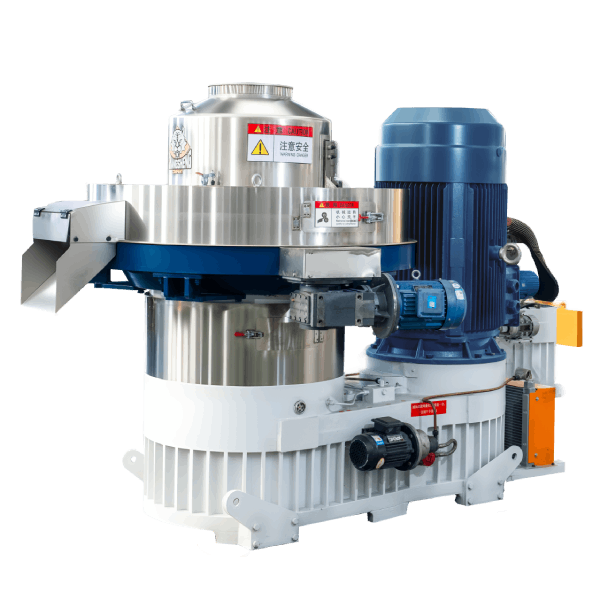
A flat die machine uses a flat plate die. The die is horizontal, and material is spread across the top surface by gravity and roller rotation. The wear pattern on a flat die is usually concentrated where material is thickest, which is often near the center or near the discharge side, depending on the feeder position. Flat die wear is usually visible from above, and hole entry condition can be inspected without removing the die from the machine.
A ring die machine uses a vertical ring die. The die is vertical, and material is pressed outward by rollers from the inside. The wear pattern on a ring die is usually concentrated where the roller pressure is highest and where the feed distribution is uneven. Ring die wear is usually inspected from the inside of the ring, and die hole entry condition should be checked along the full ring, not only at one section.
In practice, the same “die worn out” symptom may have different wear patterns on flat die and ring die machines. The inspection method and the replacement criteria should be selected based on the machine type.
Feed Pellet vs Biomass Pellet Wear Behavior
Die wear also differs between feed pellet and biomass pellet production.
Feed pellets usually use steam conditioning. The material enters the die chamber warm and with a controlled moisture. Friction and die temperature are lower than in biomass pelletizing. Feed pellet die wear is usually slower, and the die hole surface tends to polish gradually.
Biomass pellets usually rely on friction heat generated in the die. The material enters the die chamber at ambient temperature. Friction and die temperature are higher, and abrasive biomass such as rice husk and straw accelerates die wear. Biomass pellet die wear is usually faster, and the die hole surface can show scoring and cracking in addition to polishing.
A die specification that works for feed pellets may not work for biomass pellets, and vice versa. The die material, heat treatment, and compression ratio should be selected based on the actual application.
Signs That a Pellet Machine Die Is Worn Out
Die wear appears as a combination of signs. A single sign is not enough to confirm wear. Several signs together are a reliable indicator. The pattern depends on the feedstock, the die specification, and the operating condition.
Lower Output at the Same Settings
The die produces fewer tons per hour than it did when new, at the same moisture, feed rate, and die temperature. Lower output is one of the earliest signs of die wear. As a practical reference, a drop of 10 to 20 percent from the die’s original output at the same settings is a strong indicator that die condition should be inspected. The exact threshold depends on the application and should be confirmed with a pelletizing test.
Higher Fines and Lower Pellet Durability
Pellet durability drops and fines increase. Pellets may break during conveying, screening, or packing. As a practical reference, a rise in fines of 2 to 5 percentage points above the die’s original fines level at the same settings is a strong indicator that die condition should be inspected. The exact threshold depends on the application and on the target pellet grade.
Higher Motor Load or More Frequent Overload Trips
A worn die increases friction, which increases motor load. Motor load should be compared against the die’s original load record at the same feedstock and settings. As a practical reference, a rise of 5 to 10 percent above the original load at the same settings is a strong indicator that die condition should be inspected. The exact threshold depends on the motor rating and on the machine design.
Pellet Surface Change
Pellets may show a rougher surface, more cracks, or a different color. The pellet may also feel softer than before. These changes are related to the die hole surface and taper.
Die Temperature Drift
Die temperature may run higher or lower than normal at the same settings. Higher temperature is caused by increased friction; lower temperature is caused by reduced compression. Die temperature should be compared against the die’s original temperature record at the same feedstock and settings. A consistent drift of more than a few degrees from the original record at the same settings is a strong indicator that die condition should be inspected. The exact tolerance depends on the machine design and on the process.
Visible Wear on Die Hole Entry and Exit
The die hole entry and exit may show a polished appearance, rounded edges, or an enlarged diameter. Visible wear on the hole entry and exit is a direct indicator of die wear.
Uneven Wear Across the Die Surface
Wear may be concentrated in one section of the die. Uneven wear points to uneven feed distribution, roller condition, or a feeder alignment problem.
Causes of Die Wear
Abrasive Feedstock
Feedstock with high silica content, such as rice husk, straw, and coconut shell, wears the die faster than softwood sawdust. Abrasive feedstock is the main cause of accelerated die wear. The rate of wear depends on the silica content and on the die material and heat treatment.
Mineral Contamination
Sand, soil, and small stones in the feedstock wear the die hole surface. Mineral contamination is often present in field-collected material and in material stored outdoors.
Bark Content
Bark contains silica and abrasive particles. High bark content increases die wear.
Moisture Out of Range
Very dry material increases friction and die temperature, which accelerates wear. Very wet material reduces friction, which changes the compression profile and can also cause uneven wear.
Compression Ratio Mismatch
If the die compression ratio is too high for the feedstock, the die works harder, and the hole surface wears faster. If the compression ratio is too low, material passes through too easily and pellet quality drops, which also shortens die life.
Roller Condition and Roller Clearance
A worn roller or incorrect roller clearance changes the load on the die. If clearance is too large, material slips and wears the die unevenly. If clearance is too small, both roller and die wear faster. Die wear and roller wear act on each other: a worn die increases roller load, which accelerates roller wear, and a worn roller increases die load, which accelerates die wear. Both should be inspected together.
Feed Distribution and Feeder Alignment
If material is not distributed evenly across the die, some sections of the die work harder than others. Uneven distribution accelerates local wear and reduces die life.
Repeated Overload and Abnormal Load
Repeated overload events increase the load on the die surface and accelerate wear. This is common in projects with unstable feed, variable moisture, or repeated jam events.
Climate Effect on Die Wear
Climate affects die wear. In cold climate, material enters the die chamber cold, and the die must generate more friction heat to reach the binding range. This increases the load on the die surface and can accelerate wear, especially if the die is not warmed up before production. In humid climate, material can absorb moisture from the air, which reduces friction and changes the compression profile. Corrosion can also form on the die surface when the machine is not in use, which weakens the die hole surface. In both climates, the die should be inspected more frequently than in stable indoor conditions.
How to Inspect a Die for Wear
Die inspection should be done with the power locked out and with the die chamber open. Inspection should record the following.
Die Hole Diameter Measurement
Measure the die hole diameter at several positions on the die. The positions should be distributed across the die surface, with at least three measurements in each quadrant and additional measurements near the discharge side and near the entry side. This distribution allows the wear pattern to be mapped, not only the average diameter. The measurement should be taken with a suitable gauge, such as a pin gauge or a bore gauge, and the same method should be used each time so that measurements can be compared.
Die Hole Taper and Entry Condition
Inspect the die hole entry and exit. A polished entry, a rounded edge, or a chamfered entry indicates wear. The taper should be compared against the original specification where the information is available. Taper can be checked with a taper gauge or by measuring hole diameter at the entry, at the midpoint, and at the exit, and comparing the values against the original specification.
Die Hole Surface Condition
Inspect the die hole surface for polishing, scoring, or cracking. Polished holes indicate reduced friction. Scored holes indicate abrasive wear. Cracked holes indicate overload or thermal stress. The inspection can be done with a light and, where available, with a borescope for the inner surface.
Die Surface Flatness
Check the die surface for flatness and for even contact marks from the rollers. Flatness can be checked with a straight edge and a feeler gauge, or with a dial indicator on a suitable fixture. The acceptable tolerance should come from the equipment manufacturer’s manual. Uneven contact marks indicate uneven load and uneven wear.
Wear Pattern Across the Die
Map the wear pattern across the die. The mapping should record the wear level at each inspection position on a simple diagram of the die surface. If wear is concentrated in one section, the cause is usually feed distribution, roller condition, or feeder alignment, rather than general die wear. The wear map can be compared from one inspection to the next to track the wear rate.
Record the Inspection
Record the die hole diameter, taper condition, surface condition, wear pattern, and total running hours. This record allows the wear rate to be tracked over time, and it supports the decision to replace the die.
How to Decide When to Replace a Die
The decision to replace a die is based on a combination of factors. A single factor is not enough, and the correct threshold depends on the application.
Replace the die when pellet quality drops below the target even after correcting moisture, die temperature, and feed rate.
Replace the die when output drops significantly at the same settings and cannot be recovered by adjustment. A drop of more than 20 percent from the die’s original output at the same settings is a strong indicator.
Replace the die when die hole diameter has increased beyond the tolerance allowed by the equipment manufacturer.
Replace the die when die holes show polishing, scoring, or cracking that cannot be corrected.
Replace the die when motor load increases and cannot be reduced by adjusting the process. A rise of more than 10 percent above the original load at the same settings is a strong indicator.
Replace the die when the die has reached the running hours recommended by the equipment manufacturer for the current feedstock and operating conditions.
The correct replacement threshold is project-specific. It depends on the feedstock, the die specification, the operating conditions, and the target pellet quality, and should be confirmed with the equipment manufacturer, not assumed from a general figure.
What to Do Before Replacing a Die
Before replacing the die, the following should be checked.
Check the roller condition and roller clearance. A worn die is often accompanied by worn rollers, and replacing only the die without correcting the roller condition may cause early failure of the new die.
Check the feeder position and alignment. If the feeder is misaligned, the new die will wear unevenly.
Check the feedstock moisture and particle size. If the feedstock is out of specification, the new die will wear faster.
Check the die bolt condition and flange surface. If the flange surface is not flat, the new die will not seat correctly.
Review the operating record for overload events, jam events, and moisture variation. These conditions affect die life.
How to Specify a Replacement Die
When ordering a replacement die, the following should be confirmed with the supplier.
Die size and die hole diameter.
Die compression ratio.
Die hole taper.
Die material and heat treatment.
Die hardness and hardness profile.
Die compatibility with the machine model and with the roller assembly.
Die compatibility with the feedstock and with the target pellet diameter.
Recommended running hours under the actual feedstock and operating conditions.
Price, lead time, and spare parts availability.
The die specification should match the machine model and the actual feedstock. A die specification from a general catalog may not be suitable for the actual feedstock. To confirm the match, the die specification should be tested with a pelletizing test on the actual feedstock, or verified against a reference project with the same feedstock type, moisture, and target pellet diameter. The pelletizing test should record the output, pellet quality, and motor load, and these values should be compared against the supplier’s stated values.
Effect on Cost per Ton
A worn die increases cost per ton in several ways. Lower output increases the fixed cost per ton. Higher fines reduce the proportion of usable product. Higher motor load increases power cost. More frequent overload trips increase downtime. Replacing the die earlier than necessary wastes the remaining die life, while replacing it too late increases the risk of roller and drive system damage. The correct replacement timing is part of cost control, not only part of maintenance.
Frequently Asked Questions
How do I know when my pellet machine die is worn out?
A worn die shows lower output at the same settings, higher fines, lower pellet durability, higher motor load, changes in pellet surface, die temperature drift, and visible wear on die hole entry and exit. A single sign is not enough; several signs together indicate wear. Die hole diameter measurement and die hole surface inspection are the most reliable indicators. As a practical reference, a drop of more than 10 to 20 percent in output, a rise of more than 5 to 10 percent in motor load, or a rise of more than 2 to 5 percentage points in fines, compared to the die’s original record at the same settings, is a strong indicator that the die should be inspected.
What causes a pellet machine die to wear out quickly?
The most common causes are abrasive feedstock, mineral contamination, high bark content, moisture out of range, compression ratio mismatch, worn rollers, incorrect roller clearance, uneven feed distribution, repeated overload events, and climate conditions. The correct cause should be identified before replacing the die, so that the new die does not wear out in the same way.
Can a worn die be repaired or reconditioned?
In some cases, die reconditioning is possible, but the decision depends on the die hole condition, the die material, and the equipment manufacturer’s recommendation. Dies with polished holes, enlarged holes, or cracks are usually not suitable for reconditioning. The correct option should be confirmed with the die manufacturer.
How often should a pellet machine die be replaced?
Die replacement interval depends on the feedstock, the die specification, the operating conditions, and the target pellet quality. It should be determined by tracking die hole diameter, output, fines, and motor load over time, and by following the equipment manufacturer’s recommendation. There is no general replacement interval that applies to all projects.
What should I specify when ordering a replacement die?
Specify the machine model, die size, die hole diameter, compression ratio, die hole taper, die material and heat treatment, target pellet diameter, feedstock type and moisture, and the required running hours. Confirm compatibility with the roller assembly and with the machine model. Where possible, confirm the die specification with a pelletizing test on the actual feedstock, or against a reference project with the same feedstock type and operating conditions.
Can I replace only the die and keep the old rollers?
In some cases yes, but the roller condition should be checked first. A worn die is often accompanied by worn rollers, and replacing only the die without correcting the roller condition can cause early failure of the new die. If the rollers are near the end of their life, they should be replaced at the same time as the die.