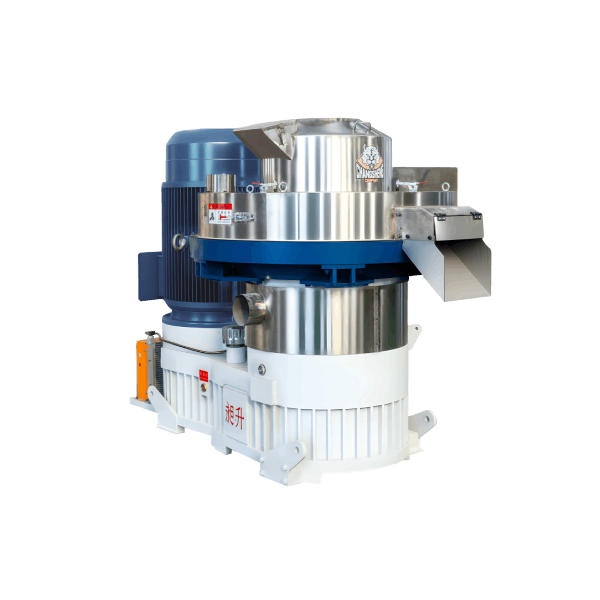
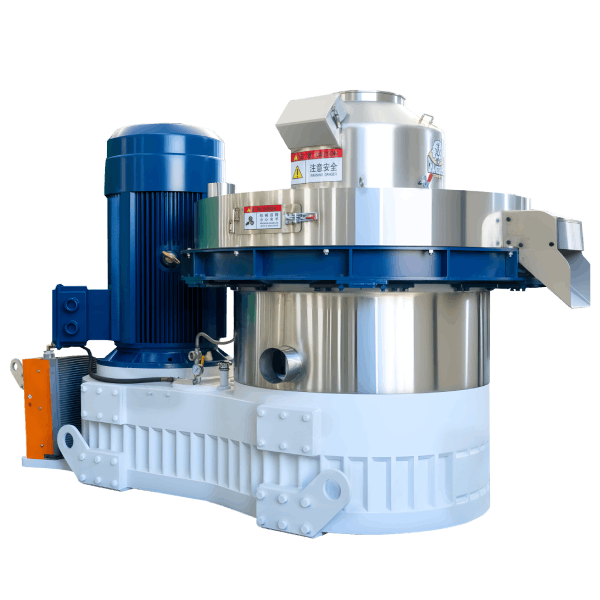
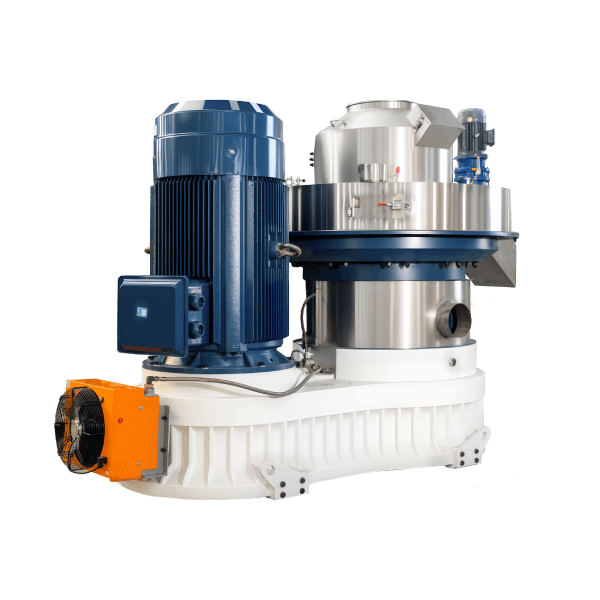
Pellet Production Line Malaysia: 0.5-5 t/h for Palm & Wood
News 2026-05-15
1. Product Definition
A pellet production line for Malaysia processes palm oil mill waste (EFB, palm kernel shell, mesocarp fiber) and wood residues (sawdust, rubberwood) into fuel pellets, featuring upgraded 20CrMnTi dies (for high-silica EFB, 8-12% ash), 415V/50Hz electrical, SST/SIRIM certification, and tropical humidity protection (80-90% RH).
2. Technical Parameters & Specifications
| Parameter | Small Line | Medium Line | Large Line |
|---|---|---|---|
| Capacity (t/h) | 0.5 – 1.0 | 1.0 – 2.0 | 2.0 – 5.0 |
| Total Installed Power (kW) | 100 – 150 | 150 – 250 | 250 – 450 |
| Pellet Mill Motor (kW) | 55 – 90 | 90 – 132 | 132 – 200 |
| Die Material | 20CrMnTi (required for EFB) | 20CrMnTi + coating | 20CrMnTi + tungsten rollers |
| Die Life – EFB (hours) | 800 – 1,200 | 1,000 – 1,500 | 1,200 – 2,000 |
| Die Life – PKS (hours) | 1,200 – 1,800 | 1,500 – 2,000 | 1,800 – 2,500 |
| Pellet Diameter (mm) | 6, 8 | 8, 10 | 10, 12 |
| Calorific Value (MJ/kg) – PKS | 18 – 20 | 18 – 20 | 18 – 20 |
| Calorific Value – EFB | 14 – 17 | 14 – 17 | 14 – 17 |
| Optimal Moisture (%) | 12 – 18 | 12 – 18 | 12 – 18 |
| Voltage | 415V three-phase | 415V three-phase | 415V three-phase |
| SST/SIRIM Certification | Available | Available | Available |
| Price Range (USD) | $100k – 200k | $200k – 400k | $400k – 800k |
For Malaysia pricing: Request a pellet production line Malaysia quotation with SST/SIRIM certification and delivery to Port Klang.
3. Structure & Material Composition
Malaysia-Specific Design Features
Electrical (Malaysia Standards)
- Voltage: 415V three-phase (standard industrial)
- Frequency: 50Hz
- Certification: SST (Sales and Service Tax) exemption for certain equipment. SIRIM (MS IEC 61439) for control panel.
- Plugs: BS 1363 (UK type) for small equipment
Upgraded Metallurgy for Palm Waste
- EFB (Empty Fruit Bunch): 20CrMnTi die (case HRC 60-62) + tungsten carbide rollers – high silica (8-12% ash)
- Palm Kernel Shell (PKS): 20CrMnTi die (hard, abrasive)
- Mesocarp fiber: GCr15 or 20CrMnTi
- Rubberwood: GCr15 standard
Tropical Adaptations
- Corrosion protection: Epoxy coating + stainless hardware (humidity 80-90%)
- Dust explosion protection: ATEX/NFPA for palm dust
- Covered storage (rains – Malaysia 2,000-4,000mm/year)
4. Manufacturing Process (Engineering Steps)
Step 1 – Raw Material Drying
Challenge: EFB fresh 60-70% moisture, PKS 15-20%, mesocarp fiber 40-50%.
Equipment: Rotary dryer (biomass-fired using palm waste)
Step 2 – Grinding
Equipment: Hammer mill (PKS requires 3-4mm screen, EFB requires shredder first)
Energy: PKS requires 50% more energy than wood
Step 3 – Pelletizing
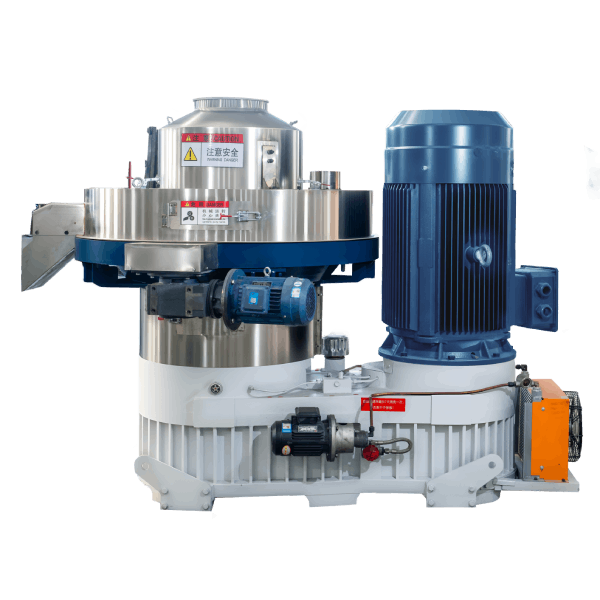
Equipment: Ring die pellet mill, 20CrMnTi die
Control: Die temperature 85-100°C, roller gap 0.15-0.25mm
Derate: EFB capacity 40-60% of wood rating
Step 4 – Cooling
Equipment: Counterflow cooler
Why: Tropical humidity – pellets must be cool and dry (<10% moisture)
Step 5 – Screening & Bagging
Equipment: Rotary screener, bagging scale
Export: Pellets often exported to Japan, Korea – requires ENplus/ISO 17225-6
5. Industry Comparison
| Parameter | Chinese Import (Direct) | Malaysian Distributor | Malaysian Manufacturer | Used Equipment |
|---|---|---|---|---|
| Price (USD) | $100k-800k | $150k-1M | $200k-1.2M | $50k-400k |
| SST exemption | Apply yourself | Usually included | Usually included | No |
| SIRIM certification | Optional | Yes | Yes | Unknown |
| 20CrMnTi die option | Yes (upgraded) | Yes | Yes | Variable |
| Spare parts in Malaysia | Some (KL stock) | Yes | Yes | Limited |
| Technical support | Remote (video) | Local phone/visit | Local visit | None |
| Lead time | 12-20 weeks | 4-8 weeks | 8-16 weeks | Immediate |
| Why Choose Shandong Changsheng | Best price, 20CrMnTi dies, SST eligible | Convenience premium | Highest price | High risk |
Compare Malaysia sourcing options: Request factory-direct price to Port Klang with SST exemption.
6. Application Scenarios (By Buyer Role)
Distributors / Importers
Seeking pellet production line Malaysia for palm oil mills (Sabah, Sarawak, Johor, Pahang). Decision focus: 20CrMnTi dies (EFB), SST exemption, SIRIM certification, and spare parts in KL.
EPC Contractors
Specifying pellet lines for Malaysian biomass plants. Decision focus: EFB shredding (required), palm kernel shell grinding (3-4mm), dust explosion (ATEX), and export certification (ENplus, Japan specification).
Engineering Consultants / Technical Advisors
Advising palm oil mills on waste-to-energy. Decision focus: payback (12-24 months), Japan/Korea export price ($130-180/ton), and SST exemption (0% vs 10%).
End-user Facilities
Palm oil mills, biomass power plants, wood processing (rubberwood), pellet exporters.
7. Core Technical Pain Points & Engineering Solutions
Pain Point 1 – EFB (Empty Fruit Bunch) Fibrous, Difficult to Pellet
Problem: Standard pellet mill cannot process EFB (long fibers, 50-60% moisture).
Root cause: EFB requires shredding before grinding.
Solution:* EFB shredder (primary) + hammer mill (secondary). 20CrMnTi die (abrasion resistant). Expect 40-60% capacity vs wood.
Pain Point 2 – Palm Kernel Shell (PKS) Very Hard
Problem:* PKS extremely hard (density 800-1,000 kg/m³). Standard die wears rapidly (500-800 hours).
Root cause:* Hard shell, abrasive.
Solution:* 20CrMnTi die (HRC 60-62). Tungsten carbide rollers. 3-4mm screen (finer than wood). Expect 50-70% capacity vs wood.
Pain Point 3 – High Humidity (80-90%) Causes Mold
Problem:* Pellets stored in tropical warehouse mold within 2-4 weeks.
Root cause:* Pellet moisture >10%, humidity 80-90%.
Solution:* Dry pellets to <8% moisture (cooler). Seal in plastic bags (not paper). Add mold inhibitor (propionic acid). Dehumidified storage.
Pain Point 4 – Dust Explosion (Palm Dust)
Warning:* Palm dust (EFB, PKS, fiber) explosive. Ignition from static, spark.
Mitigation:* Explosion vents on cyclones. ATEX motors (Zone 21/22). Spark detection with water mist. Ground equipment. Regular cleaning.
8. Risk Warnings & Mitigation Strategies
Risk 1 – EFB Shredder Missing (Cannot Process EFB)
Warning:* Pellet line has hammer mill but no EFB shredder. EFB jams, cannot process.
Mitigation:* Specify EFB shredder (primary) + hammer mill (secondary). Budget $30k-100k for shredder.
Risk 2 – No SST Exemption (10% Tax)
Warning:* Equipment not SST exempt. Buyer pays 10% extra (RM40k-400k).
Mitigation:* Apply for SST exemption (Schedule A) – biomass processing equipment eligible. Use customs broker.
Risk 3 – Moisture in Storage
Warning:* Pellets stored in open warehouse absorb moisture, mold.
Mitigation:* Sealed plastic bags. Dehumidifier. Covered storage. Use within 3 months.
9. Procurement Selection Guide (6 Actionable Steps)
Step 1 – Identify your feedstock
EFB (high moisture, fibrous) → EFB shredder + 20CrMnTi die. PKS (very hard) → 20CrMnTi die + tungsten rollers. Mesocarp fiber → GCr15 or 20CrMnTi. Rubberwood → GCr15.
Step 2 – Apply for SST exemption
Register with Customs Department (MySST). Apply for exemption (Schedule A – biomass equipment). Use customs broker.
Step 3 – Get total landed cost (RM)
Formula: FOB price (USD → RM) + ocean freight (RM10k-30k) + customs duty (0-20%) + 10% SST (if not exempt) + customs broker (RM2k-5k) + inland freight (RM2k-10k). Add 20-40% to FOB.
Step 4 – Request 20CrMnTi die
Standard GCr15 insufficient for EFB/PKS. Specify 20CrMnTi (add 5k−20k).TungstenrollersforPKS(add3k-10k).
Step 5 – Plan for export certification
Japan: requires moisture <10%, ash <3% (PKS), <10% (EFB), calorific value >17 MJ/kg. Request ENplus or ISO 17225-6.
Step 6 – Negotiate local support
Supplier must have spare parts in Malaysia (KL). Remote support (video). Local technician training.
10. Engineering Case Study
Project Background: A palm oil mill in Johor, Malaysia produced 30,000 tons/year of EFB (60% moisture) and 10,000 tons/year PKS. Wanted to pelletize for export to Japan ($150/ton).
Initial Problem: Mill purchased standard wood pellet line (RM2.5M). No EFB shredder. EFB jams. PKS wore die in 400 hours. Humidity caused mold. Abandoned after 1 year.
Root Cause Analysis:
- No EFB shredder (could not process EFB)
- Standard GCr15 die (failed with PKS)
- No humidity control (mold)
- No dust explosion protection
Solution Implemented (Malaysia-Spec Pellet Line):
| Component | Specification | Cost (RM) |
|---|---|---|
| EFB shredder | 2 t/h, 45kW | RM200k |
| Hammer mill (PKS) | 3mm screen, 75kW | RM150k |
| Pellet mill | 132kW, 20CrMnTi die | RM500k |
| Rotary dryer | 1.5m × 12m | RM400k |
| Cooler + bagging | Complete | RM200k |
| Dust explosion | ATEX vents, spark detection | RM100k |
| Shipping (China to Port Klang) | 40ft container × 3 | RM80k |
| Installation | Local contractor | RM150k |
| Total | RM1.78M |
Final Data Results (12 months operation):
| Metric | Standard Line (Failed) | Malaysia-Spec Line |
|---|---|---|
| EFB processed | 0 | 15,000 tons |
| PKS processed | 0 | 8,000 tons |
| Die life – PKS (hours) | 400 | 1,800 |
| Annual pellet production | 0 | 20,000 tons |
| Export revenue (RM800/ton) | RM0 | RM16M |
| Payback | N/A | 2 months |
Request a Malaysia-spec pellet line quotation: Contact engineering team with your palm oil mill capacity and feedstock mix.
11. FAQ
Q1: What is the price of a pellet production line in Malaysia?
RM400k – 1M (0.5-1 t/h). RM1M – 2.5M (1-2 t/h). RM2.5M – 5M (2-5 t/h). Add 20-40% for shipping, duty, SST (if not exempt).
Q2: Do I need SST exemption for pellet equipment in Malaysia?
Yes, to avoid 10% SST. Apply for exemption (Schedule A – biomass processing equipment). Use customs broker.
Q3: What is the best pellet mill for EFB (Empty Fruit Bunch)?
Ring die with 20CrMnTi die + EFB shredder (primary). Tungsten carbide rollers. Expect die life 800-2,000 hours.
Q4: What about palm kernel shell (PKS)?
PKS very hard. Requires 20CrMnTi die + tungsten rollers. 3-4mm hammer mill screen. Expect die life 1,200-2,500 hours.
Q5: How to prevent mold in Malaysian humidity?
Dry pellets to <8% moisture (cooler). Seal in plastic bags (not paper). Add mold inhibitor (propionic acid). Dehumidifier in storage.
Q6: What certifications are needed for export?
Japan: moisture <10%, ash <3% (PKS) or <10% (EFB), calorific >17 MJ/kg. Europe: ENplus or ISO 17225-6. SIRIM for local.
Q7: How long does delivery take to Malaysia?
Manufacturing: 6-10 weeks. Ocean freight: 10-14 days (China to Port Klang). Customs: 1-3 weeks. Total: 10-18 weeks.
Q8: What import duties apply to pellet lines in Malaysia?
HTS code 8436.80.00. Duty 0-20% depending on classification. SST 10% (exempt for biomass equipment). Use customs broker.
Q9: Can I export pellets to Japan from Malaysia?
Yes. Japan is major importer of PKS and EFB pellets. Price $130-180/ton. Requires low moisture (<10%), high calorific (>17 MJ/kg).
Q10: What about dust explosion risk?
Palm dust explosive. Install explosion vents, ATEX motors, spark detection, grounding. Required for insurance.
Q11: Do I need an EFB shredder?
Yes for EFB (fibrous, long fibers). Hammer mill cannot process unshredded EFB. Shredder + hammer mill required.
Q12: What is the typical payback for a palm oil mill?
6-12 months for mills replacing diesel/coal. 12-24 months for export pellets. Faster with free waste.
Q13: Is after-sales support available in Malaysia?
Some suppliers have KL stock. Remote support (video). Ask for local technician.
Q14: What are the power requirements?
415V three-phase, 50Hz (Malaysia standard). Ensure mill has sufficient transformer capacity (500kVA for 2 t/h line).
Q15: Do I need SIRIM certification?
For local use, optional but recommended. For export, not required (buyer specifies ENplus/ISO).
12. Commercial Call-to-Action
For Malaysian palm oil mills and biomass plants: Request a pellet production line Malaysia quotation with 20CrMnTi dies, EFB shredder, SST exemption, and delivery to Port Klang.
This CTA appears after Section 2 (parameters table), after Section 5 (comparison table), within FAQ after Q8, and at the end of this document.
Need an SST exemption guide? Contact the engineering team for SST exemption application assistance and customs broker referral.
Looking for Japan export certification? Request ENplus/ISO 17225-6 documentation for pellet quality.
To proceed: Send your inquiry via the contact form. Include your palm oil mill capacity (tons FFB/hour), feedstock (EFB, PKS, fiber), and target export market.
13. Author & E-E-A-T Credentials
Author: Zhang Wei
Malaysia & Southeast Asia Market Specialist
- 11 years in pellet equipment export to Malaysia (2014–present)
- Deployed 20+ pellet lines to Malaysia (Johor, Sabah, Sarawak, Pahang, Perak)
- Developed 20CrMnTi die specification for EFB and PKS
- Author of “Pellet Production Guide for Malaysia” (China Machine Press, 2023)
- Member of the Malaysian Biomass Industries Confederation (MBIC)
Affiliation: Shandong Changsheng Machinery Co., Ltd.
The author has directly managed Malaysian deliveries for pellet production line Malaysia projects at palm oil mills, wood processing plants, and export pellet facilities, navigated SST exemption, and validated die life for EFB/PKS. All specifications, pricing data, and palm waste solutions are derived from actual Malaysian installations from 2018–2026.