Dispose of Wood Waste: Options, Cost & Buyer Guide
News 2026-10-09
Dispose of Wood Waste: How to Compare Landfill, Biomass Fuel, Pelletizing and Briquetting
Disposing of wood waste is not a single decision. It is a choice between several options that differ in cost, regulatory exposure, and potential revenue. The right option depends on the type of wood waste, the volume available, the local regulatory environment, the available power supply, and whether the buyer wants to reduce disposal cost or to create a new product stream.
The practical question for a buyer is not which option is the cheapest on paper. The real question is which option is technically feasible for the specific wood waste, and which option has a defensible cost or revenue case over several years.
This guide is written for sawmills, furniture factories, plywood and board plants, pallet workshops, construction and demolition contractors, woodworking businesses, and biomass fuel producers. It covers the wood waste types, disposal options, technical feasibility, cost factors, regulatory considerations, and procurement steps. For the process of turning sawdust into pellets, see the turn sawdust into pellets page on this site. For the general wood pellet production system, see the machine to make wood pellets page on this site.
What Counts as Wood Waste
Wood waste is not a single material. It includes several categories with different characteristics and different disposal options.
Sawdust and fine wood dust from sawing, sanding, and cutting operations.
Wood shavings from planing and profiling.
Wood chips and offcuts from milling, joinery, and pallet production.
Bark from debarking operations.
Construction and demolition wood, which may include treated, painted, or contaminated wood.
Pallet and crate wood, which may include nails, staples, and treated wood.
Plywood, MDF, and board plant residue, which may contain resin and glue.
Each category has different moisture, particle size, contamination level, and suitability for different disposal routes. A disposal strategy that works for clean softwood sawdust may not work for treated construction wood or resin-containing board residue.
Wood Waste by Species and Treatment
Species affects moisture, ash content, and pellet quality. Softwood sawdust from pine, fir, and spruce usually pelletizes more easily because of higher lignin content. Hardwood sawdust from oak, maple, and beech is denser and more abrasive, and may require a higher compression ratio to reach the same pellet durability. Ash content is usually lower in clean softwood and higher in mixed wood waste with bark or soil.
Treatment status affects waste classification in most regions. Clean, untreated wood is usually treated as a separate category from treated, painted, or glued wood. Treated wood may contain preservatives that are not suitable for fuel pellets or bedding. Painted wood may contain heavy metals. Glued wood, such as plywood and MDF, may contain resins and adhesives. These categories may be subject to different disposal requirements, and may not be suitable for pelletizing or briquetting for fuel.
Before choosing a disposal route, confirm the species mix and treatment status of the wood waste. This determines which options are technically feasible.
Why Wood Waste Disposal Is a Real Problem
Wood waste disposal is a real problem for three reasons.
First, landfill cost. In many regions, landfill fees for industrial wood waste have risen, and some regions restrict the landfilling of biodegradable waste.
Second, regulatory pressure. Open burning of wood waste is restricted or banned in many regions because of air quality regulations. Treated, painted, and glued wood may be classified as a different waste stream from clean wood, with different disposal requirements.
Third, storage and safety. Accumulated wood dust and fine wood waste create fire and explosion risk. Storage of wet wood waste can produce mold, odor, and in some cases spontaneous heating.
Because of these factors, wood waste disposal is not only a cost question. It is also a regulatory, safety, and operational question.
Disposal Options for Wood Waste
Landfill
Landfill is the simplest disposal route, but it is increasingly expensive and increasingly restricted. Landfill is suitable for mixed, contaminated, or treated wood waste that cannot be processed into fuel or other products. Landfill cost depends on local tipping fees, transport distance, and any regulatory restrictions. Landfill should be treated as a baseline cost against which other options are compared.
Open Burning
Open burning is restricted or banned in many regions. It is not a recommended disposal route for commercial volumes of wood waste. Where allowed, it is usually limited to clean, untreated wood and to specific conditions. Air quality regulations and fire safety regulations should always be confirmed before considering open burning.
Biomass Fuel for On-Site Boilers
Clean wood waste can be used as biomass fuel in on-site boilers, kilns, or dryers. This route avoids landfill cost and can replace purchased fuel. Biomass boilers usually require wood chips or pellets within a specified moisture and particle size range. This route is common in sawmills, board plants, and wood processing facilities where there is a continuous heat demand.
Pelletizing
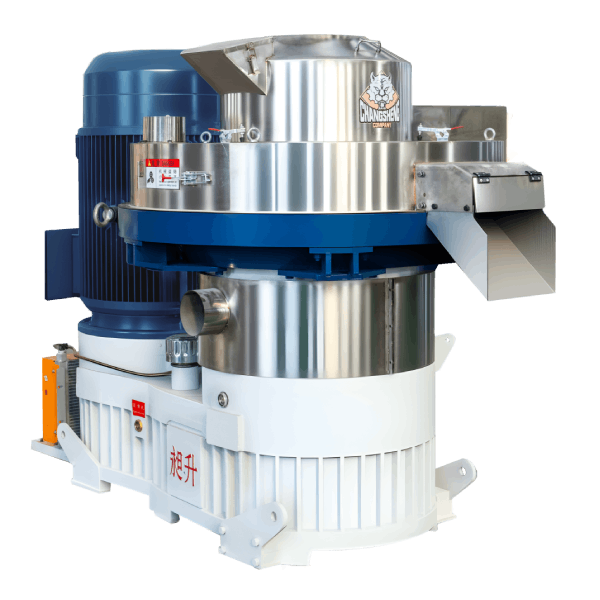
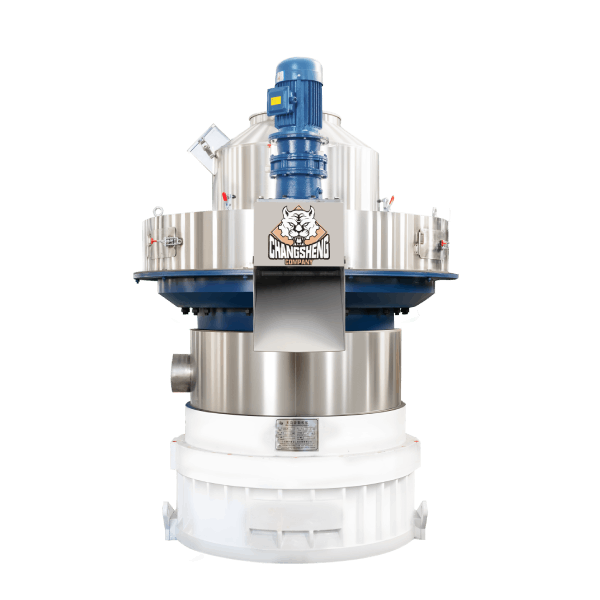
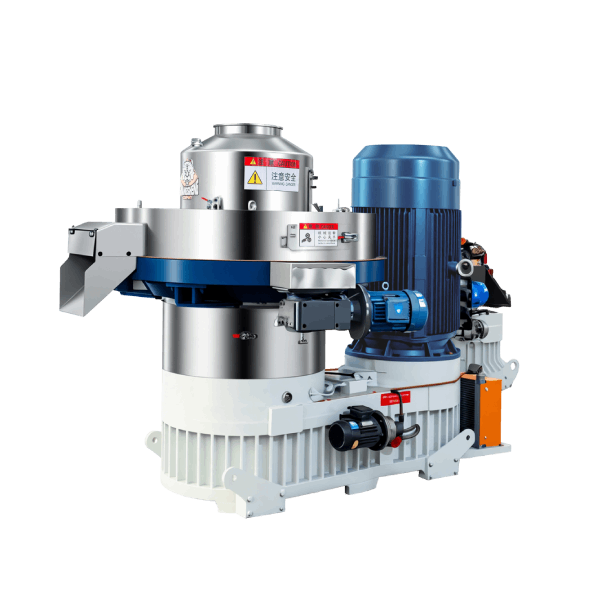
Pelletizing converts wood waste into dense, uniform pellets for fuel, bedding, or other markets. It requires a production line with grinding, drying, pelletizing, cooling, screening, and packing. Pelletizing is suitable when the wood waste is clean, when volume is sufficient to support the line, and when there is a market for the finished pellets.
Briquetting
Briquetting compresses wood waste into larger briquettes for industrial furnaces and some heating systems. Briquetting can accept a wider range of particle sizes and moisture than pelletizing, and may require less drying in some cases. Briquettes are less uniform than pellets and are usually sold into industrial markets rather than residential markets.
Composting and Mulch
Clean wood waste can be composted or processed into mulch. This route is suitable for some landscaping and agricultural markets. It requires less equipment than pelletizing or briquetting, but the product value is usually lower.
Animal Bedding
Clean, untreated wood waste, especially sawdust and shavings, can be used as animal bedding. Bedding requires low dust, low moisture, and no contamination. Bedding is a higher-value market than landfill but requires consistent quality and often requires screening and drying.
Comparison of Disposal Options
Option: Landfill
Suitable Wood Waste: Mixed, contaminated, treated
Typical Cost or Revenue: Cost only
Key Constraint: Local tipping fees and restrictions
Option: Open Burning
Suitable Wood Waste: Clean, untreated
Typical Cost or Revenue: Low cost, high regulatory risk
Key Constraint: Air quality and fire regulations
Option: Biomass Fuel for On-Site Boilers
Suitable Wood Waste: Clean chips or pellets
Typical Cost or Revenue: Cost saving on purchased fuel
Key Constraint: Boiler fuel specification and heat demand
Option: Pelletizing
Suitable Wood Waste: Clean sawdust, shavings, chips after grinding
Typical Cost or Revenue: Product revenue, higher capital cost
Key Constraint: Volume, moisture, and market
Option: Briquetting
Suitable Wood Waste: Wider range of clean wood waste
Typical Cost or Revenue: Product revenue, lower than pellets
Key Constraint: Industrial market access
Option: Composting and Mulch
Suitable Wood Waste: Clean wood waste
Typical Cost or Revenue: Low product value
Key Constraint: Local market and regulations
Option: Animal Bedding
Suitable Wood Waste: Clean sawdust and shavings
Typical Cost or Revenue: Higher product value
Key Constraint: Quality and hygiene requirements
The correct option depends on the specific wood waste, the available volume, the local market, and the project economics. There is no single best option for all projects. The cost and revenue figures above depend on region, market, and regulation, and should be confirmed with a local advisor before planning.
Wood Waste Volume and Disposal Choice
Volume affects which disposal options are practical. Small volumes, for example from a small joinery workshop, are usually handled by landfill or by a local waste contractor. Medium volumes, for example from a furniture factory or pallet workshop, may support on-site biomass fuel or a small pellet line. Large volumes, for example from a sawmill or board plant, can support a commercial pellet line, briquetting line, or dedicated biomass boiler.
The minimum volume required to support a pellet line depends on line capacity, operating hours, and the yield from raw wood waste to finished pellets. As an illustrative example, a 500 kg/h line running 2,000 hours per year requires approximately 1,000 tons of finished pellet output per year, and a larger amount of raw wood waste depending on moisture and yield. This figure is illustrative and should be adjusted for the specific project.
Moisture and Disposal Choice
Moisture affects which disposal options are practical. Dry wood waste, such as dry sawdust from kiln-dried wood, is suitable for pelletizing, briquetting, and bedding with minimal drying. Wet wood waste, such as green sawdust or wet chips, is usually suitable for on-site biomass boilers, and may require drying before pelletizing.
Typical target moisture before pelletizing is around 10 to 15 percent, depending on wood species, die compression ratio, and machine configuration. The exact target should be confirmed with a pelletizing test.
Contamination and Disposal Choice
Contamination affects which disposal options are practical. Clean wood waste is suitable for pelletizing, briquetting, and bedding. Wood waste with nails, staples, and stones is suitable for landfill or for processing with magnetic separation and screening. Wood waste with treated, painted, or glued material may not be suitable for fuel or bedding, and may require landfill or specialized disposal.
Local Market and Disposal Choice
Local market affects the economics of each disposal option. A pellet line requires a market for the finished pellets. A briquetting line requires a market for briquettes. Bedding requires a market for bedding. Where the local market is weak, the project may need to sell into regional or export markets, which adds transport cost and quality requirements.
Regulatory Considerations
Wood waste disposal is regulated in most regions. Key regulatory areas include:
Waste classification, which distinguishes clean wood from treated, painted, or glued wood.
Air quality regulations, which restrict open burning.
Landfill restrictions on biodegradable waste.
Fire and explosion safety regulations for wood dust.
Transport and storage regulations for wood waste.
Product standards for pellets, briquettes, and bedding.
Regulations vary by country and by region. For example, some European countries restrict landfilling of biodegradable waste and have specific fuel quality standards under ISO 17225 and ENplus. Some North American regions have specific air quality regulations for wood-fired boilers and specific combustible dust standards under NFPA. All regulatory requirements should be confirmed with the relevant authority and with a qualified advisor before choosing a disposal route.
Cost Structure of Wood Waste Disposal Options
The cost of wood waste disposal depends on the option.
For landfill, the cost includes tipping fees, transport, and any regulatory compliance cost. This cost is usually recurring and rises with volume.
For on-site biomass fuel, the cost includes boiler equipment, fuel preparation, and maintenance. The saving is the avoided purchase of fossil fuel or purchased biomass. Payback depends on heat demand, fuel price, and boiler efficiency.
For pelletizing, the cost includes the production line, drying and grinding equipment, electrical infrastructure, civil works, installation, spare parts, and operating cost. The revenue depends on pellet price, market access, and product quality. Cost per ton of pellets is the figure that matters, not machine price alone.
For briquetting, the cost is usually lower than pelletizing because less drying and grinding may be required, but the product value is usually lower.
For composting and mulch, the cost is low but the product value is usually low as well.
For animal bedding, the cost includes screening, drying, and hygiene control, but the product value is higher than fuel pellets in many markets.
Pelletizing Wood Waste: Technical Feasibility
Pelletizing is one of the more technically demanding disposal routes. It requires that the wood waste meets several conditions.
Moisture is within the suitable range before pelletizing, typically around 10 to 15 percent depending on wood species, die compression ratio, and machine configuration. The exact target should be confirmed with a pelletizing test.
Particle size is within the range suitable for the die, usually 2 to 5 mm depending on die specification. Grinding is required if the wood waste contains chips, shavings, or offcuts.
Contamination is controlled. Nails, staples, stones, and treated wood must be removed or avoided. Magnetic separators remove ferrous metal. Screening removes oversize particles. Air classification removes sand and stones where mineral contamination is high.
Volume is sufficient to support the production line over the project life. A pellet line that runs only a few hours per week usually has a poor cost case because of high fixed cost and low machine utilization.
Market exists for the finished pellets. Pellet quality may need to meet standards such as ISO 17225 for solid biofuels. Some markets also use certification schemes such as ENplus, and some North American markets use PFI specifications.
Common Mistakes in Wood Waste Disposal
First, choosing a disposal option before testing the wood waste. Moisture, contamination, particle size, and treatment status determine which options are feasible.
Second, comparing only the disposal cost and ignoring the potential product revenue. Pelletizing and briquetting can create a revenue stream, but only if the market exists.
Third, underestimating drying and grinding requirements. These stages often represent a significant part of total project cost.
Fourth, ignoring contamination and treatment status. Treated, painted, and glued wood may not be suitable for fuel or bedding.
Fifth, ignoring regulatory requirements. Air quality, waste classification, and fire safety regulations affect which options are allowed.
Sixth, buying equipment before confirming volume and market. A pellet line that cannot run at design capacity or cannot sell its output has a poor cost case.
Seventh, ignoring storage and safety. Wood dust and fine wood waste create fire and explosion risk, and storage of wet wood waste creates mold and odor.
Typical Project Scenario
The following summarizes typical project parameters from wood waste disposal projects. Specific customer names, locations, and contact details are not included.
Typical project: wood waste disposal at a sawmill.
Wood waste: softwood sawdust and shavings from pine, fir, and spruce.
Disposal route: pelletizing into fuel pellets for on-site boiler and local market.
Moisture: reduced by drying to the range suitable for pelletizing.
Pellet diameter: 6 to 8 mm.
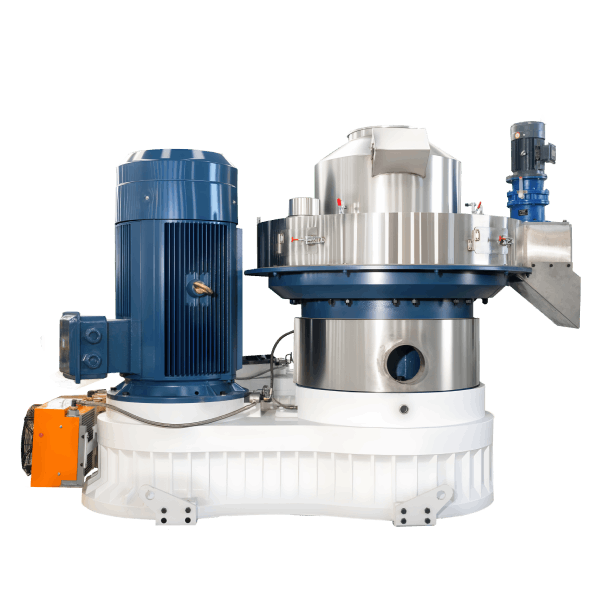
Configuration: ring die pellet machine with hammer mill, dryer, cooler, screener, and packing.
Application: industrial fuel pellets and local fuel market supply.
The parameters above are typical ranges and should be confirmed with actual test records.
What to Confirm Before Choosing a Disposal Option
Confirm wood waste type, species, moisture, particle size, contamination level, and treatment status.
Confirm available volume per day, per week, and per year.
Confirm existing disposal cost, including tipping fees and transport.
Confirm existing or potential heat demand for on-site biomass fuel.
Confirm local regulatory requirements for waste classification, air quality, and fire safety.
Confirm market for pellets, briquettes, or bedding, including quality standards.
Confirm power supply, site space, and labor availability.
Confirm capital budget and operating cost tolerance.
Confirm supplier capability for the chosen equipment, including test run and after-sales support.
Confirm inspection and acceptance method for the equipment.
Frequently Asked Questions
What is the best way to dispose of wood waste?
There is no single best way. Landfill is simple but increasingly expensive. Open burning is restricted in many regions. On-site biomass fuel, pelletizing, briquetting, composting, mulch, and animal bedding are alternatives with different technical and economic requirements. The right choice depends on wood waste type, treatment status, volume, local market, and regulations.
Can all wood waste be pelletized?
No. Pelletizing requires that wood waste meets moisture, particle size, and contamination requirements. Treated, painted, and glued wood may not be suitable for fuel pellets. Clean sawdust, shavings, and chips after grinding are usually suitable.
Is pelletizing always more profitable than landfill?
Not always. Pelletizing requires capital investment, operating cost, and a market for the finished pellets. It can be profitable when volume is sufficient, wood waste is clean, and the pellet market is strong. Landfill may be cheaper for small or contaminated volumes.
What is the difference between pelletizing and briquetting for wood waste?
Pelletizing produces smaller, denser, more uniform pellets. Briquetting produces larger briquettes and can accept a wider range of particle sizes and moisture. Pellets are usually sold into residential and industrial markets. Briquettes are usually sold into industrial markets.
Can wood waste be used as fuel without pelletizing?
Yes. Clean wood chips can be used directly in some biomass boilers. The boiler must be designed for the chip size and moisture. Pelletizing is required when the fuel must be denser, more uniform, or suitable for markets that require pellets.
What regulations apply to wood waste disposal?
Regulations vary by country and region. Key areas include waste classification, air quality, landfill restrictions, fire and explosion safety, transport, and product standards. All requirements should be confirmed with the relevant authority and with a qualified advisor.
How much does it cost to dispose of wood waste?
Cost depends on the option. Landfill cost includes tipping fees and transport. Pelletizing cost includes equipment, drying, grinding, electrical infrastructure, civil works, installation, spare parts, and operating cost, offset by pellet revenue. Cost per ton is the figure that matters, not equipment price alone. Final cost should be confirmed against a written scope of supply.