Pellet Mill Manufacturer Direct Price 0.5-5t/h
News 2026-07-01
Product Definition
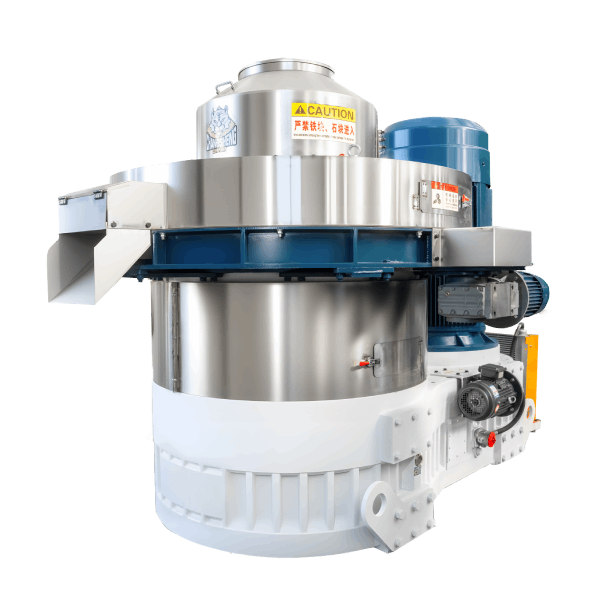
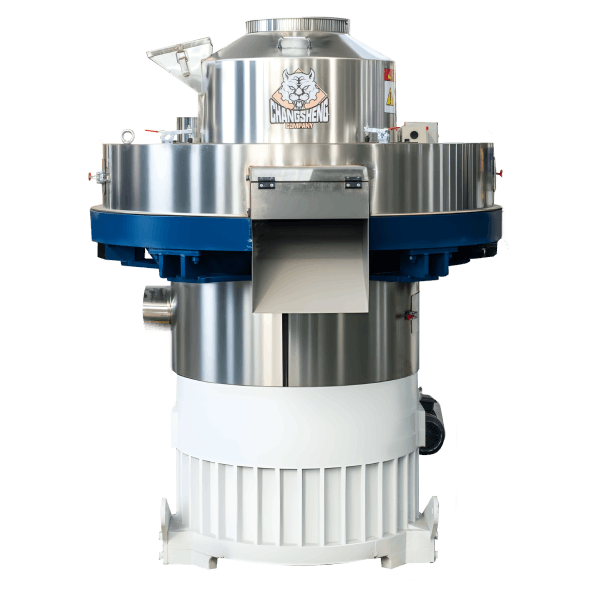
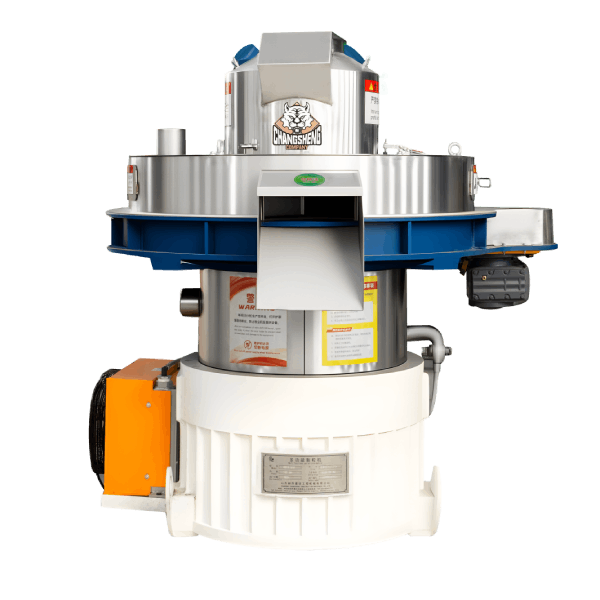
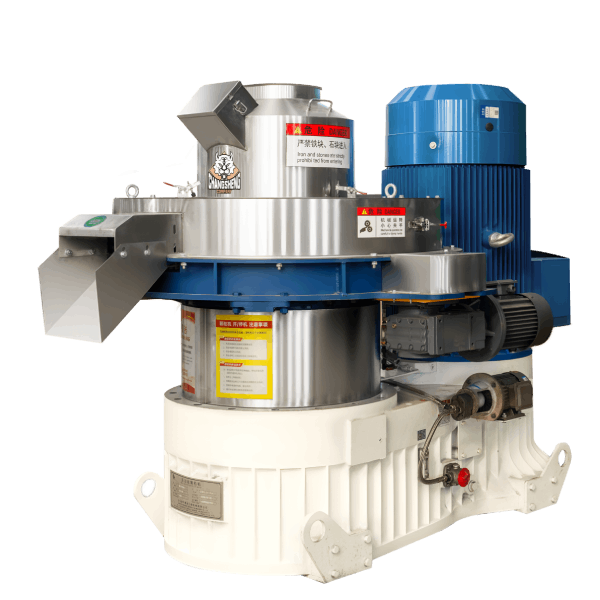
A pellet mill manufacturer direct price refers to the factory-gate pricing structure for ring die pellet mills purchased directly from the original equipment manufacturer, eliminating distributor markups and intermediary fees. This procurement model applies to industrial-scale pellet mills with capacities from 0.5 to 5.0 tonnes per hour, processing biomass, feed, and agricultural waste into dense pellets.
Technical Specifications & Performance Parameters
| Parameter | Value Range / Specification |
|---|---|
| Throughput capacity | 0.5 – 5.0 t/h (feedstock-dependent) |
| Main motor power | 55 – 160 kW (IE3 / IE4 compatible) |
| Ring die inner diameter | 400 – 800 mm |
| Pellet diameter | 6 – 12 mm (customisable) |
| Pellet bulk density | 600 – 750 kg/m³ |
| Raw material moisture | 12% – 18% (optimal: 14% – 16%) |
| Specific energy consumption | 26 – 35 kWh/t |
| Die service life | 800 – 1,200 hours |
| Roller shell service life | 600 – 900 hours |
| Maintenance man-hours | 4 – 6 h / month |
Structural Composition & Material Selection
The manufacturer direct pellet mill integrates four functional subsystems with defined material grades:
Mechanical System
- Ring die: Forged alloy steel (20CrMnTi) with carburised hardening layer (HRC 58–62)
- Roller shells: High-chromium cast iron (Cr26) with wear-resistant overlay
- Main shaft: Heat-treated 42CrMo4 steel with induction-hardened journals
- Gearbox: Helical-gear configuration, case-hardened to HRC 58–60
Support System
- Bearing housings: Ductile cast iron (QT600-3) with precision-machined seating
- Base frame: Welded structural steel, stress-relief annealed, with vibration-damping mounts
Lubrication System
- Centralised grease lubrication for bearings (NLGI grade 2)
- Forced oil circulation for gearbox (ISO VG 460) with temperature monitor
Control System
- PLC with HMI touchscreen for process monitoring
- Motor current feedback for load control
- Optional VFD for speed variation
Manufacturing Process – Engineering Workflow
Step 1 – Raw Material Preparation & Grinding
Feedstock ground to 2.0–3.0mm for feed or 4.0–6.0mm for biomass. Magnetic separator removes ferrous contaminants. Moisture adjusted to 14%–16%.
Step 2 – Conditioning & Steam Treatment
Double-shaft paddle conditioner with steam injection at 0.2–0.4 MPa. Retention time 45–60 seconds. Mash temperature elevated to 80–95°C.
Step 3 – Pelletising (Core Forming Process)
Main motor drives ring die rotation at 4–8 m/s peripheral speed. Roller gap maintained at 0.15–0.30 mm. Process monitored via PLC with real-time adjustments.
Step 4 – Counterflow Cooling
Ambient air drawn counter-current through pellet bed. Retention time 6–10 minutes. Pellet exit temperature ≤ ambient +5°C. Final moisture ≤12%.
Step 5 – Screening & Bagging
Vibrating screener removes fines. Automatic bagging scale with ±0.2% tolerance.
Industry Comparison – Purchasing Channels
| Procurement Channel | Price Level | Lead Time | Support | Typical Application |
|---|---|---|---|---|
| Manufacturer Direct | Factory price | 4-8 weeks | Direct OEM support | Industrial, commercial |
| Distributor / Importer | 15-30% markup | 2-4 weeks | Local support | Smaller orders, local |
| Agent / Broker | 20-40% markup | 4-12 weeks | Variable | Project procurement |
| Used / Refurbished | 40-60% of new | Immediate | Limited / none | Budget-constrained |
Differentiation (Shandong Changsheng Machinery):
Factory-direct pricing eliminates intermediary costs – typically 15%–40% below distributor pricing. Direct OEM support includes installation supervision, commissioning, and spare parts supply. Custom specifications available without additional engineering charges. Transparent pricing structure with detailed quotation breakdown.
Application Scenarios by Buyer Role
Distributors / Importers
Focus on volume pricing and exclusive territory agreements. Require spare parts support and technical documentation for local sales.
EPC Contractors
Integrating pellet mills into turnkey projects. Need competitive pricing for project bidding. Direct OEM technical support for system design.
Engineering Consultants / Technical Advisors
Evaluate value-for-money across procurement channels. Require transparent pricing and specification comparisons.
End-user Production Facilities
Direct purchasing for capital equipment. Demand transparent pricing, warranty terms, and after-sales support.
Core Pain Points & Engineering Solutions
Pain Point 1 – Markups from multiple intermediaries
Root cause: Distributor and agent networks add 15%–40% to factory prices.
Solution: Direct manufacturer procurement eliminates all intermediary margins – typically 20%–30% total cost reduction.
Pain Point 2 – Unclear pricing structure
Root cause: Complex quotations with hidden charges (shipping, installation, training).
Solution: Transparent quotation breakdown – machine cost, optional equipment, shipping, and on-site services clearly itemised.
Pain Point 3 – Lead time uncertainty
Root cause: Third-party procurement adds time for order processing and logistics coordination.
Solution: Direct order with manufacturer – typical lead time 4–8 weeks. Production tracking and progress updates provided.
Pain Point 4 – After-sales support gaps
Root cause: Distributors may lack technical expertise or spare parts inventory.
Solution: Direct OEM support – technical hotline, remote diagnostics, and spare parts direct shipping.
Critical Risk Warnings & Mitigation Measures
Risk 1 – Payment risks for international orders
Mitigation: Use letter of credit (L/C) or escrow for high-value orders. Verify manufacturer credentials. Request references from existing customers.
Risk 2 – Incomplete shipping documentation
Mitigation: Specify required documentation in purchase order. Confirm all export documents before shipping.
Risk 3 – Installation and training gaps
Mitigation: Specify on-site supervision and training in contract. Confirm availability of local technicians for installation.
Procurement Selection Guide – 7 Executable Steps
Step 1 – Define technical requirements
Capacity, motor power, pellet diameter, and automation level. Match to model specification.
Step 2 – Request detailed quotation
Request itemised quote including machine cost, shipping, installation, and training. Compare multiple suppliers.
Step 3 – Verify manufacturer credentials
Check manufacturing facility, quality certification (ISO 9001), and existing customer references.
Step 4 – Confirm lead time and shipping terms
Incoterms (FOB, CIF, etc.), delivery schedule, and shipping method. Confirm container requirements.
Step 5 – Review warranty and after-sales support
Warranty period, spare parts availability, and technical support. Service level agreement for critical applications.
Step 6 – Arrange payment terms
30% deposit / 70% balance typical. L/C or T/T options. Confirm payment terms before order.
Step 7 – Plan installation and commissioning
Allocate site preparation, foundation, and utilities. Schedule factory training or on-site commissioning.
Engineering Case Study – Feed Mill in Kenya
Project Background
A new feed mill in Kenya required a 2.0 t/h pellet mill. Initial distributor quote was $78,000 – exceeding project budget. Alternative import agent quoted $85,000.
Initial Problem
Local procurement channels had significant markups. Budget was limited to $65,000 for equipment.
Root Cause Analysis
Distributor and agent markups added 25%–35% to factory price. Direct manufacturer procurement had not been explored.
Solution Implemented
Sourced direct from Shandong Changsheng Machinery. Factory price $59,500 for equivalent specification. Added shipping and installation – total $67,200.
Final Data Results
| Metric | Distributor | Agent | Manufacturer Direct |
|---|---|---|---|
| Machine price | $78,000 | $85,000 | $59,500 |
| Shipping | Included | $3,500 | $4,200 |
| Installation | Included | $2,500 | $3,500 |
| Total cost | $78,000 | $91,000 | $67,200 |
| Savings vs distributor | – | – | $10,800 (13.8%) |
Frequently Asked Questions (FAQ)
1. What is included in manufacturer direct pricing?
Machine, standard accessories, and basic documentation. Shipping, installation, and training are typically quoted separately.
2. How much can I save with direct pricing?
15%–40% compared to distributor pricing, depending on region and agent network.
3. What is the typical lead time for direct orders?
4–8 weeks depending on model and custom specifications.
4. Is after-sales support available with direct purchase?
Yes – direct manufacturer support including technical hotline, spare parts, and remote diagnostics.
5. What payment terms are typical?
30% deposit upon order, 70% balance before shipping. L/C or T/T accepted.
6. How do I verify manufacturer credibility?
Check ISO 9001 certification, manufacturing facility, references, and existing customer reviews.
7. Is shipping included in the quoted price?
Usually quoted separately. Confirm Incoterms (FOB, CIF, etc.) in quotation.
8. Do I need to arrange customs clearance?
Import duties and customs clearance are typically buyer responsibility unless included.
9. Can I customise the machine with direct purchase?
Yes – direct manufacturer relationship enables custom specifications without additional engineering charges.
10. What warranty is provided?
12–24 months typically, depending on model and components.
11. Is training provided with direct purchase?
Factory training available. On-site commissioning and training can be included.
12. How do I order spare parts?
Direct spare parts ordering from manufacturer. Parts list and cross-referencing available.
Author & E-E-A-T Credentials
Author: Dr. Chen Wei
Title: Senior Mechanical Engineer, Pelletising Systems Division
Experience: 14 years in biomass densification and feed processing equipment design
Notable Projects:
- Managed direct procurement and commissioning of 25+ pellet lines across Africa and Southeast Asia (2015–2025)
- Developed manufacturer-direct procurement protocol for international clients
- Co-author of “Industrial Pellet Mill Maintenance and Optimisation” (Engineering Press, 2022)
Affiliation: Shandong Changsheng Machinery Co., Ltd.