Pellet line project feasibility study example
News 2026-02-11
Product Definition
A pellet line project feasibility study evaluates the technical, economic, and operational viability of establishing a pellet production line, integrating raw material analysis, process design, equipment configuration, capital investment, operating cost, and risk factors to support informed industrial decision-making.
Purpose of a Pellet Line Project Feasibility Study
A pellet line project feasibility study example is not a marketing document. It is an engineering and financial decision tool used to determine whether a pellet production project can operate sustainably under real-world conditions.
For B2B stakeholders, the study answers three core questions:
• Can the plant run reliably at the designed capacity?
• What is the realistic cost per ton over the lifecycle?
• Where are the technical and commercial risks?
Without a structured feasibility study, pellet projects often suffer from underutilization, cost overruns, or extended payback periods.
Technical Parameters and Design Assumptions (Example Project)
The following pellet line project feasibility study example is based on a mid-scale industrial configuration:
Designed capacity
• 6 tons per hour (fuel pellets)
Annual operating hours
• 6,800 hours/year
Raw material
• Forestry residues (wood chips, sawdust)
Raw material moisture
• Incoming: 30%–35%
• Before pelletizing: ≤12%
Pellet specifications
• Diameter: 6–8 mm
• Bulk density: ≥650 kg/m³
Energy consumption
• Electricity: 110–130 kWh/ton
• Thermal energy (drying): 1.0–1.4 GJ/ton
Labor requirement
• 4–5 operators per shift (two shifts)
Structure and Material Composition (Plant-Level)
The pellet line structure in this feasibility study includes:
Raw Material Handling
• Steel belt conveyors
• Storage silos with live-bottom discharge
Size Reduction
• Primary hammer mill with alloy steel hammers
Drying System
• Rotary drum dryer (carbon steel shell)
• Biomass-fired hot air furnace
• Cyclone and bag filter dust collection
Pelletizing Section
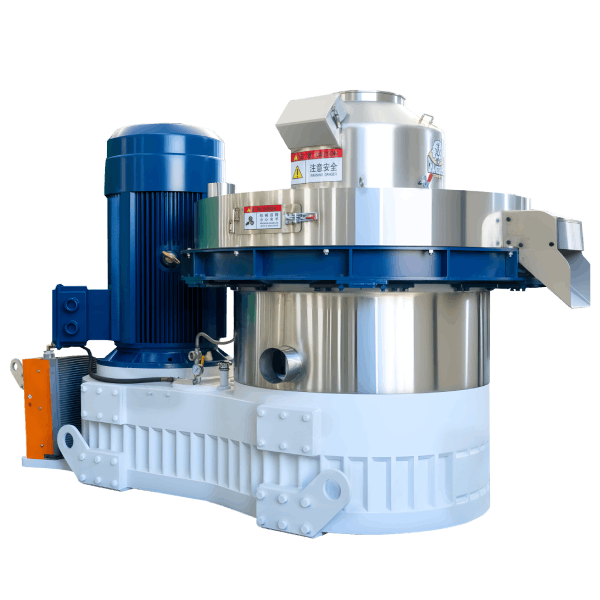
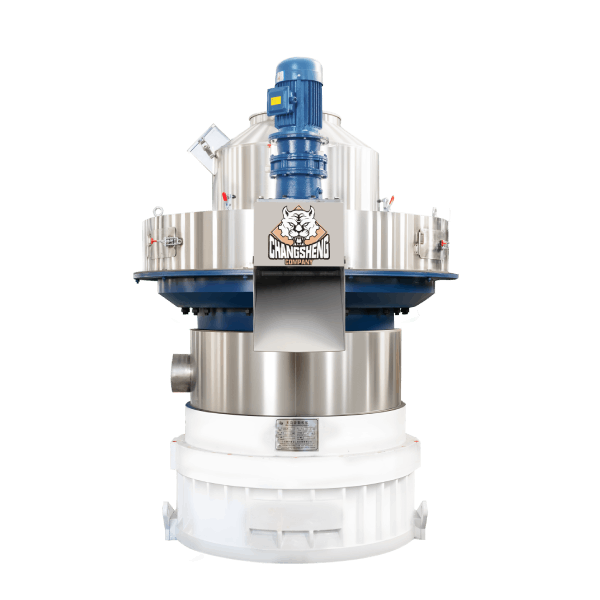
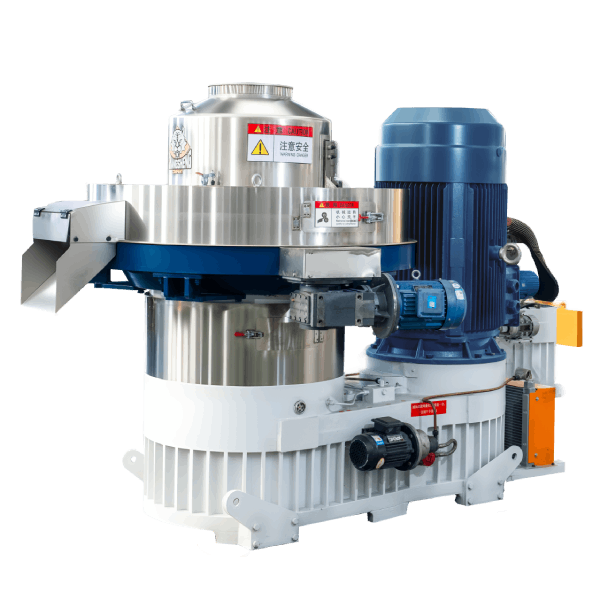
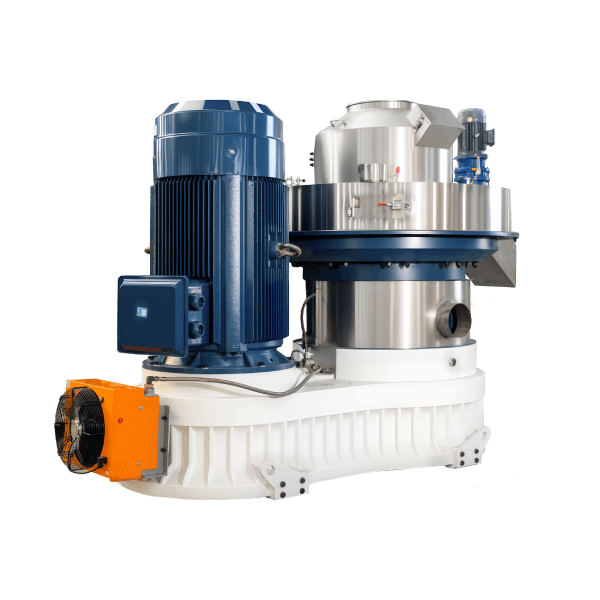
• Ring die pellet mills
• Forged alloy steel dies and roller shells
Cooling and Screening
• Counterflow pellet cooler
• Vibrating screener with fines recycle
Packaging and Storage
• Automatic weighing and bagging system
• Finished pellet silo
Electrical and Automation
• PLC-based control system
• Variable frequency drives
Material selection emphasizes durability, availability of spare parts, and lifecycle cost control.
Manufacturing Process (Engineering Workflow)
Step 1: Raw Material Preparation
Material is screened and conveyed to ensure stable feed flow and avoid foreign object damage.
Step 2: Crushing
Particle size is reduced to below 5 mm to improve pellet density and die performance.
Step 3: Drying
Moisture is reduced to target range using controlled hot air flow and residence time.
Step 4: Pelletizing
Conditioned material is compressed through ring dies under controlled pressure and temperature.
Step 5: Cooling
Pellets are cooled to near-ambient temperature to stabilize mechanical strength.
Step 6: Screening and Packaging
Fines are removed and recycled; qualified pellets are bagged or stored in bulk.
Industry Comparison (Feasibility Perspective)
| Production Model | Capital Intensity | Operating Stability | Logistics Efficiency | Investment Risk |
|---|---|---|---|---|
| Pellet Line | Medium | High | High | Medium |
| Briquette Line | Low | Medium | Medium | Medium |
| Loose Biomass | Very Low | Low | Low | High |
| Charcoal Processing | High | Medium | Medium | High |
Pellet lines offer the most balanced feasibility profile for long-term industrial operation.
Application Scenarios
Distributors and Importers
• Long-term fuel pellet supply contracts
• Export-oriented biomass fuel operations
EPC Contractors
• Biomass energy projects
• Industrial fuel replacement initiatives
Engineering Consultants
• Feasibility and bankability studies
• Project risk assessments
Core Pain Points Identified in Feasibility Studies
Pain Point 1: Raw Material Supply Instability
Solution: Secure multi-source contracts and design flexible feeding systems.
Pain Point 2: Underestimated Drying Cost
Solution: Perform accurate heat balance calculations based on moisture load.
Pain Point 3: Overstated Nameplate Capacity
Solution: Base feasibility on continuous output, not maximum rating.
Pain Point 4: High Maintenance Cost
Solution: Specify standardized wear parts and preventive maintenance plans.
Risk Warnings and Mitigation Measures
Feedstock seasonality can significantly impact operating cost and uptime.
Over-optimistic operating hours inflate projected returns.
Inadequate dust control increases fire, explosion, and insurance risk.
Lack of trained operators extends commissioning and ramp-up time.
Procurement and Selection Guide (Feasibility-Oriented)
- Define target market and pellet application
- Confirm long-term raw material availability and pricing
- Select plant capacity based on demand, not ambition
- Request full process flow, power, and heat balance
- Compare lifecycle cost across suppliers
- Validate reference projects of similar scale
- Include commissioning and training in scope
Engineering Case Example
In this pellet line project feasibility study example, a 6 t/h wood pellet plant in Eastern Europe was designed for district heating supply. The project achieved stable production within 30 days of commissioning, with actual output reaching 95% of design capacity and operating cost closely matching feasibility projections due to accurate drying and energy modeling.
FAQ
- What is the main purpose of a feasibility study?
To evaluate technical, economic, and operational viability. - How accurate should cost estimates be?
Typically within ±15% for pre-investment decisions. - Is raw material analysis mandatory?
Yes, it is critical for realistic design. - Can feasibility studies be reused?
Only partially; site-specific factors matter. - What is the biggest cost risk?
Drying energy and raw material logistics. - How long does a feasibility study take?
Usually 4–8 weeks for industrial projects. - Should suppliers prepare the study?
Preferably reviewed by an independent engineer. - Is financing affected by study quality?
Yes, banks rely heavily on feasibility data. - How detailed should equipment lists be?
Sufficient to support accurate CAPEX estimates. - When should feasibility be updated?
Before final investment decision or major design change.
CTA
For a project-specific pellet line project feasibility study example, including engineering calculations, cost modeling, and risk assessment, request technical documentation and feasibility support from an experienced pellet production system engineering provider.
E-E-A-T Author Credentials
This article is authored by an industrial biomass and pellet production engineer with over 12 years of experience in feasibility studies, EPC project evaluation, and operational optimization of commercial and industrial pellet production lines across multiple global markets.