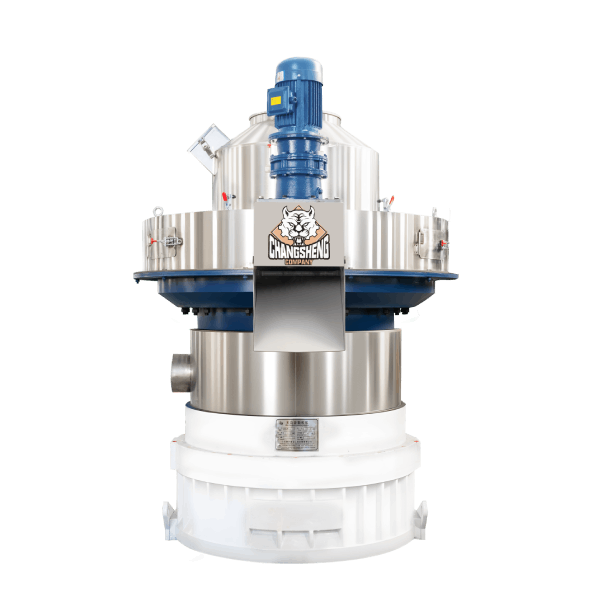
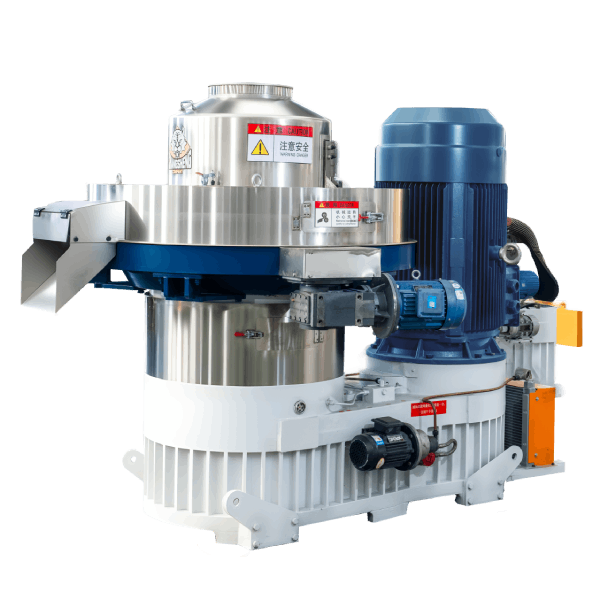
Pellet Maker for Sale: How to Choose the Right Machine Before You Buy
News 2026-10-06
A pellet maker for sale is not a single product. It is a family of machines that differ in die type, drive system, capacity, and automation. Two machines with the same nominal capacity can differ significantly in price, output, pellet quality, and die life, depending on the feedstock and the configuration.
The practical question for a buyer is not which listing looks cheapest. The real question is which machine fits your feedstock, your target pellet quality, your power supply, and your operating pattern, and what is included in the price.
This guide is written for buyers who are comparing pellet makers for sale. It covers machine types, feedstock compatibility, how to read a listing, what determines price, how to compare suppliers, and what to confirm before placing an order. For general pellet making machine selection without a “for sale” focus, see the pellet making machine page on this site. For wood-specific pricing, see the wood pellet making machine price page on this site.
What “Pellet Maker for Sale” Usually Means
In the market, “pellet maker for sale” is used broadly. It may refer to a single machine, a machine with basic feeding and discharge, or a complete pellet production line. It may refer to a flat die machine for small farms, a ring die machine for commercial production, or a feed pellet machine for animal feed.
Before comparing listings, the buyer should define three things: the feedstock, the target capacity, and the target pellet quality. Without these three inputs, a “pellet maker for sale” listing cannot be evaluated. Two machines with the same listed capacity may perform very differently on the same feedstock.
Listings also differ in how they are supplied. A listing may be for a machine in stock, for a machine built to order, or for a machine built to a specific configuration. Stock machines ship faster but are fixed in configuration. Custom-built machines allow more flexibility but require longer lead time. Buyers should confirm which type of supply a listing represents before comparing price.
Pellet Maker Types Available for Sale
Flat Die Pellet Maker
A flat die machine uses a flat plate die. It is simpler, lower in cost, and easier to maintain. It suits small capacity, varied feedstock, and intermittent operation. Flat die machines are common for small farms, workshops, and pilot projects.
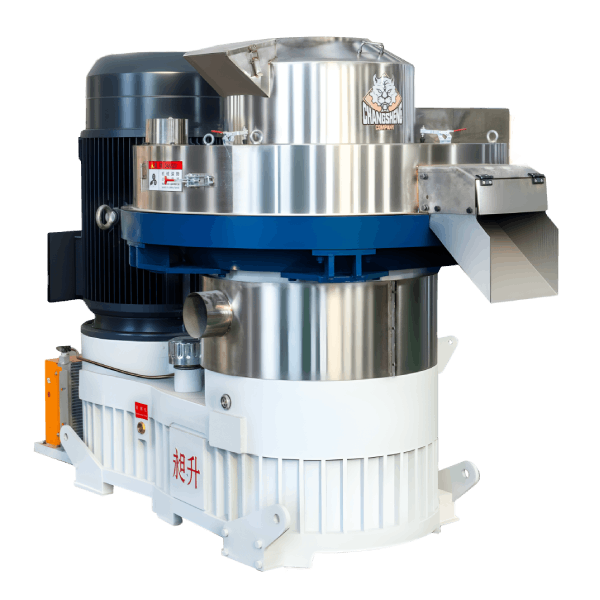
Ring Die Pellet Maker
A ring die machine uses a vertical ring die. It provides higher capacity, more stable pellet quality, and better energy efficiency at scale. It suits commercial and industrial production. Ring die machines require more specialized maintenance and may need lifting equipment for die change.
Feed Pellet Maker
A feed pellet machine is configured for animal feed materials such as corn, soybean meal, and formulated feed ingredients. Feed pellets require feed-grade hygiene, formulation control, and usually steam conditioning.
Biomass Pellet Maker
A biomass pellet machine is configured for wood waste, agricultural residues, and other organic materials. Biomass pellets require different die compression ratio, feeder design, and wear-resistant components compared with feed pellets.
New vs Used Pellet Maker for Sale
New machines come with a manufacturer warranty, documented configuration, and a defined scope of supply. Used machines are usually sold as-is, and their condition depends on previous operation. For used machines, buyers should verify die and roller condition, bearing vibration, gearbox oil condition, motor insulation, and control system function before purchase. Used machines may be a practical option for small-scale or pilot production, but they carry more risk on capacity, die life, and spare parts availability.
OEM and ODM Options
For distributors and importers, OEM and ODM options may be available. OEM usually means the machine carries the buyer’s brand, and the supplier manufactures to the buyer’s specification. ODM usually means the supplier designs and manufactures the machine, and the buyer applies their own branding. Both may require a minimum order quantity, and both require a clear specification and quality control agreement. OEM and ODM terms should be confirmed in writing before ordering.
Flat Die vs Ring Die: Which to Buy
Factor: Production scale
Flat Die: Small
Ring Die: Medium to large
Factor: Initial investment
Flat Die: Lower
Ring Die: Higher
Factor: Continuous operation
Flat Die: Limited
Ring Die: Suitable
Factor: Maintenance
Flat Die: Simpler
Ring Die: More specialized
Factor: Die change
Flat Die: Easier, basic tools
Ring Die: May need lifting equipment
Factor: Typical use
Flat Die: Small farm or workshop
Ring Die: Commercial and industrial production
A flat die machine is often the better choice for small farms, workshops, and pilot projects with varied feedstock or intermittent operation. A ring die machine is often the better choice for commercial production, continuous operation, and consistent pellet quality.
Feedstock Compatibility Before Buying
Before buying a pellet maker, confirm that the machine is configured for your feedstock.
Wood and sawdust are usually the easiest to pelletize. Wood chips and shavings require grinding. Hardwood requires higher compression ratio and more wear-resistant die material. Bark-containing material increases die and roller wear.
Agricultural residues such as straw, rice husk, and corn stover are more abrasive and often have lower lignin content. They usually require higher compression ratio and wear-resistant die and roller material.
Animal feed materials usually pelletize more easily but require feed-grade hygiene and formulation control. Feed pellets often use steam conditioning.
Palm fiber, EFB, coffee husk, peanut shell, cotton stalk, and coconut husk are more abrasive or have higher oil or mineral content. They require specific configuration and, in some cases, additional preprocessing.
For projects that will run multiple feedstocks, buyers should plan for either a fixed mix ratio with a die selected for the more challenging component, or a dual die configuration with separate dies for each feedstock. Both approaches should be confirmed with a pelletizing test before ordering.
How to Read a Pellet Maker for Sale Listing
A listing should state machine type, capacity, motor power, die type, die diameter, die hole diameter, pellet diameter range, drive system, feeder type, and included auxiliary equipment.
A capacity figure without stated feedstock, moisture, particle size, and die specification is not a technical commitment. Two listings that both say “1 t/h” may be in different configurations and may not produce the same output on your feedstock.
A listing that includes the machine but not the feeder, cooler, screener, or control panel is not a complete line. A listing that includes a “complete line” should state exactly what is included.
Common missing items in listings include feeder, cooler, screener, packing, hammer mill, dryer, conveyor, control panel, electrical system, dust collection, spare parts, freight, insurance, import charges, installation, and commissioning. Buyers should confirm each item before comparing price.
Listings also differ in price terms. Prices may be quoted as EXW, FOB, or CIF. EXW means the buyer arranges everything from the supplier’s factory. FOB means the supplier delivers to the port of shipment. CIF means the supplier delivers to the destination port and includes insurance. The same machine can appear to be priced very differently under different terms, so price terms should always be confirmed before comparison.
What Determines Pellet Maker Price
Price depends on machine type, capacity, motor power, die size and material, roller configuration, drive system, automation level, material compatibility, spare parts included, and auxiliary equipment scope.
A small flat die machine and a large ring die machine are in different price categories. A belt drive machine and a gearbox drive machine are also in different price categories. A machine for softwood and a machine for abrasive biomass may differ in price because of die and roller specification.
Machine price is not the same as complete pellet production line cost. A complete line may include chipper, hammer mill, dryer, conditioner, pellet maker, cooler, screener, packing machine, and dust collection. Final cost should be confirmed against a written scope of supply.
What Is Often Excluded from a “For Sale” Price
Listings often show machine price only. Common exclusions include:
Feeder, cooler, screener, and packing.
Hammer mill, dryer, and conveyor.
Control panel and electrical system.
Dust collection.
Spare parts first order.
Freight, insurance, and import charges.
Installation and commissioning.
Training and documentation.
Buyers comparing listings should compare scope of supply, not headline price. A low listing price with a narrow scope often leads to a higher landed project cost. For example, a listing that excludes the dryer may look cheaper than a listing that includes it, but the buyer will still have to purchase the dryer separately.
How to Compare Pellet Maker Suppliers
Compare capacity conditions, including feedstock, moisture, particle size, and pellet diameter.
Compare die and roller specification, including die material, die hole diameter, compression ratio, and roller hardness.
Compare drive system and motor power, including total connected load.
Compare voltage, phase, frequency, and control voltage. Confirm protection class and insulation class.
Compare auxiliary equipment scope, including chipper, hammer mill, dryer, conditioner, cooler, screener, packing, dust collection, and control system.
Compare spare parts list with part numbers and recommended first order.
Compare warranty scope, wear part definition, and response process.
Compare inspection and acceptance method before shipment, including test run material and conditions, and whether a factory visit or video inspection is allowed.
Compare payment terms. Common terms include deposit plus balance against shipping documents, or letter of credit for larger amounts. Payment terms should be confirmed in writing.
Compare lead time. Standard models may ship in a shorter time, while custom configurations or special dies may require longer lead time. Lead time should be confirmed with the supplier and matched to the project schedule.
Compare after-sales support, including remote support and local service partners where applicable.
Compare destination country compliance requirements, including certification, labeling, and documentation, where applicable.
Common Buying Risks for Pellet Maker for Sale
The first risk is capacity mismatch. A rated capacity without stated feedstock and moisture conditions is not a guaranteed output for your project.
The second risk is feedstock mismatch. A machine configured for softwood may not run hardwood or abrasive biomass at the same output or die life.
The third risk is incomplete quotation. A low machine price with a narrow scope often leads to a higher landed project cost.
The fourth risk is inadequate drying or grinding. If wood moisture is high or particle size is coarse, drying and grinding equipment are required, and they are often excluded from a machine-only listing.
The fifth risk is insufficient power supply. Voltage, phase, frequency, and transformer capacity must match the machine, and should be confirmed before ordering.
The sixth risk is poor spare parts planning. A project without a spare die on site will face long downtime when the first die wears out.
The seventh risk is unclear performance guarantee. A capacity guarantee should reference feedstock, moisture, particle size, pellet diameter, and running hours.
The eighth risk is shipping and documentation omissions. Common omissions include packing specification, container loading plan, shipping marks, certificate of origin, and user manual in the destination language. These items should be confirmed before shipment.
Typical Project Scenario
The following summarizes typical project parameters from pellet maker for sale projects. Specific customer names, locations, and contact details are not included.
Typical project: wood pellet production from sawmill sawdust.
Raw material: softwood sawdust from pine, fir, and spruce.
Moisture: reduced by drying to the range suitable for pelletizing.
Pellet diameter: 6 to 8 mm.
Configuration: ring die pellet maker with hammer mill, dryer, cooler, screener, and packing.
Application: industrial fuel pellets and local fuel market supply.
Acceptance: trial run with actual sawdust, output and pellet quality recorded before shipment.
The parameters above are typical ranges and should be confirmed with actual test records.
What to Confirm Before You Buy
Confirm capacity with stated feedstock, moisture, particle size, and pellet diameter.
Confirm die compression ratio and die material.
Confirm die hole diameter and pellet diameter.
Confirm roller shell material and hardness.
Confirm drive system, gearbox or belt drive.
Confirm feeder type and whether variable frequency control is included.
Confirm grinding, conditioning, and drying scope.
Confirm cooling, screening, and packing scope.
Confirm dust collection and explosion protection scope, including reference to applicable NFPA or local standards where relevant.
Confirm motor power, total connected load, voltage, phase, and frequency.
Confirm spare parts list with part numbers and recommended first order.
Confirm warranty scope, wear part definition, and response process.
Confirm inspection and acceptance method before shipment.
Confirm packing, shipping marks, and documentation requirements.
Confirm price terms, payment terms, and lead time.
Confirm destination country compliance requirements, where applicable.
Frequently Asked Questions
What is a pellet maker for sale?
A pellet maker for sale is a machine used to compress ground material into dense cylindrical pellets. It may refer to a single machine or to a complete pellet production line, depending on the listing.
What is the difference between a flat die and ring die pellet maker?
Flat die machines are simpler, lower in cost, and easier to maintain, and suit small production and varied materials. Ring die machines are more efficient at higher capacity and produce denser pellets, and suit commercial and industrial production.
What materials can a pellet maker process?
Wood, sawdust, wood shavings, wood chips after grinding, agricultural residues, animal feed materials, palm fiber, EFB, coffee husk, peanut shell, cotton stalk, coconut husk, and rice husk can be pelletized with appropriate configuration.
How much does a pellet maker for sale cost?
Cost depends on machine type, capacity, motor power, die specification, drive system, automation, and scope of supply. A small flat die machine, a medium ring die machine, and a complete industrial line are in clearly different price categories. Final cost should be confirmed against a written scope of supply. Price terms such as EXW, FOB, and CIF should also be confirmed before comparing quotations.
What is often excluded from a pellet maker for sale listing?
Listings often exclude feeder, cooler, screener, packing, hammer mill, dryer, conveyor, control panel, electrical system, dust collection, spare parts, freight, insurance, import charges, installation, and commissioning. Buyers should confirm what is included in each listing.
How do I compare pellet maker suppliers?
Compare capacity conditions, die and roller specification, drive system, motor power, auxiliary equipment scope, spare parts list, warranty terms, inspection method, payment terms, lead time, after-sales support, and destination country compliance. Comparing landed project cost and scope of supply gives a more reliable basis than comparing listed machine price.
Should I buy a new or used pellet maker?
New machines come with a manufacturer warranty, documented configuration, and a defined scope of supply. Used machines are usually sold as-is and require inspection of die and roller condition, bearing vibration, gearbox oil condition, motor insulation, and control system function. Used machines may be a practical option for small-scale or pilot production, but they carry more risk on capacity, die life, and spare parts availability.