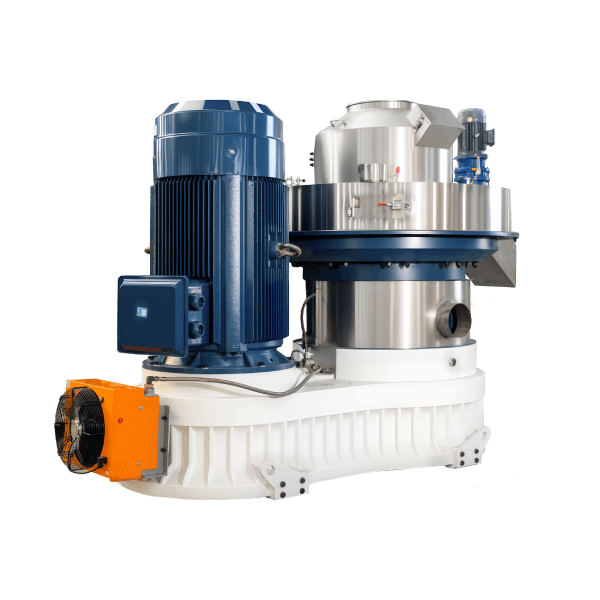
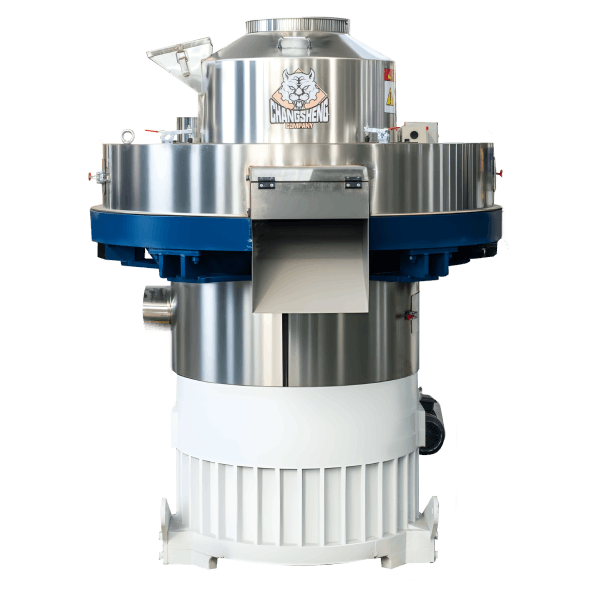
Pellet Mill for Sawmill Owner: Selection, Cost & ROI Guide
News 2026-09-16
As a sawmill owner, you already know the problem: sawdust piles up faster than you can sell it, and disposal costs keep rising. What many mill owners overlook is that this “waste” stream is actually a raw material with a defined calorific value, a growing export market, and a payback period that can be calculated before you spend a single dollar on equipment.
This guide is written for sawmill owners who are evaluating whether to add a pellet mill, and for procurement managers who need to understand the technical and commercial variables before committing capital. It covers material feasibility, equipment selection, cost structure, ROI, and the procurement pitfalls that separate a profitable installation from an expensive lesson.
Why Sawmill Owners Are Adding Pellet Mills
The Real Cost of Sawdust Disposal
Sawdust disposal is rarely free. Even when a local farmer or biomass plant takes it away, you are absorbing handling costs, loader time, storage space, and often a tipping fee. In many regions, environmental regulations now restrict open burning of sawdust, and landfill acceptance of wet wood waste is increasingly limited.
A typical sawmill producing 10,000 m³ of sawn timber per year generates roughly 2,000–3,000 tonnes of sawdust and wood chips, depending on species, cutting patterns, and recovery rate. If disposal costs you even a modest amount per tonne, the annual expense becomes significant. More importantly, you are giving away a material that has a market value as densified biomass.
Revenue Streams from Pelletizing Sawdust
Sawmill owners who install pellet mills typically pursue one or more of these revenue models:
- Self-supply for thermal energy: Pellets feed a biomass boiler for kiln drying, space heating, or process heat. This offsets fossil fuel costs directly.
- Regional sale: Bagged or bulk pellets sold to local heating markets, farms, or small power plants.
- Export: Wood pellets for European, Japanese, or Korean power markets, subject to certification and quality standards.
- Contract manufacturing: Toll processing for pellet traders who need consistent supply.
The economics differ for each model. Self-supply usually offers the fastest payback because you are displacing purchased energy. Export requires higher capital, certification, and quality control, but can command premium pricing.
Can Your Sawmill Waste Be Pelletized?
Material Checklist: What Works and What Doesn’t
Not all sawmill residues pelletize equally. The table below summarizes common materials and their suitability.
| Material | Pelletability | Notes |
|---|---|---|
| Softwood sawdust (pine, spruce, fir) | Excellent | Natural lignin content acts as binder |
| Hardwood sawdust (oak, beech, ash) | Good | Higher density, may need more compression |
| Mixed sawdust | Good | Consistency varies; blending recommended |
| Planer shavings | Good | Larger particle size, may need grinding |
| Bark | Poor to fair | High ash, low lignin, abrasive |
| MDF/HDF dust | Not recommended | Adhesives and resins cause emissions and die wear |
| Treated wood | Prohibited | Chemical contamination, regulatory violation |
| Green wood chips | Fair | Requires drying before pelletizing |
The best feedstock for a sawmill pellet mill is clean, untreated softwood or hardwood sawdust with consistent particle size and controlled moisture. Contamination from plywood, particleboard, or treated lumber must be avoided entirely.
Moisture Content: The Single Most Important Variable
Moisture content determines whether your pellet mill produces dense, durable pellets or a crumbling mess. For most wood species, the ideal moisture range entering the pellet mill is 12–15% (wet basis). Above 18%, pellets become soft and the mill may choke. Below 10%, the material may not bind properly and die wear increases.
Sawmill sawdust typically arrives at 25–50% moisture, depending on whether it is green or air-dried. This means drying is almost always required. A rotary dryer or belt dryer sized to your production rate is not optional equipment—it is a core part of the process.
Moisture control is not just about the dryer. You need consistent infeed, reliable moisture measurement, and the ability to adjust drying intensity as ambient conditions and feedstock change. Many pellet line failures trace back to inadequate moisture control, not the pellet mill itself.
Particle Size and Pre-Grinding Requirements
Ring die pellet mills perform best with material that has been reduced to a consistent particle size, typically 3–6 mm for wood pellets. Sawdust from a sawmill may already fall in this range, but planer shavings, chips, and oversized particles require a hammer mill upstream.
The hammer mill screen size affects pellet quality and mill throughput. A finer screen produces smaller particles, which bind better but reduce hammer mill capacity and increase power consumption. A coarser screen increases throughput but may produce less durable pellets. The correct balance depends on your feedstock and target pellet quality.
Ring Die vs Flat Die Pellet Mill for Sawmill Applications
When Ring Die Wins
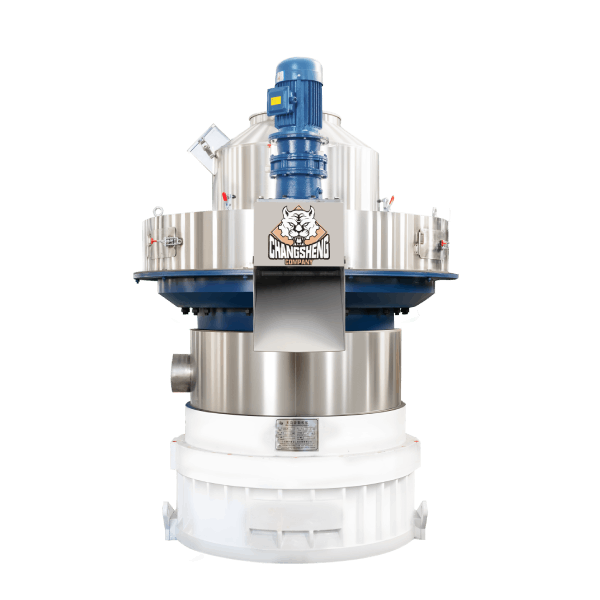
Ring die pellet mills are the standard for industrial-scale wood pellet production. They offer:
- Higher capacity per unit (typically 1–20 t/h for wood applications)
- Better pellet quality and density
- Lower specific energy consumption at scale
- Longer die life when operated correctly
- Easier integration with automated control systems
For a sawmill producing more than 1 tonne per hour of pellets, ring die is almost always the correct choice. It is also the preferred technology for export-grade pellet production, where consistent quality and certification matter.
When Flat Die Makes Sense
Flat die pellet mills are simpler, cheaper, and easier to maintain. They are suitable for:
- Small-scale production (under 500 kg/h)
- On-farm or small workshop use
- Situations where capital budget is severely limited
- Pilot or test production before scaling up
Flat die mills have limitations: lower throughput, faster die wear, and greater difficulty achieving consistent pellet quality at higher capacities. For a commercial sawmill operation, flat die is usually a stepping stone, not a final solution.
Comparison Table
| Factor | Ring Die | Flat Die |
|---|---|---|
| Typical capacity | 1–20 t/h | 0.1–0.5 t/h |
| Pellet quality | High, consistent | Moderate, variable |
| Die life | 800–1,500 hours | 300–600 hours |
| Specific energy | Lower at scale | Higher per tonne |
| Capital cost | Higher | Lower |
| Maintenance complexity | Moderate | Low |
| Best for | Commercial production | Small-scale / pilot |
How to Size a Pellet Mill for Your Sawmill
Step-by-Step Capacity Calculation
Sizing begins with your available feedstock, not your desired output. Follow this sequence:
- Measure your sawdust generation. Determine tonnes per day or per shift, based on timber intake and cutting patterns.
- Account for moisture loss. If sawdust arrives at 40% moisture and you dry to 14%, you lose roughly 30% of incoming weight.
- Determine operating hours. A pellet mill running 8 hours per day at 1 t/h produces 8 tonnes per day. Running 20 hours per day produces 20 tonnes.
- Match capacity to feedstock. Do not size the mill larger than your reliable feedstock supply. Intermittent operation wastes energy and accelerates wear.
- Add a margin. A 10–15% capacity buffer accommodates feedstock variability and maintenance downtime.
Matching Upstream and Downstream Equipment
A pellet mill is only one component. The full line typically includes:
- Receiving and storage for raw sawdust
- Hammer mill for particle size reduction
- Dryer (rotary or belt) with heat source
- Pellet mill with feeder and conditioner
- Cooler to reduce pellet temperature
- Screener to remove fines
- Bagging or bulk loading system
- Dust collection and air handling
Each piece must be sized to match the pellet mill. A common mistake is buying a large pellet mill but undersizing the dryer or cooler, which creates a bottleneck that limits real output.
Common Sizing Mistakes
- Sizing for peak feedstock, not average. Sawdust supply fluctuates. Size for reliable average, not best-case peak.
- Ignoring moisture variability. A dryer sized for average moisture will fail during wet seasons.
- Underestimating power requirements. Wood pelletizing requires significant connected load. Confirm your electrical supply can handle it.
- Forgetting about storage. Pellets need protected storage. Fines and moisture degrade quality quickly.
Complete Pellet Line Configuration for Sawmills
Process Flow Overview
The standard process flow for a sawmill pellet line is:
Raw sawdust → Storage → Hammer mill → Dryer → Pellet mill → Cooler → Screener → Storage/Bagging
Each stage has a defined function and must be controlled to maintain quality and throughput.
Key Equipment Beyond the Pellet Mill
- Hammer mill: Reduces particle size. Screen size selection affects pellet quality and energy use.
- Dryer: Reduces moisture to target range. Rotary dryers are common for wood; belt dryers offer gentler drying.
- Cooler: Reduces pellet temperature from 70–90°C to near ambient. Improper cooling causes condensation and mold.
- Screener: Removes fines and oversize. Fines can be recycled.
- Dust collection: Essential for safety, environmental compliance, and housekeeping.
Layout and Space Requirements
A 1–2 t/h pellet line typically requires 200–500 m² of covered space, depending on configuration and storage needs. Vertical integration (using gravity flow) reduces conveying equipment but requires taller buildings. Horizontal layouts are easier to expand but need more floor space.
Allow access for maintenance, forklift movement, and raw material delivery. Do not compress the layout to save building cost—poor access increases downtime and safety risk.
Investment and Operating Cost Breakdown
CAPEX: What You Actually Need to Budget
Capital cost varies widely by capacity, automation level, and supplier. As a general reference for a 1–2 t/h wood pellet line:
| Item | Approximate Share |
|---|---|
| Pellet mill | 25–35% |
| Dryer and heat source | 20–30% |
| Hammer mill | 5–10% |
| Cooler, screener, conveyors | 10–15% |
| Electrical and control | 8–12% |
| Civil works and installation | 10–20% |
These are indicative ranges. Actual costs depend on specifications, local labor, import duties, and freight.
OPEX: Power, Labor, Wear Parts, Maintenance
Operating cost per tonne of pellets typically includes:
- Electricity: The largest single cost. Wood pelletizing consumes roughly 80–120 kWh per tonne, depending on feedstock and equipment efficiency.
- Thermal energy for drying: If you use natural gas or biomass, this is significant. Using your own sawdust as fuel can reduce this cost.
- Labor: A 1–2 t/h line may need 2–4 operators per shift, depending on automation.
- Wear parts: Dies and rollers are the main consumables. Die life varies with feedstock, moisture, and operation.
- Maintenance: Bearings, belts, screens, and lubrication.
ROI Calculation Example
Assume a sawmill produces 2,000 tonnes per year of dry sawdust. After drying and processing, yield is approximately 1,800 tonnes of pellets.
If pellets sell for $150/tonne, gross revenue is $270,000. If operating cost is $80/tonne, gross margin is $70/tonne, or $126,000 per year. If total capital investment is $400,000, simple payback is approximately 3.2 years.
If pellets are used for self-supply, compare against the cost of the fossil fuel they displace. In many cases, payback is faster because you are avoiding retail energy prices.
Technical Parameters That Matter in Procurement
Die Speed, Compression Ratio, and Motor Power
- Die speed: Affects pellet quality and throughput. Higher speed increases capacity but may reduce density.
- Compression ratio: The ratio of die hole length to diameter. Higher ratio increases pellet density but also energy consumption and die wear.
- Motor power: Must match the die and feedstock. Undersized motors stall; oversized motors waste energy.
These parameters must be specified together. A pellet mill is not a commodity—it is a system that must be matched to your material and production targets.
Material of Die and Roller
Dies are typically made from alloy steel or stainless steel. For wood pellets, hardened alloy steel with proper heat treatment offers the best balance of wear life and cost. Rollers should be matched to the die material and surface hardness.
Ask the supplier for material certificates and hardness test reports. This is a standard procurement practice for industrial equipment.
Safety and Compliance Considerations
Depending on your destination market, the equipment may need to comply with:
- CE marking (European Union)
- UL or CSA standards (North America)
- Local electrical codes
- ATEX or dust hazard classification (if applicable)
Confirm compliance requirements before purchase. Retrofitting for compliance is expensive and delays commissioning.
Installation, Commissioning, and Common Pitfalls
Site Preparation Checklist
- Foundation and anchor bolt drawings approved
- Power supply capacity confirmed
- Compressed air and water available if required
- Dust collection ductwork planned
- Material handling access clear
- Spare parts and tools on site
Commissioning Timeline
A typical commissioning sequence for a 1–2 t/h line:
- Mechanical installation completion and alignment check
- Electrical and control system verification
- Dry run without material
- First material feed and parameter adjustment
- Moisture and quality testing
- Performance test at rated capacity
- Operator training and handover
Allow 2–4 weeks for commissioning, depending on site readiness and line complexity.
Troubleshooting Early-Stage Issues
- Pellets too soft: Check moisture, die compression ratio, and feedstock particle size.
- Mill choking: Reduce feed rate, check moisture, inspect die holes for blockage.
- Excessive die wear: Verify feedstock cleanliness, moisture, and compression ratio.
- High fines: Check cooler operation, screener condition, and pellet durability.
Most early-stage issues trace back to moisture control, feedstock consistency, or incorrect operating parameters. Supplier technical support is critical during this phase.
Maintenance Strategy to Reduce Downtime
Daily, Weekly, Monthly Checks
- Daily: Inspect die and rollers, check lubrication, monitor motor current, verify moisture.
- Weekly: Check belts, bearings, screens, and dust collection.
- Monthly: Inspect gearbox oil, coupling alignment, and electrical connections.
Wear Part Life and Replacement Indicators
- Die: Replace when pellet quality drops, energy consumption rises, or visible wear exceeds limits.
- Rollers: Replace when surface wear reduces pellet density or throughput.
- Bearings: Monitor temperature and vibration. Replace at first sign of failure.
Spare Parts Planning
Keep critical spares on site: one die, one set of rollers, bearings, belts, and screens. Downtime cost usually exceeds spare parts cost by a wide margin.
How to Evaluate a Pellet Mill Supplier
Factory Audit Checklist
- Manufacturing capability and equipment
- Quality control process and records
- Material certification for dies and rollers
- Assembly and testing procedures
- Reference installations and customer feedback
Test Report and Sample Validation
Before purchase, request:
- Material test report for die and roller
- Performance test data for similar feedstock
- Sample pellets produced from your material
- Warranty terms and spare parts pricing
After-Sales and Technical Support
Confirm:
- Installation and commissioning support
- Operator training availability
- Remote troubleshooting capability
- Spare parts delivery time
- Response time for technical issues
A supplier who cannot provide these is a risk, regardless of price.
Case Study: Sawmill in Northern Europe
Project Background
A sawmill in Northern Europe producing 15,000 m³ of softwood lumber per year faced rising sawdust disposal costs and wanted to produce pellets for regional sale.
Configuration and Results
The installed line included a hammer mill, rotary dryer, ring die pellet mill (1.5 t/h), cooler, screener, and bagging system. Feedstock was spruce and pine sawdust at 45% moisture, dried to 13%.
Results after six months:
- Pellet output: 1.4–1.6 t/h
- Pellet durability index: above 97%
- Payback period: 3.5 years
- Disposal cost eliminated
Lessons Learned
- Moisture control was the most critical factor.
- Operator training reduced downtime significantly.
- Die life improved after feedstock screening was improved.
FAQ
Can I pelletize sawdust directly from my sawmill without drying?
No. Most sawmill sawdust is too wet for direct pelletizing. Drying to 12–15% moisture is almost always required.
What is the minimum capacity for a commercially viable pellet mill?
For commercial production, 1 t/h is generally the minimum. Smaller mills can work for self-supply or pilot projects.
How long does a pellet die last?
Die life varies with feedstock, moisture, and operation. For wood pellets, 800–1,500 hours is typical for a quality die.
Can I use the same pellet mill for both wood and other biomass?
In principle, yes, but dies and operating parameters must be matched to the material. Switching feedstocks requires adjustment and may reduce die life.
What certifications should I look for?
CE for Europe, UL or CSA for North America, and ISO 9001 for quality management. Confirm requirements for your market.
How much space does a pellet line need?
A 1–2 t/h line typically requires 200–500 m², including storage and access.
About the Author
This article was prepared by the engineering and international trade team at Shandong Changsheng Machinery Co., Ltd. With over a decade of experience in biomass pelletizing equipment, the team has supported sawmills, biomass power plants, and pellet producers across Europe, Southeast Asia, and the Americas. Our engineers specialize in feedstock assessment, equipment selection, line configuration, and commissioning support for industrial pellet production. The company provides ring die and flat die pellet mills, complete pellet lines, and technical consulting for international clients.
CTA:
If you are evaluating a pellet mill for your sawmill and want a technical assessment based on your actual feedstock and production targets, contact our engineering team to request a preliminary configuration and budgetary estimate. We can also arrange a video factory tour and provide reference installations in your region.