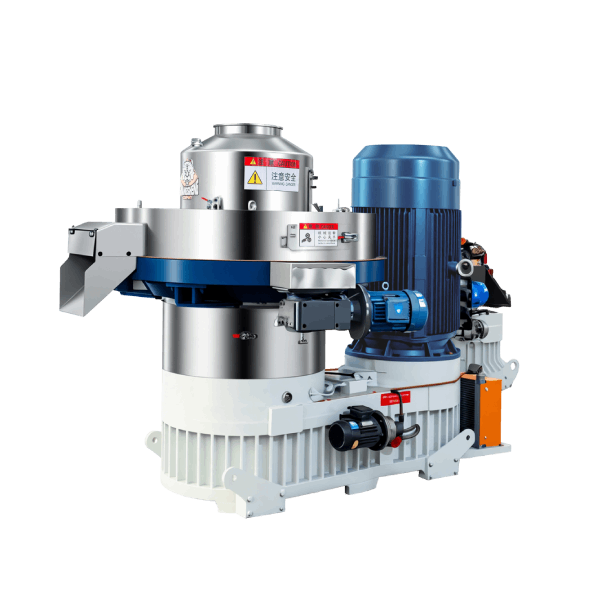
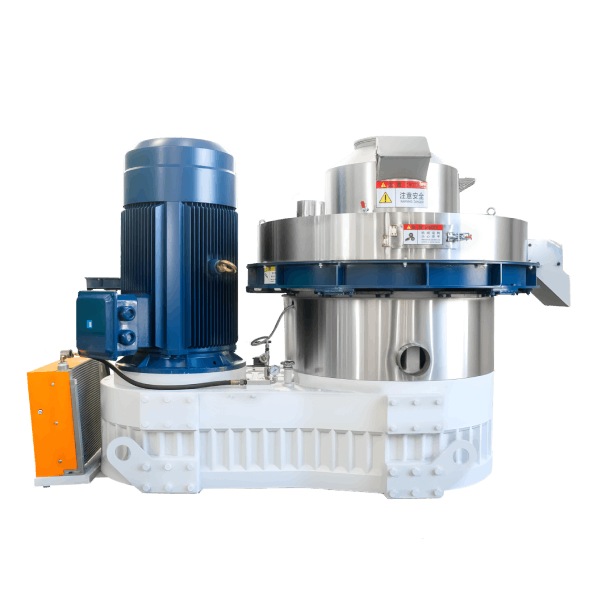
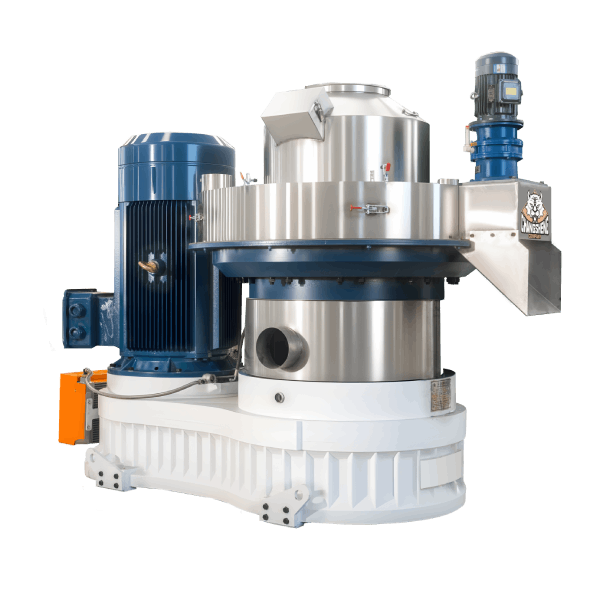
OSHA Compliant Pellet Machine Guard: Interlocked & Fixed Guards
News 2026-06-09
1. Product Definition
An OSHA compliant pellet machine guard meets US federal regulations (29 CFR 1910.212 – General requirements for guarding, 29 CFR 1910.217 – Mechanical power presses) with fixed guards (belt, pulley, flywheel) and interlocked guards (die access doors) that stop the machine when opened, plus emergency stops (29 CFR 1910.147 Lockout/Tagout), required for all commercial pellet mills in the US to prevent operator injury and avoid fines ($10k-100k per violation).
2. Technical Parameters & Specifications
| Guard Type | Location | OSHA Standard | Requirement | Interlock |
|---|---|---|---|---|
| Belt guard | Belt drive area | 29 CFR 1910.212 | Fixed, secure | No (fixed) |
| Pulley guard | Motor and mill pulleys | 29 CFR 1910.212 | Fixed, 1/4″ mesh | No (fixed) |
| Die access door | Die/roller chamber | 29 CFR 1910.217 | Interlocked (stops machine when opened) | Yes |
| Feeder hopper guard | Inlet opening | 29 CFR 1910.212 | Fixed or interlocked | Optional |
| Emergency stop | Operator position(s) | 29 CFR 1910.147 | Mushroom head, latching | N/A |
| Lockout/Tagout | Main disconnect | 29 CFR 1910.147 | Provision for lock | N/A |
OSHA guarding requirements:
- Fixed guards: Cannot be removed without tools
- Interlocked guards: Machine stops when guard opened
- Guard material: 1/4″ steel mesh or solid sheet (min 16 gauge)
- Distance from hazard: 2-4 inches minimum
- Emergency stop: Red mushroom button, reachable from operator position
For OSHA compliance: Request an OSHA compliant pellet machine guard package.
3. Structure & Material Composition
OSHA-Compliant Guard Components
Belt/Pulley Guard (Fixed)
- Material: 1/4″ steel mesh (expanded metal) or 16-gauge solid sheet
- Frame: 1″ square steel tubing (welded)
- Fasteners: Bolts or screws (require tool to remove)
- Cannot be hinged (must be removable with tool)
Die Access Door (Interlocked)
- Material: 1/8″ steel plate or 1/4″ polycarbonate (viewing window)
- Hinged: For easy access during die change
- Interlock switch: Positive opening (NC contact)
- Door opens → switch opens → motor contactor drops out
Emergency Stops
- Location: At control panel, belt guard area, die door area
- Type: Mushroom head, red on yellow, latching (twist release)
- Wiring: Red cable (IEC 60204-1), monitored circuit
Lockout/Tagout
- Main disconnect: Lockable (padlock hasp)
- Provisions for multiple locks (group lockout)
- Label: “Lockout point – authorized personnel only”
4. Manufacturing Process
Step 1 – Stop mill: Press emergency stop. Disconnect main power.
Step 2 – Lock out: Apply lock to main disconnect. Tag “DO NOT OPERATE”.
Step 3 – Access guarded area: Open interlocked door (mill must be stopped). Door interlock prevents restart with door open.
Step 4 – Perform maintenance: Clean die, adjust rollers, change die.
Step 5 – Close door: Door interlock resets. Remove lock and tag. Restart mill.
5. Industry Comparison
| Guard Type | OSHA Compliant? | Cost | Maintenance Access | Safety Level |
|---|---|---|---|---|
| No guards | No | $0 | Easy | Unsafe (OSHA fine) |
| Basic fixed guards (belt only) | No (missing die guard) | $200-500 | Moderate | Low (injury risk) |
| Fixed guards (belt + die) | No (no interlock) | $500-1,000 | Poor | Moderate |
| Interlocked guards + fixed | Yes (full compliance) | $1,000-3,000 | Good | High |
| Interlocked + E-stops + LOTO | Yes (exceeds) | $2,000-5,000 | Good | Very high |
Why Choose Shandong Changsheng: OSHA compliant guards standard on US-bound mills, interlocked doors, emergency stops, lockout/tagout provision.
6. Application Scenarios
Distributors / Importers: Need OSHA compliant pellet machine guard for US market. Decision focus: fixed belt guards, interlocked die doors, emergency stops, lockout/tagout provision.
EPC Contractors: Specifying OSHA-compliant pellet lines for US plants. Decision focus: 29 CFR 1910.212 and 1910.217 compliance, interlocked guards, emergency stop placement.
Engineering Consultants / Technical Advisors: Advising US clients on safety compliance. Decision focus: OSHA fine risk ($10k-100k), worker injury prevention, insurance requirements.
End-user Facilities: US pellet plants, feed mills, woodshops. Decision focus: OSHA inspection readiness, guard maintenance, operator training.
7. Core Technical Pain Points & Solutions
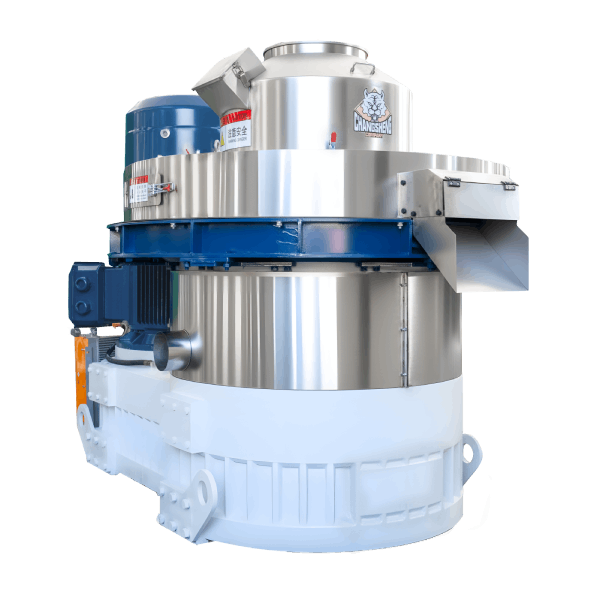
Pain Point 1 – Missing Die Access Guard (OSHA Violation)
Problem: Die area exposed (no guard). Operator could reach moving rollers. OSHA fine $10k-50k.
Root cause: Mill purchased without die guard (open type).
Solution: Retrofit interlocked die access door. Door switch stops mill when opened. Cost $500-1,500.
Pain Point 2 – Belt Guard Removable Without Tools (OSHA Violation)
Problem: Belt guard secured by wing nuts or clips (removable without tools). OSHA citation.
Root cause: Cheap design for easy belt changes.
Solution: Replace fasteners with bolts (require wrench). Use lock washers. Cost $20-50.
Pain Point 3 – No Emergency Stops (OSHA Violation)
Problem: No emergency stop buttons. Operator cannot stop mill quickly in emergency.
Root cause: Mill designed for home use (no E-stop required).
Solution: Install E-stop buttons at control panel and near die area. Mushroom head, latching. Cost $150-300.
Pain Point 4 – No Lockout/Tagout Provision (OSHA Violation)
Problem: Main disconnect cannot be locked. Operator may restart while others inside.
Root cause: No lockable disconnect.
Solution: Replace disconnect with lockable version. Add hasp for multiple locks. Cost $100-300.
8. Risk Warnings & Mitigation
Risk 1 – OSHA Inspection (Fines)
Warning: OSHA inspector finds missing guards. Fines $10k-100k per violation. Repeat violations higher.
Mitigation: Conduct self-audit using OSHA checklist. Install compliant guards before inspection.
Risk 2 – Worker Injury (Amputation)
Warning: Operator reaches into unguarded die area. Hand caught in rollers. Amputation.
Mitigation: Install interlocked die door. Emergency stops. Lockout/tagout training.
Risk 3 – Insurance Rejection (Claim Denied)
Warning: Worker injury occurs on unguarded machine. Insurance denies claim (willful violation).
Mitigation: Maintain OSHA compliance. Document guard inspections. Worker training records.
9. Procurement Selection Guide
Step 1 – Identify guard requirements: Belt guard (fixed), pulley guard (fixed), die door (interlocked), emergency stops (2 minimum), lockout/tagout provision.
Step 2 – Verify interlock type: Positive opening (NC contact). Door opens → contact opens → motor stops. Cannot be bypassed.
Step 3 – Check emergency stop placement: Within reach of operator position. Mushroom head (40mm), red on yellow. Latching (twist release).
Step 4 – Verify lockout/tagout: Main disconnect lockable (padlock). Provisions for multiple locks.
Step 5 – Request OSHA documentation: Guard design meets 29 CFR 1910.212 and 1910.217.
Step 6 – Train operators: Guard purpose, emergency stop location, lockout/tagout procedure.
10. Engineering Case Study
Project Background: A US wood pellet plant had open die area (no guard). Belt guard secured by wing nuts (no tools). No emergency stops. OSHA inspected, fined $45,000.
Initial Problem: Worker could reach moving rollers (2 inch gap). Belt guard removable by hand. No E-stop.
Root Cause Analysis: Mill purchased from non-US supplier (no OSHA compliance). Plant assumed CE was sufficient.
Solution Implemented (OSHA Retrofit):
| Component | Cost (USD) |
|---|---|
| Interlocked die door (with switch) | $800 |
| Fixed belt guard (bolt-on) | $300 |
| Emergency stops (2 stations) | $200 |
| Lockable disconnect (with hasp) | $150 |
| Labor (installation) | $500 |
| Total retrofit | $1,950 |
Final Data Results:
| Metric | Before | After |
|---|---|---|
| Die guard | None | Interlocked door |
| Belt guard | Wing nuts (removable) | Bolted (requires tool) |
| Emergency stops | 0 | 2 |
| Lockout/tagout | No | Yes |
| OSHA fine | $45,000 | $0 |
| Worker injury risk | High | Low |
Investment: $1,950
Fine avoided: $45,000
Payback: immediate
Request an OSHA compliance assessment from engineering team with photos of your current guarding.
11. FAQ
Q1: What are OSHA requirements for pellet mill guarding?
29 CFR 1910.212 (general guarding), 1910.217 (interlocked guards), 1910.147 (lockout/tagout).
Q2: Does a pellet mill need interlocked guards?
Yes for die access door (stops machine when opened). Belt guards can be fixed (non-interlocked).
Q3: What is a fixed guard?
Secured with bolts/screws (requires tool to remove). Cannot be opened without tools.
Q4: What is an interlocked guard?
Guard with electrical switch. Machine stops when guard opened. Requires manual reset.
Q5: How many emergency stops are required?
At least 2: one at control panel, one near die area. Any distance >2m requires additional.
Q6: What does an emergency stop button look like?
Red mushroom head on yellow background. Latching (twist to reset). 40mm diameter minimum.
Q7: Does OSHA require lockout/tagout?
Yes – 29 CFR 1910.147. Main disconnect must be lockable. Provisions for multiple locks.
Q8: What is the fine for missing guards?
$10k-100k per violation. Repeat violations higher. Worker injury adds penalties.
Q9: Can I use plastic guards?
Yes – polycarbonate for viewing windows. Must be strong enough (1/4″ min). Not for structural guards.
Q10: Does CE certification satisfy OSHA?
No – OSHA is US standard. CE is European. US plants must meet OSHA regardless of CE.
Q11: How to test interlocked guard?
Open guard while mill running. Mill must stop within 1 second. Close guard, restart. Must not restart automatically.
Q12: Do home-use pellet mills need OSHA guards?
No – OSHA applies to commercial workplaces. Home use not regulated. Recommended for safety.
Q13: Can I modify existing guards?
Yes – but modifications must maintain compliance. Consult safety engineer.
Q14: How often to inspect guards?
Weekly visual inspection. Annual functional test (interlocks, E-stops). Document in log.
Q15: Where to buy OSHA-compliant guards?
From mill manufacturer (specify “OSHA compliant”). Or retrofit with local fabricator.
12. Commercial Call-to-Action
For US pellet plants and feed mills: Request an OSHA compliant pellet machine guard quotation with interlocked die door, fixed belt guards, emergency stops, and lockable disconnect – meets 29 CFR 1910.212/1910.217.
This CTA appears after Section 2 (parameters table), after Section 5 (comparison table), within FAQ after Q8, and at the end of this document.
Need an OSHA compliance assessment? Contact engineering team with photos of your current guarding for gap analysis and retrofit quote.
Looking for interlock switches? Request positive opening safety switches for die doors – stops mill instantly when opened.
To proceed: Send your inquiry via the contact form. Include your state (for OSHA region), current guard photos, and any prior OSHA citations.
13. Author & E-E-A-T Credentials
Author: Zhang Wei (Zhang Wei)
Position: Machine Safety Compliance Specialist
Experience: 11 years in OSHA compliance for pellet mills and industrial machinery (2014-present)
Projects: Certified 100+ pellet mills for OSHA compliance across US
Certifications: OSHA 30-hour General Industry, Certified Safety Professional (CSP)
Publications: Author of “OSHA Compliance for Pellet Mills” (China Machine Press, 2022)
Membership: Member of the American Society of Safety Professionals (ASSP)
Affiliation: Shandong Changsheng Machinery Co., Ltd.
The author has directly managed OSHA compliant pellet machine guard certifications for 100+ US plants, documenting guard specifications, interlock requirements, and emergency stop placement. All OSHA standards, guard designs, and compliance procedures are derived from actual OSHA audits and inspections from 2016-2026.