Pellet Machine 1t Per Hour: Complete Selection Guide
News 2026-09-01
Page SEO Summary: This guide helps buyers select a 1t per hour pellet machine—covering specifications, type options, equipment configuration, price ranges, and procurement guidance.
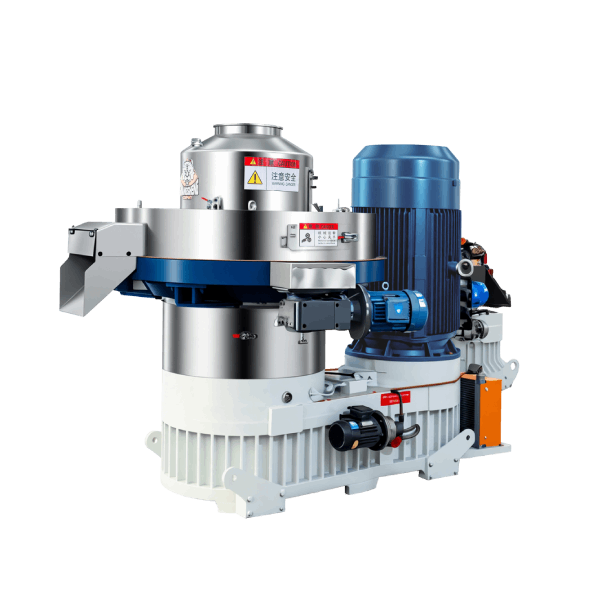
A 1 ton per hour pellet machine represents a significant step up from small-scale production. It is the entry point for serious commercial production, suitable for feed mills, biomass plants, and growing pellet businesses.
This guide provides a comprehensive overview of 1t/h pellet machines, helping you understand the specifications, options, and considerations for this capacity.
What Is a 1t/h Pellet Machine?
Capacity Context
| Scale | Capacity | Annual Output (8,000 hrs) | Typical Users |
|---|---|---|---|
| Small | 0.1-0.5 t/h | 800-4,000 tons | Small farms |
| Medium | 0.5-2 t/h | 4,000-16,000 tons | Commercial |
| Large | 2-5 t/h | 16,000-40,000 tons | Industrial |
| Very Large | 5+ t/h | 40,000+ tons | Large industrial |
1t/h Positioning
| Aspect | Detail |
|---|---|
| Position | Entry-level commercial |
| Typical users | Feed mills, biomass plants, small businesses |
| Operation | Single shift or continuous |
| Market | Local to regional |
Typical Specifications
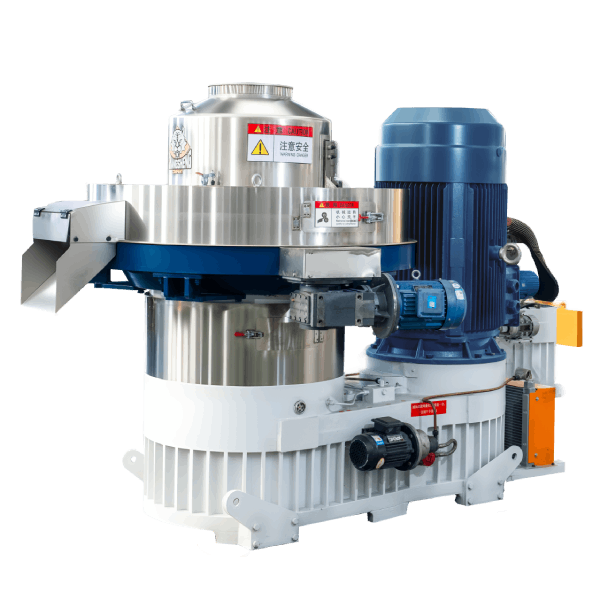
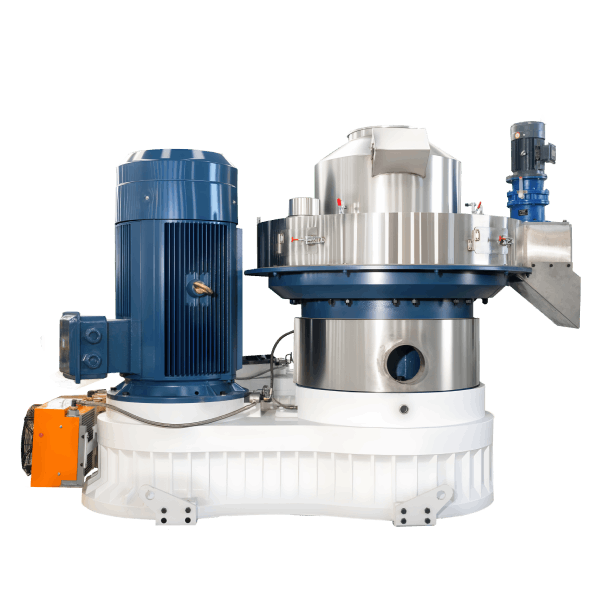
Pellet Mill Specifications
| Parameter | Typical Range | Notes |
|---|---|---|
| Capacity | 0.8-1.2 t/h | Depends on material |
| Motor power | 55-75 kW | For wood/feed |
| Die diameter | 350-450 mm | Ring die |
| Die speed | 250-350 RPM | Variable |
| Pellet diameter | 2-12 mm | Die dependent |
| Weight | 4,000-6,000 kg | Varies by manufacturer |
| Dimensions | 2.0 × 1.5 × 2.5 m | Approximate |
Power Supply
| Parameter | Typical | Notes |
|---|---|---|
| Voltage | 380V/415V | 3-phase |
| Frequency | 50Hz or 60Hz | Region dependent |
| Amperage | 100-150 A | Full load |
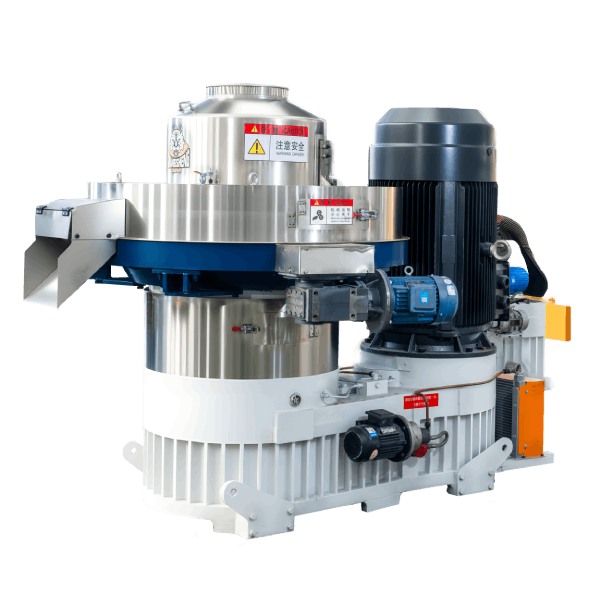
Flat Die vs Ring Die
Which Type for 1t/h?
| Aspect | Flat Die | Ring Die |
|---|---|---|
| Maximum capacity | ~300 kg/h | 5,000+ kg/h |
| Suitability for 1t/h | Not suitable | Recommended |
| Pellet quality | Good | Excellent |
| Efficiency | Lower | Higher |
| Cost | Lower | Higher |
Recommendation
For 1t/h capacity, a ring die pellet mill is the appropriate choice. Flat die machines are not capable of 1t/h output.
Complete System Configuration
Required Equipment
| Equipment | Function | Specification |
|---|---|---|
| Hammer mill | Grind material | 30-45 kW |
| Pellet mill | Form pellets | 55-75 kW |
| Cooler | Cool pellets | 1-1.5 t/h |
| Screening | Remove fines | 1-1.5 t/h |
| Conveying | Move material | Various |
Optional Equipment
| Equipment | Function | When Needed |
|---|---|---|
| Dryer | Reduce moisture | If material >15% moisture |
| Conditioner | Pre-heat material | Recommended |
| Dust collector | Environmental control | Recommended |
| Packaging | Bag product | For retail sales |
Complete Line Example
| Component | Specification |
|---|---|
| Hammer mill | 37 kW, 3-6 mm screen |
| Pellet mill | 55-75 kW ring die |
| Cooler | Counterflow, 1 t/h |
| Screening | Vibrating screen |
| Conveying | Bucket elevators, screw conveyors |
Space Requirements
Equipment Footprint
| Equipment | Approximate Size | Area |
|---|---|---|
| Hammer mill | 1.2 × 1.2 m | 1.5 m² |
| Pellet mill | 2.0 × 1.5 m | 3.0 m² |
| Cooler | 1.5 × 1.5 m | 2.3 m² |
| Screening | 1.0 × 1.5 m | 1.5 m² |
| Conveying | Various | 5-10 m² |
| Total equipment area | 15-25 m² |
Total Facility Space
| Area | Recommended Size | Purpose |
|---|---|---|
| Production floor | 50-80 m² | Equipment and operation |
| Raw material storage | 100-200 m² | Storage |
| Finished product storage | 50-100 m² | Product storage |
| Total facility | 200-380 m² |
Price Overview
Equipment Cost Estimates
| Equipment | Estimated Cost (USD) |
|---|---|
| Hammer mill (37 kW) | $8,000-15,000 |
| Pellet mill (55-75 kW) | $20,000-40,000 |
| Cooler (1 t/h) | $8,000-15,000 |
| Screening | $3,000-8,000 |
| Conveying | $5,000-15,000 |
| Control system | $3,000-10,000 |
| Total equipment | $47,000-103,000 |
Complete Line Cost
| Scope | Estimated Cost (USD) |
|---|---|
| Pellet mill only | $20,000-40,000 |
| Basic line (mill + cooler) | $30,000-60,000 |
| Complete line (full system) | $60,000-120,000 |
Additional Costs
| Cost | Estimated |
|---|---|
| Installation | $10,000-25,000 |
| Shipping | $5,000-15,000 |
| Electrical | $5,000-15,000 |
| Commissioning | $3,000-8,000 |
Capacity Factors
Materials and Output
| Material | Expected Output (t/h) | Notes |
|---|---|---|
| Softwood | 1.0-1.2 | Easiest to pelletize |
| Hardwood | 0.8-1.0 | Moderate difficulty |
| Wood chips | 0.8-1.0 | Requires proper grinding |
| Animal feed | 1.0-1.5 | Higher output possible |
| Agricultural residues | 0.7-0.9 | Variable |
Factors Affecting Capacity
| Factor | Impact |
|---|---|
| Material moisture | >12% reduces output |
| Particle size | Proper size = rated capacity |
| Die condition | Worn die reduces output |
| Operator skill | Affects consistency |
Procurement Checklist
Requirements Definition
- □ Target material confirmed
- □ Capacity requirement confirmed (1 t/h)
- □ Power supply confirmed
- □ Space confirmed
- □ Budget established
Equipment Selection
- □ Ring die pellet mill selected
- □ Complete line equipment identified
- □ Additional equipment (dryer, conditioner) assessed
- □ Automation level determined
Supplier Evaluation
- □ Multiple suppliers compared
- □ Component brands reviewed
- □ References contacted
- □ Warranty terms reviewed
Decision
- □ Best option selected
- □ Supplier chosen
- □ Order placed
Frequently Asked Questions
1. What is a 1t per hour pellet machine?
A pellet machine capable of producing 1 ton of pellets per hour. This is typically a ring die pellet mill with 55-75 kW motor power.
2. What is the typical motor power?
55-75 kW, depending on the material being processed. Harder materials require higher power.
3. Is flat die or ring die better for 1t/h?
Ring die. Flat die machines cannot achieve 1t/h capacity.
4. What equipment is needed with the pellet mill?
Hammer mill, cooler, screening, and conveying equipment. Optional: dryer, conditioner, dust collector.
5. How much space is needed?
Equipment footprint: 15-25 m². Total facility: 200-380 m² including storage.
6. How much does a 1t/h pellet machine cost?
Pellet mill only: $20,000-40,000. Complete line: $60,000-120,000.
7. What materials can be processed?
Wood (softwood, hardwood), animal feed, agricultural residues, and many biomass materials.
8. What power supply is needed?
3-phase power, typically 380V/415V, 50Hz or 60Hz depending on location.
About the Author
Zhang Wei – Senior International Sales Engineer, Shandong Changsheng Machinery Co., Ltd.
Zhang Wei has over 12 years of experience in the biomass and feed pellet mill industry, with a background in mechanical engineering and international project execution. He has helped clients across Southeast Asia, the Middle East, Africa, Europe, and Latin America select 1t/h pellet machines for their operations.
With hands-on experience in both the manufacturing workshop and client-side operations, Zhang brings practical insights into successful equipment procurement—from the factory floor to the customer’s production site.