Farm Pellet Mill: Complete Guide for Agricultural Use
News 2026-08-31
Page SEO Summary: This comprehensive guide helps farmers understand pellet mills for agricultural use—covering applications, feed production, cost savings, and equipment selection.
For farmers, feed costs are one of the largest operating expenses. A farm pellet mill offers a practical solution: turning your own grain, hay, and crop residues into high-quality pelleted feed at a fraction of the cost of commercial feed.
This guide explains everything farmers need to know about farm pellet mills—from applications to equipment selection and cost savings.
What Is a Farm Pellet Mill?
Simple Definition
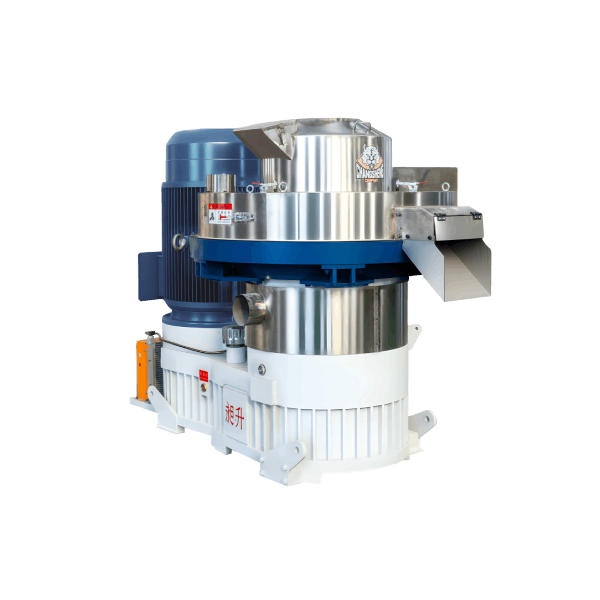
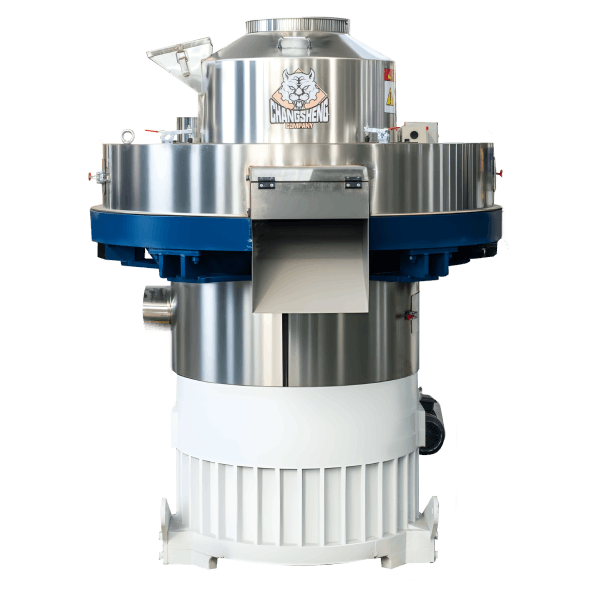
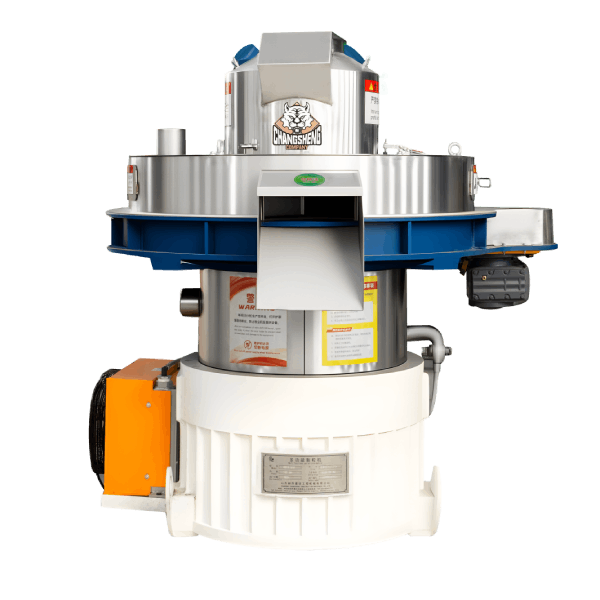
A farm pellet mill is a small-to-medium scale pellet machine designed for agricultural use. It produces pelleted feed for livestock, poultry, and other farm animals, or fuel pellets from farm waste.
Primary Uses
| Application | Description | Benefit |
|---|---|---|
| Animal feed | Pelleted feed for livestock | Better feed efficiency |
| Feed supplement | Mineral and protein pellets | Custom nutrition |
| Biomass fuel | Pellets from crop residues | Waste utilization |
| Bedding pellets | Absorbent animal bedding | Farm use |
Why Farmers Use Pellet Mills
Feed Benefits
| Benefit | Impact |
|---|---|
| Better feed conversion | Less feed per kg of gain |
| Reduced waste | Less feed scattered |
| Consistent nutrition | Better animal performance |
| Custom formulation | Tailored to your animals |
| Lower feed cost | 10-30% savings |
Waste Utilization
| Waste Type | Pellet Product | Value |
|---|---|---|
| Crop residues | Fuel pellets | Energy |
| Hay waste | Feed pellets | Animal feed |
| Straw | Fuel or bedding | Multiple uses |
What Animals Benefit?
Livestock
| Animal | Pellet Size | Feed Value |
|---|---|---|
| Poultry | 2-4 mm | High |
| Pigs | 2-5 mm | High |
| Cattle | 4-6 mm | Moderate |
| Sheep/Goats | 4-6 mm | Moderate |
| Rabbits | 3-4 mm | High |
Feed Consumption
| Animal | Daily Feed | Feed Cost/Year (per animal) |
|---|---|---|
| Chicken | 0.1-0.15 kg | $10-15 |
| Pig | 1.5-2.5 kg | $100-150 |
| Cow | 10-15 kg | $300-500 |
Cost Savings
Feed Cost Comparison
| Scenario | Purchased Feed | Home-Made Pellets | Savings |
|---|---|---|---|
| 100 chickens | $1,500/year | $1,050/year | $450/year |
| 50 pigs | $7,500/year | $5,250/year | $2,250/year |
| 20 cows | $8,000/year | $5,600/year | $2,400/year |
Equipment Payback
| Farm Size | Equipment Cost | Annual Savings | Payback |
|---|---|---|---|
| Small (50 animals) | $2,000-4,000 | $500-1,000 | 2-4 years |
| Medium (200 animals) | $4,000-8,000 | $2,000-4,000 | 1-2 years |
| Large (500 animals) | $8,000-15,000 | $5,000-10,000 | 1-2 years |
Feed Formulation Basics
Common Ingredients
| Ingredient | Purpose | Typical % |
|---|---|---|
| Corn | Energy | 50-65% |
| Soybean meal | Protein | 15-25% |
| Wheat bran | Fiber | 5-15% |
| Hay/alfalfa | Fiber | 10-20% |
| Premix | Minerals/vitamins | 1-3% |
Simple Feed Formulas
Poultry Feed
| Ingredient | Starter | Grower | Layer |
|---|---|---|---|
| Corn | 55% | 60% | 50% |
| Soybean meal | 25% | 20% | 15% |
| Wheat bran | 15% | 15% | 25% |
| Premix | 5% | 5% | 10% |
Pig Feed
| Ingredient | Weaner | Grower | Finisher |
|---|---|---|---|
| Corn | 60% | 65% | 70% |
| Soybean meal | 25% | 20% | 15% |
| Wheat bran | 10% | 10% | 10% |
| Premix | 5% | 5% | 5% |
Equipment Selection
Capacity by Farm Size
| Farm Size | Animals | Recommended Capacity |
|---|---|---|
| Small | <50 | 30-50 kg/h |
| Medium | 50-200 | 50-150 kg/h |
| Large | 200+ | 150-300 kg/h |
Machine Types
| Type | Capacity | Price | Best For |
|---|---|---|---|
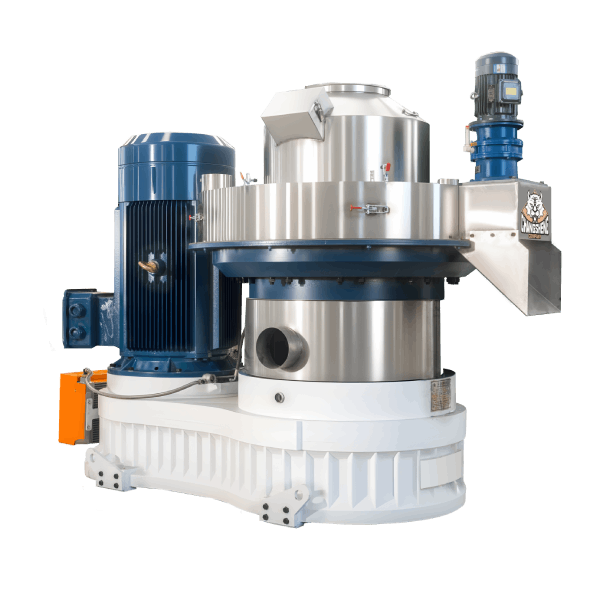
| Flat die | 30-300 kg/h | $500-5,000 | Small-medium farms |
| Ring die | 200-1,000+ kg/h | $5,000-15,000 | Large farms |
Power Supply
| Power | Availability | Machine Options |
|---|---|---|
| Single-phase 220V | Most farms | Small machines (under 5 kW) |
| 3-phase 380V | Some farms | Larger machines (5+ kW) |
Setup Requirements
Space
| Item | Small Farm | Medium Farm | Large Farm |
|---|---|---|---|
| Machine footprint | 1-2 m² | 2-4 m² | 4-8 m² |
| Work area | 3-5 m² | 5-10 m² | 10-20 m² |
| Storage | 10-20 m² | 20-40 m² | 40-80 m² |
Additional Equipment
| Equipment | Need? | Notes |
|---|---|---|
| Hammer mill | If grain isn’t ground | Grinds to powder |
| Mixer | For custom blends | Mixes ingredients |
| Cooler | Recommended | Cools pellets |
Operation on the Farm
Daily Process
| Step | Task |
|---|---|
| 1 | Grind ingredients (if needed) |
| 2 | Mix ingredients (if needed) |
| 3 | Start pellet mill |
| 4 | Feed material gradually |
| 5 | Collect and cool pellets |
| 6 | Store in dry place |
Who Can Operate
| Operator | Training Needed |
|---|---|
| Farm owner | Basic training |
| Farm worker | Basic training |
| Anyone | 1-2 hours instruction |
Procurement Checklist
Farm Assessment
- □ Animals and numbers confirmed
- □ Feed consumption calculated
- □ Power supply confirmed
- □ Space available
Equipment Selection
- □ Capacity matched to animals
- □ Type selected (flat/ring die)
- □ Power supply compatible
- □ Budget confirmed
Cost Analysis
- □ Equipment cost budgeted
- □ Annual savings estimated
- □ Payback period calculated
Decision
- □ Best option selected
- □ Supplier chosen
- □ Order placed
Frequently Asked Questions
1. What is a farm pellet mill?
A farm pellet mill is a small-to-medium pellet machine designed for agricultural use, producing pelleted feed or fuel pellets from farm products and residues.
2. What animals can eat pelleted feed?
Poultry, pigs, cattle, sheep, goats, rabbits, and other livestock benefit from pelleted feed.
3. How much can I save on feed?
10-30% compared to commercial feed, depending on scale and ingredient availability.
4. What capacity do I need?
Small farm: 30-50 kg/h. Medium farm: 50-150 kg/h. Large farm: 150-300 kg/h.
5. How much does a farm pellet mill cost?
Small machines: $500-2,000. Medium: $2,000-5,000. Large: $5,000-15,000.
6. What ingredients can I use?
Corn, soybean meal, wheat bran, hay, alfalfa, and other farm-grown ingredients.
7. Is it easy to operate?
Yes. Basic training is enough for most farm workers. Operation is straightforward.
8. What is the payback period?
Typically 1-4 years depending on scale and feed costs.
About the Author
Zhang Wei – Senior International Sales Engineer, Shandong Changsheng Machinery Co., Ltd.
Zhang Wei has over 12 years of experience in the biomass and feed pellet mill industry, with a background in mechanical engineering and international project execution. He has helped farmers across Southeast Asia, the Middle East, Africa, Europe, and Latin America reduce feed costs with farm pellet mills.
With hands-on experience in both the manufacturing workshop and client-side operations, Zhang brings practical insights into successful equipment procurement—from the factory floor to the farm.