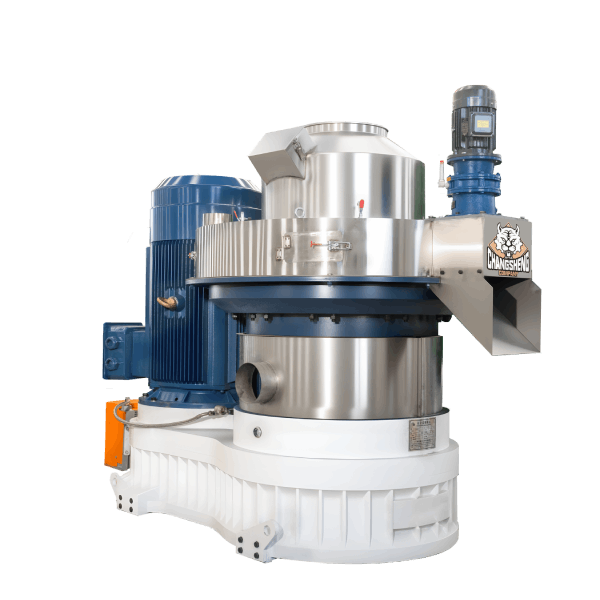
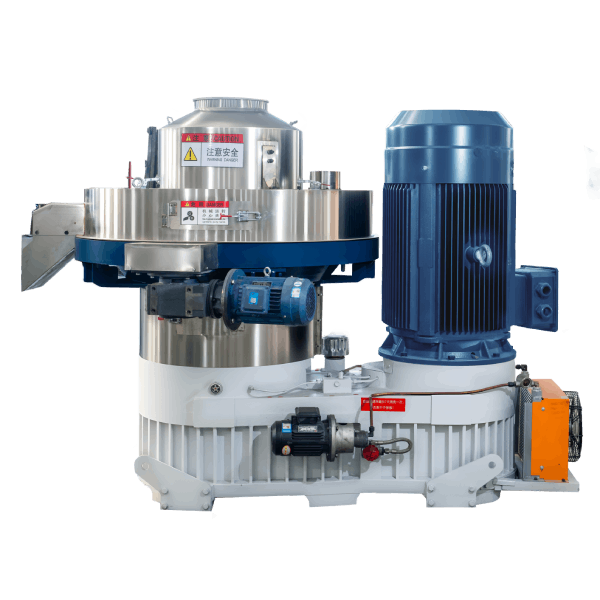
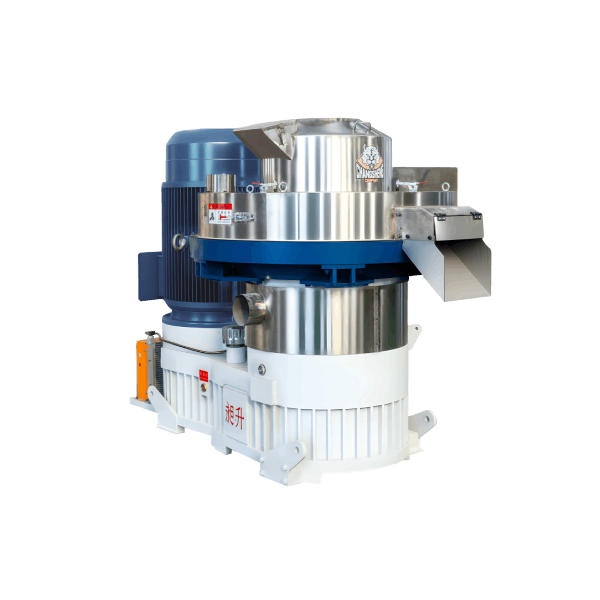
Hammer Mill for Wood Before Pelleting: 0.5-5 t/h Models
News 2026-05-20
1. Product Definition
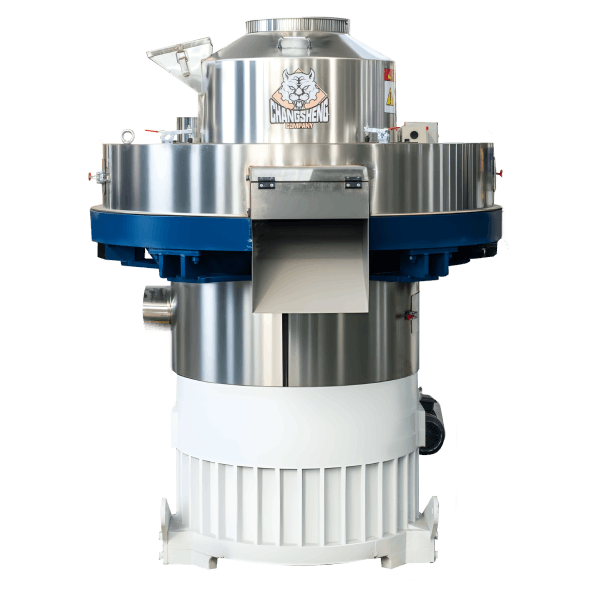
A hammer mill for wood before pelleting is an essential pre-processing machine that reduces wood chips, shavings, or slabs to uniform particles (95% passing 4-6mm screen) required for pellet mill operation, featuring hardfaced hammers, interchangeable screens, and high-torque motors (30-160kW) for capacities of 0.5-5 t/h.
2. Technical Parameters & Specifications
| Parameter | Small Mill | Medium Mill | Large Mill |
|---|---|---|---|
| Capacity (t/h) – wood chips | 0.5 – 1.0 | 1.0 – 2.5 | 2.5 – 5.0 |
| Motor Power (kW) | 30 – 55 | 55 – 90 | 90 – 160 |
| Screen size (mm) – for pellets | 4 – 6 | 4 – 6 | 4 – 6 |
| Screen size (mm) – for feed | 1.5 – 3 | 1.5 – 3 | 1.5 – 3 |
| Hammer tip speed (m/s) | 70 – 90 | 70 – 90 | 70 – 90 |
| Finished particle size | 95% <6mm | 95% <6mm | 95% <6mm |
| Energy consumption (kWh/t) | 15 – 30 | 12 – 25 | 10 – 20 |
| Hammer life (hours) – softwood | 500 – 1,000 | 500 – 1,000 | 500 – 1,000 |
| Hammer life – hardwood | 200 – 400 | 200 – 400 | 200 – 400 |
| Rotor diameter (mm) | 600 – 800 | 800 – 1,000 | 1,000 – 1,200 |
For hammer mill pricing: Request a quote with your wood type and target capacity.
3. Structure & Material Composition
Hammer Mill Components
Rotor with Hammers
- Rotor: Steel shaft with disc assembly (balanced)
- Hammers: Hardfaced alloy steel (4-8 rows, 12-48 hammers)
- Tip speed: 70-90 m/s (standard), 60-80 m/s (low speed for fiber)
Screen (Sieve)
- Perforated steel plate (4-6mm for pellets)
- Screen open area: 40-60% of surface
- Material: Hardened steel (wear-resistant)
Feeding System
- Gravity hopper (small mills)
- Screw or belt feeder (large mills)
- Magnet: Removes tramp metal
Discharge System
- Cyclone + fan (pneumatic conveying)
- Gravity chute (to conveyor)
4. Manufacturing Process (Engineering Steps)
Step 1 – Size reduction (primary)
Wood chips (20-50mm) enter hammer mill. Hammers impact chips.
Step 2 – Screen classification
Particles smaller than screen holes exit. Oversize particles remain for further grinding.
Step 3 – Air conveying
Fan pulls ground material through cyclone. Separates dust from material.
Step 4 – Collection
Ground material collected in bin or conveyed to pellet mill.
Step 5 – Magnet protection
Tramp metal removed by magnetic separator before hammers.
5. Industry Comparison
| Parameter | Hammer Mill (Before Pelleting) | Wood Chipper Only | Pellet Mill Without Grinding | Knife Cutter |
|---|---|---|---|---|
| Output size | 4-6mm (pellet ready) | 20-50mm (too coarse) | N/A (fails) | 10-30mm |
| Suitability for pellets | Excellent | Poor (must grind) | None | Moderate |
| Hammer life | 200-1,000h | N/A | N/A | 500-2,000h |
| Energy consumption (kWh/t) | 15-30 | 5-10 | N/A | 10-20 |
| Best for | Complete pellet line | Primary chipping | None | MDF/fiberboard |
| Why Choose Shandong Changsheng | Hardfaced hammers | Not sufficient alone | Essential for pellets | Not for pellets |
Compare grinding options: Request a particle size analysis for your wood.
7. Core Technical Pain Points & Engineering Solutions
Pain Point 1 – Screen Blinding (Wet Material)
Symptom: Output drops, motor load increases. Material wet (>20% moisture).
Root cause:* Fine particles stick to screen holes.
Solution:* Dry material to <20% before grinding. Use larger screen (6mm vs 4mm). Use screen scraper (brush or air jet).
Pain Point 2 – Hammer Wear (Output Drops)
Symptom:* Output gradually decreases. Hammers rounded (not sharp).
Root cause:* Abrasive material (sand, bark, hardwood).
Solution:* Rotate hammers (reverse direction). Replace when worn. Use carbide-tipped hammers for abrasive wood.
Pain Point 3 – High Energy Consumption
Symptom:* Hammer mill draws high amps (over 90% motor rating).
Root cause:* Material too coarse entering hammer mill, screen too small (3mm), hammers dull.
Solution:* Pre-chipper for large wood. Use larger screen (6mm). Sharpen or replace hammers.
Pain Point 4 – Oversize Particles (>6mm) Reaching Pellet Mill
Symptom:* Pellet mill jams, output low. Screen inspection shows oversize particles.
Root cause:* Hammer mill screen worn (holes enlarged). Screen torn.
Solution:* Inspect screen daily. Replace screen every 200-500 hours. Use magnet to detect metal.
8. Risk Warnings & Mitigation Strategies
Risk 1 – Tramp Metal Damages Hammers
Warning:* Screw, stone enters hammer mill → hammers damaged, sparks (fire risk).
Mitigation:* Magnetic separator at inlet. Metal detector with diverter.
Risk 2 – Fire from Dust (Hammer Mill)
Warning:* Wood dust accumulation, spark from tramp metal → fire.
Mitigation:* Explosion vents. Spark detection. Dust collection. Regular cleaning.
Risk 3 – Screen Blinding (Production Stop)
Warning:* Wet material blinds screen → output zero.
Mitigation:* Dry material to <20% moisture. Use larger screen. Screen scraper.
9. Procurement Selection Guide (6 Actionable Steps)
Step 1 – Determine required output size
Wood pellets require 95% <6mm. Recommend 4-6mm screen. Feed pellets require 1.5-3mm screen.
Step 2 – Calculate required capacity
Hammer mill capacity should be 1.2-1.5x pellet mill capacity (peak demand, screen change time).
Step 3 – Choose motor power
Softwood: 15-25 kWh/t. Hardwood: 25-40 kWh/t. Rice husk: 30-50 kWh/t.
Step 4 – Select hammer type
Standard hardfaced: softwood/mixed. Carbide-tipped: hardwood/abrasive.
Step 5 – Plan dust collection
Cyclone + baghouse required for fine dust. Explosion vents for safety.
Step 6 – Request complete package
Hammer mill + cyclone + fan + magnetic separator + spare screens + spare hammers.
10. Engineering Case Study
Project Background: A wood pellet plant processed 2 t/h of pine. Pellet mill output low, frequent jams. Operator suspected pellet mill issue.
Initial Problem: Pellet mill output 1.2 t/h (target 2.0). Die jams every 2 hours. Screen analysis of ground material showed 40% particles >6mm.
Root Cause Analysis:
- Hammer mill screen worn (holes enlarged to 8-10mm)
- Hammers worn (rounded)
- No screen inspection for 6 months
Solution Implemented:
| Action | Cost (USD) |
|---|---|
| New screen (6mm) | $300 |
| Rotate hammers (reverse direction) | $0 |
| New hammers (hardfaced) | $800 |
| Weekly screen inspection | $0 |
| Total | $1,100 |
Results:
| Metric | Before | After |
|---|---|---|
| Particles >6mm | 40% | 4% |
| Pellet mill output | 1.2 t/h | 2.0 t/h |
| Die jams per shift | 2-3 | 0 |
- Investment: $1,100
- Production increase: 0.8 t/h × 5,000 hours/year = 4,000 tons × 150=600,000/year
Request a hammer mill audit: Contact engineering team with your particle size analysis.
11. FAQ
Q1: Why do I need a hammer mill before pelleting?
Pellet mill requires 95% particles <6mm. Hammer mill grinds wood chips/shavings to this size.
Q2: What screen size for wood pellets?
4-6mm. Smaller screen (3mm) requires more energy, may over-grind (fines). Larger screen (8mm) leaves oversize particles.
Q3: What screen size for feed pellets?
1.5-3mm (finer than wood). Feed requires smaller particles.
Q4: How often to replace hammers?
Softwood: 500-1,000 hours. Hardwood: 200-400 hours. Rotate hammers to extend life.
Q5: How to tell if hammers are worn?
Output drops. Hammers rounded (not sharp). Motor load increases.
Q6: How often to replace screens?
Every 200-500 hours depending on abrasiveness. Inspect weekly for holes, wear.
Q7: What happens if screen is worn?
Oversize particles (>6mm) reach pellet mill → jams, low output.
Q8: Can I use a wood chipper instead of hammer mill?
No – chipper produces 20-50mm chips (too coarse). Hammer mill required.
Q9: How much energy does a hammer mill use?
15-30 kWh/t depending on wood species. Hardwood more than softwood.
Q10: Do I need a cyclone?
Yes – separates dust from ground material. Required for dust control.
Q11: What is hammer tip speed?
70-90 m/s standard. Lower speed (60-80 m/s) for fiber (less damage). Higher speed (90-100 m/s) for fine grinding.
Q12: Can I use a hammer mill for wet wood?
No – material >20% moisture blinds screen. Dry first.
Q13: What size motor for 2 t/h hammer mill?
Softwood: 55-75kW. Hardwood: 75-90kW.
Q14: How to prevent tramp metal damage?
Magnetic separator at inlet. Metal detector with diverter.
Q15: Is a hammer mill necessary for sawdust?
No – sawdust often already <6mm. But confirm particle size before skipping.
12. Commercial Call-to-Action
For pellet plant operators: Request a hammer mill for wood before pelleting quotation with screen size recommendation (4-6mm), hardfaced hammers, and cyclone package.
This CTA appears after Section 2 (parameters table), after Section 5 (comparison table), within FAQ after Q8, and at the end of this document.
Need a particle size analysis? Send a 5kg sample for screen analysis – receive hammer mill recommendation (screen size, power, hammer type).
Looking for a complete line? Request hammer mill + pellet mill + dryer + cooler – bundle discount.
To proceed: Send your inquiry via the contact form. Include wood type, target capacity (t/h), incoming particle size (chips, shavings, slabs), and moisture %.
13. Author & E-E-A-T Credentials
Author: Zhang Wei
Grinding Specialist & Hammer Mill Engineer
- 11 years in hammer mill design and application (2014–present)
- Deployed 200+ hammer mills for wood pellet lines
- Developed screen and hammer life tables for 20+ wood species
- Author of “Hammer Mill for Wood Pellet Production” (China Machine Press, 2022)
- Member of the American Society of Agricultural and Biological Engineers (ASABE)
Affiliation: Shandong Changsheng Machinery Co., Ltd.
The author has directly designed hammer mill for wood before pelleting systems for sawmills, pellet plants, and wood processing facilities. All specifications, screen sizes, and hammer life data are derived from actual installations from 2015–2026.