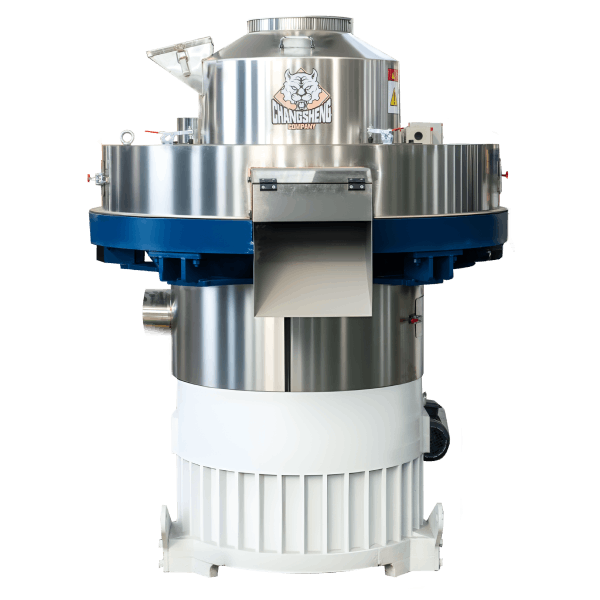
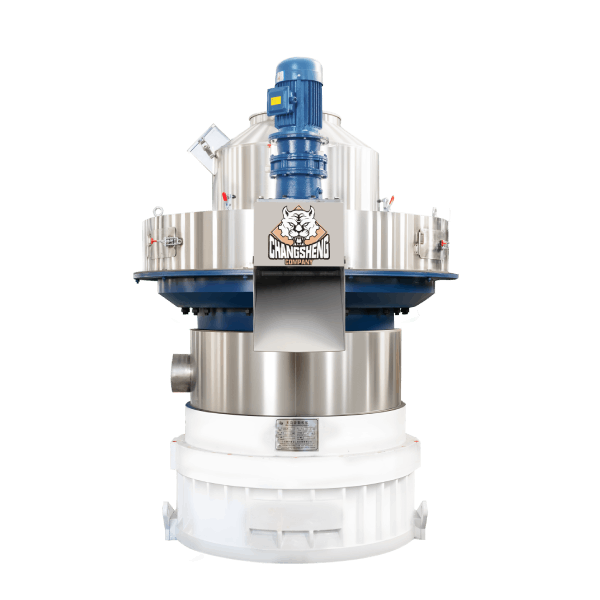
Pellet Mill with Automatic Gap Adjustment: Complete Selection Guide
News 2026-07-17
Page SEO Summary: This technical guide helps procurement professionals and plant engineers evaluate pellet mills with automatic gap adjustment—covering how the technology works, benefits over manual systems, ROI considerations, and selection criteria for reliable operation.
The gap between the roller and the die—millimeters in size—has an outsized impact on pellet mill performance. Set too wide, and the rollers cannot properly compress the material, resulting in poor pellet quality, reduced throughput, and increased fines. Set too narrow, and the rollers contact the die, accelerating wear and potentially causing catastrophic damage. Set inconsistently, and production fluctuates unpredictably.
For decades, this critical gap was set manually, relying on the experience and judgment of the operator. Today, automatic gap adjustment systems have transformed this essential but tedious task into a precise, consistent, and automated process. A pellet mill with automatic gap adjustment maintains optimal roller-to-die clearance continuously, adapting to wear and operating conditions without operator intervention.
This guide provides a comprehensive framework for understanding, evaluating, and procuring pellet mills with automatic gap adjustment technology.
Understanding Roller-to-Die Gap
What Is the Roller Gap?
The roller gap (also called roller clearance) is the distance between the outer surface of the roller and the inner surface of the die ring in a ring die pellet mill.
| Aspect | Description |
|---|---|
| Location | Between the roller and the die inside the die chamber |
| Typical gap | 0.2-1.0 mm (varies by design and material) |
| Critical dimension | 0.01-0.02 mm precision for optimal operation |
| Measurement | Measured at the point of closest approach (minimum gap) |
Why the Gap Matters
| Gap Condition | Effect | Consequence |
|---|---|---|
| Optimal gap | Consistent compression | Best pellet quality; optimal throughput; normal wear |
| Too wide | Insufficient compression | Poor pellet quality; low density; high fines; reduced output |
| Too narrow | Roller contacts die | Accelerated die and roller wear; metal fatigue; potential damage |
| Uneven gap | Variable compression | Inconsistent pellet quality; uneven die wear; vibration |
Factors That Change the Gap
| Factor | Effect on Gap | Frequency |
|---|---|---|
| Die wear | Increases gap over time | Continuous |
| Roller wear | Increases gap over time | Continuous |
| Thermal expansion | Changes gap as machine warms up | At startup and during operation |
| Material buildup | Reduces effective gap | With sticky materials |
| Mechanical settling | Changes gap over time | During initial operation and over service life |
Manual vs. Automatic Gap Adjustment
Manual Gap Adjustment
| Aspect | Manual System | Consequence |
|---|---|---|
| Method | Operator manually adjusts eccentric shaft via threaded rod or hydraulic cylinder | Labor intensive |
| Frequency | Periodic adjustment; often when problems arise | Reactive rather than proactive |
| Precision | Depends on operator skill and experience | Inconsistent |
| Measurement | Visual or feeler gauge | Subjective |
| Monitoring | None | Gap status unknown between adjustments |
Common Manual Adjustment Practices
| Practice | Description | Limitation |
|---|---|---|
| Feeler gauge | Insert gauge between roller and die | Difficult; only at one point |
| Visual inspection | Operator visually assesses gap | Imprecise; dependent on experience |
| Sound/performance | Adjust based on machine sound or output | Reactive; not predictive |
| Scheduled adjustment | Adjust on a schedule regardless of actual need | May be unnecessary or insufficient |
Automatic Gap Adjustment
| Aspect | Automatic System | Advantage |
|---|---|---|
| Method | Sensors + actuators + control system continuously maintain optimal gap | Consistent; hands-off |
| Frequency | Continuous; real-time adjustment | Proactive |
| Precision | Controlled to 0.01-0.02 mm precision | Highly consistent |
| Measurement | Position sensors or force sensors | Objective; continuous |
| Monitoring | Real-time gap status; alarms | Full visibility |
How Automatic Gap Adjustment Works
Basic System Architecture
| Component | Function | Type |
|---|---|---|
| Sensor | Measures current gap | Position sensor; force sensor; strain gauge |
| Actuator | Adjusts roller position | Hydraulic cylinder; electric linear actuator |
| Controller | Compares actual vs. target; commands actuator | PLC with control algorithm |
| HMI | Displays gap status; allows target setting | Touch screen interface |
Typical Control Sequence
| Step | Action | Description |
|---|---|---|
| 1 | Measure | Sensor measures current gap continuously |
| 2 | Compare | Controller compares actual gap to setpoint |
| 3 | Calculate | Control algorithm calculates required adjustment |
| 4 | Actuate | Actuator moves roller to achieve target gap |
| 5 | Confirm | Sensor confirms the gap changed correctly |
| 6 | Monitor | System continues monitoring; adjusts as needed |
Sensor Technologies
| Sensor Type | How It Works | Advantages | Limitations |
|---|---|---|---|
| Position sensor (LVDT) | Measures mechanical position | High accuracy; reliable | Contact measurement |
| Inductive proximity sensor | Detects metal position | Non-contact; durable | Less precise |
| Strain gauge / load cell | Measures force/pressure | Real-time force feedback | Indirect gap measurement |
| Ultrasonic sensor | Measures distance via sound waves | Non-contact; flexible | Potential interference |
Actuator Technologies
| Actuator Type | Operation | Advantages | Limitations |
|---|---|---|---|
| Hydraulic cylinder | Hydraulic fluid pressure moves roller | High force; precise | Requires hydraulic system; higher cost |
| Electric linear actuator | Motor-driven screw or ball-screw | Simpler; no hydraulics | Less force capacity |
| Eccentric shaft with servo | Servo motor rotates eccentric shaft | Direct mechanism; fast response | More complex mechanics |
Benefits of Automatic Gap Adjustment
Operational Benefits
| Benefit | Description | Impact |
|---|---|---|
| Consistent pellet quality | Gap maintained at optimum continuously | Higher PDI; fewer off-spec pellets |
| Maximum throughput | Optimal gap ensures maximum material flow | Higher production |
| Reduced fines | Consistent compression minimizes fines | Better product quality |
| Longer die life | Gap maintains proper compression, reduces wear | Lower operating cost |
| Less operator intervention | Gap adjusts automatically | Reduced labor; fewer errors |
Economic Benefits
| Benefit | Quantified Impact (Est.) |
|---|---|
| Reduced die wear | 10-20% longer die life |
| Improved pellet quality | 2-5% higher PDI |
| Increased throughput | 3-8% higher production |
| Reduced downtime | 5-15 hours/year saved |
| Lower operator skill requirement | Reduced training and supervision |
The Cost of Manual Adjustment
| Factor | Impact |
|---|---|
| Inconsistent quality | Loss of premium prices; customer complaints |
| Higher die wear | Increased die replacement cost (10-20% of pellet mill value) |
| Lower throughput | Reduced capacity; underutilized asset |
| Operator labor | Time spent on manual adjustments |
| Production variability | Difficult to predict output; inventory challenges |
Return on Investment Analysis
ROI Calculation Example
Assumptions:
- 5 t/h pellet line
- Production value: $500/hour
- Operation: 16 hours/day, 300 days/year
- Die replacement: 2 times/year at $8,000 each
- Automatic gap adjustment premium: $15,000
| Benefit | Annual Value |
|---|---|
| 10% longer die life | $1,600 (one less die every 5 years) |
| 5% higher production | 240 more tons/year at $500/hour = $120,000 |
| 2% higher PDI (quality premium) | Price premium of $5-10/ton = $7,500-15,000 |
| Reduced downtime | 10 hours/year at $500/hour = $5,000 |
| Total Annual Benefit | $134,100 – $141,600 |
Investment: $15,000 premium (typical range: $10,000-$30,000)
Payback Period: 1-2 months
Selection Decision Framework
When to Select Automatic Gap Adjustment
| Factor | Decision |
|---|---|
| Continuous operation | Strongly recommended |
| High production value | Recommended (quick payback) |
| Variable materials | Recommended |
| Limited skilled operators | Strongly recommended |
| Quality-critical application | Strongly recommended |
| Remote operation | Highly recommended |
When Manual May Suffice
| Factor | Decision |
|---|---|
| Intermittent operation | May not justify |
| Consistent, easy material | Manual may suffice |
| Very small scale | Cost may be prohibitive |
| Operations with experienced operators | Manual may be acceptable |
Supplier Evaluation
Questions to Ask
| Category | Questions |
|---|---|
| Technology | What sensor technology is used? What is the precision? |
| Reliability | How reliable is the system? What is the MTBF? |
| Integration | Does it integrate with the overall control system? |
| Maintenance | What maintenance is required? How is it serviced? |
| Training | What training is provided for operators and maintenance? |
| Calibration | How is the system calibrated? How often? |
| Retrofit | Can it be retrofitted to existing equipment? |
Verification
- Reference sites with automatic gap adjustment
- Technical documentation and specifications
- Demonstration or video of system operation
- Service and support capabilities
Procurement Checklist
Technical Specifications
- Automatic gap adjustment included
- Sensor technology specified
- Actuator technology specified
- Control system integration defined
- Precision (tolerance) confirmed
- Adjustment range confirmed
Operational Considerations
- Training on automatic gap operation
- Maintenance procedures understood
- Calibration schedule defined
- Spare parts (sensors, actuators) considered
Commercial Considerations
- Cost premium evaluated (ROI confirmed)
- Warranty on automatic gap system
- Retrofit option (if applicable)
- Service and support availability
Frequently Asked Questions
1. What is automatic gap adjustment in a pellet mill?
Automatic gap adjustment is a system that continuously maintains the optimal distance between the roller and the die in a ring die pellet mill. Sensors measure the gap, and actuators adjust the roller position automatically to maintain the target clearance as the die and rollers wear.
2. Why is roller-to-die gap important?
The gap determines how effectively the material is compressed between the roller and the die. A gap that is too wide results in poor pellet quality and low throughput. A gap that is too narrow causes excessive wear and potential damage. Consistent gap = consistent quality.
3. How does automatic gap adjustment compare to manual adjustment?
Automatic gap adjustment provides continuous, precise control without operator intervention. Manual adjustment is periodic, imprecise, and dependent on operator skill. Automatic systems maintain the optimal gap despite wear and operating conditions; manual systems cannot.
4. What is the typical payback period for automatic gap adjustment?
For continuous operations, the payback is typically 1-6 months. The ROI comes from improved pellet quality, higher throughput, reduced wear, and lower operator labor.
5. Does automatic gap adjustment reduce the need for operator skills?
It reduces the need for skills related to gap adjustment and allows operators to focus on other tasks. However, operators still need to understand the system and monitor its operation.
6. Can automatic gap adjustment be retrofitted to existing pellet mills?
Yes, many automatic gap adjustment systems can be retrofitted to existing pellet mills. The feasibility depends on the machine design, available space, and mechanical compatibility.
7. What maintenance is required for automatic gap adjustment?
Maintenance includes checking sensors, calibrating the system, inspecting actuators, and verifying the control system. The additional maintenance is relatively small compared to the benefits.
8. Is automatic gap adjustment necessary for all pellet mills?
Not for all, but for continuous operations, high-value production, or variable materials, it is strongly recommended. For very small or intermittent operations, manual adjustment may be sufficient.
About the Author
Zhang Wei – Senior International Sales Engineer, Shandong Changsheng Machinery Co., Ltd.
Zhang Wei has over 12 years of experience in the biomass and feed pellet mill industry, with a background in mechanical engineering and international project execution. He has managed pellet mill supply projects for clients across Southeast Asia, the Middle East, Africa, Europe, and Latin America, including extensive experience with advanced automation and control systems.
With hands-on experience in both the manufacturing workshop and client-side operations, Zhang brings practical insights into successful equipment procurement—from the factory floor to the customer’s production site.