Page SEO Summary: This comprehensive guide explains how wood pellets are manufactured—covering raw material preparation, production steps, equipment requirements, and quality control.
Wood pellets are one of the most efficient and sustainable fuel sources available today. But how are they actually made? From raw wood to finished pellets, the manufacturing process involves several precise steps that transform waste wood into a high-energy fuel.
This guide provides a comprehensive overview of how wood pellets are manufactured, from raw material preparation to quality control.
Overview of the Manufacturing Process
Simple Summary
Wood pellets are made by drying, grinding, and compressing wood material under high pressure. The wood’s natural lignin acts as a binder, holding the pellets together without any added chemicals.
Process Stages
Stage Description 1. Raw material Wood sawdust, chips, or residues 2. Drying Reduce moisture to 10-12% 3. Grinding Reduce to 2-5 mm particle size 4. Conditioning Add heat and steam 5. Pelletizing Compress through a die 6. Cooling Cool and harden pellets 7. Screening Remove fines 8. Packaging Bag or bulk delivery
1. Raw Material Preparation
Suitable Materials
Material Quality Availability Sawdust Excellent Most common Wood chips Good Common Wood shavings Good Common Bark Moderate Common Wood residues Variable Common
Material Requirements
Requirement Specification Why Moisture 10-12% (after drying) Optimal for pelletizing Particle size 2-5 mm Uniform flow Cleanliness Free from contaminants Equipment protection
Raw Material Storage
Requirement Details Covered storage Protect from rain Ventilation Prevent spontaneous combustion Separation Keep different materials separate
2. Drying
Why Drying Is Essential
Reason Impact Optimal moisture 10-12% needed Energy efficiency Less energy in pelletizing Pellet quality Better binding Storage stability Prevents degradation
Drying Methods
Method Description Advantages Rotary dryer Rotating drum with hot air High capacity; robust Belt dryer Moving belt with hot air Gentle; good quality Flash dryer Rapid drying Fast; compact
Moisture Content
Moisture Level Effect <10% Poor binding; brittle pellets 10-12% Optimal for pelletizing 12-15% Acceptable; reduced quality >15% Steam issues; poor quality
3. Grinding
Why Grinding Is Important
Reason Impact Uniform particle size Consistent pellet quality Surface area Better binding Flow characteristics Smooth operation
Grinding Equipment
Equipment Description Application Hammer mill Impact grinding Most common Chipper Coarse reduction Large pieces Crusher Primary reduction Tough materials
Particle Size Requirements
Size Effect <2 mm Good flow; good binding 2-5 mm Standard; acceptable >5 mm Poor pellets; equipment damage
4. Conditioning
Purpose of Conditioning
Purpose How It Works Heat activation Softens lignin Moisture addition Improves binding Temperature control Optimal conditions
Conditioning Process
Parameter Value Temperature 80-100°C Steam addition 2-5% of material Retention time 15-30 seconds
5. Pelletizing
The Core Process
Step Description 1 Material enters die chamber 2 Rollers press material through holes 3 Friction generates heat (80-120°C) 4 Lignin softens and binds particles 5 Pellets emerge from die 6 Cutters trim to length
Die Types
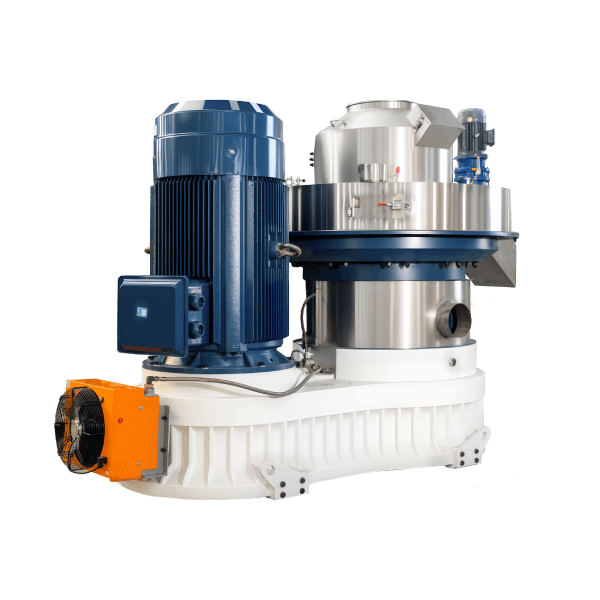
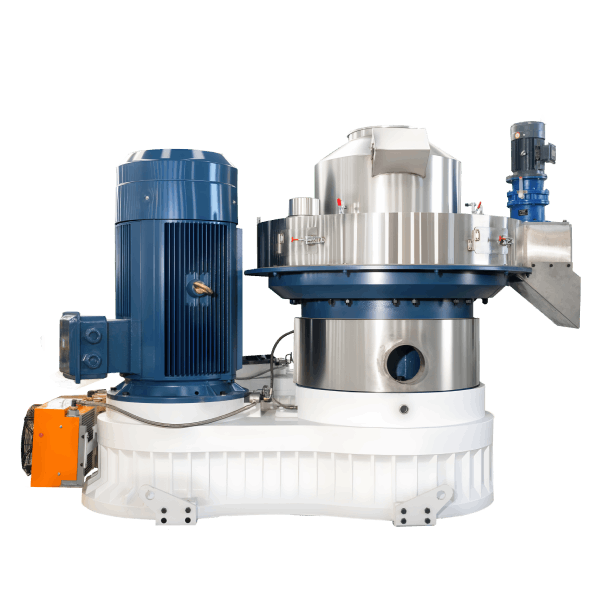
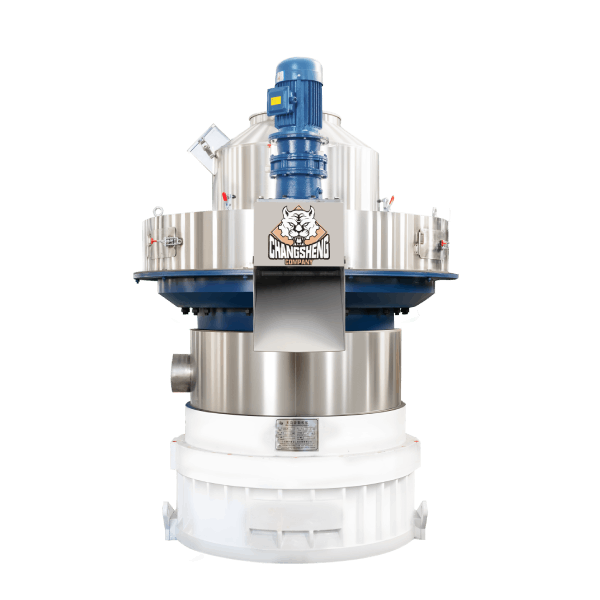
Type Description Best For Flat die Flat plate with holes Small scale Ring die Vertical ring with holes Commercial production
Key Parameters
Parameter Value Why Temperature 80-120°C Lignin activation Pressure High Density and binding Die L/D ratio 1:8 to 1:12 Pellet quality
6. Cooling
Why Cooling Is Essential
Reason Impact Pellet hardening Sets the structure Moisture removal Final moisture control Storage stability Prevents degradation
Cooling Methods
Method Description Advantages Counterflow cooler Air flows upward Efficient; compact Belt cooler Conveyor with air Gentle; high capacity
Cooling Targets
Parameter Target Final temperature Ambient +3-5°C Final moisture 8-10% Cooling time 10-20 minutes
7. Screening and Packaging
Screening
Purpose How It Works Fines removal Separate broken pellets and dust Quality control Ensure uniform product Recycling Fines returned to process
Packaging
Method Description Bags 10-20 kg for residential Bulk Silos or trucks for industrial Big bags 500-1,000 kg for commercial
The Equipment System
Complete Production Line
Stage Equipment Function Raw material Receiving hopper, conveyor Intake Drying Rotary dryer Moisture reduction Grinding Hammer mill Size reduction Conditioning Conditioner Heat and moisture Pelletizing Pellet mill Form pellets Cooling Cooler Cool and dry Screening Fines screen Remove fines Packaging Bagging system Final product
Production Line Sizes
Scale Capacity Equipment Small 0.5-1 t/h Basic line Medium 1-3 t/h Full line Large 3-10 t/h Industrial line
Quality Control
Key Quality Parameters
Parameter Premium Standard Industrial Ash content <0.7% <1.5% <3% Moisture <10% <10% <10% Durability >97.5% >96% >95% Fines <1% <2% <3%
Testing Methods
Test Equipment Frequency Moisture Moisture analyzer Every batch Durability PDI tester Every batch Ash Muffle furnace Regular Size Sieve analysis Every batch
Frequently Asked Questions
1. How are wood pellets manufactured?
Wood pellets are manufactured by drying, grinding, and compressing wood material under high pressure. The wood’s natural lignin acts as a binder, holding the pellets together without additives.
2. What raw materials are used?
Sawdust, wood chips, wood shavings, and wood residues from sawmills and forestry operations are the primary raw materials.
3. What equipment is needed?
Key equipment includes: dryer, hammer mill, conditioner, pellet mill, cooler, screening, and packaging systems.
4. What is the optimal moisture content?
Wood material should have 10-12% moisture for optimal pelletizing. Higher moisture requires more drying; lower moisture reduces binding.
5. How hot does the pellet mill get?
Temperatures reach 80-120°C during pelletizing due to friction. This heat activates the lignin that binds the pellets.
6. Are any chemicals added?
No. High-quality wood pellets are made from 100% wood. The lignin in the wood acts as a natural binder.
7. How long does the process take?
The entire process from raw material to finished pellets takes minutes, excluding drying time which can be 20-40 minutes.
8. What is the difference between flat die and ring die?
Flat die is simpler and lower capacity (small scale). Ring die is higher capacity and produces better quality pellets (commercial production).
About the Author
Zhang Wei – Senior International Sales Engineer, Shandong Changsheng Machinery Co., Ltd.
Zhang Wei has over 12 years of experience in the biomass and feed pellet mill industry, with a background in mechanical engineering and international project execution. He has helped clients across Southeast Asia, the Middle East, Africa, Europe, and Latin America understand wood pellet manufacturing and set up production facilities.
With hands-on experience in both the manufacturing workshop and client-side operations, Zhang brings practical insights into successful equipment procurement—from the factory floor to the customer’s pellet plant.