Wood pellet plant design standards 2026
News 2026-02-12
Wood Pellet Plant Design Standards 2026: Engineering and Compliance Guide for Industrial Projects
Product Definition
Wood pellet plant design standards 2026 refer to the latest engineering, safety, environmental, and efficiency requirements used to plan, construct, and operate industrial wood pellet production facilities, covering layout design, equipment selection, energy use, emission control, and long-term operational compliance.
Technical Parameters and Design Specifications
A wood pellet plant designed to 2026 standards typically meets the following technical and environmental benchmarks:
• Plant capacity range: 1–12 tons per hour per production line
• Annual operating hours: 6,000–7,500 hours
• Installed electrical power: 300–1,500 kW depending on scale
• Specific electricity consumption: 85–115 kWh per ton of pellets
• Raw material moisture input: 35–55 percent
• Finished pellet moisture: ≤10 percent
• Pellet diameter: 6–8 mm (industrial standard)
• Bulk density: 600–750 kg/m³
• Dust emission after filtration: ≤20 mg/Nm³
• Noise limit at plant boundary: ≤65 dB(A)
These parameters are considered baseline values for feasibility studies, EPC contracts, and environmental approvals in 2026.
Plant Structure and Material Composition
A compliant wood pellet plant is organized into clearly defined functional zones:
Raw material handling and storage
• Structural steel sheds with corrosion protection
• Concrete floors with dust-sealed joints
Size reduction section
• Hammer mills with alloy steel rotors and screens
• Fully enclosed housings to limit airborne particulates
Drying system
• Rotary drum dryer with carbon steel shell
• Internal lifters lined with wear-resistant material
• Indirect heating furnace (biomass or gas fired)
Pelletizing section
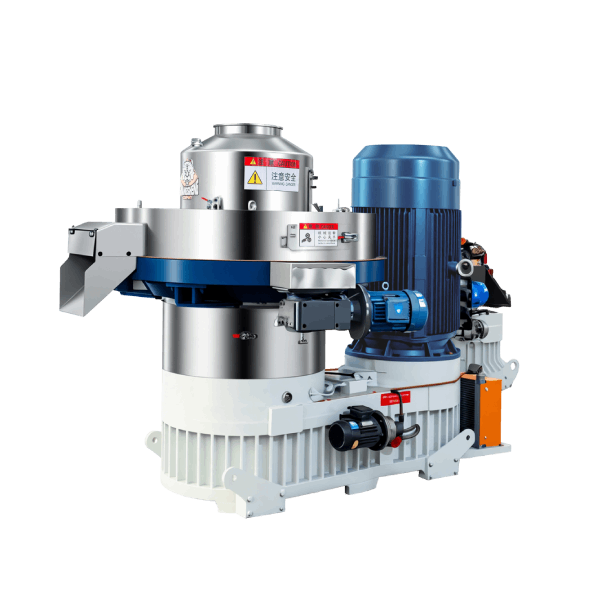
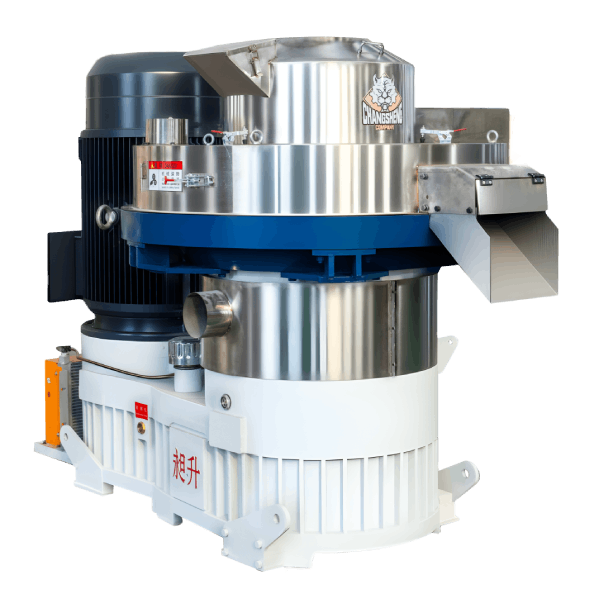
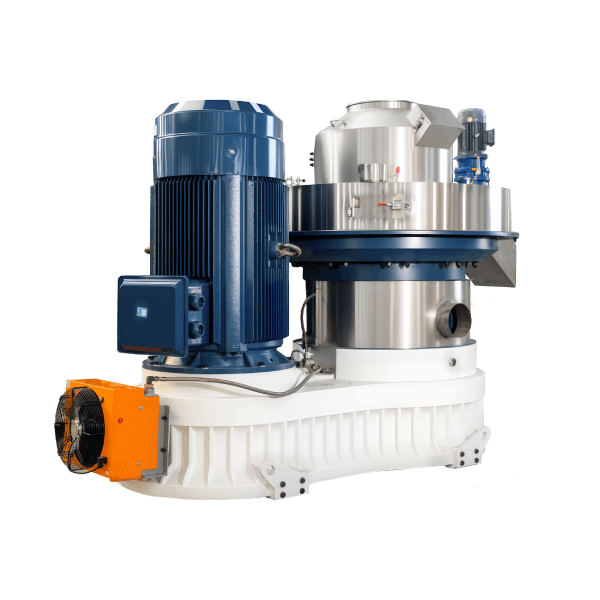
• Ring die pellet mills with forged alloy steel dies
• Heavy-duty gearboxes rated for continuous operation
Cooling and screening
• Counterflow cooler with galvanized steel structure
• Vibrating screens with stainless steel contact parts
Dust and emission control
• Cyclone separators
• Pulse-jet baghouse with industrial filter media
Structural materials are selected to balance durability, thermal stability, and maintenance accessibility.
Manufacturing Process and Engineering Control Points
Step 1: Raw material reception
Equipment: belt conveyors, magnetic separators
Key point: prevent metal contamination and uncontrolled dust release
Step 2: Size reduction
Equipment: hammer mills
Key point: control particle size between 3–5 mm for pellet quality
Step 3: Drying
Equipment: rotary dryer, hot air generator
Key point: stabilize moisture to 10–12 percent before pelletizing
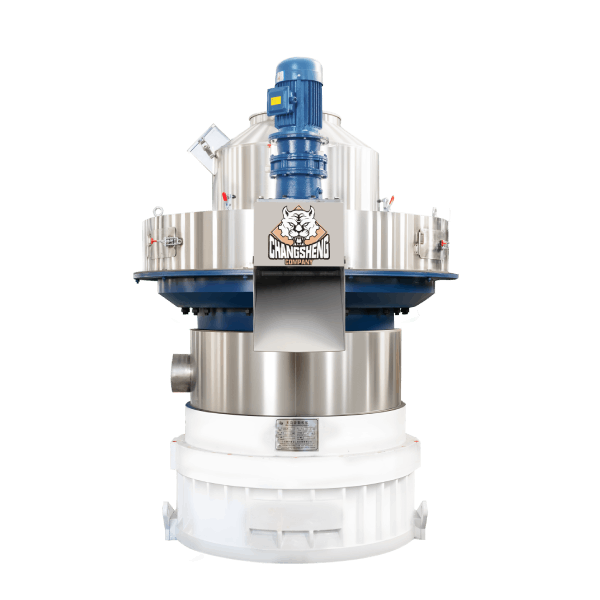
Step 4: Pelletizing
Equipment: ring die pellet mills
Key point: maintain die temperature between 80–110°C
Step 5: Cooling
Equipment: counterflow cooler
Key point: reduce pellet temperature to within 5–10°C of ambient
Step 6: Screening and recycling
Equipment: vibrating screens
Key point: return fines directly to pellet mill inlet
Step 7: Storage and loading
Equipment: silos, bulk loading systems
Key point: avoid pellet degradation and dust formation
Industry Comparison: Wood Pellet Plants vs Alternative Solid Fuel Facilities
| Parameter | Wood Pellet Plant | Coal Briquette Plant | RDF Fuel Line |
|---|---|---|---|
| Renewable classification | Yes | No | Partial |
| Dust control requirement | High | Very high | High |
| Energy efficiency | High | Medium | Medium |
| Environmental approval complexity | Medium | High | High |
| Product uniformity | High | Medium | Low |
| Export compliance | Strong | Limited | Limited |
This comparison explains why modern pellet plants require stricter layout and dust control standards than traditional solid fuel facilities.
Application Scenarios and Stakeholder Use
Distributors and importers
Use design standards to ensure exported pellets meet destination regulations.
EPC contractors
Apply standards to avoid redesign, penalties, and commissioning delays.
Engineering consultants
Use standards for feasibility studies and environmental impact assessments.
Industrial operators
Apply standards to reduce energy cost, downtime, and regulatory risk.
Core Engineering Pain Points and Solutions
Pain Point 1: Excessive dust accumulation
Solution: Zonal dust extraction and sealed transfer points
Pain Point 2: High dryer energy consumption
Solution: Waste heat recovery and optimized airflow design
Pain Point 3: Pellet quality instability
Solution: Moisture control and die speed optimization
Pain Point 4: Noise exceeding limits
Solution: Acoustic enclosures and vibration isolation foundations
Risk Warnings and Avoidance Strategies
• Undersized dust collectors cause emission violations
Avoidance: design airflow capacity with 25 percent margin
• Poor layout increases fire and explosion risk
Avoidance: separate drying and pelletizing zones
• Ignoring raw material variability reduces output stability
Avoidance: include buffer silos and moisture equalization
• Inadequate maintenance access raises lifecycle cost
Avoidance: enforce minimum service clearance standards
Procurement and Plant Design Selection Guide
Step 1: Define target capacity and operating hours
Step 2: Confirm local emission and fire safety regulations
Step 3: Match dryer type to raw material moisture range
Step 4: Specify dust control systems in early design
Step 5: Require energy consumption benchmarks from suppliers
Step 6: Verify reference plants operating for over 24 months
Step 7: Include automation and monitoring in scope
This sequence aligns engineering design with long-term compliance and cost control.
Engineering Case Example
A 6 t/h wood pellet plant designed under updated European standards integrated indirect biomass drying, centralized dust collection, and enclosed conveyors. The project achieved stable operation at 7,000 hours per year, with dust emissions consistently below 15 mg/Nm³ and energy consumption reduced by approximately 10 percent compared to older layouts.
Frequently Asked Questions
- Are wood pellet plant design standards mandatory?
They are required for permits, financing, and insurance approval. - What changed in 2026 standards?
Stricter dust, noise, and energy efficiency expectations. - Is indirect drying preferred?
Yes, for lower emission and fire risk. - What is the main environmental concern?
Dust emissions and dryer exhaust. - How is fire risk managed?
Zoning, temperature monitoring, and spark detection. - Do standards affect plant layout size?
Yes, more space is required for safety clearances. - Can old plants be upgraded?
Yes, but often at higher cost than compliant new builds. - What automation level is recommended?
PLC-based centralized control with alarms. - Are export markets sensitive to design standards?
Yes, especially in Europe and Japan. - Do standards reduce operating cost?
Yes, through efficiency and reduced downtime.
Call to Action
For a project-specific wood pellet plant design standards 2026 review, request detailed layout drawings, compliance checklists, or engineering reference data from qualified pellet plant equipment suppliers or EPC engineering teams.
E-E-A-T Author Credentials
This document is prepared by industrial process engineers with over 15 years of experience in wood pellet plant design, EPC execution, environmental compliance, and international project consulting across Europe, Asia, and North America, specializing in energy efficiency and emission-controlled biomass systems.