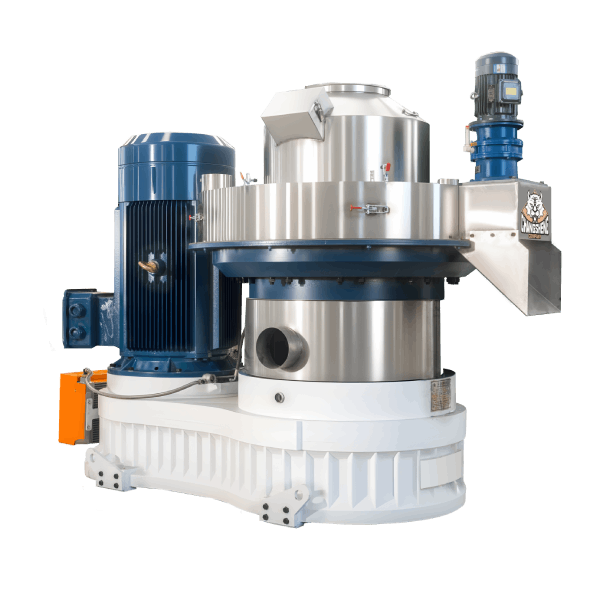
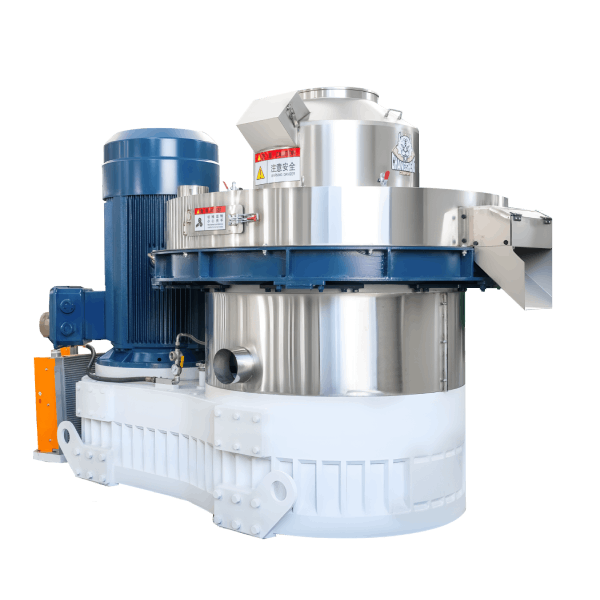
Poultry Feed Pellet Machine with Mixer: Complete Selection Guide
News 2026-07-30
Page SEO Summary: This technical guide helps poultry farmers and feed producers evaluate poultry feed pellet machines with mixers—covering equipment types, capacity selection, investment considerations, and procurement guidance.
The global poultry industry continues to grow, driving increasing demand for high-quality pelleted feed. Pelleting improves feed efficiency, reduces waste, and enhances the nutritional value of poultry feed. For poultry farmers and small-to-medium feed producers, a poultry feed pellet machine with mixer offers an efficient, space-saving solution.
This equipment combines mixing and pelletizing functions into a single system, simplifying the production process and reducing the need for separate equipment. It is particularly suitable for small to medium-scale operations where space and budget are considerations.
This guide provides a comprehensive technical framework for understanding, selecting, and procuring poultry feed pellet machines with integrated mixers.
What Is a Poultry Feed Pellet Machine with Mixer?
Definition
A poultry feed pellet machine with mixer is a complete system that combines ingredient mixing and pelletizing into a single integrated unit. It typically includes a mixer (ribbon or paddle type) feeding directly into a pellet mill (ring die or flat die), along with conveying and conditioning components.
Integrated vs. Separate Systems
| Aspect | Integrated System | Separate System |
|---|---|---|
| Space requirement | Smaller | Larger |
| Equipment cost | Lower overall | Higher overall |
| Production efficiency | Good (single operator) | Better (dedicated lines) |
| Flexibility | Less flexible | More flexible |
| Maintenance | Simpler | More complex |
| Best for | Small-mid scale | Large scale |
Typical System Components
| Component | Function |
|---|---|
| Mixer | Blend ingredients uniformly |
| Conditioner | Add steam/moisture; pre-cook |
| Pellet mill | Form pellets |
| Cooler | Cool and dry pellets |
| Screening | Remove fines |
| Control panel | System control |
How the System Works
Process Flow
| Stage | Equipment | Description |
|---|---|---|
| 1. Grinding | Hammer mill (separate) | Reduce raw materials to powder |
| 2. Weighing | Scale (separate) | Measure ingredients |
| 3. Mixing | Mixer | Blend all ingredients uniformly |
| 4. Conditioning | Conditioner | Add steam and moisture |
| 5. Pelletizing | Pellet mill | Form pellets |
| 6. Cooling | Cooler | Reduce temperature and moisture |
| 7. Screening | Fines screen | Remove fines |
Key Operation Parameters
| Parameter | Typical Range | Impact |
|---|---|---|
| Mixing time | 3-8 minutes | Uniformity |
| Conditioning temperature | 70-85°C | Starch gelatinization |
| Conditioning moisture | 15-18% | Pellet quality |
| Die compression ratio | 1:8 to 1:12 | Pellet density |
| Pellet temperature | 80-90°C | During pelleting |
Equipment Types and Configurations
By Production Capacity
| Type | Capacity (kg/h) | Motor Power | Suitable For |
|---|---|---|---|
| Small | 50-150 | 7.5-15 kW | Small farms; hatcheries |
| Medium | 150-400 | 15-30 kW | Mid-size farms; small feed mills |
| Large | 400-800 | 30-55 kW | Commercial feed mills |
By Die Type
| Die Type | Capacity Range | Advantages | Best For |
|---|---|---|---|
| Flat die | 50-300 kg/h | Lower cost; simpler | Small operations |
| Ring die | 150-2,000+ kg/h | Higher output; better quality | Commercial operations |
By Mixer Type
| Mixer Type | Best For | Advantages |
|---|---|---|
| Ribbon mixer | Powders; general poultry feed | Simple; reliable |
| Paddle mixer | Wet ingredients; fat addition | Good mixing; versatile |
| Vertical mixer | Small batches | Compact |
Capacity Selection
Matching Capacity to Flock Size
| Operation Scale | Birds | Feed Need (kg/h) | Recommended Capacity |
|---|---|---|---|
| Small farm | 1,000-5,000 | 20-100 | 50-100 kg/h |
| Mid-size farm | 5,000-20,000 | 100-400 | 100-300 kg/h |
| Large farm | 20,000-50,000 | 400-1,000 | 300-500 kg/h |
| Commercial feed mill | 50,000+ | 1,000+ | 500+ kg/h |
Feed Consumption Guidelines
| Poultry Type | Daily Feed (kg/bird) | Example (10,000 birds) |
|---|---|---|
| Broiler (grower) | 0.10-0.15 | 1,000-1,500 kg/day |
| Broiler (finisher) | 0.15-0.20 | 1,500-2,000 kg/day |
| Layer | 0.10-0.12 | 1,000-1,200 kg/day |
| Breeder | 0.15-0.18 | 1,500-1,800 kg/day |
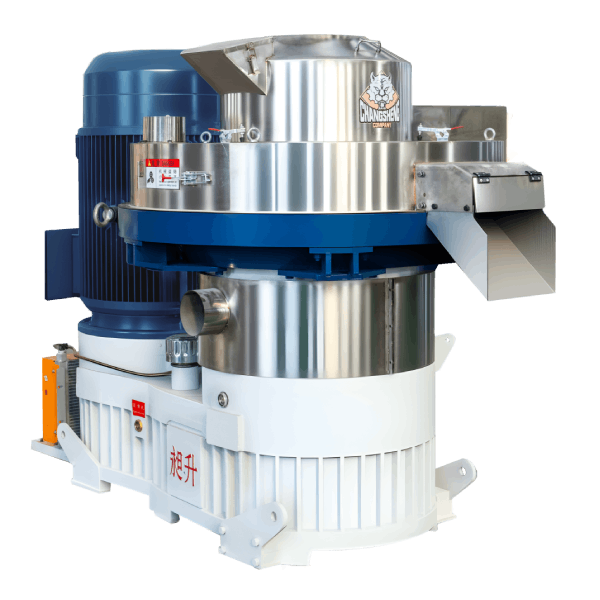
Key Specifications
Pellet Mill Specifications for Poultry Feed
| Specification | Recommendation | Rationale |
|---|---|---|
| Motor power | Match to capacity | Production target |
| Die compression ratio (L/D) | 1:8 to 1:12 | Good pellet quality |
| Die diameter | 350-500 mm | Capacity-dependent |
| Pellet diameter | 2.0-4.5 mm | Bird age-specific |
| Conditioner | Recommended | Improves quality |
Mixer Specifications
| Specification | Recommendation | Rationale |
|---|---|---|
| Mixer type | Ribbon or paddle | General poultry feed |
| Mixing time | 3-8 minutes | Uniformity |
| Co-efficient of variation | <5% | Uniformity |
| Construction | Stainless steel | Hygiene; durability |
Feed Formulation Basics
Common Ingredients
| Ingredient | Function | Typical Inclusion |
|---|---|---|
| Corn/maize | Energy source | 50-65% |
| Soybean meal | Protein source | 20-30% |
| Fish/meat meal | Protein source | 2-5% |
| Wheat bran | Fiber source | 5-10% |
| Oil/fat | Energy | 2-5% |
| Vitamins/minerals | Nutritional balance | 1-3% |
Pellet Quality Targets
| Parameter | Target | Why |
|---|---|---|
| Durability (PDI) | >90% | Handling; transport |
| Moisture | 10-12% | Storage stability |
| Fines | <5% | Feed quality |
| Color | Consistent | Quality indicator |
Investment Considerations
Cost Estimates
| Capacity | Equipment Cost (USD) | Complete Line Cost (USD) |
|---|---|---|
| 50-100 kg/h | $3,000-8,000 | $8,000-20,000 |
| 100-300 kg/h | $8,000-20,000 | $20,000-50,000 |
| 300-500 kg/h | $20,000-35,000 | $50,000-100,000 |
| 500-1,000 kg/h | $35,000-60,000 | $100,000-200,000 |
Additional Costs
| Cost Category | Estimated |
|---|---|
| Installation | 5-15% of equipment cost |
| Commissioning | $500-3,000 |
| Shipping | Destination-dependent |
| Training | $500-2,000 |
Quality Control
Key Parameters to Monitor
| Parameter | Frequency | Method |
|---|---|---|
| Ingredient quality | Each batch | Visual; moisture; protein |
| Mixing uniformity | Periodic | CV test |
| Pellet durability | Each batch | PDI tester |
| Moisture | Each batch | Moisture analyzer |
| Pellet size | Each batch | Calipers; gauge |
Common Quality Issues
| Issue | Cause | Solution |
|---|---|---|
| Poor durability | Insufficient conditioning; wrong die | Adjust conditioning; check die |
| High fines | Poor pellet quality; cooling | Check parameters; adjust cooling |
| Inconsistent size | Die wear; cutter issues | Inspect die; adjust cutters |
| Moisture problems | Drying issues | Check cooler operation |
Procurement Checklist: Poultry Feed Pellet Machine with Mixer
Production Requirements
- □ Target capacity (kg/h) defined
- □ Flock size and feed needs confirmed
- □ Pellet size (diameter) determined
- □ Feed formulation established
Equipment Specifications
- □ Mixer type selected (ribbon/paddle)
- □ Pellet mill type selected (flat/ring die)
- □ Motor power confirmed
- □ Voltage/frequency match site supply
- □ Stainless steel contact surfaces specified
Complete System
- □ Mixer included
- □ Conditioner included
- □ Pellet mill included
- □ Cooler included
- □ Screening included
- □ Control panel included
Commercial
- □ Equipment investment budgeted
- □ Complete line cost estimated
- □ Operating cost projected
- □ Raw material cost calculated
- □ Payback period estimated
Supplier Evaluation
- □ Supplier experience with poultry feed
- □ References from poultry operations
- □ Spare parts availability
- □ Warranty and support terms
Frequently Asked Questions
1. What is a poultry feed pellet machine with mixer?
It is an integrated system that combines ingredient mixing and pelletizing. It typically includes a mixer, conditioner, pellet mill, and cooler, designed for small to medium-scale poultry feed production.
2. What capacity do I need?
Match capacity to your flock size. A small farm (1,000-5,000 birds) needs 50-100 kg/h. A mid-size operation (5,000-20,000 birds) needs 100-300 kg/h.
3. What is the difference between flat die and ring die?
Flat die is simpler and cheaper, suitable for 50-300 kg/h. Ring die is more efficient and higher output, suitable for 150-2,000+ kg/h. Ring die produces better quality pellets.
4. How much does a poultry feed pellet machine with mixer cost?
Equipment cost ranges from $3,000-60,000 depending on capacity. A complete line ranges from $8,000-200,000.
5. What is the optimal pellet size for poultry?
Broiler starter: 2.0-2.5 mm; broiler grower: 3.0-3.5 mm; broiler finisher: 3.5-4.5 mm; layers: 3.0-4.0 mm. Different ages require different sizes.
6. Do I need a conditioner?
A conditioner is recommended for better pellet quality. It adds steam and moisture, improving starch gelatinization and pellet durability.
7. What is pellet durability (PDI)?
PDI (Pellet Durability Index) measures how well pellets withstand handling. For poultry feed, >90% PDI is typical. Higher PDI means less fines and less feed waste.
8. Is it profitable to make poultry feed?
Yes, especially for larger operations. Making your own feed can reduce costs by 10-20% compared to purchased feed, with payback typically 1-2 years.
About the Author
Zhang Wei – Senior International Sales Engineer, Shandong Changsheng Machinery Co., Ltd.
Zhang Wei has over 12 years of experience in the biomass and feed pellet mill industry, with a background in mechanical engineering and international project execution. He has managed feed production projects for poultry, livestock, and aquaculture operations across Southeast Asia, the Middle East, Africa, and Latin America.
With hands-on experience in both the manufacturing workshop and client-side operations, Zhang brings practical insights into successful equipment procurement—from the factory floor to the customer’s feed production facility.