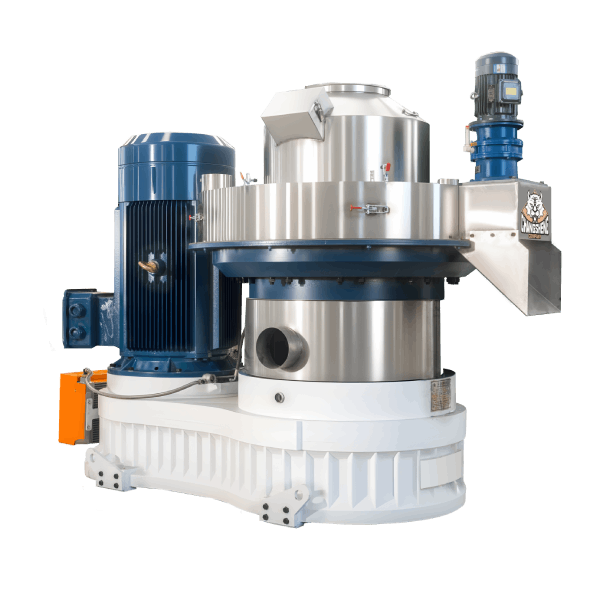
Pellet Mill for Cement Plant Kiln Fuel: Complete Technical Guide

News 2026-07-27

Page SEO Summary: This technical guide helps cement plant engineers and procurement professionals evaluate pellet mills for kiln fuel—covering fuel specifications, kiln requirements, equipment selection, and economic analysis for cement industry alternative fuel projects.

Cement manufacturing is among the most energy-intensive industries in the world. The rotary kiln, the heart of the cement plant, requires temperatures of 1,400-1,500°C to produce clinker—the intermediate product in cement production. Traditional kiln fuels include coal, petroleum coke, and natural gas, representing a major operating cost and carbon footprint.

Wood pellets and other biomass-derived fuels offer a promising alternative for cement kilns. As a renewable, cost-competitive fuel with lower sulfur content, pellets can partially or fully replace fossil fuels while reducing emissions and operating costs. However, cement kilns have stringent fuel requirements that must be carefully addressed.

This guide provides cement plant engineers, energy managers, and procurement professionals with a comprehensive framework for evaluating wood pellet production for cement kiln fuel applications.


The Cement Industry Energy Challenge

Why Cement Plants Are Seeking Alternative Fuels

FactorDriver
High energy costFuel is 30-40% of operating cost
Carbon reductionPressure to reduce CO₂ emissions
Fuel price volatilityCoal/petcoke prices fluctuate
Sulfur emissionsStricter SOx regulations
Sustainability goalsESG and corporate commitments
Waste utilizationUse of biomass residues

Typical Cement Plant Fuel Consumption

Plant Size (tpd clinker)Annual Coal Equivalent (tons)Pellet Equivalent (tons)
1,000-2,000 tpd100,000-200,000150,000-300,000
2,000-5,000 tpd200,000-500,000300,000-750,000
5,000-10,000 tpd500,000-1,000,000750,000-1,500,000
10,000+ tpd1,000,000+1,500,000+

Cement Kiln Fuel Requirements

Why Cement Kilns Are Different

CharacteristicRequirementImplication
High temperature1,400-1,500°C flame temperatureFuel must have high calorific value
Long residence timeMaterial in kiln for 20-40 minutesConsistent combustion
Ash integrationAsh becomes part of clinkerAsh chemistry matters
Sulfur controlLimits on SOx emissionsLow-sulfur fuel preferred
Continuous operation24/7/365 operationReliable fuel supply

Fuel Specification Requirements

ParameterCoal ReferencePellet RequirementWhy Important
Calorific value (MJ/kg)24-30>16.5 (minimum)Kiln temperature
Moisture (%)5-15<10Combustion efficiency
Ash content (%)5-15<3 (preferred)Clinker chemistry
Sulfur content (%)0.5-3<0.1SOx emissions
Volatile matter (%)20-35>70Ignition and flame
Fixed carbon (%)50-7015-25Burnout

Ash Chemistry Considerations

ElementCoal AshPellet AshImpact on Clinker
SiO₂HighLow-ModerateSilica modulus
Al₂O₃HighLowAlumina modulus
Fe₂O₃ModerateLowIron content
CaOLowModerate-HighLime content
K₂O/Na₂OModerateLowAlkali issues

Wood Pellets as Cement Kiln Fuel

Advantages and Challenges

AdvantageChallenge
RenewableLower calorific value than coal
Low sulfurLower flame temperature
Carbon neutralDifferent ash chemistry
Cleaner burningRequires fuel handling system
Cost competitiveStorage space required
Available supplySeasonal availability

Typical Co-Firing Ratios

Co-Firing LevelApplicationFeasibility
5-10%Initial phaseEasy
10-20%ModerateModerate
20-40%SignificantRequires modification
40-60%HighRequires major modification
60-100%Full substitutionRequires dedicated design

Pellet Production System for Cement Plants

Scale Requirements

Kiln Capacity (tpd)Co-Firing (20%) Pellet DemandRecommended Capacity
1,000-2,000 tpd30,000-60,000 tons/year4-8 t/h
2,000-5,000 tpd60,000-150,000 tons/year8-20 t/h
5,000-10,000 tpd150,000-300,000 tons/year20-40 t/h

System Configuration Options

ConfigurationDescriptionBest For
On-site productionPlant at cement facilityLarge plants; full control
Regional productionOff-site; dedicated supplyMultiple plants
External supplyPurchased pelletsAny; no production investment

Equipment Components

ComponentFunctionCement-Specific Considerations
Drying systemReduce moistureLarge capacity required
Grinding systemSize reductionRobust for various feedstocks
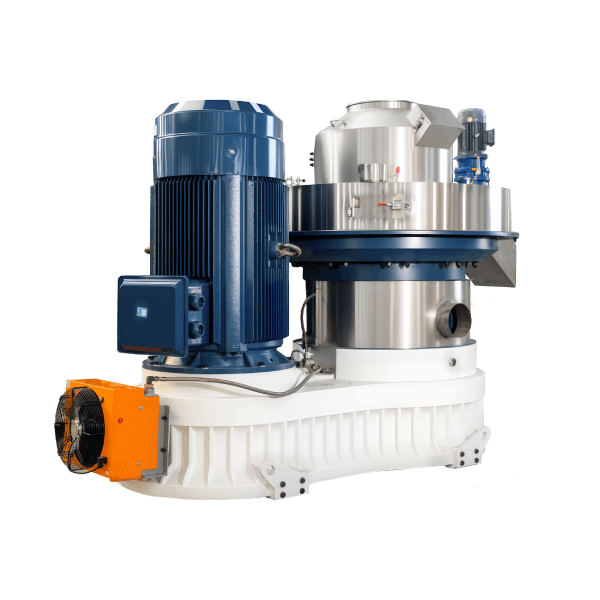
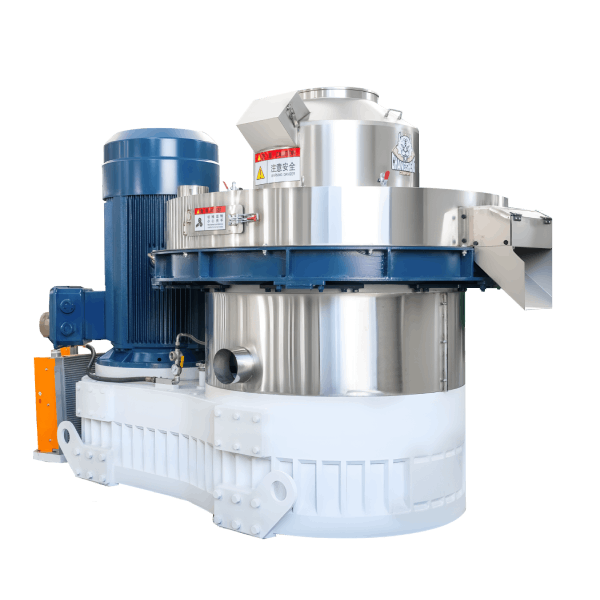
Pellet millForm pelletsMultiple lines for redundancy
Cooling systemCool pelletsHeat recovery potential
Storage systemBuffer supply1-2 months capacity recommended
Fuel handlingConvey to kilnCompatible with coal system

pellet machine

Feedstock Options for Cement Plants

Suitable Feedstocks

FeedstockAvailabilityCalorific ValueAsh ContentSuitability
Wood chipsGood16-18 MJ/kg0.5-2%Excellent
SawdustVariable16-18 MJ/kg0.5-2%Excellent
Agricultural residuesRegional14-16 MJ/kg3-10%Moderate
Palm kernel shellRegional17-19 MJ/kg2-5%Excellent (tropical)
Olive pomaceRegional17-19 MJ/kg3-7%Good (Mediterranean)
Rice huskRegional14-15 MJ/kg15-20%Limited (high ash)

Supply Considerations

FactorCement Plant Requirement
VolumeVery large; consistent
ConsistencyQuality must be stable
SeasonalityYear-round supply needed
CostMust compete with coal
DistanceLogistics cost matters

Economic Analysis

Fuel Cost Comparison

FuelCost per GJ ($)CO₂ Emissions (kg/GJ)Sulfur Content
Coal$2.0-4.090-1000.5-3%
Petroleum coke$1.5-3.580-953-6%
Natural gas$3.0-5.055-600%
Wood pellets$3.0-6.00 (neutral)<0.1%
Self-produced pellets$2.0-4.00 (neutral)<0.1%

Annual Savings Example (2,000 tpd plant)

ParameterValue
Clinker capacity2,000 tpd
Annual clinker660,000 tons
Fuel demand (coal)150,000 tons/year
Coal cost$100/ton = $15,000,000
Pellet replacement (20%)30,000 tons/year
Pellet cost (self-produced)$80/ton = $2,400,000
Annual savings$3,600,000
Investment$5,000,000-10,000,000
Payback period1.5-3 years

Environmental and Regulatory

Emission Benefits

PollutantCoalWood PelletsReduction
CO₂HighNeutral100% (biogenic)
SO₂HighVery Low90-95%
NOxModerateModerate10-20%
ParticulatesHighLow (with controls)50-70%
Heavy metalsModerateVery Low80-90%

Regulatory Considerations

RequirementConsideration
Air permitMust allow alternative fuels
Emission limitsMust meet SO₂, NOx, particulate limits
Fuel qualityMust meet specifications
Storage regulationsFire safety; dust control
ReportingFuel use; emissions

Implementation Considerations

Key Success Factors

FactorImportance
Fuel quality controlCritical for kiln operation
Consistent supplyCritical for continuous operation
Boiler/kiln integrationFuel feed system compatibility
Staff trainingAlternative fuel operation
Clinker qualityMust maintain product quality

Project Phases

PhaseActivitiesDuration
1. FeasibilityTechnical, economic, supply assessment3-6 months
2. DesignEngineering, permitting6-12 months
3. ProcurementEquipment, contractors3-6 months
4. InstallationConstruction, integration12-18 months
5. CommissioningTesting, optimization2-4 months

Procurement Checklist: Cement Plant Pellet System

Feasibility

  • □ Fuel demand and current costs documented
  • □ Kiln fuel requirements understood
  • □ Feedstock availability assessed
  • □ Site availability confirmed
  • □ Regulatory requirements identified

Technical Specifications

  • □ Pellet quality specifications established
  • □ Kiln fuel feed system compatibility assessed
  • □ Ash chemistry impact evaluated
  • □ Co-firing ratio determined
  • □ Storage capacity designed

Economic

  • □ Cost comparison completed
  • □ Investment budget confirmed
  • □ Payback period calculated
  • □ Operating cost projection developed

Implementation

  • □ Project timeline established
  • □ Contractors identified
  • □ Training plan created
  • □ Maintenance plan established

Frequently Asked Questions

1. Can wood pellets fuel a cement kiln?

Yes. Wood pellets can be used as a supplemental or primary fuel in cement kilns. They must meet specific quality requirements for calorific value, ash content, and moisture. Co-firing ratios of 10-40% are common.

2. What quality specifications are needed?

Key specifications: calorific value >16.5 MJ/kg, moisture <10%, ash <3%, sulfur <0.1%, consistent particle size. Ash chemistry must be compatible with clinker production.

3. How does pellet fuel compare to coal?

Pellets have lower calorific value (16-18 vs 24-30 MJ/kg), lower sulfur content, and lower ash content than coal. They require more volume per unit of energy. The flame temperature is slightly lower.

4. What is the payback period for a cement plant?

Payback typically ranges from 1.5-5 years, depending on the fuel being replaced (coal, petcoke, or gas) and whether pellets are purchased or self-produced. Self-production has lower operating costs.

5. What is the maximum co-firing ratio?

Typical co-firing ratios range from 10-40% with conventional equipment. Higher ratios require specialized burners and fuel handling systems. Some plants achieve 60-80% alternative fuel substitution.

6. Does pellet fuel affect clinker quality?

With proper fuel selection and kiln operation, clinker quality can be maintained. Ash chemistry must be monitored and adjusted. Most plants maintain quality with proper process control.

7. What are the environmental benefits?

Wood pellets offer significant environmental benefits: carbon-neutral CO₂, 90-95% lower SO₂ emissions, 50-70% lower particulate emissions, and reduced heavy metals compared to coal.

8. What are the main challenges?

Challenges include: ensuring consistent fuel supply, meeting quality specifications, maintaining clinker quality, managing ash chemistry, and the capital investment for production facilities or conversion.


About the Author

Zhang Wei – Senior International Sales Engineer, Shandong Changsheng Machinery Co., Ltd.

Zhang Wei has over 12 years of experience in the biomass and feed pellet mill industry, with a background in mechanical engineering and international project execution. He has worked on alternative fuel projects for cement plants, power plants, and other industrial facilities across multiple regions.

With hands-on experience in both the manufacturing workshop and client-side operations, Zhang brings practical insights into successful equipment procurement—from the factory floor to the cement plant kiln.