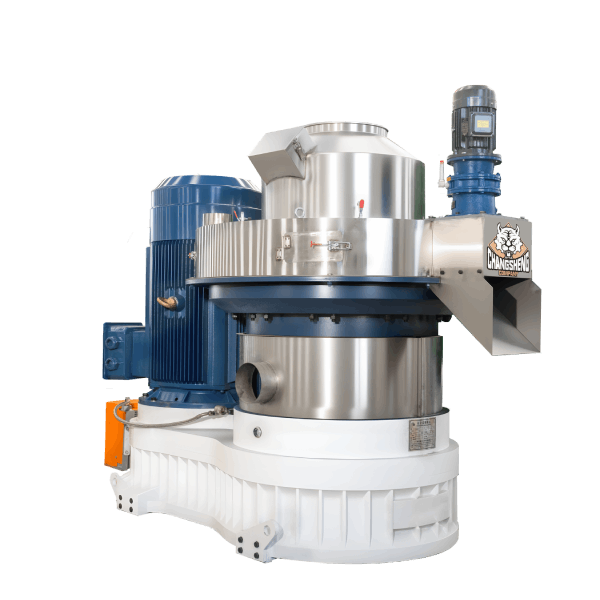
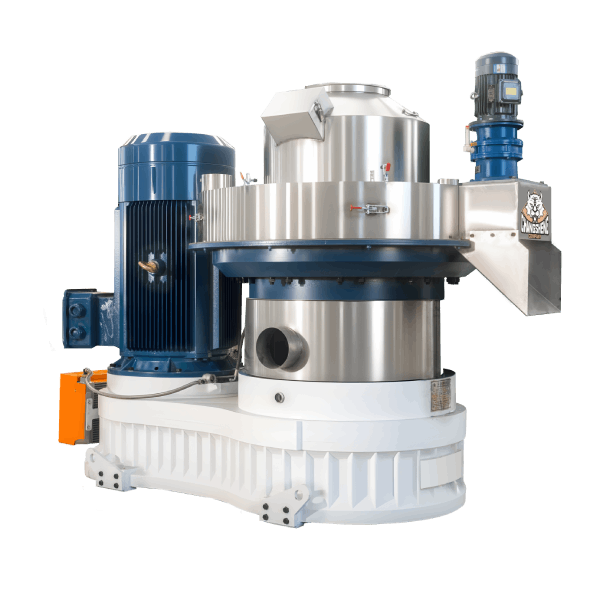
Pellet Mill with Noise Reduction Cover: Complete Selection Guide
News 2026-07-18
Page SEO Summary: This technical guide helps procurement professionals and plant managers evaluate pellet mills with noise reduction covers—covering noise levels, regulatory compliance, acoustic technology, and selection criteria for healthier workplaces.
A pellet mill in full operation generates noise levels that can exceed 100 decibels (dB) at close range. Prolonged exposure to noise above 85 dB can cause permanent hearing damage, and regulatory bodies around the world—including OSHA in the US and the EU’s Noise at Work regulations—mandate strict exposure limits and hearing protection requirements.
Beyond regulatory compliance, noise affects worker comfort, communication, and overall productivity. It can also be a significant source of neighborhood complaints for facilities located near residential areas. The solution for many operations is a pellet mill with noise reduction cover—an acoustic enclosure designed to contain and absorb the sound generated during pelletizing.
This guide provides a comprehensive framework for understanding the noise challenges associated with pellet mills, evaluating noise reduction technologies, and making informed procurement decisions.
Understanding Pellet Mill Noise
Typical Noise Levels
| Operation | Typical Noise Level (dBA) | Exposure Limit (8 hours) | Need for Protection |
|---|---|---|---|
| Pellet mill (uncovered) | 95-105 dBA | 85 dBA (OSHA) | Required |
| Pellet mill (with cover) | 75-85 dBA | 85 dBA | May be optional |
| Hammer mill | 100-110 dBA | 85 dBA (OSHA) | Required |
| Fan/blower | 85-95 dBA | 85 dBA (OSHA) | Often required |
| Conveyors | 75-85 dBA | 85 dBA (OSHA) | Often optional |
Noise Sources in a Pellet Mill
| Source | Noise Type | Contribution | Control Approach |
|---|---|---|---|
| Motor | Mechanical/electrical | Moderate | Enclosure; maintenance |
| Gearbox | Mechanical | Moderate-High | Enclosure; acoustic insulation |
| Die chamber/rollers | Mechanical impact | High | Primary source; enclosure critical |
| Vibration | Structural | Moderate | Vibration isolation; mass |
| Air movement | Aerodynamic | Moderate | Silencers; airflow management |
Noise Frequency Spectrum
| Frequency | Source | Control Approach |
|---|---|---|
| Low (<250 Hz) | Vibration; motors | Mass; isolation |
| Mid (250-2000 Hz) | Mechanical impact; gearbox | Absorption; damping |
| High (>2000 Hz) | Air turbulence; high-frequency noise | Absorption; barriers |
Regulatory Requirements
OSHA Standard (US)
| Parameter | Limit |
|---|---|
| Permissible Exposure Limit (PEL) | 90 dBA (8-hour TWA) |
| Action Level | 85 dBA (8-hour TWA) |
| Hearing protection required | At or above 85 dBA |
| Engineering controls required | At or above 90 dBA |
| Hearing conservation program | At or above 85 dBA |
EU Noise at Work Regulations
| Parameter | Limit |
|---|---|
| Lower action value | 80 dBA (8-hour) |
| Upper action value | 85 dBA (8-hour) |
| Exposure limit | 87 dBA (8-hour) |
| Hearing protection required | Above 80 dBA |
| Health surveillance required | Above 85 dBA |
Other Countries
| Country | Standard | 8-Hour Limit |
|---|---|---|
| UK | Control of Noise at Work | 80/85 dBA |
| Australia | WHS Regulations | 85 dBA |
| Canada | CSA Z107.56 | 85 dBA |
| China | GBZ 2.2 | 85 dBA |
Noise Reduction Cover Technology
How It Works
| Element | Function | Mechanism |
|---|---|---|
| Outer shell | Structural support; mass | Blocks sound transmission |
| Acoustic absorption | Absorbs sound energy | Porous material (foam, fiberglass) |
| Mass loaded vinyl | Adds mass | Increases sound transmission loss |
| Decoupling | Prevents vibration transmission | Isolates cover from machine |
| Seals/gaskets | Prevents sound leakage | At openings and seams |
| Silencers | Reduces noise at openings | For cooling air inlets/outlets |
Types of Noise Reduction Covers
| Type | Description | Effectiveness | Best For |
|---|---|---|---|
| Partial enclosure | Covers specific noisy components | 5-10 dB reduction | Moderate noise reduction; limited scope |
| Full enclosure | Encloses entire pellet mill | 15-25 dB reduction | Maximum reduction; new installations |
| Acoustic room | Entire room with acoustic treatment | 15-25 dB reduction | New facilities; comprehensive solution |
| Barrier/curtain | Flexible acoustic curtain | 10-15 dB reduction | Retrofits; cost-effective |
Typical Cover Construction
| Layer | Material | Thickness | Function |
|---|---|---|---|
| 1 (outer) | Steel sheet | 1.0-2.0 mm | Structural; mass |
| 2 | Mass loaded vinyl | 2-5 mm | Sound barrier; added mass |
| 3 | Acoustic foam | 25-50 mm | Sound absorption |
| 4 (inner) | Perforated metal | 0.8-1.2 mm | Protects foam; allows absorption |
Expected Noise Reduction
| Configuration | Typical Reduction | Resulting Level | Regulatory Status |
|---|---|---|---|
| No cover | – | 95-105 dBA | Exceeds limits |
| Basic cover (10 dB) | 10-12 dB | 83-93 dBA | May meet or exceed |
| Standard cover (15 dB) | 15-18 dB | 77-87 dBA | Often meets limits |
| Premium cover (20 dB) | 20-22 dB | 73-83 dBA | Usually meets limits |
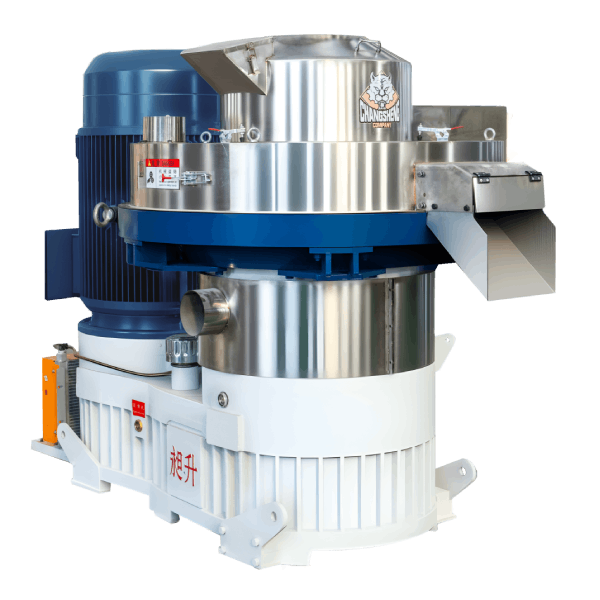
Design and Operational Considerations
Impact on Cooling
| Aspect | Consideration | Solution |
|---|---|---|
| Heat dissipation | Enclosure traps heat | Proper ventilation; silencers |
| Airflow | Restricted flow | Forced ventilation; proper sizing |
| Motor cooling | Motor needs airflow | Ducted cooling; oversized fans |
Impact on Maintenance
| Aspect | Consideration | Solution |
|---|---|---|
| Access | Enclosure restricts access | Panels; quick-release fasteners |
| Visibility | Reduced visibility | Viewing windows; lighting |
| Cleaning | Dust accumulation | Access for cleaning; dust seals |
| Maintenance time | Extended time for tasks | Tool-less access; labeled panels |
Key Design Features
| Feature | Purpose | Importance |
|---|---|---|
| Access panels | Allow access for maintenance | High |
| Viewing windows | Allow visual inspection | Moderate-High |
| Quick-release fasteners | Reduce maintenance time | High |
| Lifting points | Enable removal for major work | Moderate |
| Dust seals | Prevent dust ingress | High |
| Silencers | Ventilation without noise | High |
| Interlocks | Safety during operation | Very High |
Cost Considerations
Investment Cost
| Cover Type | Typical Cost Range | Cost as % of Pellet Mill Value |
|---|---|---|
| Basic cover | $3,000-8,000 | 5-10% |
| Standard cover | $8,000-15,000 | 10-20% |
| Premium cover | $15,000-25,000+ | 20-30%+ |
Cost-Benefit Analysis
| Benefit | Quantified Impact (Est.) |
|---|---|
| Hearing protection savings | $1,000-5,000/year (PPE, audiometric testing) |
| Reduced injury risk | Avoided workers’ compensation claims |
| Compliance penalties avoided | OSHA fines ($5,000-$70,000+) |
| Improved productivity | Better communication = fewer errors |
| Employee morale | Reduced stress; better retention |
| Neighborhood complaints | Avoided; good community relations |
Return on Investment
| Scenario | Payback Period |
|---|---|
| OSHA compliance requirement | Immediate (avoidance of fines) |
| New facility construction | 1-2 years |
| Retrofit to existing facility | 2-4 years |
Procurement Checklist
Regulatory Requirements
- Local noise regulations identified
- Required exposure limit confirmed
- Hearing conservation program requirements known
- Applicable standards (OSHA, EU, etc.) verified
Noise Reduction Specifications
- Target noise level defined (dBA at operator position)
- Required reduction (dB) determined
- Cover type selected (full/partial)
- Construction materials specified
- Acoustic performance data required
Design and Operation
- Cooling and ventilation requirements confirmed
- Maintenance access requirements identified
- Viewing windows (for inspection)
- Interlocks and safety features
- Dust seals and protection
Supplier Evaluation
- Supplier experience with acoustic enclosures
- Acoustic performance data available
- References from similar applications
- Installation and support capability
Frequently Asked Questions
1. How much noise does a pellet mill produce?
A typical pellet mill generates 95-105 dBA at close range. This is well above the 85 dBA action level and 90 dBA permissible exposure limit in most countries. Prolonged exposure requires hearing protection.
2. How much noise can a noise reduction cover reduce?
A well-designed full enclosure can reduce noise by 15-25 dB. This brings the noise level from 100 dBA to 75-85 dBA, potentially below the regulatory action level for many operations.
3. Is a noise reduction cover required by regulation?
Regulations do not specifically require covers, but they require employers to control noise exposure through engineering controls (like covers) where feasible. If employees are exposed above the action level, the employer must take steps to reduce exposure.
4. Does a noise reduction cover affect pellet mill performance?
Properly designed covers do not affect performance. They must provide adequate cooling air flow and access for maintenance. Poorly designed covers can cause overheating or restrict access.
5. How does a noise reduction cover affect maintenance?
Maintenance access is a critical design consideration. Good covers have quick-release panels, viewing windows, and proper clearance. Poor covers can make maintenance more difficult and time-consuming.
6. What is the investment cost for a noise reduction cover?
Costs range from $3,000 for basic covers to $25,000+ for premium full enclosures. The cost is typically 5-30% of the pellet mill value. The payback period is usually 1-4 years.
7. Can a noise reduction cover be retrofitted to an existing pellet mill?
Yes. Retrofits are common and often more cost-effective than replacing the entire mill. The design must consider existing layout, available space, and access requirements.
8. What other noise reduction measures can be used?
Other measures include: hearing protection (PPE), administrative controls (rotating personnel), vibration isolation, room acoustic treatment, equipment maintenance to reduce wear noise, and silencers on air systems.
About the Author
Zhang Wei – Senior International Sales Engineer, Shandong Changsheng Machinery Co., Ltd.
Zhang Wei has over 12 years of experience in the biomass and feed pellet mill industry, with a background in mechanical engineering and international project execution. He has managed pellet mill supply projects for clients across Southeast Asia, the Middle East, Africa, Europe, and Latin America, with extensive experience in noise control, safety compliance, and operational optimization.
With hands-on experience in both the manufacturing workshop and client-side operations, Zhang brings practical insights into successful equipment procurement—from the factory floor to the customer’s production site.