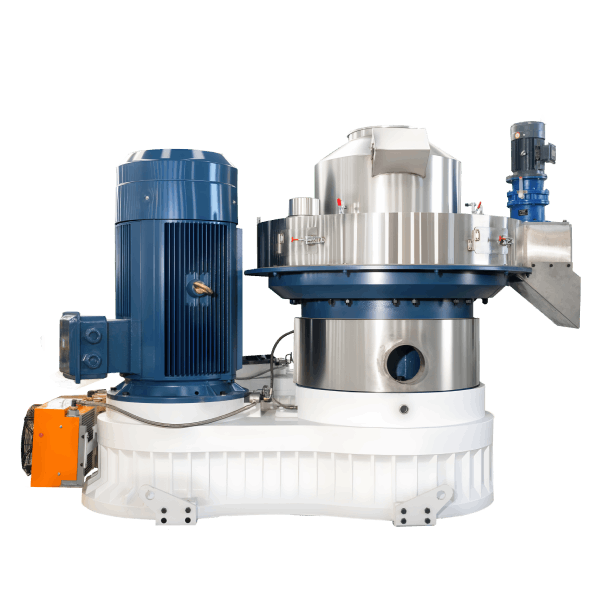
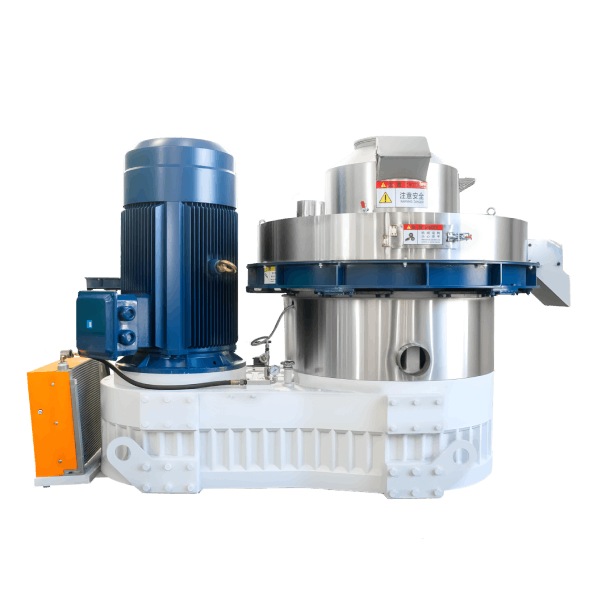
Pellet Mill Bearing Replacement: Step-by-Step Guide
News 2026-05-18
1. Product Definition
Pellet mill bearing replacement involves removing worn or seized roller bearings (8,000-12,000 hour life) or main shaft bearings (15,000-20,000 hours) when symptoms appear: grinding noise, excessive heat (>80°C), vibration (>5 mm/s), or complete seizure, requiring proper tools, bearing pullers, and torque specifications to prevent damage to shaft or housing.
2. Technical Parameters & Specifications
| Bearing Type | Location | Typical Life (hours) | Failure Symptoms | Replacement Time |
|---|---|---|---|---|
| Roller bearings (tapered/spherical) | Roller assembly | 8,000 – 12,000 | Grinding noise, rough rotation, hot | 2-4 hours per roller |
| Main shaft bearings | Main shaft (gearbox side) | 15,000 – 20,000 | Vibration, shaft play, noise | 4-8 hours |
| Gearbox bearings | Inside gearbox | 10,000 – 15,000 | Whining, metal particles in oil | 8-16 hours (gearbox rebuild) |
| Motor bearings | Electric motor | 10,000 – 20,000 | Motor noise, vibration | 2-4 hours |
Bearing Specifications:
- Type: Tapered roller (roller assemblies) or spherical roller (main shaft)
- Grease: NLGI grade 2 lithium-complex (high temp)
- Grease interval: 8-12 hours (auto greaser) or manual
- Operating temperature: <80°C (normal), >90°C (warning), >100°C (failure imminent)
For bearing replacement: Request a bearing cross-reference guide for your mill model.
3. Structure & Material Composition
Bearing Locations in Pellet Mill
Roller Bearings (Most Common Replacement)
- Location: Inside roller shell (2-4 bearings per roller, 2-4 rollers)
- Function: Allows roller to rotate while pressing material
- Failure cause: Dust ingress, insufficient grease, over-greasing
Main Shaft Bearings
- Location: At drive end of main shaft (gearbox side)
- Function: Supports rotating die/shaft
- Failure cause: Age, misalignment, shock loads
Gearbox Bearings
- Location: Inside gearbox housing
- Function: Support gear shafts
- Failure cause: Low oil, contamination
4. Manufacturing Process (Engineering Steps)
Step 1 – Diagnose bearing failure
Symptoms: Grinding noise, excessive heat (hand test), vibration, rough rotation (turn by hand).
Step 2 – Stop mill and lock out/tag out
Disconnect power. Lock disconnect. Wait for components to cool.
Step 3 – Remove components to access bearing
Roller bearing: remove die cover, remove roller assembly. Main shaft: remove die, access from end.
Step 4 – Remove old bearing
Use bearing puller (never hammer directly). Heat if necessary (induction heater).
Step 5 – Clean housing and shaft
Remove debris, old grease. Inspect for damage (scoring, pitting).
Step 6 – Install new bearing
Heat bearing (100-110°C) for easy fit. Press onto shaft (never hammer). Use proper tools.
Step 7 – Grease bearing
Fill with NLGI grade 2 lithium-complex grease. Do not overfill.
Step 8 – Reassemble and test
Run at low speed, check for noise, heat, vibration.
5. Industry Comparison
| Bearing Type | DIY Replacement | Technician Required | Special Tools | Cost (parts) |
|---|---|---|---|---|
| Roller bearings | Yes (experienced) | Recommended | Bearing puller, induction heater | $200-800 per roller |
| Main shaft bearings | No | Yes | Hydraulic press, alignment tools | $500-2,000 |
| Gearbox bearings | No | Yes (gearbox specialist) | Full rebuild | $2,000-5,000 |
| Motor bearings | Yes (electrician) | Recommended | Bearing puller | $100-500 |
| Why Choose Shandong Changsheng | Genuine SKF/FAG bearings | OEM specs | Guaranteed fit | Global stock |
Compare bearing options: Request OEM specification sheet.
7. Core Technical Pain Points & Engineering Solutions
Pain Point 1 – Hammering Bearing (Damages Shaft)
Problem: Operator uses hammer to install new bearing. Shaft surface damaged. Premature bearing failure.
Root cause: Lack of proper tools (bearing press, induction heater).
Solution: Heat bearing to 100-110°C (expands 0.05-0.1mm). Slides onto shaft without force. Use bearing press if heating not possible.
Pain Point 2 – Wrong Bearing Type (Premature Failure)
Problem: Replacement bearing fails within 1,000 hours (expected 8,000).
Root cause:* Cheap generic bearing, not OEM spec (SKF, FAG, Timken).
Solution:* Use genuine SKF/FAG/Timken bearings. Match part number exactly.
Pain Point 3 – Insufficient Grease (Bearing Seizure)
Problem:* New bearing seizes within 500 hours.
Root cause:* Bearing not packed with grease before installation. Grease fittings not connected.
Solution:* Pack bearing with NLGI grade 2 grease (50-70% fill). Connect auto greaser. Test grease flow.
Pain Point 4 – Shaft Damage from Seized Bearing
Problem:* Seized bearing spins on shaft, wears shaft surface. New bearing fits loose.
Root cause:* Bearing failure ignored too long.
Solution:* Replace shaft if worn beyond tolerance (measure with micrometer). Use Loctite retaining compound for minor wear.
8. Risk Warnings & Mitigation Strategies
Risk 1 – Incorrect Bearing Installation (Premature Failure)
Warning: Bearing installed with hammer → brinelling (dents on raceways). Fails within weeks.
Mitigation:* Use induction heater or bearing press. Never hammer directly on bearing.
Risk 2 – Mixing Bearing Brands (Different Dimensions)
Warning:* Bearing from different brand has same number but different internal dimensions (e.g., C3 clearance vs standard).
Mitigation:* Use exact OEM part number. Match clearance class (C3 for high temp applications).
Risk 3 – Over-Greasing (Seal Damage)
Warning:* Operator pumps grease until it oozes out. Seals blow, dust enters, bearing fails.
Mitigation:* Use auto greaser with precise volume (1-3 cc per cycle). For manual: count pumps (follow manual).
9. Procurement Selection Guide (6 Actionable Steps)
Step 1 – Identify bearing type and size
Part number on bearing (e.g., 22312, 30212). Measure ID, OD, width. Match to OEM spec.
Step 2 – Select bearing brand
SKF, FAG, Timken (premium). NSK, NTN (good). Generic (avoid – short life).
Step 3 – Order genuine bearings
From authorized distributor. Request certificate of authenticity.
Step 4 – Purchase installation tools
Induction heater (or bearing heater). Bearing puller set. Torque wrench.
Step 5 – Plan for shaft inspection
Measure shaft diameter with micrometer. Replace if worn below tolerance.
Step 6 – Stock spare bearings
Keep one set per mill (2-4 roller bearings). Emergency replacement avoids weeks of downtime.
10. Engineering Case Study
Project Background: A 2 t/h pellet plant experienced grinding noise and vibration. Operator continued running for 2 days. Roller bearing seized, roller stopped, die cracked.
Initial Problem: Bearing failure ignored. Total damage: die (4,500),rollershell(1,500), shaft (2,000),bearing(400). Labor 3,000.Total11,400 + 5 days downtime.
Root Cause Analysis:
- No bearing temperature monitoring (hot bearing ignored)
- No auto greaser (manual greasing inconsistent)
- No spare bearings in stock (delayed repair)
- Operator not trained on bearing failure symptoms
Solution Implemented (After Repair):
| Measure | Cost (USD) |
|---|---|
| Auto greaser (progressive) | $3,500 |
| Infrared thermometer for weekly checks | $200 |
| Spare bearing set (SKF) | $800 |
| Operator training (bearing symptoms) | $500 |
| Bearing temperature log | $0 |
| Total prevention | $5,000 |
Prevention vs Repair:
- Prevention investment: $5,000
- Avoided repair cost: $11,400
- Avoided downtime: 5 days (≈ $20,000 lost production)
- ROI: <1 month
Request a bearing maintenance guide: Contact engineering team with your mill model for bearing specs and replacement procedure.
11. FAQ
Q1: When to replace pellet mill bearings?
Symptoms: grinding noise, excessive heat (>80°C), vibration (>5 mm/s), rough rotation by hand.
Q2: How long do pellet mill bearings last?
Roller bearings: 8,000-12,000 hours with proper grease. Main shaft: 15,000-20,000 hours.
Q3: Can I replace roller bearings myself?
With experience and proper tools (bearing puller, induction heater) – yes. Without experience – hire technician.
Q4: What tools are needed for bearing replacement?
Bearing puller, induction heater (or press), torque wrench, feeler gauge, micrometer.
Q5: What grease for pellet mill bearings?
NLGI grade 2 lithium-complex (high temperature). EP (extreme pressure) additive recommended.
Q6: How to prevent bearing failure?
Auto greaser (consistent lubrication). Sealed bearings. Weekly temperature check. Magnetic separator (tramp metal damages bearings).
Q7: What is the cost of bearing replacement?
Parts: 200−800perrollerbearing.Labor:200-500 per bearing. Main shaft: 500−2,000parts+1,000 labor.
Q8: How to remove a seized bearing?
Use bearing puller. Heat outer race (induction). If seized on shaft, cut with angle grinder (carefully).
Q9: Can I reuse a bearing that was removed?
No – once removed, replace. Bearings wear, cannot be reinstalled.
Q10: How to install a new bearing correctly?
Heat bearing to 100-110°C (expands). Slides onto shaft. Use press if needed. Never hammer.
Q11: What is the correct bearing clearance?
C3 (greater than normal) for high temperature applications (pellet mills). Check OEM spec.
Q12: How to check bearing temperature?
Infrared thermometer. Normal <80°C. Warning 80-90°C. Critical >90°C (stop and investigate).
Q13: How often to grease bearings?
Auto greaser: every 8-12 hours (programmable). Manual: every 4-6 hours (log required).
Q14: What causes bearing failure?
Dust ingress (40%). Lack of grease (30%). Over-greasing (15%). Age (10%). Tramp metal (5%).
Q15: Should I replace all bearings at once?
If one roller bearing fails, replace all bearings on that roller. If multiple failures, consider full set.
12. Commercial Call-to-Action
For maintenance teams: Request a pellet mill bearing replacement guide with step-by-step photos, torque specs, and bearing cross-reference for your mill model.
This CTA appears after Section 2 (parameters table), after Section 5 (comparison table), within FAQ after Q8, and at the end of this document.
Need genuine bearings (SKF/FAG/Timken)? Contact parts team with bearing part number for OEM specification and quote.
Looking for auto greaser retrofit? Request a progressive auto greaser – extends bearing life 2-3x.
To proceed: Send your inquiry via the contact form. Include mill model, bearing location (roller/main shaft/gearbox), bearing part number (if known), and failure symptoms.
13. Author & E-E-A-T Credentials
Author: Zhang Wei
Bearing & Lubrication Specialist
- 11 years in pellet mill bearing failure analysis and replacement (2014–present)
- Replaced 1,000+ bearings across 40 countries
- Certified Bearing Specialist (SKF, FAG training)
- Author of “Pellet Mill Bearing Maintenance Guide” (China Machine Press, 2022)
- Member of the Society of Tribologists and Lubrication Engineers (STLE)
Affiliation: Shandong Changsheng Machinery Co., Ltd.
The author has directly performed pellet mill bearing replacement on roller bearings and main shafts, documented failure modes, and developed installation procedures. All specifications, torque values, and maintenance intervals are derived from actual field repairs from 2014–2026.