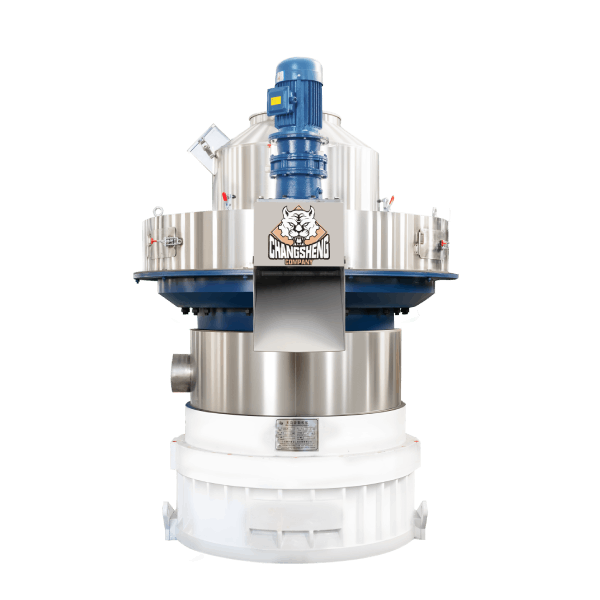
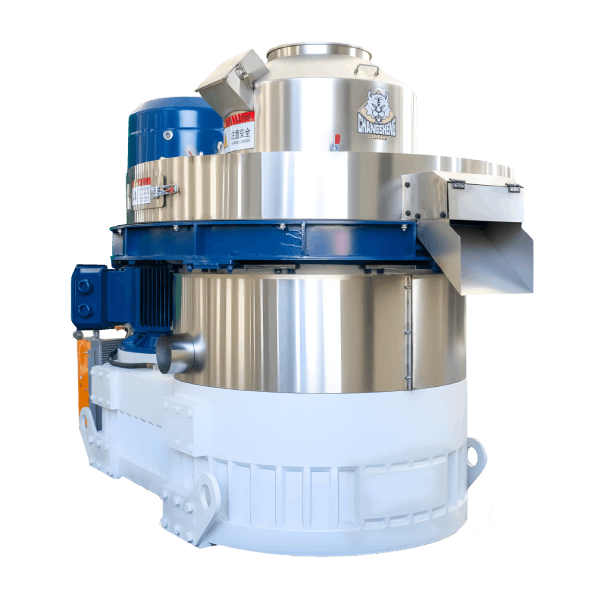
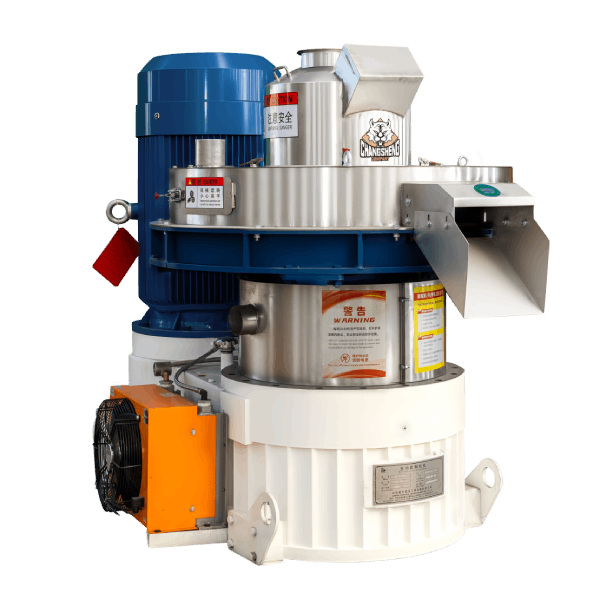
Pellet Machine for Food Processing Plant: Complete Operations Guide
News 2026-07-25
Page SEO Summary: This operations guide helps food processing facility managers evaluate pellet machines—covering waste-to-energy applications, food-grade requirements, equipment selection, and economic analysis for food industry operations.
Food processing plants generate significant amounts of organic by-products and waste: fruit pits, nut shells, grain husks, coffee grounds, vegetable trimmings, and more. These materials represent both a disposal cost and a potential resource. At the same time, food processing facilities are energy-intensive operations requiring steam, hot water, and electricity.
A pellet machine for food processing plants offers a dual solution: converting organic waste into valuable pellets that can be used as boiler fuel, animal feed ingredients, or other applications. The approach reduces waste disposal costs, produces renewable energy, and supports sustainability goals.
This guide provides food processing facility managers and engineers with a comprehensive framework for evaluating pellet production systems for food industry applications.
The Food Processing Opportunity
Why Food Processing Plants Are Ideal for Pellet Production
| Factor | Advantage |
|---|---|
| Organic waste | High volume of suitable raw material |
| Energy demand | Significant heat and power needs |
| Sustainability | Waste reduction and renewable energy |
| Regulatory pressure | Waste diversion requirements |
| Cost savings | Reduced disposal and fuel costs |
Common Food Processing Waste Streams
| Waste Type | Source | Pellet Potential |
|---|---|---|
| Fruit pits | Fruit processing | Excellent (high energy) |
| Nut shells | Nut processing | Excellent (high energy) |
| Grain husks/bran | Milling | Good (feed or fuel) |
| Coffee grounds | Coffee processing | Good (fuel) |
| Olive pomace | Olive oil processing | Good (fuel) |
| Vegetable trimmings | Vegetable processing | Variable (requires drying) |
| Seed hulls | Oilseed processing | Good (fuel) |
| Brewer’s spent grain | Brewing | Good (feed or fuel) |
Applications for Food Processing Plant Pellets
Primary Applications
| Application | Description | Best For |
|---|---|---|
| Boiler fuel | Replace fossil fuels for steam/hot water | All food processing |
| Animal feed | High-fiber feed ingredient | Grain/seed processing |
| Animal bedding | Absorbent bedding | Various |
| Soil amendment | Organic soil additive | Various |
| Export/sale | Sell to external market | Large volumes |
Energy Substitution Potential
| Fuel Replaced | Annual Savings Potential | Carbon Reduction |
|---|---|---|
| Heavy fuel oil | $200-400/ton | Very high |
| Natural gas | $100-200/ton | High |
| Propane | $150-300/ton | High |
| Electricity | Variable | Very high |
Food-Grade Equipment Requirements
Material Specifications
| Component | Requirement | Reason |
|---|---|---|
| Contact surfaces | Stainless steel (304/316) | Food safety; corrosion resistance |
| Non-contact surfaces | Stainless or coated carbon steel | Hygiene; cleaning |
| Fasteners | Stainless steel | Rust prevention |
| Gaskets/seals | Food-grade materials | Contamination prevention |
Hygiene Considerations
| Requirement | Implementation |
|---|---|
| Easy cleaning | Smooth surfaces; no crevices |
| Sanitary design | Drainable; accessible |
| Dust control | Enclosed systems; dust collection |
| Segregation | Prevent cross-contamination |
| Cleaning protocols | Defined CIP/SIP procedures |
Regulatory Compliance
| Regulation | Applicability | Requirement |
|---|---|---|
| FDA (US) | Food contact | 21 CFR compliance |
| EFSA (EU) | Food/feed contact | EC 1935/2004 |
| HACCP | Food safety | Risk assessment |
| GFSI | Food safety | Certification |
Pellet Machine Selection for Food Processing
Configuration Options
| Option | Description | Best For |
|---|---|---|
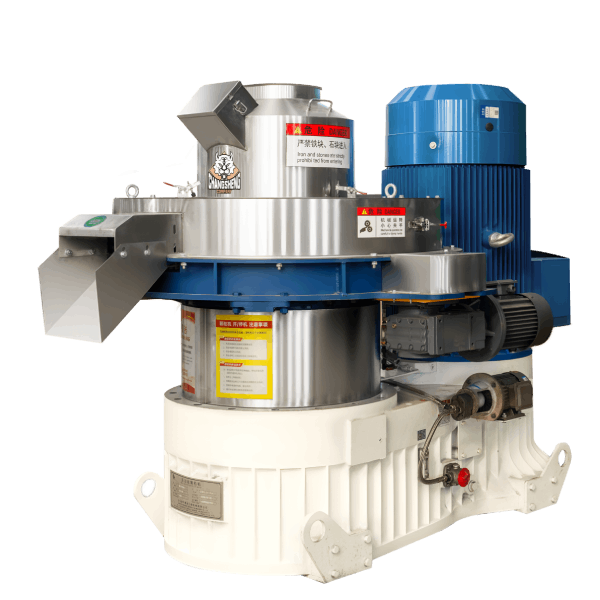
| Basic food-grade pellet mill | Stainless steel; food-safe design | Small-moderate waste volumes |
| Complete feed-grade line | Hammer mill + pellet mill + cooler | Animal feed production |
| Complete fuel-grade line | Drying + grinding + pelleting | Boiler fuel production |
| Dual-purpose system | Both feed and fuel | Flexible operations |
Key Specifications
| Parameter | Food Grade Requirement | Typical Value |
|---|---|---|
| Material | Stainless steel (304/316) | All contact surfaces |
| Die material | Food-grade alloy | Premium steel |
| Lubrication | Food-grade lubricants | NSF H1 or equivalent |
| Seals | Food-grade materials | FDA/EFSA compliant |
| Electrical | IP65+ | Washdown capability |
Capacity Guidance
| Facility Size | Waste Volume | Recommended Capacity |
|---|---|---|
| Small processor | 1-5 tons/day | 50-200 kg/h |
| Mid-size processor | 5-20 tons/day | 200-800 kg/h |
| Large processor | 20+ tons/day | 800+ kg/h |
Waste-to-Energy Economics
Cost Comparison
| Scenario | Annual Disposal Cost | Annual Fuel Cost | Total Cost |
|---|---|---|---|
| Landfill waste + purchased fuel | $20,000-100,000 | $100,000-500,000 | $120,000-600,000 |
| Waste-to-pellets + fuel | $5,000-20,000 | $20,000-80,000 | $25,000-100,000 |
| Savings | $15,000-80,000 | $80,000-420,000 | $95,000-500,000 |
ROI Example
Scenario: Mid-size food processor
| Parameter | Value |
|---|---|
| Waste volume | 2,000 tons/year |
| Landfill cost | $50/ton |
| Fuel oil cost | $400,000/year |
| Equipment investment | $150,000-250,000 |
| Annual waste savings | $100,000 |
| Annual fuel savings | $100,000-300,000 |
| Total annual savings | $200,000-400,000 |
| Payback period | 6-18 months |
Feedstock-Specific Considerations
Fruit Pits and Nut Shells
| Aspect | Consideration |
|---|---|
| Energy content | Very high (18-20+ MJ/kg) |
| Grinding | Hard; requires robust hammer mill |
| Pelletizing | Good binding; moderate pressure |
| Storage | Dry storage required |
| Seasonality | Often seasonal supply |
Grain By-Products
| Aspect | Consideration |
|---|---|
| Energy content | Moderate (16-18 MJ/kg) |
| Grinding | Easy to moderate |
| Pelletizing | Good; starch provides binding |
| Storage | Dry; potential for spoilage |
| Feed value | High; good for animal feed |
Wet Waste (Fruit/Vegetable)
| Aspect | Consideration |
|---|---|
| Moisture | High; requires significant drying |
| Energy content | Variable |
| Grinding | Easy |
| Pelletizing | May need conditioning |
| Storage | Limited shelf life |
Implementation Considerations
Facility Integration
| Factor | Consideration |
|---|---|
| Location | Near waste generation and energy use |
| Material flow | Efficient waste-to-pellet routing |
| Energy recovery | Use waste heat for drying |
| Staffing | Training on food-grade operation |
| Quality control | Testing and monitoring |
Regulatory and Safety
| Aspect | Consideration |
|---|---|
| Food safety | HACCP plan |
| Dust explosion | Explosion protection measures |
| Fire safety | Storage and handling |
| Emissions | Boiler emissions compliance |
| Waste permits | Waste-to-energy permitting |
Procurement Checklist: Food Processing Plant
Waste Assessment
- □ Waste types and volumes quantified
- □ Moisture content measured
- □ Energy potential assessed
- □ Feed value assessed (if feed application)
Equipment Specifications
- □ Stainless steel contact surfaces specified
- □ Food-grade seals and lubricants confirmed
- □ Sanitary design features included
- □ Washdown capability confirmed
- □ Capacity matched to waste volume
Application Requirements
- □ End-use application defined (fuel/feed/other)
- □ Quality specifications established
- □ Storage and handling planned
- □ Integration with existing systems assessed
Compliance
- □ Food safety regulations identified
- □ HACCP plan developed
- □ Permitting requirements identified
- □ Emission requirements confirmed
Economic Assessment
- □ Disposal cost savings calculated
- □ Fuel cost savings estimated
- □ Equipment investment budgeted
- □ Payback period calculated
Frequently Asked Questions
1. Can food processing waste be made into pellets?
Yes. Many food processing wastes—fruit pits, nut shells, grain husks, coffee grounds, and more—can be made into high-quality pellets for fuel, feed, or other applications. Proper drying and grinding are essential.
2. What are the food-grade requirements for a pellet machine?
Contact surfaces must be stainless steel (304 or 316). Non-contact surfaces should be stainless or coated. Seals, gaskets, and lubricants must be food-grade. The design should allow easy cleaning and sanitation.
3. Can the pellets be used as animal feed?
Many food processing by-products can be pelleted as animal feed. Grain husks, bran, spent grain, and similar materials are commonly used as high-fiber feed ingredients. Food safety requirements apply.
4. What is the payback period for a food processing plant pellet system?
Payback is typically 6-18 months for mid-size to large operations due to savings from reduced waste disposal and fuel costs. Smaller operations may have longer payback periods.
5. Do food processing plant pellets require special storage?
Yes. Pellets must be stored in dry, clean conditions. Moisture can cause degradation. For feed pellets, proper storage is essential to prevent spoilage. For fuel pellets, fire safety is a consideration.
6. What food safety regulations apply?
In the US, FDA regulations apply for food contact. In Europe, EFSA regulations apply. HACCP plans are required. For feed applications, feed safety regulations apply. Check local requirements.
7. Can the system handle variable waste streams?
Yes, with proper design. Multi-material pellet mills can process different feedstocks. However, consistent quality requires proper blending and moisture control.
8. Is this a sustainable solution for food processors?
Yes. Converting organic waste to pellets reduces landfill disposal, produces renewable energy, and supports sustainability goals. It aligns with circular economy principles and can enhance brand reputation.
About the Author
Zhang Wei – Senior International Sales Engineer, Shandong Changsheng Machinery Co., Ltd.
Zhang Wei has over 12 years of experience in the biomass and feed pellet mill industry, with a background in mechanical engineering and international project execution. He has worked on pellet production systems for food processing, agricultural processing, and waste-to-energy applications across multiple regions.
With hands-on experience in both the manufacturing workshop and client-side operations, Zhang brings practical insights into successful equipment procurement—from the factory floor to the food processing plant.