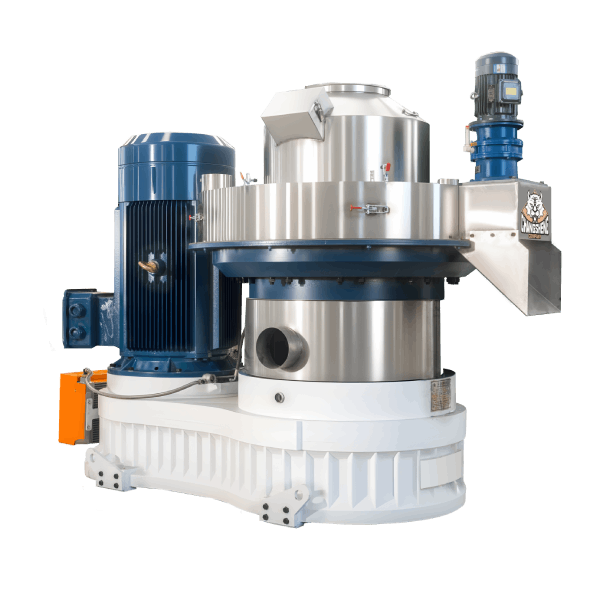
Pellet Machine 10 Tons Per Day Capacity: Complete Project Guide
News 2026-07-21
Page SEO Summary: This project planning guide helps entrepreneurs and procurement professionals evaluate a 10 tons per day pellet production facility—covering equipment configuration, investment costs, space requirements, and key decision factors.
For many entrepreneurs, farm cooperatives, and small-to-medium businesses, a pellet production facility with 10 tons per day capacity represents an ideal entry point. It is large enough to be commercially viable, yet small enough to be manageable—a practical scale for regional markets, agricultural waste utilization, and growing businesses.
Ten tons per day may not be the largest pellet plant you’ll see in an industrial park, but it’s a respectable capacity for a standalone business. It can serve a local market, process agricultural residues from surrounding farms, or supply a consistent stream of product to regional buyers.
This guide provides a comprehensive project planning framework for a 10 tons per day pellet production facility—covering capacity analysis, equipment configuration, investment considerations, and key decision factors.
Capacity: Understanding 10 Tons Per Day
The Numbers
| Parameter | Value | Calculation |
|---|---|---|
| Daily output | 10 tons/day | Target capacity |
| Operating hours | 8-16 hours/day | Single or double shift |
| Hourly output range | 0.63-1.25 t/h | Depends on operating hours |
| Annual output | 2,000-3,000 tons/year | 200-300 operating days |
Realistic Operating Scenarios
| Scenario | Hours/Day | Days/Year | Annual Output |
|---|---|---|---|
| Single shift | 8 hours | 250 days | 2,000 tons/year |
| Single shift (max) | 10 hours | 260 days | 2,600 tons/year |
| Double shift | 16 hours | 280 days | 2,800 tons/year |
| Double shift (max) | 16 hours | 300 days | 3,000 tons/year |
What 10 Tons/Day Means in Practice
| Application | 10 Tons/Day = | Annual Impact |
|---|---|---|
| Livestock feed | Feed for ~500 cattle or ~5,000 pigs | ~2,500 tons/year |
| Wood pellets | Heat for ~50-80 homes | ~2,500 tons/year |
| Biomass fuel | Fuel for ~1-2 MW boiler | ~2,500 tons/year |
| Feed for export | 1-2 containers per week | ~2,500 tons/year |
Equipment Configuration
Option 1: Single Shift (8-10 hours/day)
| Equipment | Specification | Function |
|---|---|---|
| Pellet mill | 22-37 kW motor; 1.0-1.5 t/h | Pelletizing |
| Hammer mill | 15-22 kW; 3-6 mm screen | Grinding |
| Cooler | 1.5-2.0 t/h capacity | Cooling |
| Screening | 1.5-2.0 t/h | Fines removal |
| Conveying | Bucket elevators | Material handling |
| Control panel | Basic to PLC | Machine control |
Option 2: Double Shift (16 hours/day)
| Equipment | Specification | Function |
|---|---|---|
| Pellet mill | 37-55 kW motor; 0.7-1.0 t/h | Pelletizing |
| Hammer mill | 22-30 kW; 3-6 mm screen | Grinding |
| Cooler | 1.0-1.5 t/h capacity | Cooling |
| Screening | 1.0-1.5 t/h | Fines removal |
| Conveying | Bucket elevators | Material handling |
| Control panel | PLC with HMI | Machine control |
Complete Line Components
| Component | Purpose | Priority |
|---|---|---|
| Feed cleaner | Remove stones and metal | Recommended |
| Hammer mill | Size reduction | Required |
| Pellet mill | Core pelletizing | Required |
| Cooler | Temperature and moisture control | Required |
| Screening | Fines removal | Required |
| Conveying | Material transfer | Required |
| Control panel | Machine control | Required |
| Dust collection | Environmental control | Required (often) |
| Conditioner | Pre-heating for better pellets | Optional |
| Packaging | Bagging or bulk | Optional |
Investment Costs (Estimates)
Equipment Cost Breakdown
| Component | Estimated Cost (USD FOB) |
|---|---|
| Pellet mill (22-55 kW) | $18,000-35,000 |
| Hammer mill (15-30 kW) | $8,000-20,000 |
| Cooler (1.5-2.0 t/h) | $6,000-15,000 |
| Screening system | $3,000-8,000 |
| Conveying equipment | $5,000-15,000 |
| Dust collection | $3,000-10,000 |
| Conditioner (optional) | $3,000-8,000 |
| Control panel (PLC) | $3,000-10,000 |
| Total Equipment Cost | $49,000-121,000 |
Installation and Setup
| Cost Category | Estimated Cost | Notes |
|---|---|---|
| Shipping (FOB basis) | $2,000-8,000 | Destination-dependent |
| Installation labor | $5,000-15,000 | Local or supplier-provided |
| Electrical installation | $3,000-10,000 | Wiring; control; transformer |
| Foundation | $2,000-8,000 | Building-dependent |
| Commissioning | $2,000-5,000 | Supplier support |
| Total Installation | $14,000-46,000 |
Total Project Investment
| Scenario | Estimated Investment |
|---|---|
| Basic line (equipment only) | $50,000-120,000 |
| Complete line (installed) | $65,000-170,000 |
| Full facility (building included) | $150,000-350,000+ |
Space Requirements
Equipment Footprint
| Equipment | Approximate Size | Area |
|---|---|---|
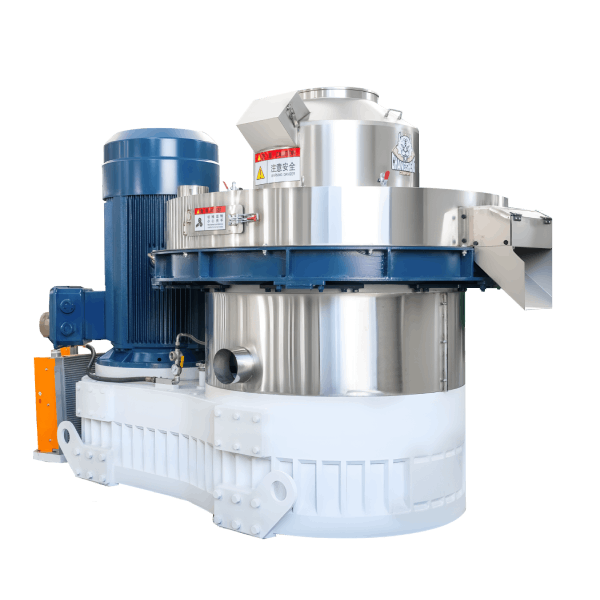
| Pellet mill | 1.5 × 1.5 m | 2.3 m² |
| Hammer mill | 1.2 × 1.2 m | 1.4 m² |
| Cooler | 1.5 × 1.5 m | 2.3 m² |
| Screening | 1.0 × 1.5 m | 1.5 m² |
| Conveying | Variable | 5-10 m² |
| Control panel | 1.0 × 1.0 m | 1.0 m² |
| Total Equipment | 15-25 m² |
Total Facility Space
| Area | Recommended Size | Purpose |
|---|---|---|
| Production floor | 50-80 m² | Equipment and operation |
| Raw material storage | 100-200 m² | Baled or loose material |
| Finished product storage | 50-100 m² | Bags or bulk storage |
| Office/utility | 20-40 m² | Office; restroom; break room |
| Total facility | 220-420 m² |
Operating Costs (Annual Estimate)
10 Tons/Day Operation (Single Shift, 250 days/year)
| Cost Category | Estimated Annual Cost | Notes |
|---|---|---|
| Electricity | $15,000-25,000 | ~30-50 kW average load |
| Die replacement | $3,000-6,000 | 2-3 dies/year |
| Roller shells | $1,000-3,000 | Annual replacement |
| Maintenance/parts | $2,000-5,000 | Routine maintenance |
| Raw material | $100,000-250,000 | Major cost; depends on material |
| Labor | $15,000-30,000 | 1-2 operators |
| Operating Cost | $136,000-319,000 |
Revenue Potential
| Product | Estimated Market Price (USD/ton) | Annual Revenue (2,500 tons) |
|---|---|---|
| Livestock feed pellets | $200-300 | $500,000-750,000 |
| Wood pellets (local) | $150-200 | $375,000-500,000 |
| Wood pellets (export) | $200-250 | $500,000-625,000 |
| Biomass pellets (industrial) | $100-180 | $250,000-450,000 |
Estimated Profitability (Single Shift, 2,500 tons/year)
| Item | Low Scenario | High Scenario |
|---|---|---|
| Revenue | $500,000 | $750,000 |
| Raw material cost | $150,000 | $250,000 |
| Operating costs (excl. raw material) | $40,000 | $70,000 |
| Gross Profit | $310,000 | $430,000 |
Key Decision Factors
When 10 Tons/Day Is Right
| Factor | Consideration |
|---|---|
| Market demand | 10 tons/day requires ~2,500 tons/year market |
| Raw material availability | Requires ~3,000-4,000 tons/year of raw material |
| Capital availability | Investment: $65,000-170,000 (installed) |
| Operating costs | Requires stable electricity and labor |
| Regulatory requirements | Permits; emissions; waste handling |
| Space | ~250-400 m² total facility |
When to Consider Larger or Smaller
| Situation | Recommendation |
|---|---|
| Market uncertain | Start smaller (5 tons/day) |
| Strong demand | Consider 20-30 tons/day |
| Limited raw material | Scale down to match supply |
| Limited capital | Start with basic line; expand later |
| Long-term commitment | 10 tons/day is a solid entry point |
Procurement Checklist: 10 Tons/Day Facility
Feasibility
- □ Market demand confirmed (2,500+ tons/year)
- □ Raw material supply secured
- □ Site identified and available
- □ Capital budget established
Equipment Specifications
- □ Pellet mill capacity confirmed (0.7-1.5 t/h)
- □ Motor power specified (22-55 kW)
- □ Voltage/frequency match site supply
- □ Complete line configuration defined
- □ Control system specified
Project Planning
- □ Operating hours defined (single or double shift)
- □ Installation timeline established
- □ Training plan created
- □ Spare parts plan developed
Supplier Evaluation
- □ Supplier experience with this capacity
- □ References from similar installations
- □ Warranty and support terms
- □ Spare parts availability
Frequently Asked Questions
1. What is the hourly output for a 10 tons/day pellet machine?
For a single shift (10 hours/day), the hourly output is 1.0 t/h. For double shift (16 hours/day), the hourly output is 0.625 t/h. The pellet mill can be sized accordingly.
2. What motor power is needed for a 10 tons/day operation?
For single shift operation (1.0 t/h): 22-37 kW motor. For double shift operation (0.625 t/h): 22-30 kW motor. The exact power depends on the material being processed.
3. How much does a 10 tons/day pellet line cost?
Equipment cost ranges from $50,000-120,000 FOB. Complete installed cost ranges from $65,000-170,000. Full facility with building ranges from $150,000-350,000+.
4. How much space is needed for a 10 tons/day pellet plant?
Production area: 50-80 m². Total facility (including storage): 220-420 m². The exact space depends on raw material type and storage needs.
5. Can a 10 tons/day plant operate on a single shift?
Yes. Single shift operation (8-10 hours/day) requires a larger pellet mill (1.0-1.25 t/h). This is often simpler and requires less labor.
6. Is 10 tons/day pellet production profitable?
Yes, with proper market conditions. At typical prices, annual revenue can be $500,000-750,000. After operating costs, gross profit can be $300,000-400,000 depending on market conditions.
7. How much raw material is needed for 10 tons/day?
Approximately 3,000-4,000 tons/year of raw material is needed (allow for moisture loss and inefficiency). For a 250-day operation, this is about 12-16 tons/day of raw material.
8. What is the typical payback period for a 10 tons/day plant?
With favorable market conditions, payback is typically 1-2 years. With moderate conditions, 2-3 years. This is based on equipment-only investment; facility construction adds to payback time.
About the Author
Zhang Wei – Senior International Sales Engineer, Shandong Changsheng Machinery Co., Ltd.
Zhang Wei has over 12 years of experience in the biomass and feed pellet mill industry, with a background in mechanical engineering and international project execution. He has managed pellet mill supply projects for clients across Southeast Asia, the Middle East, Africa, Europe, and Latin America, including numerous small-to-medium scale facilities.
With hands-on experience in both the manufacturing workshop and client-side operations, Zhang brings practical insights into successful equipment procurement—from the factory floor to the customer’s production site.