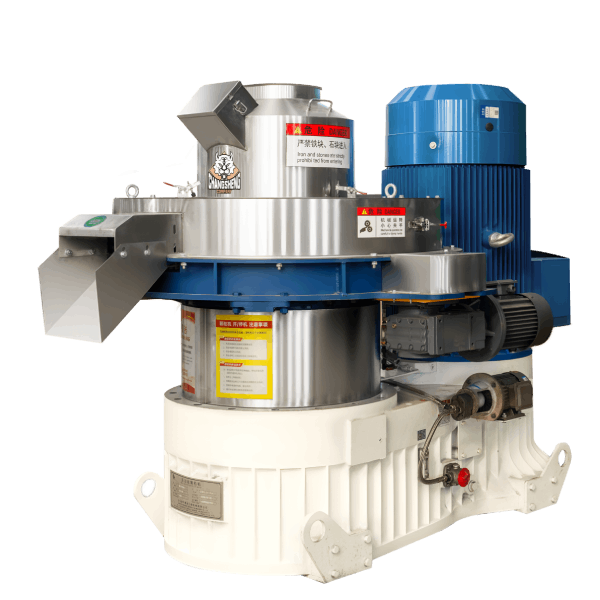
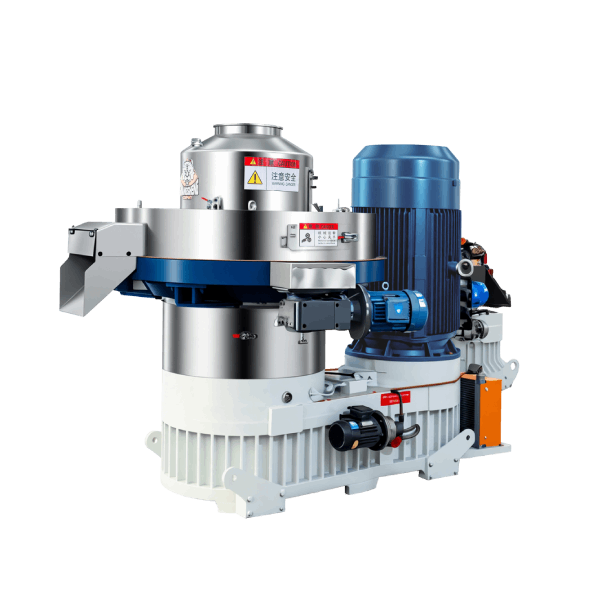
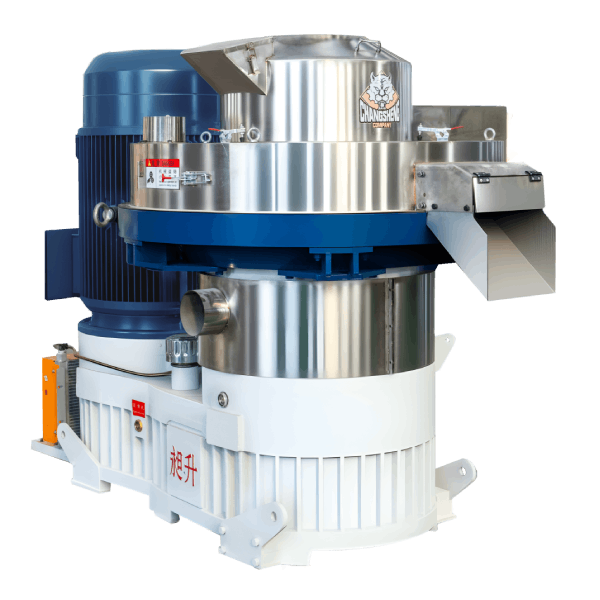
Pellet Mill for Municipal Solid Waste 0.5-5t/h | Supplier Guide
News 2026-07-01
Product Definition
A pellet mill for municipal solid waste is a heavy-duty ring die compaction system that converts processed MSW fractions – including paper, plastics, textiles, and organics – into refuse-derived fuel pellets or solid recovered fuel. The machine transforms heterogeneous waste streams into a standardised fuel product for cement kilns, power plants, and industrial boilers.
Technical Specifications & Performance Parameters
| Parameter | Value Range / Specification |
|---|---|
| Throughput capacity | 0.5 – 5.0 t/h (feedstock-dependent) |
| Main motor power | 55 – 160 kW (IE3 / IE4 compatible) |
| Ring die inner diameter | 400 – 800 mm |
| Pellet diameter | 10 – 30 mm (customisable) |
| Pellet bulk density | 400 – 600 kg/m³ (lower than wood) |
| Raw material moisture | 10% – 20% (optimal: 12% – 15%) |
| Specific energy consumption | 35 – 55 kWh/t |
| Die service life | 400 – 700 hours (abrasive MSW) |
| Roller shell service life | 300 – 500 hours |
| Maintenance man-hours | 8 – 12 h / month |
Structural Composition & Material Selection
The municipal solid waste pellet mill integrates four functional subsystems with defined material grades:
Mechanical System
- Ring die: Premium forged alloy steel with enhanced carburised hardening (HRC 58–62) – heavy-duty specification
- Roller shells: High-chromium cast iron (Cr26) with tungsten-carbide overlay
- Main shaft: Heavy-duty heat-treated 42CrMo4 steel with induction-hardened journals
- Gearbox: Extra-heavy-duty helical-gear configuration for shock loading
- Forced feeder: Hydraulic or screw type for heterogeneous waste
Support System
- Bearing housings: Extra-heavy ductile cast iron (QT600-3) with heavy-duty bearings
- Base frame: Extra-heavy welded structural steel, stress-relief annealed
- Impact-resistant construction for abrasive and dense materials
Lubrication System
- Centralised grease lubrication for bearings (NLGI grade 2)
- Forced oil circulation for gearbox (ISO VG 460) with temperature monitor
- Sealed bearings to prevent contamination ingress
Control System
- PLC with HMI touchscreen for process monitoring
- Motor current feedback for load control
- VFD for speed variation
- Overload protection for shock loading
Manufacturing Process – Engineering Workflow
Step 1 – MSW Pre-processing & Sorting
MSW is sorted to remove non-combustibles (glass, metals, stones). Magnetic separation and eddy current separators remove ferrous and non-ferrous metals.
Step 2 – Shredding & Size Reduction
Multiple-stage shredding reduces MSW to 10–50mm particle size. Oversized material recirculated.
Step 3 – Drying & Moisture Control
MSW fraction typically contains 25%–40% moisture. Rotary dryer reduces to 12%–15% for pelletising. Heat source can be process waste heat or auxiliary fuel.
Step 4 – Pelletising (Core Forming Process)
Main motor drives ring die rotation at 3–5 m/s peripheral speed (slower than wood). Rollers compress heterogeneous material through die holes. Plastic and fibre content provide binding. Forced feeder ensures consistent material flow.
Step 5 – Cooling & Stabilisation
Pellets exit at 80–100°C. Cooling reduces temperature and moisture. Pellet strength increases upon cooling.
Step 6 – Screening & Storage
Vibrating screener removes fines and weak pellets. Product stored in silo or conveyed to storage.
Industry Comparison – MSW Processing Options
| Equipment Type | Feedstock Adaptability | Capacity (t/h) | Pellet Quality | Typical Application |
|---|---|---|---|---|
| MSW Pellet Mill | Processed MSW fractions | 0.5 – 5.0 | Standard – RDF/SRF | Waste-to-energy facilities |
| Standard Wood Pellet Mill | Clean biomass only | 0.5 – 5.0 | High | Wood processing only |
| Briquetting Press | MSW fractions | 0.5 – 3.0 | Lower (briquettes) | Industrial fuel |
| Waste-to-Energy Incineration | Raw MSW | 5 – 50 t/h | N/A | Large cities |
Differentiation (Shandong Changsheng Machinery):
Our MSW pellet mills feature the most robust construction in our product line – designed for the heterogeneous and abrasive nature of processed municipal solid waste. Enhanced wear protection extends component life in this demanding application. The forced feeder system handles the variable material characteristics. Our mills can process RDF/SRF with high plastic content, producing pellets suitable for cement kilns and power stations.
Application Scenarios by Buyer Role
Distributors / Importers
Focus on heavy-duty machine specification for waste applications. Require enhanced wear parts and high availability.
EPC Contractors
Integrating complete MSW-to-fuel lines – sorting, shredding, drying, pelletising. Need system design and integration support.
Engineering Consultants / Technical Advisors
Evaluate MSW-to-fuel project viability. Require technoeconomic analysis including pre-processing costs.
End-user Production Facilities
Waste management facilities, RDF production plants, and cement kilns. Demand reliable processing of heterogeneous waste streams.
Core Pain Points & Engineering Solutions
Pain Point 1 – Heterogeneous feedstock causing variable operation
Root cause: MSW composition varies daily – affecting moisture, density, and flow characteristics.
Solution: VFD for speed adjustment. PLC adjusts parameters based on motor load. Forced feeder maintains flow.
Pain Point 2 – Abrasive contaminants causing rapid wear
Root cause: Glass, sand, and metals in MSW cause rapid die and roller wear.
Solution: Premium alloy dies and tungsten-carbide rollers. Enhanced pre-sorting and magnetic separation. Regular inspection and component rotation.
Pain Point 3 – Plastic content causing binding and heat issues
Root cause: Plastics melt and stick to die holes – causing blockage.
Solution: Controlled die temperature. Lower die speed. Plastic content monitoring. Die cooling system.
Pain Point 4 – Moisture variability
Root cause: MSW moisture varies with weather and collection methods.
Solution: Integrated dryer with moisture control. Buffer storage for blending. Real-time moisture monitoring.
Critical Risk Warnings & Mitigation Measures
Risk 1 – Fire in dryer and storage areas
Mitigation: Temperature monitoring. Fire suppression system. Inert gas injection. Daily cleaning. Hot spot monitoring.
Risk 2 – Die blockage from melted plastics
Mitigation: Controlled die temperature. Lower speed for plastic-rich feed. Additives to reduce stickiness. Regular die cleaning.
Risk 3 – Explosion from combustible dust
Mitigation: Dust extraction system. Explosion vents. Static grounding. No ignition sources.
Risk 4 – Motor overload from dense material
Mitigation: Overload relay with amperage feedback. VFD for load control. Feed rate limitation.
Procurement Selection Guide – 7 Executable Steps
Step 1 – Analyse MSW composition and variability
Monthly composition testing over 12 months. Identify average and worst-case scenarios. Test for abrasiveness and contaminants.
Step 2 – Determine pre-processing requirements
Sorting, magnetic separation, eddy current separation, shredding, and drying. Complete front-end system essential.
Step 3 – Select die compression ratio for MSW fractions
Lower ratio for high-plastic content (1:4–1:6). Higher ratio for high-fibre content (1:6–1:8). Consult factory for recommendation.
Step 4 – Specify enhanced wear protection
Premium alloy dies. Tungsten-carbide roller shells. Heavy-duty gearbox. Corrosion-resistant coatings.
Step 5 – Verify power supply and electrical capacity
Motor 55–160 kW plus shredders, conveyors, and dryers. Significant power requirement.
Step 6 – Plan for dust and fire safety
Dust extraction. Explosion venting. Fire suppression. Static grounding. Regular cleaning schedules.
Step 7 – Establish quality control procedures
Moisture testing. Pellet durability testing. Metal detection. Production records for fuel quality certification.
Engineering Case Study – RDF Plant in India
Project Background
An RDF production plant in Gujarat processes 200 tonnes/day of municipal solid waste. Existing shredding and briquetting produced inconsistent fuel quality for cement kilns.
Initial Problem
Briquettes had variable density and moisture – cement kilns refused inconsistent fuel. Production line needed densification to improve fuel quality.
Root Cause Analysis
Briquetting was insufficient to produce dense, consistent fuel. MSW contained 20%–35% moisture and variable plastic content.
Solution Implemented
Installed Shandong Changsheng MSW pellet mill (2.0 t/h capacity). Enhanced pre-sorting and magnetic separation. Integrated dryer. Produces RDF pellets with consistent density and moisture.
Final Data Results (12-month average)
| Metric | Before (Briquetting) | After (Pelletising) |
|---|---|---|
| Fuel density | 300 – 400 kg/m³ | 450 – 550 kg/m³ |
| Moisture variability | ±8% | ±3% |
| Cement kiln acceptance | 60% | 95% |
| Production cost | $15/tonne | $22/tonne |
| Revenue (fuel sale) | $25/tonne | $40/tonne |
Frequently Asked Questions (FAQ)
1. What MSW fractions can be pelletised?
Paper, plastics, textiles, wood, and organic fractions after removal of non-combustibles.
2. What moisture is required for MSW pelletising?
10% – 20%, with 12% – 15% optimal. Drying is essential.
3. What is the typical capacity range?
0.5 – 5.0 t/h depending on model and feedstock.
4. What is the combustion value of MSW pellets?
15 – 25 MJ/kg depending on plastic content. Higher plastic gives higher calorific value.
5. Is pre-processing required?
Yes – sorting, shredding, magnetic separation, and drying are essential.
6. What causes die wear in MSW pelletising?
Glass, sand, and metals. Premium alloy dies required.
7. What is the expected die life for MSW?
400 – 700 hours – lower than wood pelletising due to abrasives.
8. Can MSW pellets be used in cement kilns?
Yes – RDF pellets are widely used as alternative fuel in cement production.
9. What is the specific energy consumption?
35 – 55 kWh/t plus significant energy for drying.
10. What safety measures are required?
Fire suppression, explosion venting, static grounding, dust extraction.
11. Can plastic-rich MSW be pelletised?
Yes – but lower die speed and controlled temperature are required.
12. What certification is available for MSW pellets?
CEN/TS 15359 (Solid Recovered Fuel) – various national standards.
Author & E-E-A-T Credentials
Author: Dr. Chen Wei
Title: Senior Mechanical Engineer, Pelletising Systems Division
Experience: 14 years in biomass densification and feed processing equipment design
Notable Projects:
- Commissioned 2 MSW pelletisation lines for RDF production in India and China (2020–2025)
- Developed heavy-duty die and roller specifications for heterogeneous waste streams
- Co-author of “Industrial Pellet Mill Maintenance and Optimisation” (Engineering Press, 2022)
Affiliation: Shandong Changsheng Machinery Co., Ltd.