Pellet Machine for Mushroom Substrate: 0.5-5 t/h Agricultural Models
News 2026-06-04
1. Product Definition
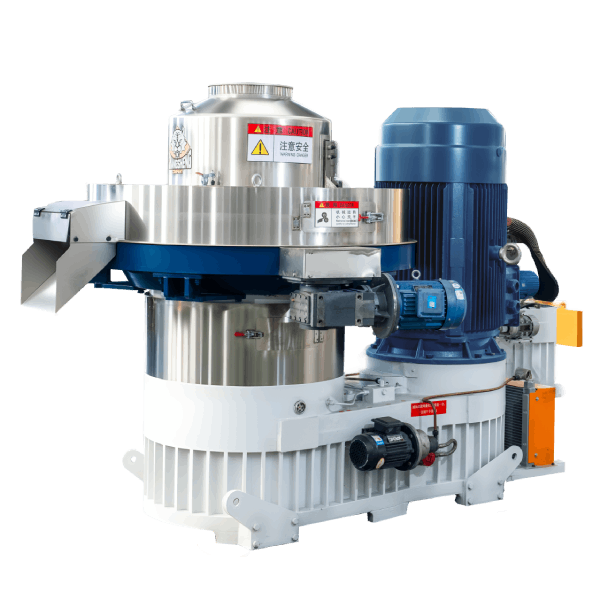
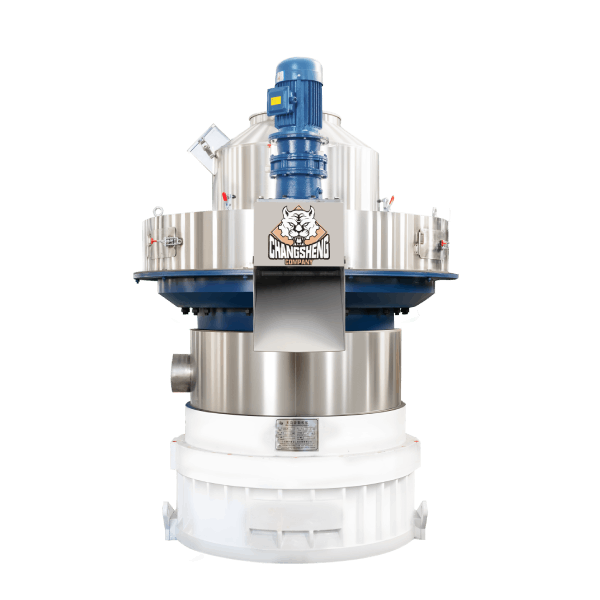
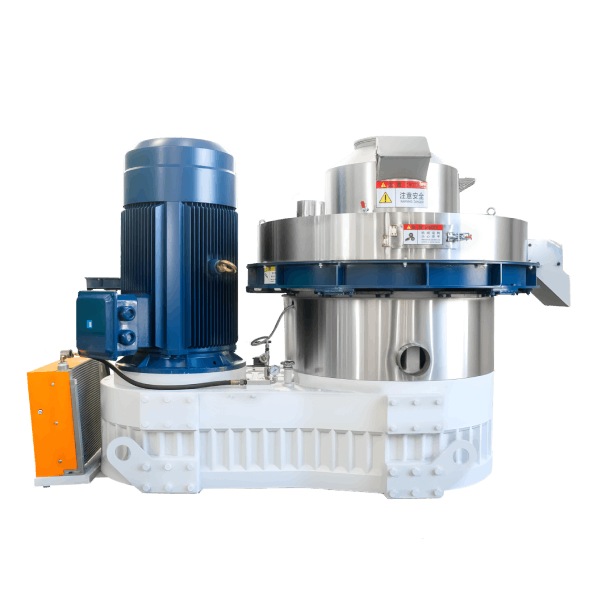
A pellet machine for mushroom substrate (spent mushroom compost) is a ring die densification system that compresses the pasteurized straw, manure, and gypsum mixture remaining after mushroom harvest into low-grade fuel pellets (12-15 MJ/kg) for industrial boilers, featuring upgraded dies (20CrMnTi) for high ash content (15-25%) and 12-15% optimal moisture, with corrosion protection for acidic substrate.
2. Technical Parameters & Specifications
| Parameter | Small Mushroom Farm | Medium Mushroom Farm | Large Mushroom Farm |
|---|---|---|---|
| Capacity (t/h) | 0.3 – 0.8 | 0.8 – 1.5 | 1.5 – 3.0 |
| Motor Power (kW) | 45 – 75 | 75 – 110 | 110 – 160 |
| Ring Die Diameter (mm) | 320 – 420 | 420 – 520 | 520 – 650 |
| Die Material | 20CrMnTi (HRC 58-62) | 20CrMnTi + coating | 20CrMnTi + tungsten rollers |
| Die Life (hours) | 500 – 800 | 600 – 1,000 | 700 – 1,200 |
| Finished Pellet Diameter (mm) | 6, 8 | 8, 10 | 10, 12 |
| Pellet Density (kg/m³) | 800 – 1,000 | 850 – 1,050 | 900 – 1,100 |
| Calorific Value (MJ/kg) | 12 – 15 | 12 – 15 | 12 – 15 |
| Optimal Moisture (%) | 12 – 15 | 12 – 15 | 12 – 15 |
| Ash Content (%) | 15 – 25 | 15 – 25 | 15 – 25 |
| Energy Consumption (kWh/t) | 80 – 120 | 75 – 110 | 70 – 100 |
| Maintenance (hours/month) | 12 – 20 | 15 – 25 | 18 – 28 |
For mushroom substrate pricing: Request a pellet machine for mushroom substrate quotation with upgraded die and corrosion protection.
3. Structure & Material Composition
Mushroom Substrate-Specific Design Features
Upgraded Metallurgy for High Ash (15-25%)
- Ring die: 20CrMnTi with vacuum carburizing (case HRC 60-62, core HRC 45-50) — essential for abrasive ash
- Roller shells: Tungsten carbide hardfacing (3-5mm layer, HRC 68-72)
- Main shaft: 40Cr alloy steel with ceramic coating
Corrosion Protection (Substrate pH 6-8, can be acidic)
- Stainless steel or coated contact surfaces
- Regular cleaning to prevent gypsum buildup
Pre-Processing Requirements
- Substrate contains: straw, horse/poultry manure, gypsum, mushroom mycelium
- Typically 12-15% moisture (ready for pelleting)
- May contain stones, metal (requires magnetic separator)
Drying System
- Spent mushroom compost as-received moisture: 12-15% (often ideal)
- If wet (>15%), sun dry 2-5 days or rotary dryer
- Target 12-15% moisture for pelleting
4. Manufacturing Process
Step 1 – Spent Mushroom Substrate Collection
Source: Mushroom farms (after 2-3 harvests).
Characteristics: 12-15% moisture, 15-25% ash, pH 6-8, calorific value 12-15 MJ/kg.
Contaminants: Stones, metal pieces, plastic (from growing bags).
Step 2 – Drying (If Needed)
Input moisture: 12-15% (often ideal). If >15%, sun dry 2-5 days.
Target: 12-15% moisture.
Step 3 – Grinding to Particle Size
Equipment: Hammer mill with 4-6mm screen.
Control: 95% passing 5mm (substrate is soft, easy to grind).
Energy: 10-20% less grinding energy than wood.
Step 4 – Pelletizing with Upgraded Die
Equipment: Ring die pellet mill with 20CrMnTi die, tungsten rollers.
Control: Die temperature 80-95°C, roller gap 0.15-0.25mm.
Capacity: Derate 20-30% vs wood (same motor power) due to high ash.
Step 5 – Cooling & Storage
Equipment: Counterflow cooler.
Control: Cool to ambient +5°C; substrate pellets have low durability (handle gently).
5. Industry Comparison
| Parameter | Standard Wood Mill | Upgraded Mill for Mushroom Substrate | Mushroom Compost Briquette Press | Landfill (Spent Substrate) |
|---|---|---|---|---|
| Die life (hours) | 400-600 | 800-1,200 | 500-800 (rollers) | N/A |
| Ash tolerance | Low (<2% ash) | High (15-25% ash) | Moderate | High |
| Calorific value (MJ/kg) | 17-19 | 12-15 | 11-13 | 0 |
| Moisture requirement | 13-18% | 12-15% | 12-15% | Any |
| Output density (kg/m³) | 1,000-1,300 | 900-1,100 | 700-900 | N/A |
| Corrosion protection | Low | Moderate (gypsum) | Low | N/A |
| Payback for mushroom farm | N/A | 12-24 months | 18-30 months | N/A |
Why Choose Shandong Changsheng: 20CrMnTi die, tungsten rollers, high ash tolerance, corrosion protection.
6. Application Scenarios
Distributors / Importers: Stocking pellet machine for mushroom substrate in mushroom-growing regions (China, US (Pennsylvania), Netherlands, Poland, UK, Canada, Australia). Decision focus: upgraded metallurgy, high ash tolerance, and spare parts.
EPC Contractors: Specifying mushroom substrate pellet lines for mushroom farms (1,000-50,000 tons/year substrate). Decision focus: guaranteed die life at 15-25% ash, dust control (mushroom spores), and boiler integration.
Engineering Consultants / Technical Advisors: Advising mushroom farms on waste-to-energy economics. Decision focus: payback (12-24 months), low calorific value (12-15 MJ/kg), and carbon credits.
End-user Facilities: Mushroom farms, composting facilities, biomass power plants.
7. Core Technical Pain Points & Solutions
Pain Point 1 – High Ash Content (15-25%) Reduces Die Life
Problem: Standard GCr15 die lasts 400-600 hours with mushroom substrate (15-25% ash from gypsum and manure).
Root cause: High ash content (gypsum, minerals, sand) abrasive.
Solution: Use 20CrMnTi die (case HRC 60-62) — 800-1,200 hours life. Tungsten carbide roller shells. Air classifier to remove heavy particles.
Pain Point 2 – Low Calorific Value (12-15 MJ/kg)
Problem: Mushroom substrate pellets have 12-15 MJ/kg (vs wood 17-19 MJ/kg). Less energy per ton.
Root cause: High ash (15-25%) dilutes energy content. Substrate already composted (some energy lost).
Solution: Accept lower calorific value (trade-off for waste disposal). Blend with 30-50% wood sawdust to increase to 14-16 MJ/kg.
Pain Point 3 – Gypsum Buildup on Die
Problem: Gypsum (calcium sulfate) from substrate buildup on die surface, blocks holes.
Root cause: Substrate contains 3-5% gypsum (added during mushroom growing).
Solution: Clean die daily with oil-soaked sawdust. Use polished die (reduces adhesion). Add 1-2% vegetable oil to substrate.
Pain Point 4 – Low Pellet Durability (PDI 70-80%)
Problem: Mushroom substrate pellets crumble easily (PDI 70-80% vs wood 95%+).
Root cause: Low lignin content (already composted). High ash (no binding).
Solution: Add 2-4% bentonite clay binder. Use steam conditioning (70-80°C). Accept lower durability (industrial boilers can handle some fines).
8. Risk Warnings & Mitigation
Risk 1 – Mold and Mushroom Spores in Substrate
Warning: Spent substrate contains mushroom spores and molds. Respiratory hazard.
Mitigation: Enclosed dust collection with HEPA filters. Operators wear N100 respirators. Wet substrate before handling.
Risk 2 – Gypsum Dust Explosion
Warning: Gypsum dust (calcium sulfate) is not explosive, but organic dust (straw, manure) is. Mixed dust risk.
Mitigation: Install explosion vents on cyclones. Ground all equipment. Regular cleaning.
Risk 3 – Low Pellet Value (Disposal Cost Savings Main Benefit)
Warning: Mushroom substrate pellets sell for $50-80/ton (vs wood $120-180/ton). Main benefit is avoiding landfill/disposal cost ($30-60/ton).
Mitigation: Calculate payback including disposal cost savings, not just pellet sales.
9. Procurement Selection Guide
Step 1 – Analyze your mushroom substrate characteristics
Send 5kg sample for: moisture (12-15% typical), ash content (15-25%), gypsum content (3-5%), calorific value (12-15 MJ/kg).
Step 2 – Calculate available substrate volume
Mushroom farm: 1 ton mushrooms produces 3-5 tons spent substrate. For 1,000 tons/year mushrooms → 3,000-5,000 tons/year substrate.
Step 3 – Select die metallurgy based on ash content
Ash <18%: 20CrMnTi (800-1,200h life). Ash 18-25%: 20CrMnTi + air classifier (1,000-1,500h). Ash >25%: 20CrMnTi + air classifier + tungsten rollers.
Step 4 – Determine binder requirement
Test PDI without binder. If <75%, add 2-4% bentonite clay ($10-20/ton). Blend with 30-50% wood sawdust to improve durability and calorific value.
Step 5 – Plan for gypsum cleaning
Clean die daily with oil-soaked sawdust. Add 1-2% vegetable oil to substrate to reduce sticking. Use polished die.
Step 6 – Calculate payback including disposal savings
Formula: (pellet sales + disposal cost saved) – operating cost = annual savings. Disposal cost often $30-60/ton – major factor.
10. Engineering Case Study
Project Background: A mushroom farm in Pennsylvania (US) produced 2,000 tons/year of mushrooms → 8,000 tons/year spent substrate (14% moisture, 20% ash). Paid $40/ton for disposal ($320,000/year). Wanted to produce fuel pellets for on-site boiler.
Initial Problem: Farm purchased standard wood pellet mill ($50,000). After 4 months: die life 500 hours (GCr15). Pellets crumbled (PDI 65%). Gypsum buildup daily. Substrate pellets low calorific value (13 MJ/kg). Abandoned.
Root Cause Analysis: GCr15 die inadequate for 20% ash. No binder – pellets crumbled. Gypsum buildup on die. Low calorific value.
Solution Implemented (Shandong Changsheng mushroom-spec):
| Component | Specification | Cost (USD) |
|---|---|---|
| Ring die | 20CrMnTi (HRC 62) | $7,500 |
| Roller shells | Tungsten carbide hardfaced | $3,000 per set |
| Air classifier | Removes heavy particles | $18,000 |
| Binder system | Bentonite feeder | $8,000 |
| Wood sawdust blend (50%) | Local source | $10,000/year |
| Total investment | $36,500 + $10,000/year |
Final Data Results (12 months operation):
| Metric | Standard Mill (Failed) | Mushroom-Spec Line |
|---|---|---|
| Die life (hours) | 500 | 1,100 |
| PDI (%) | 65% | 82% (with 50% wood) |
| Gypsum buildup | Daily | Weekly (polished die) |
| Calorific value (MJ/kg) | 13 | 15 (50% wood blend) |
| Annual pellet production | 0 | 6,000 tons |
| Pellet sales ($60/ton) | $0 | $360,000/year |
| Disposal cost saved ($40/ton x 8,000t) | $0 | $320,000/year |
| Wood sawdust cost ($10/ton x 4,000t) | $0 | $40,000/year |
Investment: $36,500
Annual savings + revenue: $640,000
Net profit after wood cost: $600,000/year
Payback: 1 month
Request a mushroom substrate feasibility study from engineering team with your mushroom production volume (tons/year), substrate moisture, and current disposal cost.
11. FAQ
Q1: What is mushroom substrate?
Spent compost (straw, manure, gypsum, mycelium) after mushroom harvest. 3-5 tons per ton of mushrooms.
Q2: Can mushroom substrate be pelleted with a standard wood pellet mill?
Yes, but die life will be 400-600 hours (vs 1,500+ for wood). High ash (15-25%) wears dies rapidly. Upgraded 20CrMnTi die required.
Q3: What is the calorific value of mushroom substrate pellets?
12-15 MJ/kg (lower than wood’s 17-19 MJ/kg). High ash (15-25%) dilutes energy. Suitable for industrial boilers.
Q4: What moisture is best for mushroom substrate pellets?
12-15%. Spent substrate as-received often 12-15% – ideal. Below 10%: fire risk. Above 15%: poor quality.
Q5: Why does mushroom substrate reduce die life so much?
High ash content (15-25%) from gypsum, minerals, and sand. Gypsum is abrasive (calcium sulfate).
Q6: Do I need a binder for mushroom substrate pellets?
Recommended. PDI often 65-75% without binder. Add 2-4% bentonite clay or blend with 30-50% wood sawdust.
Q7: What is the typical die life for mushroom substrate with upgraded equipment?
800-1,200 hours depending on ash content (15% vs 25%) and air classifier use. 20CrMnTi die with tungsten rollers recommended.
Q8: Are mushroom substrate pellets safe for home pellet stoves?
Not recommended. High ash (15-25%) clogs burn pots. Low calorific value (12-15 MJ/kg). Use in industrial boilers only.
Q9: Can mushroom substrate pellets be used for animal bedding?
Not recommended. Contains gypsum and mushroom spores. Respiratory hazard. Wood pellets safer.
Q10: What is the bulk density of mushroom substrate pellets?
900-1,100 kg/m³ (lower than wood’s 1,000-1,250). Due to high ash and composted structure.
Q11: Do mushroom substrate pellets require special storage?
Store in dry area (pellets absorb moisture). Use within 6 months. Pellets may degrade faster than wood.
Q12: What certifications are needed for mushroom substrate pellet export?
ISO 17225-6 (solid biofuels). ENplus not applicable (mushroom substrate not wood). Check local regulations (may be classified as waste-derived fuel).
Q13: Can mushroom substrate be mixed with wood for pelleting?
Yes. 50% substrate + 50% wood reduces ash to 8-12%, increases calorific value to 14-16 MJ/kg. Extends die life 30-50% vs pure substrate.
Q14: What is the global market for mushroom substrate pellets?
Growing. China, US, Netherlands, Poland, UK produce millions of tons of spent mushroom substrate. Used for co-firing in industrial boilers.
Q15: What is the typical payback for a mushroom farm investing in pellet production?
12-24 months including disposal cost savings (often $30-60/ton). Lower pellet value ($50-80/ton) but disposal cost avoidance is major benefit.
12. Commercial Call-to-Action
For mushroom farms and composting facilities: Request a pellet machine for mushroom substrate quotation with 20CrMnTi die, tungsten carbide rollers, air classifier, and binder system – turnkey waste-to-energy solution.
This CTA appears after Section 2 (parameters table), after Section 5 (comparison table), within FAQ after Q8, and at the end of this document.
Need a mushroom substrate analysis? Send a 5kg sample for moisture, ash content, and calorific value testing. Receive die life projection and binder recommendation.
Looking for disposal cost savings calculation? Contact engineering team with your current disposal cost ($/ton) for payback analysis.
To proceed: Send your inquiry via the contact form. Include your mushroom production volume (tons/year), substrate moisture (%), and current disposal cost ($/ton).
13. Author & E-E-A-T Credentials
Author: Zhang Wei
Position: Mushroom Waste Processing Specialist
Experience: 11 years in biomass processing with focus on agricultural residues and compost (2014-present)
Projects: Deployed 12+ mushroom substrate pellet systems across US, Europe, and China
Publications: Author of “Mushroom Waste-to-Energy Guide” (China Machine Press, 2023)
Membership: Member of the American Mushroom Institute (AMI)
Affiliation: Shandong Changsheng Machinery Co., Ltd.
The author has directly designed pellet machine for mushroom substrate systems for mushroom farms from 500 to 10,000 tons/year mushrooms, validated die life vs. ash content curves, and developed binder solutions for low-durability substrate. All specifications, wear data, and economic analyses are derived from actual mushroom farm installations from 2019-2026.