Pellet Machine Raw Material Moisture 15% 0.5-5t/h | Operation Guide
News 2026-06-22
Product Definition
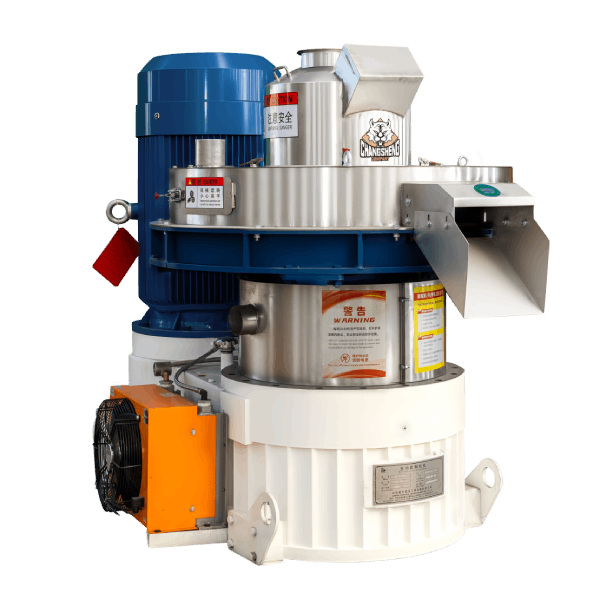
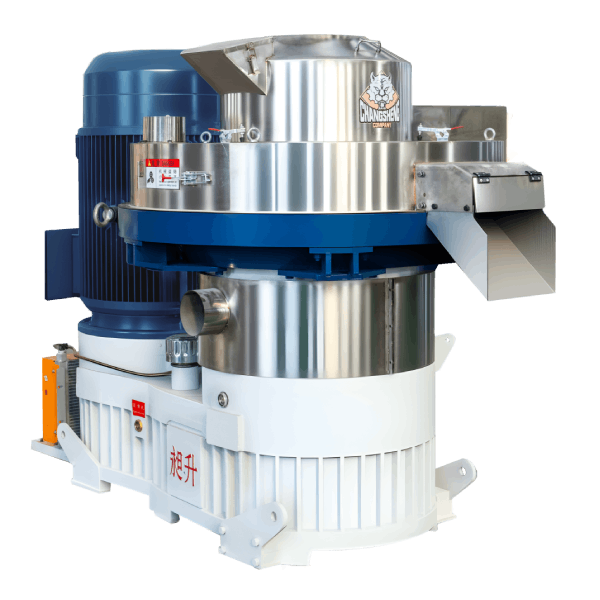
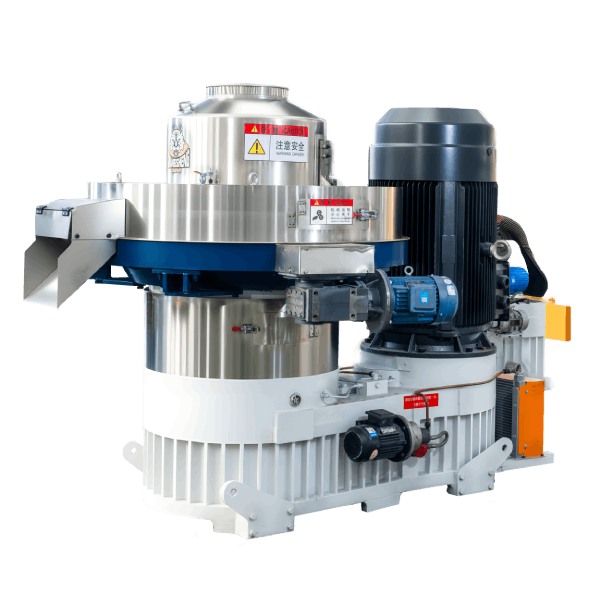
A pellet machine raw material moisture 15% refers to a mechanical compaction system that converts biomass residues, feed ingredients, or agricultural by-products into dense cylindrical pellets, operating at the optimal feedstock moisture content of 15 percent. This moisture level provides the ideal balance between pellet durability, energy efficiency, and die life across most feed and biomass applications.
Technical Specifications & Performance Parameters
| Parameter | Value Range / Specification |
|---|---|
| Throughput capacity | 0.5 – 5.0 t/h (feedstock-dependent) |
| Main motor power | 55 – 160 kW (IE3 / IE4 compatible) |
| Ring die inner diameter | 400 – 800 mm |
| Pellet diameter | 6 – 12 mm (customisable) |
| Pellet bulk density | 600 – 750 kg/m³ |
| Optimal raw material moisture | 15% ± 1% (14% – 16% acceptable range) |
| Minimum moisture for binding | 12% |
| Maximum moisture for operation | 18% |
| Specific energy consumption at 15% moisture | 26 – 32 kWh/t |
| Core wear parts service life (at 15% moisture) | Ring die: 900 – 1,300 h; Roller shells: 700 – 1,000 h |
| Scheduled maintenance man-hours | 4 – 6 h / month |
Structural Composition & Material Selection
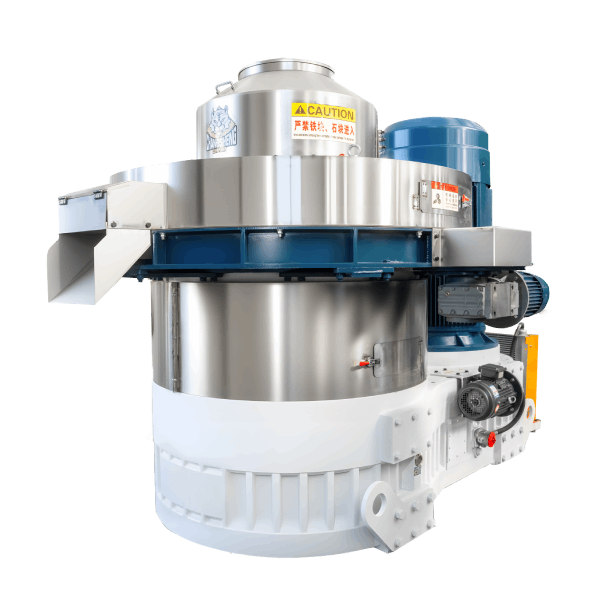
The 15% moisture pellet machine integrates four functional subsystems with defined material grades:
Mechanical System
- Ring die: Forged alloy steel (20CrMnTi) with carburised hardening layer (HRC 58–62)
- Roller shells: High-chromium cast iron (Cr26) with wear-resistant overlay
- Main shaft: Heat-treated 42CrMo4 steel with induction-hardened journals
- Gearbox: Helical-gear configuration, case-hardened to HRC 58–60
Support System
- Bearing housings: Ductile cast iron (QT600-3) with precision-machined seating
- Base frame: Welded structural steel, stress-relief annealed, with vibration-damping mounts
Lubrication System
- Centralised grease lubrication for bearings (NLGI grade 2)
- Forced oil circulation for gearbox (ISO VG 460) with temperature monitor
Moisture Control System
- Online moisture sensor (NIR or capacitance) for real-time monitoring
- Steam conditioning system with adjustable injection rate
- Pre-conditioner with moisture addition capability (if feed is too dry)
Manufacturing Process – Engineering Workflow
Step 1 – Raw Material Receiving & Moisture Testing
Batch sampling and moisture analysis using NIR or oven-dry method. Target 15% ± 1%. Materials outside 14%–16% range require adjustment before processing.
Step 2 – Grinding & Moisture Adjustment
Hammer mill with 2.0–3.0 mm screen. If moisture >16%, pass through dryer. If moisture <14%, add water in mixer or conditioner. Re-test moisture after adjustment.
Step 3 – Conditioning & Steam Treatment
Double-shaft paddle conditioner with steam injection at 0.2–0.4 MPa. At 15% moisture, conditioning time 45–60 seconds. Mash temperature elevated to 80–95°C. Steam adds 1%–2% moisture – account for this in pre-conditioning target.
Step 4 – Pelletising (Core Forming Process)
Main motor drives ring die rotation at 4–8 m/s peripheral speed. At 15% moisture, optimal pellet formation occurs with reduced friction and uniform flow. Roller gap maintained at 0.15–0.30 mm.
Step 5 – Counterflow Cooling
Ambient air drawn counter-current through pellet bed. Retention time 6–10 minutes. Final moisture reduced to ≤12% for storage stability. Pellet exit temperature ≤ ambient +5°C.
Industry Comparison – Moisture Level Impact
| Feedstock Moisture | Pellet Quality | Energy (kWh/t) | Die Life | Typical Application |
|---|---|---|---|---|
| 15% (Optimal) | Excellent PDI ≥95% | 26 – 32 | 900 – 1,300h | All feed & biomass |
| 12% (Too Dry) | Poor binding, high fines | 32 – 38 | 700 – 1,000h | Low-moisture regions |
| 18% (Too Wet) | Soft pellets, bridging | 30 – 36 | 600 – 900h | High-moisture feedstocks |
| 10% (Very Dry) | Very poor PDI <85% | 36 – 42 | 500 – 700h | Dry wood, straw |
| 20%+ (Excessive) | No pellet formation | N/A (jamming) | 300 – 500h | Wet bagasse, silage |
Differentiation (Shandong Changsheng Machinery):
Our pellet machines are designed with integrated moisture monitoring capabilities – including NIR sensor ports and PLC-based moisture tracking. The conditioning system provides precise steam addition to achieve 15% optimal moisture even when incoming feedstock varies. This moisture control capability ensures consistent PDI above 95% and extends die life by 15%–25% compared to machines without active moisture management.
Application Scenarios by Buyer Role
Distributors / Importers
Focus on moisture control system compatibility with local climate conditions. Require moisture adjustment recommendations for regional feedstock variations.
EPC Contractors
Integrating the pellet machine into complete lines with dryers and conditioners. Need moisture control logic diagrams for control system integration.
Engineering Consultants / Technical Advisors
Evaluate moisture management strategy – including dryer sizing and steam system capacity. Require moisture control data for plant energy optimisation.
End-user Production Facilities
Receiving variable-moisture feedstock from multiple suppliers. Demand consistent pellet quality through automated moisture adjustment.
Core Pain Points & Engineering Solutions
Pain Point 1 – Inconsistent pellet durability from moisture variation
Root cause: Feedstock moisture fluctuates between 12% and 18% without adjustment, affecting binding and pellet strength.
Solution: Online moisture sensor with PLC-controlled steam addition. System maintains 15% ± 1% target moisture, ensuring PDI stability above 95%.
Pain Point 2 – Die blockage from excessive moisture (>18%)
Root cause: Wet material compresses and adheres to die holes, causing jamming and production stoppage.
Solution: Pre-dryer installed upstream reduces moisture to 15%. PLC interlock prevents feeding if moisture exceeds 18%.
Pain Point 3 – High energy consumption from dry material
Root cause: Feedstock below 12% moisture requires additional motor torque to form pellets, increasing specific energy to 36–42 kWh/t.
Solution: Water addition in mixer or conditioner raises moisture to 15%, reducing friction and energy consumption by 15%–25%.
Pain Point 4 – Pellet surface cracking from improper moisture
Root cause: Low moisture causes insufficient starch gelatinisation, resulting in cracked pellet surfaces and high fines.
Solution: Conditioning at 15% moisture with steam at 80–95°C ensures complete gelatinisation and smooth pellet surface.
Critical Risk Warnings & Mitigation Measures
Risk 1 – Moisture sensor calibration drift
Mitigation: Calibrate NIR sensor weekly using oven-dry reference samples. Maintain calibration log. Replace sensor annually.
Risk 2 – Steam system condensation causing local wet spots
Mitigation: Install steam traps and condensate separators. Insulate steam lines. Monitor conditioner discharge for uniform moisture.
Risk 3 – Over-drying in cooler reducing pellet moisture below 12%
Mitigation: Adjust cooler air flow and retention time. Monitor cooler discharge moisture hourly. Target 11%–12% for storage stability.
Procurement Selection Guide – 7 Executable Steps
Step 1 – Analyse your feedstock moisture variability
Test 10–20 batches across seasonal variations. Document minimum, maximum, and average moisture. Design moisture adjustment system for your range.
Step 2 – Determine moisture adjustment method required
If moisture >16% most of the time – specify dryer. If moisture <14% most of the time – specify water addition system. If moisture varies – specify both with automatic control.
Step 3 – Specify moisture sensor type and location
NIR sensors for accuracy, capacitance sensors for cost-effectiveness. Install before conditioner and after cooler. Ensure sensor has temperature compensation.
Step 4 – Size steam conditioning system for 15% target
Calculate steam requirement: approximately 20–30 kg steam per tonne of feed at 15% moisture (varies with incoming moisture). Specify steam generator accordingly.
Step 5 – Confirm control system integration
Ensure PLC has moisture input and automatic adjustment outputs. Specify PID control loop for steam/water addition.
Step 6 – Plan for moisture testing procedures
Establish oven-dry reference testing (105°C for 4 hours). Weekly calibration schedule for online sensors.
Step 7 – Train operators on moisture management
4–8 hours training on moisture control theory, sensor calibration, and troubleshooting. Document standard operating procedures.
Engineering Case Study – Biomass Plant in Thailand
Project Background
A wood pellet facility in central Thailand processes mixed hardwood sawdust at 1.8–2.2 t/h. Incoming moisture varies from 12% in dry season to 22% in wet season.
Initial Problem
Pellet durability dropped to 86%–92% depending on season – below the 95% export requirement. Die life averaged 680 hours – below the 900-hour target.
Root Cause Analysis
Dry season moisture (12%) resulted in poor binding and high fines. Wet season moisture (18%–22%) caused die blockage and accelerated wear. No active moisture control was installed.
Solution Implemented
Installed online NIR moisture sensor before conditioner. Added PLC-controlled steam system for moisture addition in dry season. Installed hot-air pre-dryer for wet season. Target moisture set to 15%.
Final Data Results (12-month average)
| Metric | Before (No Moisture Control) | After (Moisture Control at 15%) |
|---|---|---|
| PDI pellet durability | 89.5% | 96.8% |
| Die service life | 680 h | 1,080 h |
| Specific energy | 36.5 kWh/t | 29.8 kWh/t |
| Annual downtime (blockages) | 42 h | 8 h |
| Export rejections | 14% | 1.5% |
Frequently Asked Questions (FAQ)
1. Why is 15% moisture optimal for pellet production?
15% moisture provides ideal binding, minimises friction, and maximises pellet durability while maintaining energy efficiency.
2. What happens if moisture is below 14%?
Pellets become weak and powdery (low PDI). Specific energy consumption increases by 15%–25%.
3. What happens if moisture exceeds 18%?
Pellet quality decreases, die blockage occurs, and wear parts life is significantly reduced.
4. How do I measure feedstock moisture?
Oven-dry method (105°C for 4 hours) for reference. Online NIR or capacitance sensors for real-time monitoring.
5. Can I add water directly to the pellet machine?
No – add water in the mixer or conditioner before the pellet chamber. Uniform mixing is essential.
6. What is the moisture addition rate required?
Typical steam addition: 20–30 kg steam per tonne of feed. Water addition rate varies from 0–30 L/tonne depending on incoming moisture.
7. How does moisture affect die life?
15% moisture minimises friction and wear. Below 14% increases wear by 15%–25%. Above 18% causes chemical corrosion and pitting.
8. Does the conditioning system add moisture?
Yes – steam conditioning typically adds 1%–2% moisture to the mash. Account for this in your pre-conditioning moisture target.
9. What moisture sensor is recommended?
NIR sensor provides accurate (±0.2%) continuous monitoring. Capacitance sensors are lower cost but less accurate (±0.5%).
10. What is the ideal moisture after cooling?
11%–12% for storage stability. Pellets above 13% risk mould and degradation.
11. How does feedstock type affect moisture requirements?
High-fibre materials (wood, straw) may require 15%–16% for binding. High-starch feeds (maize, wheat) can bind at 14%–15%.
12. What moisture is required for aquafeed?
14%–15% for most aquafeed. Lower moisture may be required for floating pellets.
Author & E-E-A-T Credentials
Author: Dr. Chen Wei
Title: Senior Mechanical Engineer, Pelletising Systems Division
Experience: 14 years in biomass densification and feed processing equipment design
Notable Projects:
- Commissioned 20+ moisture control systems across Southeast Asia and Africa (2016–2025)
- Developed moisture calibration protocol for tropical feedstocks
- Co-author of “Industrial Pellet Mill Maintenance and Optimisation” (Engineering Press, 2022)
Affiliation: Shandong Changsheng Machinery Co., Ltd.