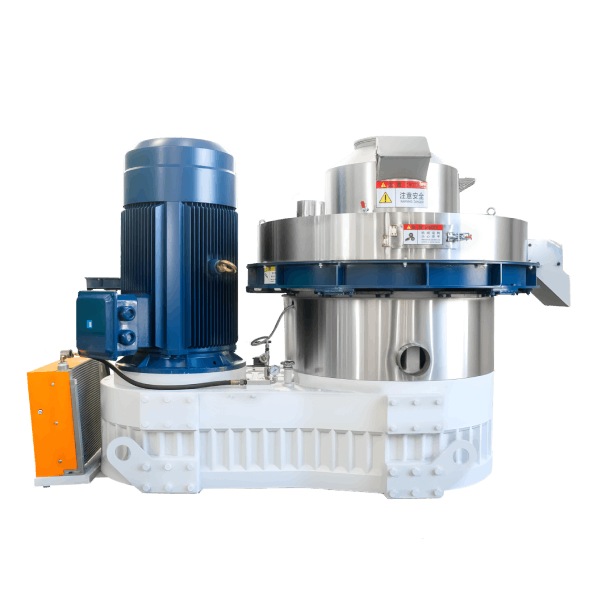
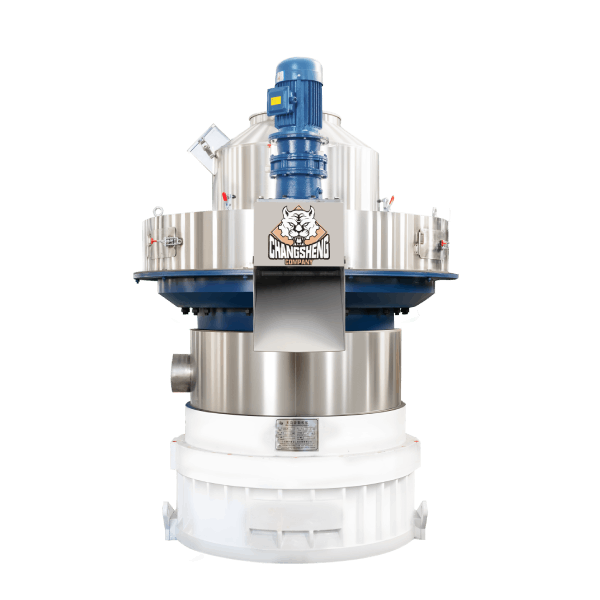
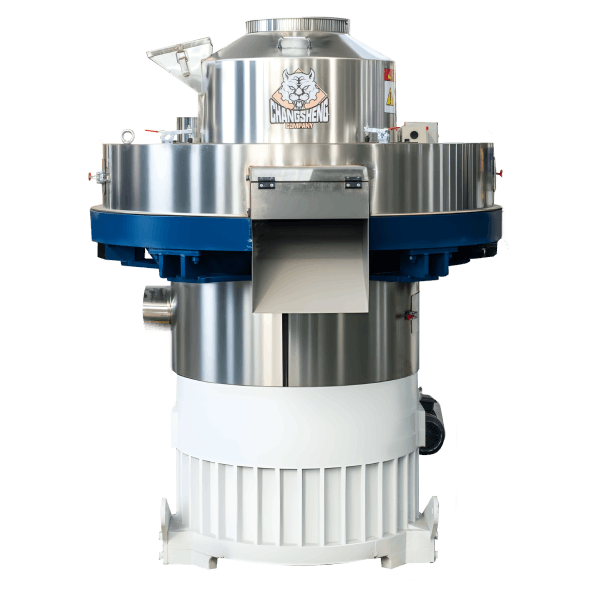
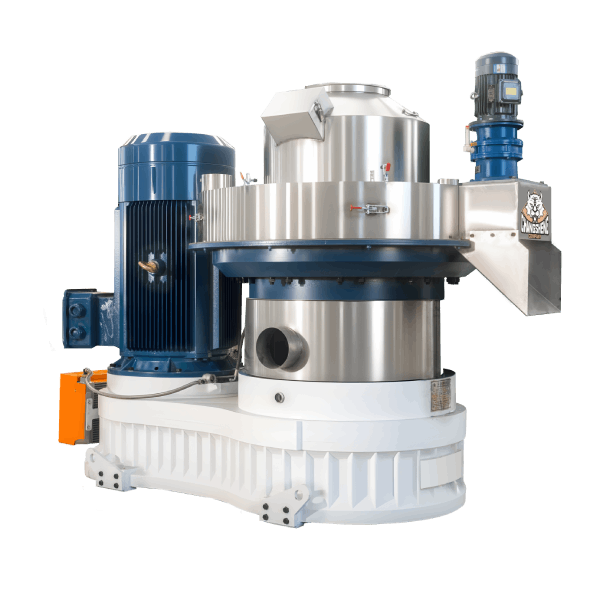
Page SEO Summary: This technical guide helps project developers and procurement professionals evaluate pellet presses for sawdust and rice husk mixtures—covering optimal blending ratios, processing parameters, equipment specifications, and strategies for producing high-quality biomass pellets from mixed feedstocks.
The global push for renewable energy has driven rapid growth in the biomass pellet industry. Two of the most abundant agricultural and wood processing residues are sawdust and rice husk. While both are widely used individually for pellet production, a growing body of research suggests that mixing these two materials offers significant advantages—improved pellet quality, optimized energy content, and better economics.
Sawdust provides excellent binding properties, high lignin content, and consistent quality. Rice husk is abundant, cheap, and has good calorific value but is notoriously difficult to pelletize alone due to its abrasive nature and high ash content. Together, these two materials can produce pellets that outperform either material alone.
This guide provides project developers, engineers, and procurement professionals with a comprehensive technical framework for evaluating and specifying a pellet press for sawdust and rice husk mixing applications.
Understanding the Raw Materials
Sawdust: The Quality Binder
Property
Typical Value
Role in Mixed Pellets
Moisture content
10-15%
Provides moisture balance
Lignin content
25-35%
Natural binder; improves pellet durability
Bulk density
200-300 kg/m³
Low density; affects storage and conveying
Ash content
0.5-2.0%
Low ash; dilutes ash from rice husk
Calorific value
17-18 MJ/kg
Moderate; higher than rice husk
Abrasiveness
Low
Easy on equipment; extends die life
Rice Husk: The Cost-Effective Filler
Property
Typical Value
Challenge in Pelleting
Moisture content
10-15%
Similar to sawdust
Lignin content
20-25%
Lower than sawdust; less natural binding
Bulk density
100-150 kg/m³
Very low; difficult to feed and compress
Ash content
15-20%
High; dilutes energy content
Silica content
15-18%
Extremely abrasive; accelerates wear
Calorific value
14-15 MJ/kg
Lower than sawdust
Abrasiveness
Very high
Shortens die and roller life
Why Mix Sawdust and Rice Husk?
The Synergy Effect
Aspect
Sawdust Alone
Rice Husk Alone
Mix (Sawdust + Rice Husk)
Pellet durability
Good
Poor
Very good (binder effect)
Ash content
Low
Very high
Acceptable (dilution effect)
Calorific value
Moderate
Low
Good (balanced)
Equipment wear
Low
Very high
Moderate (reduced)
Raw material cost
Moderate
Very low
Optimized
Availability
Limited in some regions
Abundant
Leverages both
Specific Advantages of Blending
Advantage
Mechanism
Improved pellet strength
Sawdust lignin acts as binder for rice husk particles
Higher calorific value
Sawdust increases the overall energy content
Reduced ash content
Sawdust dilutes the high ash of rice husk
Better throughput
Sawdust improves flow and compression of rice husk
Lower equipment wear
Sawdust reduces the abrasive effect of rice husk silica
Cost optimization
Rice husk is cheaper; blending reduces raw material cost
Research Findings: Optimal Blending Ratios
Recommended Mix Ratios
Application
Sawdust: Rice Husk Ratio
Rationale
Maximum durability
70:30 to 60:40
Sawdust provides sufficient binder
Best balance quality/cost
50:50
Balanced properties and cost
Maximum rice husk utilization
40:60 to 30:70
More rice husk used but quality may be compromised
Industrial combustion
30:70 to 20:80
Lower quality acceptable; cost-driven
Summary of Research
Study
Optimal Ratio
Key Finding
General recommendation
50:50
Highest pellet strength and durability
European standard (EN 14961-6)
≤50% rice husk
Ash content limits for certification
Multiple sources
70:30 to 50:50
Good balance of density, strength, and cost
Practical experience
60:40
Common in many commercial operations
Ash Content of Mixed Pellets
Blend Ratio (Sawdust:Rice Husk)
Estimated Ash Content
ENplus Category
100:0
0.5-1.5%
A1 or A2
80:20
2.5-4.0%
A2 or B
70:30
3.5-5.5%
B
60:40
5.0-7.0%
B or industrial
50:50
6.5-8.5%
Industrial only
40:60
8.0-10.5%
Industrial
Optimal Processing Parameters
Key Parameters for Mixed Feedstock
Parameter
Optimal Range
Effect on Pellets
Moisture content (feed)
10-12%
Optimal for binding and flow
Particle size
2-4 mm
Uniform particles improve quality
Pellet press temperature
80-110°C
Heat softens lignin for binding
Die compression ratio (L/D)
1:10 to 1:14
Moderate; suitable for mixed biomass
Pressure (roller adjustment)
Proper gap setting
Affects density and durability
Effect of Moisture Content on Quality
Moisture Content
Effect
<8%
Poor binding; low durability; high fines
10-12%
Optimal; best pellet quality
12-14%
Acceptable; may reduce durability
>14%
High moisture; less durable; may cause steam in die
Pellet Quality Outcomes
Quality Parameter
Expected Range
Comments
Density
1.0-1.2 g/cm³
Excellent for biomass pellets
Durability (PDI)
90-97%
Good with proper blend and parameters
Moisture (final)
8-12%
Depends on cooling
Calorific value
15-17 MJ/kg
Higher than rice husk alone
Ash content
Depends on ratio
Manageable with blend control
Equipment Requirements for Mixed Feedstock
Special Considerations for Sawdust + Rice Husk
Equipment
Special Requirement
Reason
Pellet press die
Premium material (X46Cr13 or higher)
Rice husk abrasion
Pellet press rollers
Hardened; replaceable shells
Rice husk abrasion
Motor power
1.1-1.2× standard
Mixed materials require more energy
Feeder
Variable speed; anti-bridging design
Rice husk has poor flow characteristics
Conditioner
Recommended
Pre-heating improves binding
Pellet Press Configuration for Mixed Feedstock
Specification
Recommended Value
Why
Die compression ratio
1:10 to 1:14
Moderate for mixed biomass
Die hole diameter
6-8 mm
Standard biomass pellet size
Die material
Premium alloy steel
Wear resistance for rice husk
Roller type
Heavy-duty with shell
Easier maintenance
Power
90-160 kW (for 2-5 t/h)
Based on typical capacity
Conditioning
Yes (steam or heat)
Improves lignin activation
Complete Process Flow for Mixed Feedstock
Step-by-Step Process
Stage
Equipment
Parameter
Purpose
Raw material storage
Bins for sawdust and rice husk
—
Separate storage
Weighing/Proportioning
Weigh belts or screw feeders
Based on desired blend
Accurate ratio control
Mixing
Ribbon or paddle mixer
3-5 minutes mixing time
Homogeneous blend
Drying
Dryer
10-12% moisture
Achieve optimal moisture
Milling
Hammer mill
2-4 mm particle size
Uniform size
Conditioning
Conditioner
80-90°C
Soften lignin
Pelletizing
Pellet press
80-110°C; proper pressure
Form pellets
Cooling
Counterflow cooler
Ambient
Stabilize pellets
Screening
Fines screen
—
Remove fines
Packaging
Bagging system
—
Final product
Quality Considerations and Market Applications
ENplus Certification for Mixed Pellets
Blend
ENplus Qualification
Key Limitation
100% sawdust
A1 possible
Material dependent
80% sawdust / 20% rice husk
A2 or B
Ash content and durability
70% sawdust / 30% rice husk
B typically
Ash content >3%
50% sawdust / 50% rice husk
Industrial
Ash content >6%
Market Applications
Application
Suitable Blend
Quality Requirement
Residential heating (Europe)
≥70% sawdust
ENplus A1 or A2
Industrial combustion
Any blend
Consistent quality; low moisture
Power generation
Any blend (high volumes)
Bulk supply; stable quality
Local/regional market
Any blend
Variable by region
Economic Considerations
Cost Advantage
Factor
Savings Advantage
Rice husk price
Typically 30-50% cheaper than sawdust
Blend optimization
Achieve quality at lower raw material cost
Waste utilization
Both materials are often waste streams
Volume advantage
More feedstock means more pellets
Typical Costs by Region
Region
Sawdust Cost (per ton)
Rice Husk Cost (per ton)
Savings at 50:50
Southeast Asia
$30-50
$10-20
30-50% material cost reduction
South Asia
$20-40
$5-15
30-50% material cost reduction
North America
$40-80
$15-30
25-40% material cost reduction
Europe
$50-100
$20-40
20-40% material cost reduction
Procurement Checklist: Pellet Press for Sawdust and Rice Husk Mix
Optimal blend ratio determined (based on economics and quality target)
Equipment Specifications
Pellet press with premium die material specified
Die compression ratio appropriate for mixed feed (1:10 to 1:14)
Motor power adequate for mixed materials
Feeder designed for material flow characteristics
Conditioner included for pre-heating
Hammer mill with hardened components
Mixing equipment included for homogenization
Process Parameters
Mixing ratio determined and documented
Moisture target: 10-12%
Particle size target: 2-4 mm
Temperature target: 80-110°C
Quality targets (density, durability, ash) established
Supplier Evaluation
Supplier has experience with mixed feedstocks
References from similar projects
Ability to supply complete line
Understanding of quality requirements
Frequently Asked Questions
1. What is the best mixing ratio for sawdust and rice husk pellets?
For the best balance of quality and cost, a 60:40 to 70:30 sawdust-to-rice-husk ratio is recommended. This provides good pellet durability while maximizing the use of lower-cost rice husk. For ENplus certification, stay at or below 70:30 to meet ash content requirements.
2. Why does rice husk cause more wear on pellet presses?
Rice husk contains 15-18% silica (SiO₂), which is highly abrasive. This silica accelerates wear on the die, rollers, hammers, and screens. Mixing with sawdust reduces the overall abrasiveness because the softer sawdust dilutes the silica concentration.
3. What moisture content is optimal for sawdust and rice husk mix?
The optimal moisture content for the mixed feedstock is 10-12%. Below 8%, binding is poor and pellet durability decreases. Above 14%, pellets may be less durable and steam can form inside the die.
4. Can sawdust and rice husk mix pellets meet ENplus standards?
Yes, but with limitations. Blends with high rice husk content (>20-30%) may not meet the ash content requirements for ENplus A1 or A2. Industrial-grade pellets (B class or lower) are achievable with higher rice husk content.
5. What is the calorific value of sawdust and rice husk mixed pellets?
The calorific value depends on the blend ratio. For a 50:50 mix, the calorific value is typically 15-17 MJ/kg. A 70:30 (sawdust:rice husk) mix achieves 16-17.5 MJ/kg.
6. What is the ash content of mixed pellets?
Ash content depends on the ratio. A 100% sawdust pellet has 0.5-1.5% ash. At 50:50 mix, ash content is approximately 6.5-8.5%. The high ash from rice husk is diluted but still present.
7. Is drying required for the mixed feedstock?
Yes, if the raw materials have moisture above 12%. Rice husk and sawdust may require drying depending on source and storage conditions. Drying is one of the most significant operating costs in pellet production.
8. What is the typical production capacity for mixed feed pelleting?
Production capacity depends on the pellet press size. A typical industrial pellet press with 90-132 kW motor can produce 2-5 t/h of mixed sawdust and rice husk pellets. Output may be slightly lower than pure sawdust due to the different flow characteristics of rice husk.
Zhang Wei has over 12 years of experience in the biomass and feed pellet mill industry, with a background in mechanical engineering and international project execution. He has managed pellet mill supply projects for clients across Southeast Asia, the Middle East, Africa, Europe, and Latin America, including extensive experience with mixed feedstock applications.
With hands-on experience in both the manufacturing workshop and client-side operations, Zhang brings practical insights into successful equipment procurement—from the factory floor to the customer’s production site.