Pellet Machine Final Pellet Diameter 6mm 0.5-5t/h | Specs Guide
News 2026-06-22
Product Definition
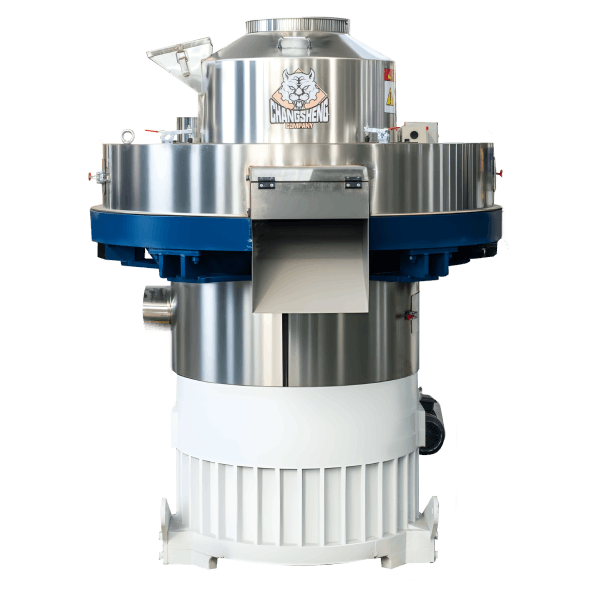
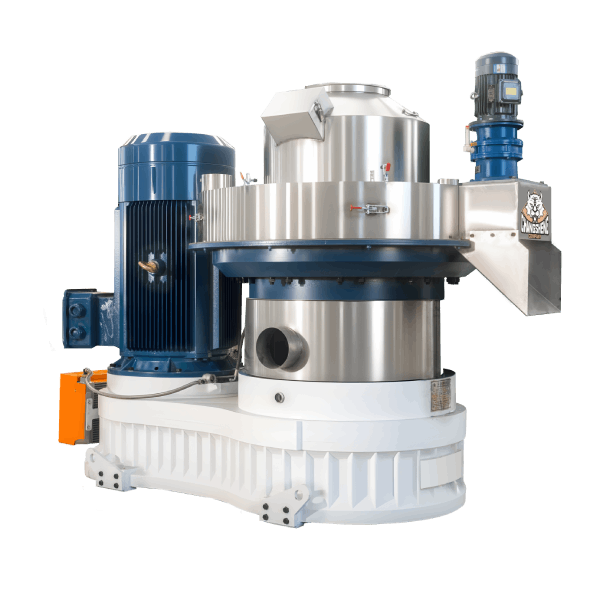
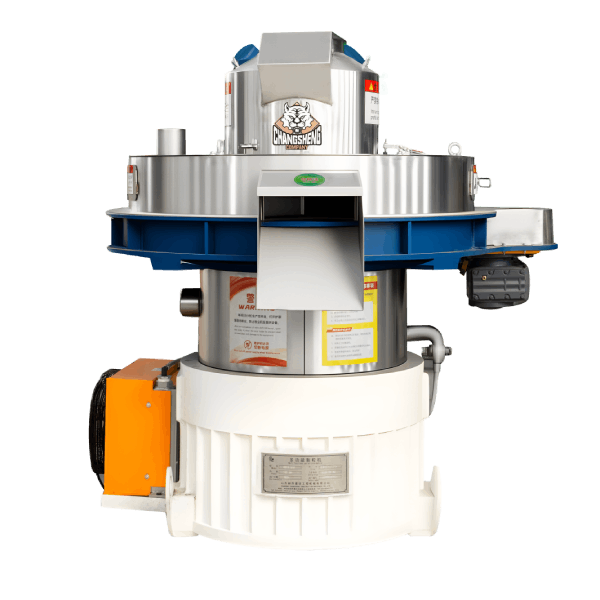
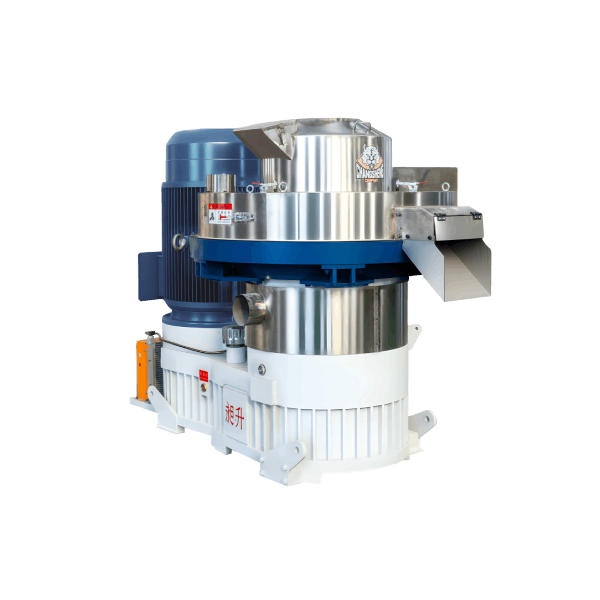
A pellet machine final pellet diameter 6mm refers to a mechanical compaction system that converts biomass residues, feed ingredients, or agricultural by-products into cylindrical pellets with a finished diameter of 6 millimetres. The 6mm pellet size is a standard specification for poultry feed, swine feed, and certain biomass fuel applications, providing optimal balance between production efficiency and end-use digestibility.
Technical Specifications & Performance Parameters
| Parameter | Value Range / Specification |
|---|---|
| Throughput capacity | 0.5 – 5.0 t/h (feedstock-dependent) |
| Main motor power | 55 – 160 kW (IE3 / IE4 compatible) |
| Ring die inner diameter | 400 – 800 mm |
| Final pellet diameter | 6.0 mm ± 0.1 mm |
| Pellet length | 15 – 30 mm (adjustable via cutter) |
| Pellet bulk density | 600 – 750 kg/m³ |
| Pellet durability index (PDI) | ≥ 95% (for 6mm poultry feed) |
| Raw material moisture | 12% – 18% (optimal: 14% – 16%) |
| Specific energy consumption | 28 – 35 kWh/t |
| Die hole count (6mm) | 800 – 2,500 holes (die size dependent) |
| Core wear parts service life | Ring die: 800 – 1,200 h; Roller shells: 600 – 900 h |
| Scheduled maintenance man-hours | 4 – 6 h / month |
Structural Composition & Material Selection
The 6mm pellet machine integrates four functional subsystems with defined material grades:
Mechanical System
- Ring die: Forged alloy steel (20CrMnTi) with carburised hardening layer (HRC 58–62) – precision-drilled with 6.0mm holes
- Roller shells: High-chromium cast iron (Cr26) with wear-resistant overlay
- Main shaft: Heat-treated 42CrMo4 steel with induction-hardened journals
- Gearbox: Helical-gear configuration, case-hardened to HRC 58–60
- Cutter assembly: Adjustable for pellet length control (15–30mm)
Die Hole Specifications
- Hole diameter: 6.0 mm (finished pellet size)
- Hole tolerance: ±0.05 mm
- Compression ratio: 1:6 to 1:10 (feedstock dependent)
- Hole pattern: Concentric rings with staggered arrangement
- Inlet taper: 30°–45° for optimal material entry
Support System
- Bearing housings: Ductile cast iron (QT600-3) with precision-machined seating
- Base frame: Welded structural steel, stress-relief annealed, with vibration-damping mounts
Lubrication System
- Centralised grease lubrication for bearings (NLGI grade 2)
- Forced oil circulation for gearbox (ISO VG 460) with temperature monitor
Control System
- PLC with HMI touchscreen for process monitoring
- Cutter speed control (variable) for pellet length adjustment
- Die temperature monitoring
Manufacturing Process – Engineering Workflow
Step 1 – Raw Material Preparation & Grinding
Hammer mill with 2.0–3.0 mm screen for feed (particle size ≤ 1/3 of pellet diameter – max 2.0mm for 6mm pellets). Magnetic separator removes ferrous contaminants. Moisture adjusted to 14%–16%.
Step 2 – Conditioning & Steam Treatment
Double-shaft paddle conditioner with steam injection at 0.2–0.4 MPa. Retention time 45–60 seconds. Mash temperature elevated to 80–95°C for starch gelatinisation. Proper conditioning critical for 6mm pellet durability.
Step 3 – Pelletising (Core Forming Process)
Main motor drives ring die rotation at 4–8 m/s peripheral speed. 6mm die holes form pellets under roller compression. Roller gap maintained at 0.15–0.30 mm. Cutter blades trim pellets to 15–30mm length.
Step 4 – Counterflow Cooling
Ambient air drawn counter-current through pellet bed. Retention time 6–10 minutes. 6mm pellets cool to ambient +5°C. Final moisture ≤12% for storage stability.
Step 5 – Screening & Bagging
Vibrating screener (top deck: 8mm retains oversize; bottom deck: 4mm removes fines). 6mm pellets pass through 8mm screen and are retained on 4mm screen. Automatic bagging scale with ±0.2% tolerance.
Industry Comparison – Alternative Pellet Diameters
| Pellet Diameter | Typical Application | Capacity (t/h) | PDI | Energy (kWh/t) |
|---|---|---|---|---|
| 6mm Pellet | Poultry feed, swine feed, small biomass | 0.5 – 5.0 | ≥95% | 28 – 35 |
| 4mm Pellet | Aquafeed, starter feeds, pet food | 0.3 – 3.0 | ≥94% | 30 – 38 |
| 8mm Pellet | Cattle feed, dairy, medium biomass | 0.8 – 6.0 | ≥93% | 26 – 33 |
| 10mm Pellet | Ruminant feed, industrial biomass | 1.0 – 7.0 | ≥90% | 24 – 31 |
| 12mm Pellet | Large ruminant, power generation | 1.2 – 8.0 | ≥88% | 23 – 30 |
Differentiation (Shandong Changsheng Machinery):
Our 6mm die is precision-drilled with CNC equipment – ensuring hole diameter tolerance of ±0.05mm and consistent pellet size. The staggered hole pattern maximises die strength while maintaining optimal open area (35%–45% of die face). Specialised inlet taper geometry (30°–45°) reduces friction and extends die life. Each die is hardness-tested (HRC 58–62) to ensure consistent wear resistance across the entire die face.
Application Scenarios by Buyer Role
Distributors / Importers
Focus on 6mm die compatibility with local poultry and swine feed formulations. Require die life data and replacement schedules for customer planning.
EPC Contractors
Integrating the 6mm pellet machine into complete feed mill lines. Need die specifications and pellet quality data for process design.
Engineering Consultants / Technical Advisors
Evaluate 6mm pellet quality – PDI, density, and uniformity for specific applications. Require die hole geometry and conditioning parameter optimisation.
End-user Production Facilities
Producing poultry and swine feed with consistent 6mm pellet size. Demand high PDI (>95%) to minimise fines during transport and handling.
Core Pain Points & Engineering Solutions
Pain Point 1 – Inconsistent pellet diameter (4.8–6.2mm variation)
Root cause: Worn or imprecise die holes, uneven die wear, or inconsistent conditioning causing die hole deformation.
Solution: CNC-drilled 6mm holes with ±0.05mm tolerance. Hardened die maintains hole geometry for 800–1,200 hours. Regular die inspection prevents out-of-tolerance production.
Pain Point 2 – Low pellet durability (PDI <90%)
Root cause: Insufficient compression ratio, improper conditioning (temperature/moisture), or excessive die speed.
Solution: 1:6–1:10 compression ratio matched to feedstock. Steam conditioning at 80–95°C with 14%–16% moisture. Peripheral speed 4–6m/s for optimal 6mm pellet formation.
Pain Point 3 – Excessive fines ( >5%)
Root cause: Improper cooling, weak pellet structure, or mechanical handling damage.
Solution: Counterflow cooling with 6–10 minute retention. PDI testing to confirm >95% before bagging. Gentle screening with 4mm and 8mm decks.
Pain Point 4 – Die hole blockage
Root cause: Inconsistent grind particle size (>2mm), excessive moisture (>18%), or foreign materials.
Solution: Ensure grind particle size ≤2mm (1/3 of pellet diameter). Maintain moisture at 14%–16%. Install magnetic separator and pre-screener.
Critical Risk Warnings & Mitigation Measures
Risk 1 – Incorrect die compression ratio for feedstock
Mitigation: Test feedstock with lab analysis. Select compression ratio 1:6 for high-oil feeds, 1:8–1:10 for high-starch feeds. Consult factory for recommendation.
Risk 2 – Heat damage to 6mm pellets during conditioning
Mitigation: Monitor die temperature (≤85°C). Reduce steam pressure if pellets show surface cracking or darkening. Aim for pellet temperature ≤80°C at die exit.
Risk 3 – Die hole wear exceeding 6.2mm tolerance
Mitigation: Measure pellet diameter weekly. Replace die when average diameter exceeds 6.2mm or PDI drops below 92%. Track die life hours for predictive replacement.
Procurement Selection Guide – 7 Executable Steps
Step 1 – Confirm 6mm pellet specification for your market
Verify customer requirements – poultry feed typically 6mm, pig grower 6mm, some biomass applications also 6mm.
Step 2 – Select appropriate compression ratio
For feed (starch-based): 1:6–1:8. For biomass (fibrous): 1:8–1:10. Consult factory for specific formulation.
Step 3 – Determine die hole pattern and open area
Standard staggered pattern with 35%–45% open area. Higher open area = higher capacity but lower die strength.
Step 4 – Specify grind particle size requirement
For 6mm pellets, hammer mill screen ≤2.0mm (max 1/3 of pellet diameter). Confirm your grinding equipment can achieve this.
Step 5 – Verify conditioning system capacity
6mm feed requires proper steam conditioning. Confirm steam generator capacity (minimum 100–150kg steam/hour per tonne pellet).
Step 6 – Plan for pellet length control
Cutter assembly adjusts pellet length (15–30mm). Specify variable-speed cutter motor for length flexibility.
Step 7 – Establish quality control procedures
Implement pellet diameter measurement (weekly), PDI testing (monthly), and die inspection (monthly). Document all quality data.
Engineering Case Study – Poultry Feed Mill in Indonesia
Project Background
A poultry feed mill in West Java produces 3.2 t/h of broiler finisher feed – requiring 6mm diameter pellets with minimum PDI of 94%.
Initial Problem
Pellet diameter varied from 5.6mm to 6.4mm – exceeding customer specification of ±0.2mm. PDI averaged 91.2% – below the 94% minimum, resulting in 8% customer rejection rate.
Root Cause Analysis
Die hole wear from silica in maize (SiO₂ ~2.5%) caused hole enlargement to 6.4mm after 600 hours. Inconsistent conditioning (temperature 70–85°C) resulted in weak pellet structure. Grind particle size was 2.5mm – too coarse for 6mm pellets.
Solution Implemented
Replaced die with Shandong Changsheng 6mm CNC-drilled die (tolerance ±0.05mm, HRC 60). Upgraded conditioner controls to maintain 85–90°C. Reduced hammer mill screen from 3.0mm to 2.0mm. Implemented weekly pellet diameter measurement.
Final Data Results (12-month average)
| Metric | Before (Standard Die) | After (Precision 6mm Die) |
|---|---|---|
| Pellet diameter variation | ±0.38mm | ±0.08mm |
| PDI (pellet durability) | 91.2% | 96.4% |
| Customer rejections (annual) | 8.2% | 1.3% |
| Die life | 620 h | 980 h |
| Specific energy | 34.5 kWh/t | 31.2 kWh/t |
| Annual savings (reduced rejects) | – | $18,400 |
Frequently Asked Questions (FAQ)
1. What throughput can I expect with 6mm pellet diameter?
0.5–5.0 t/h depending on die size, motor power, and feedstock. Typical poultry feed: 1.0–3.0 t/h at 6mm.
2. What grind size is required for 6mm pellets?
Particle size ≤2.0mm (maximum 1/3 of pellet diameter). Use 2.0–2.5mm hammer mill screen.
3. What is the recommended conditioning temperature?
80–95°C for feed. Higher temperature improves starch gelatinisation and pellet durability.
4. What is the optimal compression ratio for 6mm feed?
1:6–1:8 for standard feed. Higher ratio (1:8–1:10) for fibrous biomass or low-starch formulations.
5. How long does a 6mm die last?
800–1,200 hours depending on feedstock abrasiveness and maintenance. Measure pellet diameter monthly to detect wear.
6. What is the typical pellet length for 6mm diameter?
15–30mm, adjustable via cutter assembly. Standard for poultry is 20–25mm.
7. What is a good PDI for 6mm pellets?
≥95% for poultry feed. Lower PDI indicates poor pellet quality.
8. Can I produce both 4mm and 6mm pellets on the same machine?
Yes – by changing the die. Quick-change die system allows changeover within 45 minutes.
9. What causes 6mm pellets to break during transport?
Insufficient conditioning, improper cooling, or excessive handling. Target PDI >95% and moisture <12%.
10. How do I clean a 6mm die?
Use steam cleaning or soak in warm water. Avoid abrasive methods that enlarge holes. Compressed air after cleaning.
11. What is the specific energy consumption for 6mm pellets?
28–35 kWh/t depending on feedstock and die compression ratio.
12. Can 6mm pellets be used for poultry all stages?
6mm is suitable for grower/finisher poultry. Starter feeds require 3–4mm. Consult nutritionist for specific recommendation.
Author & E-E-A-T Credentials
Author: Dr. Chen Wei
Title: Senior Mechanical Engineer, Pelletising Systems Division
Experience: 14 years in biomass densification and feed processing equipment design
Notable Projects:
- Commissioned 25+ pellet lines with 4mm, 6mm, and 8mm die configurations across Southeast Asia (2016–2025)
- Developed die hole geometry optimisation protocol for feed durability improvement
- Co-author of “Industrial Pellet Mill Maintenance and Optimisation” (Engineering Press, 2022)
Affiliation: Shandong Changsheng Machinery Co., Ltd.