Pellet machine actual capacity vs advertised Guide
News 2026-03-02
Pellet Machine Actual Capacity vs Advertised: Engineering Evaluation and Procurement Strategy
Product Definition
Pellet machine actual capacity vs advertised refers to the measurable production output under real operating conditions compared with the nominal or promotional capacity declared by manufacturers. The difference arises from raw material variability, compression ratio, motor loading, and testing methodology used to define rated performance.
Introduction
For procurement managers, EPC contractors, and industrial investors, understanding pellet machine actual capacity vs advertised is critical to plant profitability. Capacity discrepancies directly affect ROI, energy consumption per ton, delivery schedules, and financial projections.
Manufacturers often publish rated output under optimized laboratory conditions. However, real-world performance depends on raw material moisture, particle size distribution, die condition, operator skill, and electrical stability. This article provides an engineering-based framework to evaluate pellet machine actual capacity vs advertised using measurable criteria.
Technical Parameters and Realistic Performance Benchmarks
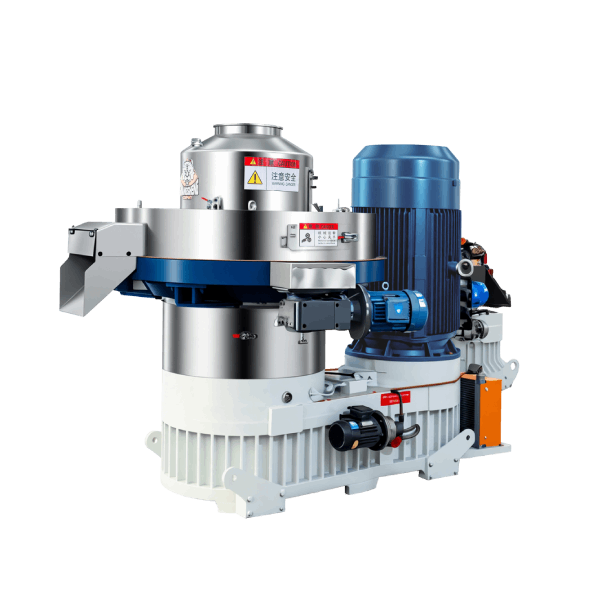
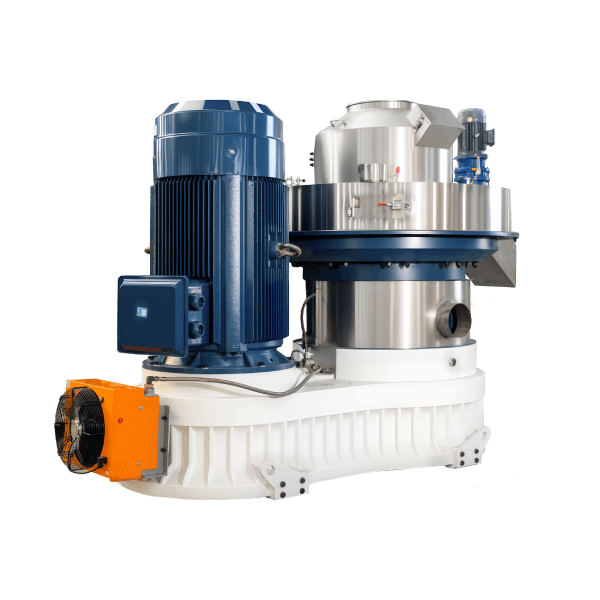
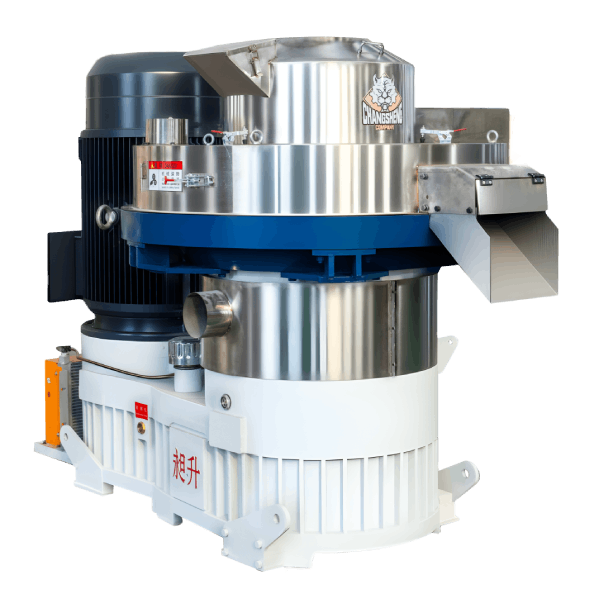
To properly assess pellet machine actual capacity vs advertised, buyers must compare standardized parameters. Typical industrial ring die pellet machine specifications include:
Ring Die Diameter: 420–560 mm
Main Motor Power: 90–250 kW
Rated Capacity: 1–5 tons/hour
Optimal Moisture Range: 12–15%
Bulk Density of Raw Material: 150–250 kg/m³
Energy Consumption: 75–105 kWh/ton
Continuous Operation Load: 85–95% rated current
In practice, pellet machine actual capacity vs advertised may differ by 5–20% depending on raw material consistency and testing duration.
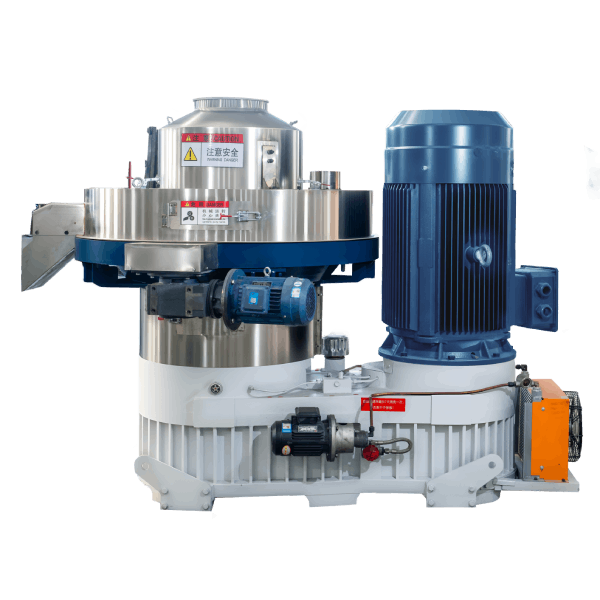
Structure and Material Composition
Output stability is linked to machine structure and material quality.
Main Drive System
• High-torque helical gear reducer
• Alloy steel gears with surface hardening
• Forced oil lubrication system
Pelletizing Chamber
• Ring die (4Cr13 stainless alloy steel, hardness HRC 52–55)
• Press rollers with replaceable sleeves
• Adjustable roller clearance system
Feeding System
• Variable frequency feeder
• Stainless steel conditioner (if included)
• Load monitoring sensor
Cooling and Discharge
• Counterflow cooler
• Vibrating screening system
Mechanical wear or improper configuration contributes significantly to pellet machine actual capacity vs advertised discrepancies.
Manufacturing and Operating Process
- Raw Material Preparation
Equipment: Hammer mill
Target size: ≤5 mm
Oversized particles increase die resistance and reduce throughput. - Drying
Equipment: Rotary dryer
Target moisture: 12–15%
Moisture above 18% decreases compression efficiency. - Pelletizing
Equipment: Ring die pellet machine
Compression ratio: 1:5–1:8 depending on material
Improper die selection leads to reduced actual capacity. - Cooling and Screening
Equipment: Counterflow cooler
Recycle rate should remain below 5% to maintain stable net output.
Each step directly influences pellet machine actual capacity vs advertised in operational environments.
Industry Comparison
| Factor | Laboratory Test Condition | Industrial Continuous Production |
|---|---|---|
| Raw Material Uniformity | High | Variable |
| Moisture Control | Strict | Fluctuating |
| Operation Duration | 1–2 hours | 8–24 hours |
| Operator Adjustment | Expert technician | Standard operator |
| Reported Capacity | Maximum peak | Average stable |
This comparison explains why pellet machine actual capacity vs advertised values may differ across suppliers.
Core Pain Points and Engineering Solutions
- Inflated Laboratory Testing
Issue: Capacity measured during short peak performance tests.
Solution: Require 4–8 hour continuous production test reports. - Non-Representative Raw Materials
Issue: Testing conducted with low-resistance materials.
Solution: Conduct test runs using buyer’s actual raw materials. - Overestimated Motor Power Utilization
Issue: Rated motor installed but not fully loaded under normal operation.
Solution: Verify operating current reaches 85–95% of rated value during test. - Incorrect Compression Ratio
Issue: Standard die supplied without material-specific optimization.
Solution: Customize die compression ratio according to fiber type and bulk density. - Poor Cooling Efficiency
Issue: High recycle rate reduces net output.
Solution: Ensure cooling system capacity matches pelletizer output.
Understanding these factors narrows the gap between pellet machine actual capacity vs advertised.
Risk Warnings and Avoidance Strategies
• Do not rely solely on catalog specifications.
• Avoid suppliers unwilling to provide full-load testing data.
• Be cautious of extremely high capacity claims relative to motor power.
• Consider long-term die wear and maintenance impact on actual output.
• Evaluate energy consumption per ton rather than peak hourly capacity.
Failure to analyze pellet machine actual capacity vs advertised can lead to 15–25% lower daily production than planned.
Procurement and Selection Guide
Step 1: Define required daily production based on 20-hour effective operation, not 24 hours.
Step 2: Calculate expected hourly output including 10% downtime allowance.
Step 3: Request continuous production test video and recorded data logs.
Step 4: Verify raw material parameters used during testing.
Step 5: Compare energy consumption per ton across suppliers.
Step 6: Inspect gearbox torque rating relative to die diameter.
Step 7: Confirm after-sales technical support and spare parts availability.
Step 8: Include capacity performance clause in purchase contract.
These steps reduce uncertainty related to pellet machine actual capacity vs advertised performance.
Engineering Case Study
Project: 4 t/h Biomass Fuel Production Line
Location: Southeast Asia
Raw Material: Mixed hardwood sawdust
Supplier Advertised Capacity: 4 t/h
Measured Initial Output: 3.2 t/h
Diagnosis Findings
• Moisture fluctuation from 13% to 17%
• Compression ratio not optimized for hardwood density
• Cooling recycle rate at 9%
Corrective Measures
• Installed online moisture sensor
• Replaced die with adjusted compression ratio (1:7)
• Upgraded cooler airflow system
Final Stable Output: 4.1 t/h
Energy Consumption Reduced from 101 to 89 kWh/ton
This example illustrates how pellet machine actual capacity vs advertised gaps can be resolved through engineering adjustments rather than equipment replacement.
Application Scenarios
Distributors
Evaluate supplier claims before promoting products in competitive markets.
EPC Contractors
Integrate real capacity validation into commissioning protocols.
Engineering Consultants
Incorporate realistic throughput assumptions into feasibility studies.
Importers and Wholesalers
Select machines with verifiable test data to reduce warranty disputes.
FAQ
- Why does actual capacity differ from advertised?
Because advertised values often represent peak laboratory performance. - What is acceptable deviation?
Within 5–10% under standardized raw material conditions. - How long should a capacity test run?
Minimum 4 continuous hours. - Does moisture impact capacity significantly?
Yes, above 18% reduces throughput. - Is higher motor power equal to higher output?
Not always; torque transmission and die design matter. - Should contracts include capacity guarantees?
Yes, based on defined raw material parameters. - How to measure real output?
Weigh finished pellets over timed production intervals. - Does die wear reduce capacity?
Yes, worn die holes reduce compression efficiency. - Is energy consumption linked to capacity gap?
Yes, unstable capacity increases kWh per ton. - Can process optimization recover lost capacity?
Often yes, without major hardware changes.
Request Technical Documentation or Quotation
For detailed evaluation of pellet machine actual capacity vs advertised performance, provide your required daily capacity, raw material type, moisture percentage, and power supply conditions. Our engineering team will supply structured capacity verification guidance, test standards, and formal quotations based on realistic production scenarios.
Authoritative Industry Background (E-E-A-T)
This technical analysis is prepared by senior mechanical engineers with over 15 years of experience in biomass pellet plant design, commissioning, and industrial capacity optimization. The team has supervised capacity testing across Asia, Europe, and the Middle East, focusing on measurable performance validation and lifecycle cost control for industrial pellet production facilities.