Pellet Mill Not Making Pellets: 10 Common Causes & Fixes
News 2026-04-29
1. Product Definition
A pellet mill fails to make pellets when prepared biomass passes through the die without forming solid cylinders, typically due to incorrect moisture (too wet or dry), excessive roller gap, worn die holes, or inadequate compression ratio for the feedstock.
2. Technical Parameters & Specifications
| Parameter | Correct Range | Problematic Range |
|---|---|---|
| Raw Material Moisture (%) | 13 – 18 | <10 (too dry) or >20 (too wet) |
| Roller-to-Die Gap (mm) – Ring Die | 0.1 – 0.3 | >0.5 (too loose) or <0.05 (contact) |
| Roller-to-Die Gap (mm) – Flat Die | 0.2 – 0.5 | >0.8 (too loose) |
| Die Temperature (°C) | 80 – 110 | <60 (too cold) or >120 (overheating) |
| Particle Size (% passing 6mm) | >95% | <80% (too coarse) |
| Compression Ratio (L/D) – Softwood | 1:4 – 1:6 | <1:3 (too low) |
| Compression Ratio – Hardwood | 1:6 – 1:8 | <1:5 (too low) |
| Motor Load (% of FLA) | 85 – 95% | <60% (underfed) or >100% (overload) |
For technical support: Request a troubleshooting checklist for your specific mill model.
3. Structure & Material Composition
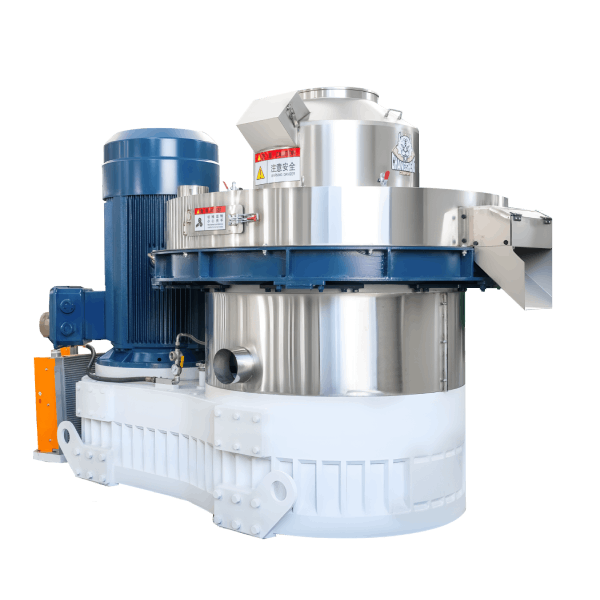
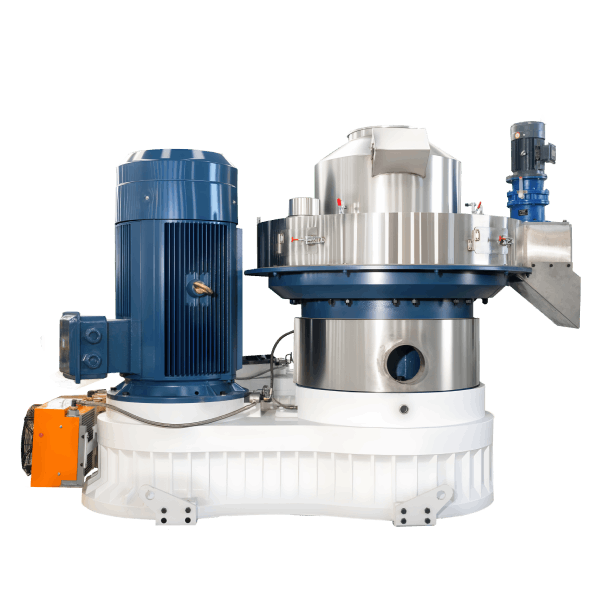
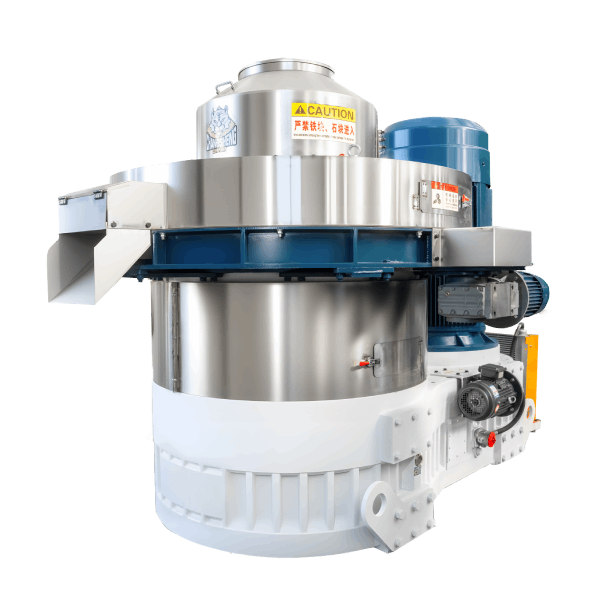
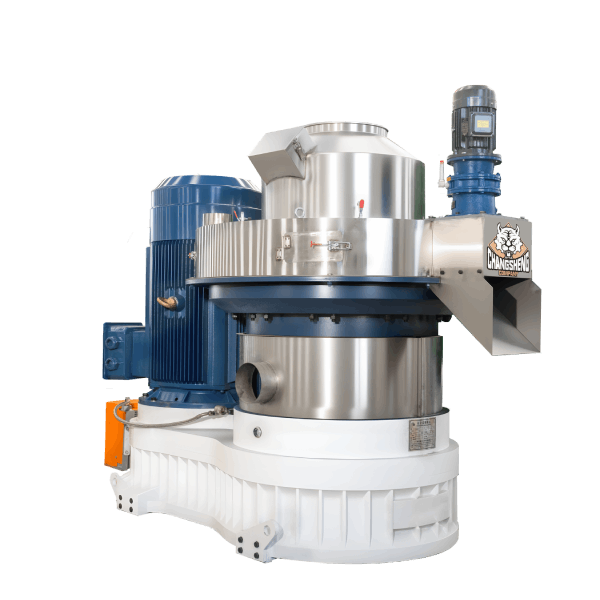
Components to Check When Pellet Mill Not Making Pellets
Material Feed System
- Hopper: Material bridging or blockage
- Screw feeder (if equipped): Proper rotation, variable speed function
- Magnets: Clean (tramp metal can block die)
Compression Zone (Die & Rollers)
- Roller gap: Too loose (material slips, no compression) vs too tight (metal contact, damage)
- Die holes: Blocked (wet material, fines) or worn (oval shape)
- Die surface: Grooves, cracks, or polished (worn smooth)
Drive System
- Belts: Slipping (glazed, loose)
- Motor: Running at correct RPM, drawing amps
- Gearbox: Unusual noise (possible failure)
Control System
- Amp meter: Shows motor load
- Feeder speed setting (if VFD equipped)
4. Manufacturing Process (Engineering Steps)
Step 1 – Material Preparation (Pre-Mill) – Most Common Cause
Equipment: Moisture meter, hammer mill, dryer
Problem: 70% of “not making pellets” issues are material-related.
Checklist: Moisture 13-18%? Particle size 95% <6mm? Material free from contaminants?
Step 2 – Feeding
Equipment: Screw feeder or gravity hopper
Problem: Underfeeding (motor load <60%) or overfeeding (motor trips).
Checklist: Material flowing freely (no bridging)? Feeder speed correct?
Step 3 – Compression (Die & Rollers) – Second Most Common
Equipment: Feeler gauge, roller adjustment mechanism
Problem: Roller gap too wide (material not gripped). Die holes blocked or worn.
Checklist: Roller gap 0.1-0.3mm (ring die). Die holes clear, not oval.
Step 4 – Extrusion
Equipment: Die, rollers, cutting knife
Problem: Material extrudes but falls apart (too wet/dry, wrong compression ratio).
Checklist: Pellet density, temperature at exit.
Step 5 – Cooling (Post-Mill)
Equipment: Cooler (if equipped)
Problem: Pellets crack after cooling (moisture gradient).
Checklist: PDI (pellet durability index) testing.
5. Industry Comparison
| Parameter | Normal Operation | Common Failure Modes | Critical Failure |
|---|---|---|---|
| Pellet formation | Solid, dense cylinders | No pellets (dust/chunks) | Motor trips, no rotation |
| Motor load (% FLA) | 85-95% | <60% (underfed) or >100% (overload) | 0% or tripped |
| Die temperature | 80-110°C | <60°C (cold) or >120°C (fire risk) | Smoke/fire |
| Pellet exit | Continuous steady flow | Sporadic, no flow | Blocked |
| Why Choose Shandong Changsheng | Technical support included | Diagnostic guide available | Emergency support available |
Compare failure modes: Request a detailed troubleshooting flowchart.
6. Application Scenarios (By Buyer Role)
Distributors / Importers
Need pellet mill not making pellets diagnostic guide to support customers without on-site technicians. Decision focus: clear symptom-to-cause tables, photos, and remote support.
EPC Contractors
Require troubleshooting documentation for plant operators. Decision focus: systematic procedures to minimize downtime.
Engineering Consultants / Technical Advisors
Advising clients on operator training. Decision focus: common mistakes and prevention.
End-user Facilities (Pellet plants, farms, feed mills)
Training operators to diagnose and fix production stoppage quickly. Decision focus: step-by-step checklist, remote support access.
7. Core Technical Pain Points & Engineering Solutions
Pain Point 1 – Material Too Wet (>20% Moisture)
Symptom: Pellet mill not making pellets – material comes out as soft, mushy chunks that fall apart. Steam appears at die exit.
Root cause: Feedstock moisture above 20% creates excess steam, expands pellets, then cracks.
Solution: Test moisture with meter (reject >18%). Dry material: sun dry (2-5 days) or use dryer. Mix wet material with dry (1:1 ratio). Target 13-18% moisture.
Pain Point 2 – Material Too Dry (<10% Moisture)
Symptom: Pellet mill not making pellets – dust comes out of die, no pellet formation. Die may overheat, smoke, risk fire.
Root cause: Insufficient moisture for steam binding. Dry material also lacks lubrication.
Solution: Add water (spray while mixing). Target 13-18% moisture. Use moisture meter per batch. Never run below 10% moisture – fire risk.
Pain Point 3 – Roller Gap Too Wide (>0.5mm ring die)
Symptom: Motor runs, material enters die area, but little or no pellet exit. Rollers slip (no grip).
Root cause: Gap larger than particle size – rollers ride over material instead of compressing.
Solution: Adjust roller gap to 0.1-0.3mm (ring die) using feeler gauge. Check all rollers equally. Mark positions for repeatability. Check gap weekly.
Pain Point 4 – Die Holes Blocked (Wet Material or Fines)
Symptom: Pellet mill not making pellets – motor load increases, then trips. No output.
Root cause: Wet material (above 20%) or fines (<3mm) compact in die holes, block completely.
Solution: Run oil-soaked sawdust (20kg diesel/vegetable oil per 200kg sawdust) through mill 10-15 minutes. If still blocked, remove die, soak in water, use compressed air. Never drill out holes.
Pain Point 5 – Die Holes Worn (Oval Shape)
Symptom: Pellets become loose, low density, often cracked. Output drops gradually.
Root cause: Die worn beyond tolerance (holes oval from abrasive feedstock).
Solution: Measure output (kg/h) weekly. Replace die when output drops 20% below baseline. Track tons per die to predict replacement.
8. Risk Warnings & Mitigation Strategies
Risk 1 – Fire from Over-Dried Material (<8% Moisture)
Warning: Dry material ignites from friction. Die temperature can exceed 150°C. Fire spreads to dust collection.
Mitigation: Test moisture before every batch (never skip). Install die temperature sensor (alarm at 110°C). Keep 9kg ABC fire extinguisher within 10 meters. Never run unattended.
Risk 2 – Motor Overload from Blocked Die
Warning: Blocked die causes motor to draw 150-200% of FLA. Motor burns out in minutes.
Mitigation: Install amp meter visible to operator. Train to stop feeder immediately if amps exceed 110%. Clear blockage (run oil-soaked material) before restarting.
Risk 3 – Roller Bearing Seizure from Dust
Warning: Dust ingress causes bearings to seize. Roller stops, die surface damages (scoring).
Mitigation: Grease bearings every 8-12 hours (or auto greaser). Use sealed bearings. Clean magnet daily (tramp metal kills bearings).
9. Procurement Selection Guide (6 Actionable Steps)
Step 1 – Check moisture first (most common cause)
Use handheld moisture meter. Target 13-18% (15% ideal). Below 10%: fire risk, add water. Above 20%: dry material.
Step 2 – Verify particle size
Take handful of ground material. 95% should pass 6mm screen. If too coarse: replace hammer mill screens, sharpen hammers.
Step 3 – Inspect roller gap
Ring die: use feeler gauge. Target 0.1-0.3mm. If gap >0.5mm, adjust. Flat die: target 0.2-0.5mm.
Step 4 – Check die holes
Die holes blocked? Run oil-soaked sawdust. Still blocked? Remove die, soak, use compressed air. Die holes oval? Replace die.
Step 5 – Verify compression ratio
If pellets form but are crumbly, compression ratio too low. If pellets too hard or mill struggles, ratio too high. Consult die supplier.
Step 6 – Monitor motor load
Amp meter should read 85-95% of motor FLA. Under 60%: increase feed rate. Over 100%: reduce feed rate immediately.
10. Engineering Case Study
Project Background: A wood pellet plant in Sweden experienced sudden stoppage – pellet mill not making pellets. Output dropped from 2 t/h to 0 t/h over 2 hours. Operators increased feed rate, then motor tripped.
Initial Problem: Plant manager suspected gearbox failure. Local technician quoted $15,000 repair.
Root Cause Analysis – Systematic Diagnosis:
- Moisture test: material 24% (should be 15-18%) – recent rain, open storage
- Die holes: 60% blocked (wet material compacted)
- Roller gap: 0.4mm (within spec 0.1-0.3mm) – acceptable
- Motor load before trip: 120% of FLA (blocked die)
Solution Implemented:
- Dried material to 16% (used existing dryer)
- Cleaned die with oil-soaked sawdust (4 hours)
- Reduced feed rate to maintain 85% motor load
- Installed moisture meter at feeder with alarm
Final Data Results (24 hours after diagnosis):
- Output restored: 1.95 t/h
- Motor load: 88% of FLA
- Gearbox repair avoided ($15,000 saved)
- Downtime: 2 days (vs 2 weeks if gearbox replaced)
- Lesson: Follow systematic troubleshooting – pellet mill not making pellets is almost always material or die, not gearbox
Request remote troubleshooting support: Contact engineering team with photos, videos, and machine readings.
11. FAQ
Q1: Why is my pellet mill not making pellets at all?
Check moisture (should be 13-18%), roller gap (0.1-0.3mm ring die), die holes (not blocked). 80% of cases are moisture or roller gap.
Q2: Material comes out as dust, no pellets – why?
Material too dry (<10% moisture) or roller gap too wide (>0.5mm). Add water, adjust gap.
Q3: Material comes out as soft, mushy chunks – why?
Material too wet (>20% moisture). Dry material or mix with dry sawdust.
Q4: Pellets form but are crumbly and break apart – why?
Moisture too low or too high, compression ratio too low, or die holes worn. Test moisture, check die.
Q5: Motor runs but no pellets and no smoke – why?
Roller gap too wide. Rollers slip on material. Adjust gap to 0.1-0.3mm (ring die). Check belt tension.
Q6: Motor trips overload – why?
Die blocked (wet material), feed rate too high, or voltage drop. Clear die, reduce feed, check voltage.
Q7: Die temperature is cold (under 60°C) – why?
Material too wet, roller gap too wide, or underfeeding. Friction creates heat; no friction = cold die.
Q8: Die temperature is over 120°C (hot, smoking) – why?
Material too dry (<10% moisture) or die blocked. Stop immediately, fire risk. Add water, clear die.
Q9: Pellets look good but crack after cooling – why?
Moisture gradient inside pellet (surface too dry, core too wet). Reduce conditioning temperature, extend cooling time, check moisture.
Q10: Output has slowly decreased over weeks – why?
Die holes gradually wearing oval. Track output weekly. Replace die when output drops 20%.
Q11: New die – still not making pellets – why?
Wrong compression ratio for feedstock. Request die with higher or lower ratio. Or material moisture off.
Q12: Mill makes pellets but motor load is only 50% – why?
Underfeeding. Increase feed rate. Also check: is material density lower than expected?
Q13: Mill worked yesterday, not today – why?
Material moisture changed (rain, humidity). Test moisture again. Also check: did material freeze? (frozen blocks die)
Q14: How to clear blocked die holes quickly?
Run oil-soaked sawdust (20kg diesel/veg oil per 200kg sawdust) through mill 10-15 minutes. Repeat if needed. Never drill.
Q15: When should I call a technician vs DIY?
DIY: moisture, roller gap, blocked die, belt tension. Technician: gearbox noise, bearing replacement, electrical faults beyond fuses, motor replacement.
12. Commercial Call-to-Action
For operators and maintenance teams: Request a complete “pellet mill not making pellets” troubleshooting guide with symptom-to-cause tables, diagnostic flowcharts, and video tutorials.
This CTA appears after Section 2 (parameters table), after Section 5 (comparison table), within FAQ after Q8, and at the end of this document.
Need immediate technical support? Submit photos, video, and machine readings for remote diagnosis by our engineering team (24-hour response).
Looking for spare parts to fix your issue? Contact the parts team with your mill model and problem description for expedited shipping.
To proceed: Send your troubleshooting inquiry via the contact form. Include mill model, symptom, recent changes (material, maintenance), motor amp reading (if available), moisture reading, and photos/video.
13. Author & E-E-A-T Credentials
Author: Zhang Wei
Senior Field Service Engineer & Troubleshooting Specialist
- 11 years in pellet mill field service and remote diagnostics (2014–present)
- Resolved 800+ “pellet mill not making pellets” cases across 50+ countries
- Developed 15 diagnostic flowcharts and 40+ video troubleshooting guides
- Author of “Pellet Mill Troubleshooting Handbook” (China Machine Press, 2022)
- Certified Maintenance & Reliability Professional (CMRP)
Affiliation: Shandong Changsheng Machinery Co., Ltd.
The author has personally diagnosed and resolved pellet mill not making pellets cases involving moisture issues, roller gap misadjustment, die blockage, worn dies, compression ratio mismatch, and drive system failures. All diagnostic procedures, root cause analyses, and repair recommendations are derived from actual field cases from 2014–2026.