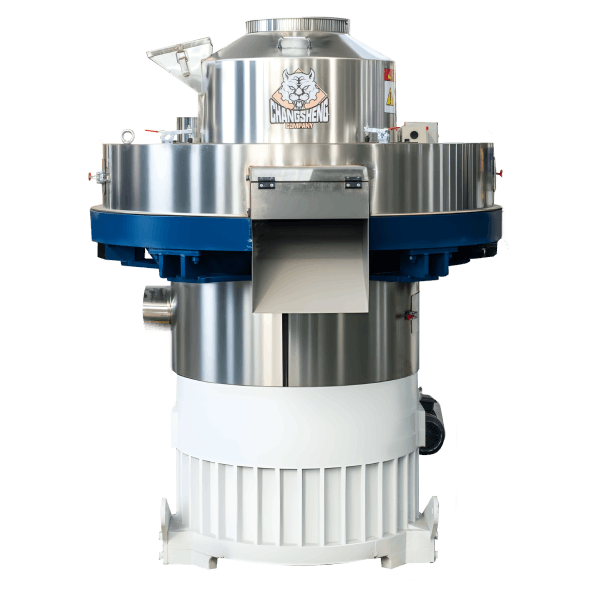
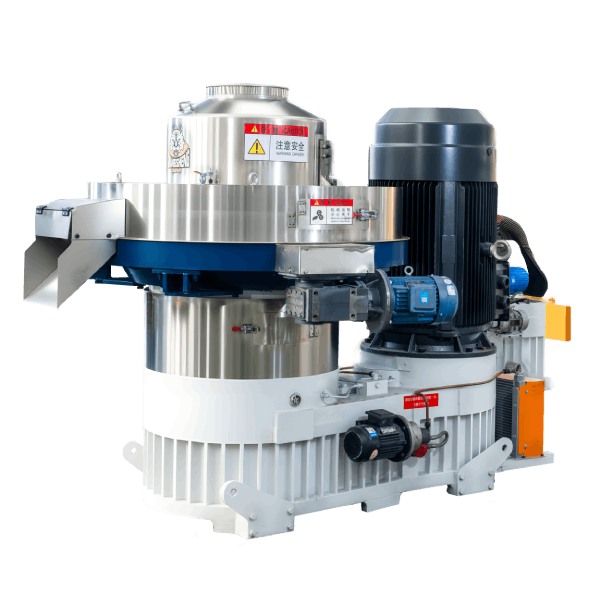
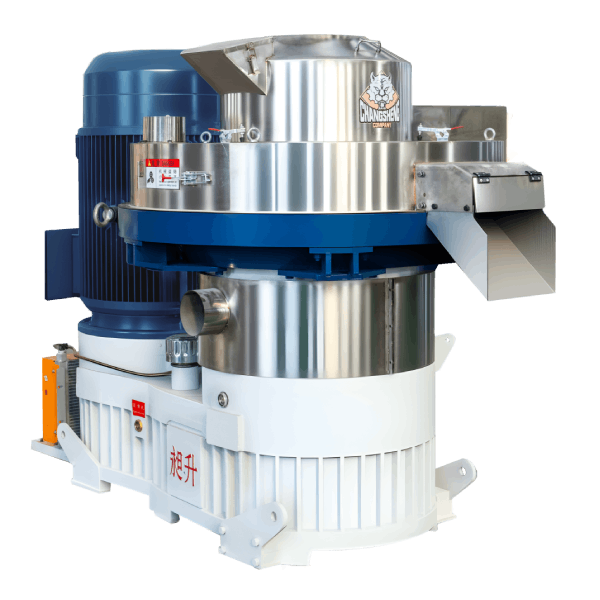
Pellet Mill with Dust Collector: Safety & NFPA Compliance
News 2026-05-08
1. Product Definition
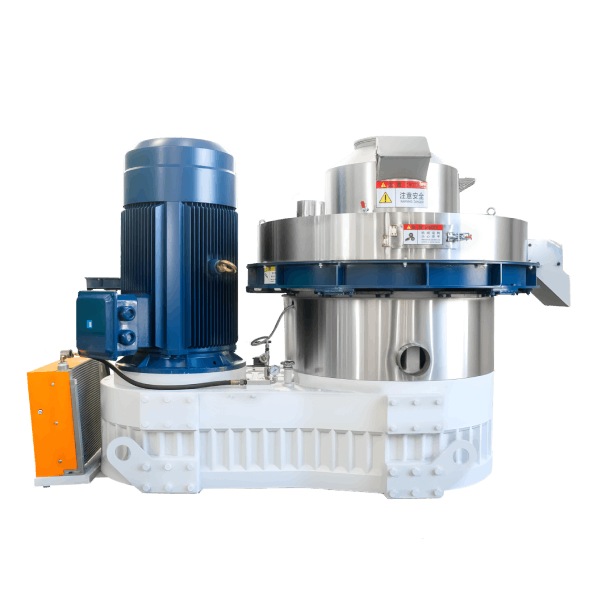
A pellet mill with dust collector is an integrated system that captures fine wood dust generated during grinding, pelleting, and cooling, using cyclones, baghouse filters, and explosion protection to improve worker safety, regulatory compliance, and product quality (reducing fines in finished pellets).
2. Technical Parameters & Specifications
| Component | Function | Efficiency | Typical Power | Maintenance |
|---|---|---|---|---|
| Cyclone (primary) | Separates large particles | 80-95% | Passive (no motor) | Empty weekly |
| Baghouse (secondary) | Filters fine dust (1-10 microns) | 99-99.9% | 2-30kW (fan motor) | Change bags 6-12 months |
| Cartridge filter | High-efficiency for fine dust | 99.5-99.95% | 1.5-15kW | Clean monthly |
| Spark detection | Prevents fire in ducts | N/A | 0.5kW | Test monthly |
| Explosion vents | Pressure relief (NFPA 68) | N/A | N/A | Inspect annually |
| Rotary airlock | Prevents air bypass | 95-99% | 0.5-3kW | Check seals monthly |
| Ductwork | Transports dust to collector | N/A | N/A | Clean quarterly |
| Dust bin | Collects waste dust | 0.5-10m³ capacity | N/A | Empty as needed |
For dust control: Request a dust collector sizing based on your pellet mill capacity.
3. Structure & Material Composition
Pellet Mill Dust Sources
Hammer Mill Dust (Coarse, 50-500 microns)
- 10-30% of material weight can become airborne
- Cyclone captures larger particles
Pellet Mill Die Area (Fine, 10-100 microns)
- Fines from die exit
- Can be recycled to mill
Cooler & Screener (Fine, 1-50 microns)
- Most hazardous (respirable)
- Baghouse required
Dust Collector Components
Cyclone
- Inlet: tangential entry creates vortex
- Body: steel cone (carbon or stainless)
- Dust outlet: rotary airlock
- Air outlet: clean air to baghouse or outdoors
Baghouse
- Filter bags: polyester, PTFE, or anti-static
- Pulse cleaning: compressed air (80-100 psi)
- Collection hopper: dust bin below
- Explosion vents: NFPA 68 compliant
4. Manufacturing Process (Engineering Steps)
Step 1 – Dust Capture at Source
Hoods at hammer mill, pellet mill die area, cooler, screener. Negative pressure draws dust into ductwork.
Step 2 – Duct Transport
Air velocity >18 m/s (prevents dust settling). Duct material: steel (carbon or stainless). Grounded (static electricity).
Step 3 – Primary Separation (Cyclone)
Larger particles (50-500 microns) drop out. Collected dust can be recycled to pellet mill (fines = raw material).
Step 4 – Secondary Filtration (Baghouse)
Fine dust (1-50 microns) captured on filter bags. Clean air discharged (must meet local air quality regulations). Bags pulsed with compressed air to release dust.
Step 5 – Dust Collection & Disposal
Collected dust: recycle to pellet mill (for fuel pellets) or waste (if contaminated). For recycling, convey back to hammer mill.
5. Industry Comparison
| Dust Control Level | Typical Efficiency | Cost ($) | NFPA Compliance | Best For |
|---|---|---|---|---|
| None (open operation) | 0% | $0 | No | Not recommended (fire/health risk) |
| Shop vacuum at die | 60-80% | $200-500 | No | Home/hobby (small volume) |
| Cyclone only | 80-95% | $1,000-5,000 | Partial (needs vents) | Small farm (recycle fines) |
| Cyclone + baghouse | 99-99.9% | $5,000-30,000 | Yes (with vents) | Commercial (NFPA required) |
| Cyclone + baghouse + spark detection | 99-99.9% | $8,000-50,000 | Yes (full) | Industrial (insurance requirement) |
| Why Choose Shandong Changsheng | Complete engineered system | NFPA/ATEX compliant | Explosion vents included | Recycle fines to boost yield |
Compare dust collector options: Request a safety compliance assessment.
6. Application Scenarios (By Buyer Role)
Distributors / Importers
Need pellet mill with dust collector for customer safety. Decision focus: NFPA/ATEX compliance, explosion vents, and local code requirements.
EPC Contractors
Specifying pellet plants must include dust collector for OSHA/NFPA compliance. Decision focus: capture efficiency, air permit limits, explosion protection.
Engineering Consultants / Technical Advisors
Advising clients on dust control. Decision focus: worker health (respirable dust), regulatory compliance, insurance requirements.
End-user Facilities
Pellet plants, feed mills, woodshops. Decision focus: reducing fines in product (recycle), worker safety, fire prevention.
7. Core Technical Pain Points & Engineering Solutions
Pain Point 1 – Dust Collector Fills with Fines (Recycle Opportunity)
Symptom: Cyclone/bin fills with fine dust every shift. Disposal cost adds up.
Root cause: Fines generated in normal operation.
Solution: Recycle dust back to pellet mill (pelleting). Convey dust to hammer mill inlet. Boost yield by 5-15%. NB: Fines recycle effectively – they re-pelletize.
Pain Point 2 – No Explosion Vents (Insurance Rejection)
Warning: Inspector cites no explosion vents on dust collector. Insurance denies coverage. 50kfine.∗Rootcause:∗Supplieromittedventstosavecost(500-2,000).
Solution: Retrofit explosion vents per NFPA 68. Use burst panels or flameless vents. Add spark detection (infrared) with water mist.
Pain Point 3 – Dust Collector Outlet Exceeds Air Permit
Problem: Local air quality permit limits 5 mg/m³ dust. Collector outlet 20 mg/m³.
Root cause: Filter bags worn or wrong type (needs PTFE or high-efficiency).
Solution: Upgrade to PTFE-coated bags (higher efficiency). Replace bags more frequently. Install HEPA after-filter.
Pain Point 4 – Static Sparks Ignite Dust in Duct
Warning: Static electricity buildup in plastic duct. Spark ignites dust. Fire.
Root cause: Duct not grounded. Using PVC flexible hose (conductive only if grounded).
Solution: Use grounded steel duct (carbon steel). If flexible hose required, use conductive rubber (grounded). Install static grounding wire.
8. Risk Warnings & Mitigation Strategies
Risk 1 – Dust Explosion
Warning: Wood dust cloud + ignition source (spark, static, hot ember) = explosion.
Mitigation: Explosion vents on dust collector. Spark detection with water mist. Ground all equipment. Regular cleaning (no dust accumulation). ATEX/NEMA-rated motors in dust areas.
Risk 2 – Health Hazard (Respirable Wood Dust)
Warning: Fine dust (<10 microns) inhaled, causes respiratory disease (hardwood: carcinogenic).
Mitigation: Dust collector efficiency >99%. Operator N100 respirators. Enclosed process. Medical surveillance.
Risk 3 – Fines in Finished Product (Customer Complaints)
Warning: Dust collector not capturing fines, product has 10% dust. Customer rejects.
Mitigation: Screen pellets (3mm mesh) after cooler. Recycle fines to pellet mill. Use baghouse (not just cyclone) for final product screening.
9. Procurement Selection Guide (6 Actionable Steps)
Step 1 – Determine dust sources
Hammer mill (coarse). Pellet mill die area (fine). Cooler/screener (very fine). Size collector for largest source.
Step 2 – Calculate required airflow
Rule: 30-50 CFM per square foot of conveyor area. For pellet mill: 500-2,000 CFM typical. Consult engineer.
Step 3 – Select cyclone vs baghouse
Cyclone only: fines >50 microns, not for NFPA compliance. Baghouse: fines 1-50 microns, required for OSHA/NFPA.
Step 4 – Verify explosion protection
NFPA 68: explosion vents. NFPA 69: deflagration venting. NFPA 77: static grounding. NFPA 654: dust collection. Request compliance documentation.
Step 5 – Plan dust disposal
Recycle fines to pellet mill (increase yield). Or waste disposal (landfill). Conveyor or rotary airlock to return.
Step 6 – Check local air permit
Contact local environmental agency. Dust emission limit (typically 5-50 mg/m³). Specify collector accordingly.
10. Engineering Case Study
Project Background: A wood pellet plant in Oregon (USA) had no dust collector. Fine dust coated surfaces 1/4 inch thick. Plant had minor fire (static spark). Workers complained of cough. OSHA inspected, fined $45,000.
Initial Problem: Plant operated without dust control for 2 years (cost savings). After fire and fine, needed compliant system. Budget $20,000.
Solution Implemented (Pellet Mill with Dust Collector):
| Component | Specification | Cost |
|---|---|---|
| Cyclone | 2,000 CFM, steel | $4,000 |
| Baghouse | 2,000 CFM, 36 bags, PTFE filters | $12,000 |
| Explosion vents | NFPA 68 compliant | $2,000 |
| Ductwork & fans | Grounded steel | $4,000 |
| Installation | Local contractor | $5,000 |
| Total | $27,000 |
Results (12 months after installation):
| Metric | Before | After |
|---|---|---|
| Dust on surfaces | 1/4 inch daily | None |
| Worker respiratory complaints | 5 per month | 0 |
| Fines in finished product | 12% | 3% (recycled) |
| Fines recycled to mill | 0 tons | 50 tons/year |
| OSHA fines | $45,000 | $0 |
| Insurance premium | $8,000/year | $5,000/year (fire risk reduced) |
- Annual savings: 45,000(fineavoidance)+3,000 insurance + 5,000recycledfinesvalue(50tons×100) = $53,000
- Payback: 6 months
Request a dust collector design: Contact engineering team with your pellet mill capacity and local codes.
11. FAQ
Q1: Do I need a dust collector for a pellet mill?
For commercial/industrial: yes (OSHA, NFPA, insurance). For home/hobby: recommended (health, safety).
Q2: What is the difference between cyclone and baghouse?
Cyclone captures large particles (80-95% efficiency). Baghouse captures fine dust (99-99.9% efficiency). Both used together.
Q3: Why do pellet mills need dust collectors?
Worker health (respirable dust). Fire/explosion prevention (wood dust explosive). Regulatory compliance (OSHA, NFPA). Product quality (reduce fines).
Q4: Can I use a shop vacuum for pellet mill dust?
For home/hobby (small volume) – yes. For commercial – no (inefficient, fire risk).
Q5: How often to empty dust collector?
Daily to weekly depending on production volume. Fines can be recycled to pellet mill (boost yield).
Q6: What is NFPA compliance for dust collectors?
NFPA 68 (explosion vents), NFPA 69 (deflagration), NFPA 77 (static grounding), NFPA 654 (dust collection). Required for insurance.
Q7: What are explosion vents?
Weak panels that burst at low pressure (0.5-1.5 psi) to release explosion pressure, preventing structural damage. Required on dust collectors in explosive environments.
Q8: Can I recycle dust back to the pellet mill?
Yes. Fines re-pelletize effectively. Increases overall yield 5-15%. Requires conveyor or rotary airlock.
Q9: How much does a dust collector cost?
Cyclone only: 1,000−5,000.Cyclone+baghouse:5,000-30,000. Complete system with installation: $10,000-50,000.
Q10: Do I need a permit for dust collector exhaust?
Check local air quality regulations. Typically require permit if emission rate >10-50 mg/m³. Baghouse usually meets limits.
Q11: What is the maintenance for a dust collector?
Daily: empty dust bin. Weekly: check pressure drop across bags. Monthly: inspect bags for tears. Annually: clean ducts.
Q12: Can dust collector improve product quality?
Yes. Removing fines before bagging reduces dust in finished pellets. Customers prefer low-dust pellets.
Q13: What type of filter bags for pellet mill dust?
Polyester (standard). PTFE (high-efficiency, expensive). Anti-static (for explosive dust). Water-repellent (for wet conditions).
Q14: How to prevent dust collector fires?
Spark detection (infrared) with water mist. Ground all equipment. Regular cleaning (no dust accumulation). Explosion vents.
Q15: Is a dust collector required by OSHA?
OSHA 29 CFR 1910.269 (wood dust). Combustible dust standard. If dust accumulation >1/32 inch, OSHA citation. Dust collector strongly recommended.
12. Commercial Call-to-Action
For safety-conscious buyers: Request a pellet mill with dust collector package including cyclone, baghouse, explosion vents, and spark detection – NFPA/ATEX compliant for insurance.
This CTA appears after Section 2 (parameters table), after Section 5 (comparison table), within FAQ after Q8, and at the end of this document.
Need a dust control assessment? Contact the engineering team with your pellet mill capacity, local codes, and budget for a custom design.
Looking for OSHA/NFPA compliance? Request a safety package including explosion vents, spark detection, and documentation for insurance.
To proceed: Send your inquiry via the contact form. Include pellet mill capacity (t/h), local dust emission limits (if known), and whether recycling fines desired.
13. Author & E-E-A-T Credentials
Author: Zhang Wei
Dust Control & Safety Engineer
- 11 years in industrial dust collection and explosion protection (2014–present)
- Designed 200+ dust collector systems for pellet mills, feed mills, and woodshops
- Certified NFPA 654 (combustible dust) and ATEX (explosion protection)
- Author of “Dust Control for Pellet Mills” (China Machine Press, 2022)
- Member of the National Fire Protection Association (NFPA)
Affiliation: Shandong Changsheng Machinery Co., Ltd.
The author has directly designed pellet mill with dust collector systems for 50+ pellet plants, ensured NFPA/ATEX compliance, and reduced dust hazards. All specifications, safety requirements, and cost data are derived from actual installations from 2016–2026.