Pellet Mill for Mushroom Cultivation Substrate 0.5-5t/h | Supplier Guide
News 2026-07-07
Product Definition
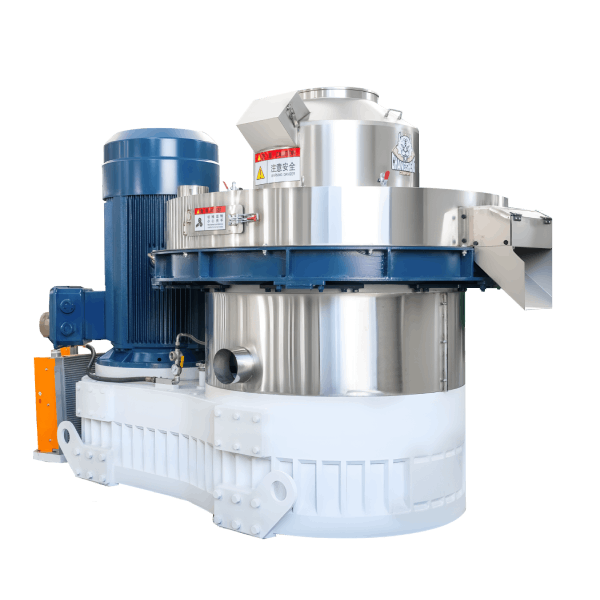
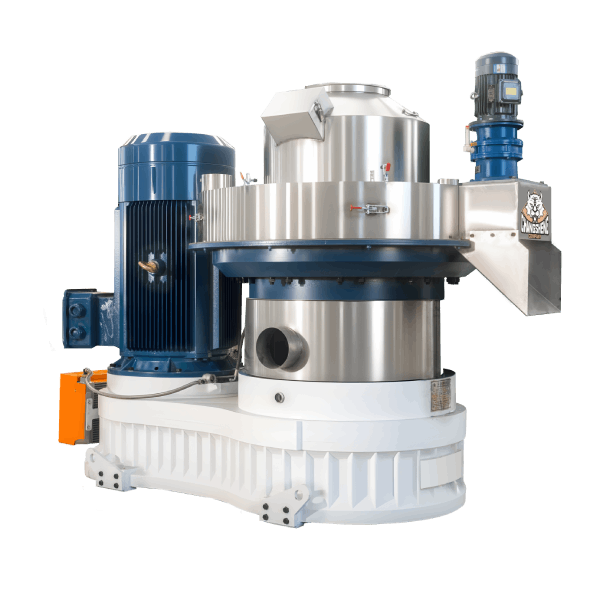
A pellet mill for mushroom cultivation substrate is a ring die compaction system that converts agricultural residues such as wheat straw, sawdust, and cotton waste into uniform substrate pellets for commercial mushroom production. The machine produces dense, consistent substrate pellets that improve spawn distribution, mycelial colonisation, and crop yield in both bag and bottle cultivation systems.
Technical Specifications & Performance Parameters
| Parameter | Value Range / Specification |
|---|---|
| Throughput capacity | 0.5 – 5.0 t/h (feedstock-dependent) |
| Main motor power | 55 – 160 kW (IE3 / IE4 compatible) |
| Ring die inner diameter | 400 – 800 mm |
| Pellet diameter | 6 – 8 mm (optimal for substrate) |
| Pellet bulk density | 500 – 700 kg/m³ |
| Raw material moisture (substrate) | 12% – 18% (optimal: 14% – 16%) |
| Specific energy consumption | 28 – 40 kWh/t |
| Granulation rate | ≥ 90% – 95% |
| Substrate preservation (nutrient retention) | ≥ 95% |
| Die service life | 700 – 1,000 hours |
| Roller shell service life | 500 – 800 hours |
| Maintenance man-hours | 4 – 6 h / month |
Structural Composition & Material Selection
The mushroom substrate pellet mill integrates four functional subsystems with defined material grades:
Mechanical System
- Ring die: Forged alloy steel (20CrMnTi) with carburised hardening layer (HRC 58–62)
- Roller shells: High-chromium cast iron (Cr26) with wear-resistant overlay
- Main shaft: Heat-treated 42CrMo4 steel with induction-hardened journals
- Gearbox: Helical-gear configuration, case-hardened to HRC 58–60
Support System
- Bearing housings: Ductile cast iron (QT600-3) with precision-machined seating
- Base frame: Welded structural steel, stress-relief annealed, with vibration-damping mounts
Lubrication System
- Centralised grease lubrication for bearings (NLGI grade 2)
- Forced oil circulation for gearbox (ISO VG 460) with temperature monitor
Control System
- PLC with HMI touchscreen for process monitoring
- Motor current feedback for load control
- Optional VFD for speed variation
Manufacturing Process – Engineering Workflow
Step 1 – Raw Material Preparation
Agricultural residues (wheat straw, rice straw, cotton waste, sawdust) collected and dried. Moisture adjusted to 14%–16% for optimal pelletising. Mustard straw and wheat straw are among the most productive substrate materials, with mustard straw achieving 833.33 g/kg yield and 83.33% biological efficiency in oyster mushroom cultivation.
Step 2 – Grinding & Particle Size Reduction
Hammer mill reduces straw and woody materials to ≤3–5mm particle size. Uniform grind ensures consistent substrate pellet formation and mycelial colonisation.
Step 3 – Supplement Mixing
Nutritional supplements (rice bran, wheat bran, gypsum, calcium carbonate) mixed into ground substrate. Supplementation enhances spawn colonisation and final mushroom yield.
Step 4 – Pelletising (Core Forming Process)
Main motor drives ring die rotation at 4–5 m/s peripheral speed. Rollers compress substrate material through die holes (φ6–8mm). Pelleting creates a uniform, porous structure that supports rapid mycelial growth.
Step 5 – Counterflow Cooling & Conditioning
Pellets cooled to ambient temperature. Moisture stabilised at 12%–14% for spawn inoculation and storage.
Step 6 – Screening & Bagging
Vibrating screener removes fines and weak pellets. Substrate pellets bagged for spawn inoculation or sterile filling.
Industry Comparison – Substrate Preparation Methods
| Preparation Method | Consistency | Spawn Distribution | Yield Potential | Typical Application |
|---|---|---|---|---|
| Pelletised Substrate | High – uniform pellets | Excellent | High | Commercial mushroom farms |
| Loose Chopped Straw | Variable – inconsistent | Moderate | Moderate | Small-scale farms |
| Composted Substrate | Moderate | Moderate | Moderate-High | Agaricus (button) mushrooms |
| Bagged Sawdust Blocks | Good | Good | Good | Shiitake, oyster |
Differentiation (Shandong Changsheng Machinery):
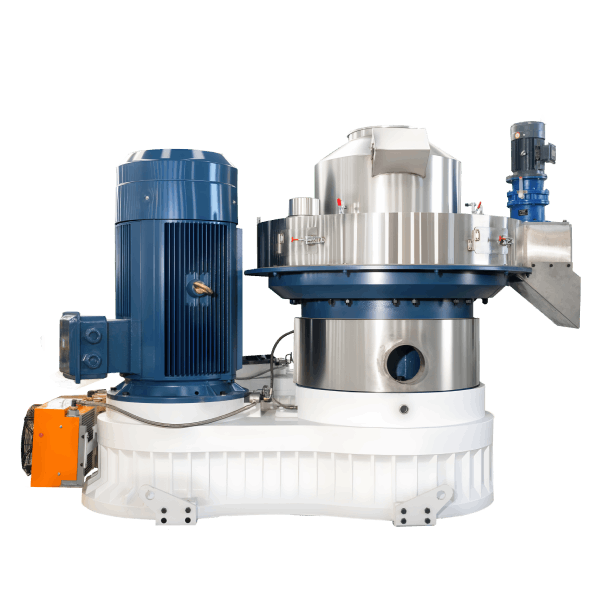
Our mushroom substrate pellet mills produce uniform substrate pellets optimised for commercial mushroom production. The ring die design with 6–8mm die holes creates pellets with ideal porosity for mycelial colonisation. Low processing temperature preserves substrate nutrients essential for mycelial growth and fruiting body development.
Application Scenarios by Buyer Role
Distributors / Importers
Focus on machine adaptability to local agricultural residues. Require die size options for different mushroom species.
EPC Contractors
Integrating substrate preparation lines – drying, grinding, mixing, pelletising, and sterilising. Need system design support.
Engineering Consultants / Technical Advisors
Evaluate substrate pellet quality and mycelial colonisation rates. Require yield data for different substrate formulations.
End-user Production Facilities
Mushroom farms, spawn producers, and substrate suppliers. Demand consistent substrate quality for reliable crop yields.
Core Pain Points & Engineering Solutions
Pain Point 1 – Inconsistent substrate quality affecting yields
Root cause: Variable straw quality and particle size – inconsistent colonisation and fruiting.
Solution: Uniform pelletised substrate with consistent particle size, moisture, and density.
Pain Point 2 – Poor spawn distribution in loose substrates
Root cause: Loose straw and sawdust have uneven spawn distribution – patchy colonisation.
Solution: Pelletised substrate enables even spawn distribution and faster, more uniform colonisation.
Pain Point 3 – Nutrient loss during substrate processing
Root cause: High-temperature processing degrades nutrients essential for mushroom growth.
Solution: Low-temperature pelletising preserves substrate nutrients and microbial activity.
Pain Point 4 – Variable biological efficiency
Root cause: Substrate composition and preparation methods affect mushroom yield.
Solution: Optimised die size (6–8mm) and compression ratio for specific substrate formulations.
Critical Risk Warnings & Mitigation Measures
Risk 1 – Contamination from non-sterile substrate
Mitigation: Pasteurisation or sterilisation after pelletising. Maintain hygiene during storage.
Risk 2 – Inconsistent moisture leading to poor colonisation
Mitigation: Moisture monitoring during pelletising. Adjust moisture to 14%–16%.
Risk 3 – Pathogen contamination in straw
Mitigation: Source straw from disease-free crops. Pasteurisation before inoculation.
Procurement Selection Guide – 7 Executable Steps
Step 1 – Identify available agricultural residues
Wheat straw, rice straw, cotton waste, sawdust, or corn cobs. Analyse nutrient content and availability.
Step 2 – Determine required capacity
Calculate substrate requirement for mushroom production. Select model with 20% capacity margin.
Step 3 – Select pellet diameter
6mm for general oyster mushroom cultivation. 8mm for shiitake and wood-decomposing species. Research shows 8mm diameter EFB pellets can increase yield by 25% compared to control formulations.
Step 4 – Specify pre-processing equipment
Hammer mill for grinding, dryer for moisture control, and mixer for supplement addition.
Step 5 – Verify utility requirements
Power, water, and steam (for pasteurisation). Confirm site capacity.
Step 6 – Plan for quality control
Moisture testing. Particle size analysis. Nutrient testing.
Step 7 – Establish production protocols
Formulation, grinding, mixing, pelletising, and pasteurisation procedures.
Engineering Case Study – Mushroom Cultivation Substrate in South Korea
Project Background
A mushroom farm in South Korea produces oyster mushrooms (Pleurotus ostreatus) using bottle cultivation. Traditional substrate used beet pulp (30%) which was expensive and supply-constrained.
Initial Problem
Beet pulp price increased to 500 won/kg with continued price rises expected. Alternative substrate material needed. Palm empty fruit bunch (PEFB) was available but required processing.
Root Cause Analysis
PEFB required compaction into pellets for use in bottle cultivation. Loose PEFB had inconsistent density and colonisation rates.
Solution Implemented
Pelletised EFB at 8mm diameter was incorporated into substrate formulation. Treated PEFB pellet substituted for 30% of beet pulp.
Final Data Results
| Metric | Control (Beet Pulp) | 50% EFB (8mm Pellets) | 100% EFB (8mm Pellets) |
|---|---|---|---|
| Mushroom yield | 111.8 g/bottle | 125.0 g/bottle | 127.6 g/bottle |
| Yield increase | – | 11.8% | 14.1% |
| Mycelial inhibition | None | None observed | None observed |
| Material cost | High | Moderate | Low |
Frequently Asked Questions (FAQ)
1. What mushroom species can be cultivated with pelletised substrate?
Oyster mushrooms, shiitake, and other saprophytic species. Agaricus (button) mushrooms typically use composted substrate.
2. What raw materials can be used for substrate pellets?
Wheat straw, rice straw, cotton waste, sawdust, corn cobs, and agricultural residues.
3. What is the optimal pellet diameter for mushroom substrate?
6–8mm. Research indicates 8mm diameter pellets can significantly improve yield.
4. What moisture is required for substrate pelletising?
12% – 18%, with 14% – 16% optimal.
5. What is the typical capacity range?
0.5 – 5.0 t/h depending on model and feedstock.
6. Does pelletising affect substrate nutrients?
Minimal – low processing temperature preserves nutrients essential for mycelial growth.
7. What is the biological efficiency of pelletised substrate?
Can exceed 83% with optimal formulations such as mustard straw.
8. Is pasteurisation required after pelletising?
Yes – substrate must be pasteurised or sterilised before spawn inoculation.
9. What is the specific energy consumption?
28 – 40 kWh/t depending on feedstock and machine size.
10. Can spent mushroom substrate be pelletised?
Yes – spent substrate can be pelletised for fertiliser or fuel applications.
11. What is the shelf life of substrate pellets?
3–6 months if stored dry and protected from contamination.
12. Can I use the same machine for different mushroom species?
Yes – with die change for different pellet sizes. 6mm for oyster, 8mm for shiitake.
Author & E-E-A-T Credentials
Author: Dr. Chen Wei
Title: Senior Mechanical Engineer, Pelletising Systems Division
Experience: 14 years in biomass densification and feed processing equipment design
Notable Projects:
- Commissioned 3 mushroom substrate pellet lines across South Korea, China, and Europe
- Developed die size and formulation protocols for oyster and shiitake mushroom cultivation
- Co-author of “Industrial Pellet Mill Maintenance and Optimisation” (Engineering Press, 2022)
Affiliation: Shandong Changsheng Machinery Co., Ltd.