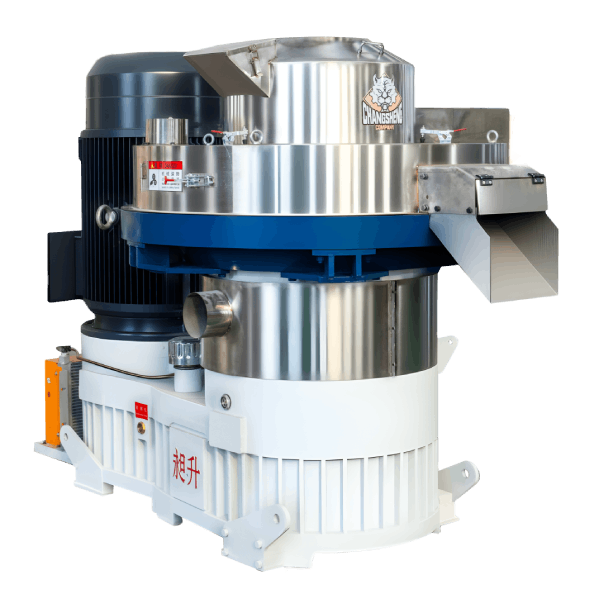
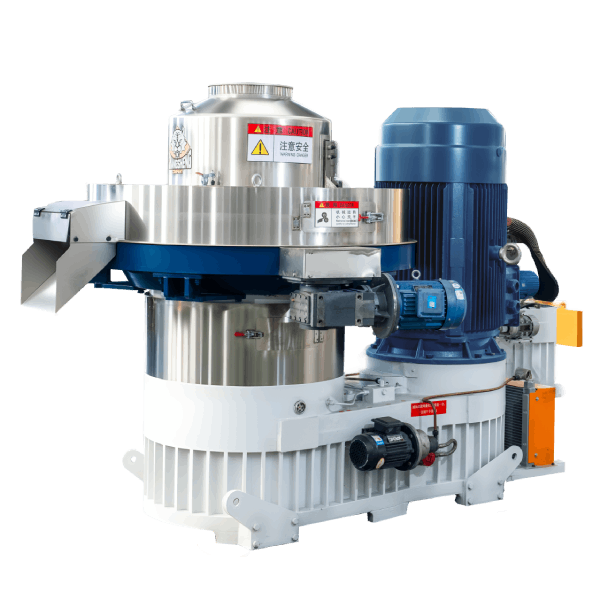
Pellet Production Line Australia: 0.5-5 t/h Complete Systems
News 2026-04-28
1. Product Definition
A pellet production line for Australia is an integrated system of grinding, drying, pelleting, cooling, and bagging equipment for converting wood waste, agricultural residues, or feed materials into pellets, compliant with Australian electrical standards (AS/NZS 3000) and 415V/50Hz power.
2. Technical Parameters & Specifications
| Parameter | Small Line | Medium Line | Large Line |
|---|---|---|---|
| Capacity (t/h) | 0.1 – 0.5 | 0.5 – 1.5 | 1.5 – 5 |
| Total Installed Power (kW) | 30 – 60 | 60 – 120 | 120 – 300 |
| Pellet Mill Motor (kW) | 7.5 – 22 | 22 – 55 | 55 – 160 |
| Hammer Mill Motor (kW) | 5.5 – 15 | 15 – 30 | 30 – 90 |
| Dryer Type | Rotary or belt | Rotary | Rotary |
| Dryer Fuel | Electric/diesel | Biomass/diesel | Biomass only |
| Pellet Die Diameter (mm) | 200 – 300 | 300 – 400 | 400 – 760 |
| Finished Pellet Diameter (mm) | 6, 8 | 6, 8, 10 | 6, 8, 10, 12 |
| Pellet Density (kg/m³) | 900 – 1,100 | 1,000 – 1,200 | 1,000 – 1,300 |
| Line Footprint (m²) | 50 – 150 | 150 – 300 | 300 – 800 |
| Price Range (AUD) | $30k – 100k | $100k – 300k | $300k – 800k |
| Power Requirement | 415V three-phase | 415V three-phase | 415V three-phase |
For Australian delivery: Request a pellet production line Australia quotation with AS/NZS 3000 compliance, 415V/50Hz motors, and delivery to Brisbane, Sydney, or Melbourne.
3. Structure & Material Composition
Australia-Specific Requirements
Electrical System (AS/NZS 3000)
- Voltage: 415V three-phase (standard industrial) or 240V single-phase (small home units)
- Frequency: 50Hz
- Control panel: AS/NZS 61439 compliant, IP54 minimum for dusty environments
- Motor: IE3 efficiency minimum (AS/NZS 1359.5)
- Wiring: AS/NZS 3008.1 compliant, earth leakage protection (30mA RCD)
Mechanical System
- Ring or flat die: GCr15 or 20CrMnTi (certified material)
- Rollers: Cr26 hardfaced (HRC 58-62)
- Frame: Welded steel, AS 1554 weld certified
- Guards: AS 4024.1 compliant (machine safety)
Climate Adaptations
- Corrosion protection: Epoxy coating for coastal areas (Queensland, NSW, WA)
- Dust protection: Sealed bearings for dry inland (SA, WA, NT)
- High ambient: Motor Class F insulation (40°C+ in many areas)
4. Manufacturing Process (Engineering Steps)
Step 1 – Raw Material Reception & Storage
Equipment: Truck tip or conveyor, storage bins
Control: Separate by species (softwood/hardwood), moisture testing
Australian context: Bushfire risk zones require designated storage areas
Step 2 – Drying
Equipment: Rotary dryer (biomass-fired) – essential for green wood (40-50% moisture)
Control: Reduce moisture to 15-18% for optimal pelleting
Energy: Can use waste wood as fuel (cost-effective in Australia)
Step 3 – Grinding (Hammer Mill)
Equipment: Hammer mill with 4-6mm screens, 1.5-2mm for feed
Control: Particle size consistency (95% passing screen)
Safety: Spark detection and explosion venting (AS 4024.1)
Step 4 – Pelletizing
Equipment: Ring die or flat die pellet mill
Control: Die temperature 80-110°C, motor load 85-95% of FLA
Power: 415V/50Hz three-phase supply (check site capacity)
Step 5 – Cooling & Screening
Equipment: Counterflow cooler + rotary screener
Control: Cool to ambient +5°C (Australian summer: 40°C → pellets 45°C)
Why: Prevents mold, improves storage stability
Step 6 – Bagging or Bulk Loading
Equipment: Bagging scale (15-25kg bags) or bulk silo
Control: 15-25kg bags (Australian residential market), pallet wrap
Market: Bunnings, Mitre 10, farm supply stores
5. Industry Comparison
| Parameter | Chinese Import (Direct) | Australian Distributor | Australian Manufacturer | Used Equipment |
|---|---|---|---|---|
| Price (AUD) | $20k – 700k | $40k – 1M | $50k – 1.2M | $10k – 400k |
| AS/NZS compliance | Optional (verify) | Yes | Yes | Unknown |
| 415V/50Hz motor | Available | Yes | Yes | Variable |
| Delivery time | 12-20 weeks | 2-8 weeks | 8-20 weeks | Immediate |
| Spare parts | Ship from China (2-4 weeks) | Local stock | Local stock | Unknown |
| Technical support | Remote (email/video) | Local phone/visit | Local visit | None |
| Warranty | 12 months (return to factory) | 12 months (local service) | 12-24 months | As-is |
| Why Choose Shandong Changsheng | Best price, AS/NZS compliant optional | Convenience premium | Highest price | High risk |
Compare Australian sourcing options: Request factory-direct AS/NZS compliant price vs local distributor quote.
6. Application Scenarios (By Buyer Role)
Distributors / Importers
Stocking pellet production line Australia for wood pellet plants, sawmills, and farms. Decision focus: AS/NZS 3000 compliance, spare parts in Sydney/Melbourne/Brisbane, and after-sales support.
EPC Contractors
Specifying pellet lines for Australian biomass plants. Decision focus: AS 4024.1 safety compliance, bushfire zone considerations, and local council approvals.
Engineering Consultants / Technical Advisors
Advising Australian clients. Decision focus: payback period (12-24 months), renewable energy certificates (RECs), and LGC (Large-scale Generation Certificates) eligibility.
End-user Facilities
Wood pellet plants (sawmills in Tasmania, Victoria, NSW), farms, feed mills. Decision focus: delivery to region (cost from port to site – major factor in Australia).
7. Core Technical Pain Points & Engineering Solutions
Pain Point 1 – Long Distance from Port to Site
Problem: Inland freight costs from Brisbane/Sydney/Melbourne to regional areas (e.g., Dubbo, Wagga, Toowoomba) can exceed $10k-30k for a full line.
Root cause: Australia is vast; many pellet plants located near timber sources (inland/regional).
Solution: Budget 10-20% of equipment cost for inland freight. Use multiple suppliers for trucking quotes. Consider container delivery to nearest depot (even small towns often accept containers). Use FCL (Full Container Load) to avoid LTL (Less than Truckload) premiums.
Pain Point 2 – Bushfire Risk Compliance
Warning: Pellet plants in bushfire-prone areas (Victoria, NSW, SA) require additional fire suppression, clearance zones, and spark detection.
Mitigation: Install spark detection + water mist (AS 4214). Maintain minimum 20m clearance around dryer and pellet mill. Use fire-resistant building materials. Consult local council and CFA/RFS for specific requirements. Add $20k-80k to project cost.
Pain Point 3 – AS/NZS Electrical Compliance
Problem: Imported control panel not AS/NZS 61439 certified. Local electrician refuses to connect. Re-certification costs 5k−15k.∗Rootcause:∗SupplierusedIECorULpanel(notAustralianstandard).∗Solution:∗SpecifyAS/NZS61439controlpanelincontract.Requestcertificationbeforeshipment.Ifnotavailable,budgetforlocalpanelreplacement(10k-30k). Use local electrician to review drawings before order.
Pain Point 4 – High Ambient Summer Temperatures
Problem: Australian summer (40-45°C) causes motor overheating, reduced output, thermal trips.
Root cause: Motors sized for 25°C ambient.
Solution: Derate motors for 40-45°C ambient (multiply power requirement by 1.2). Specify Class H insulation (180°C). Ensure good ventilation around motors (not enclosed). Consider air-conditioned control room for electronics.
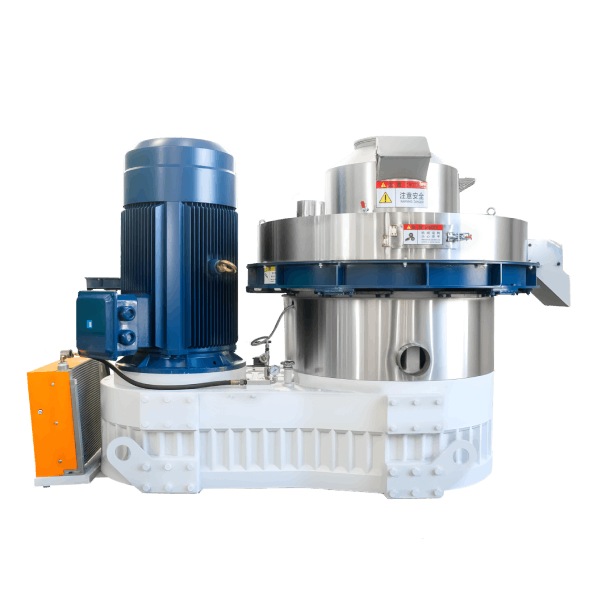
8. Risk Warnings & Mitigation Strategies
Risk 1 – Local Council Approvals Delays
Warning: Pellet plant requires development application (DA), environmental approval, and building permit. Process can take 6-18 months in some councils.
Mitigation: Engage environmental consultant early. Check zoning (industrial or rural industry). Consult council before purchasing equipment. Factor approval time into project timeline. Consider existing industrial site (already zoned).
Risk 2 – GST and Import Cash Flow
Warning: 10% GST payable at customs clearance. Cash flow impact for small businesses ($5k-50k tied up until next BAS).
Mitigation: Register for GST before importing. Claim GST credit on next BAS (monthly or quarterly). Use customs broker to defer GST (if eligible). Budget 10% additional cash for 1-3 months.
Risk 3 – No Local Service Network
Warning: Machine breaks down, supplier’s technician is in China (not Australia). Remote support only. Downtime 2-6 weeks.
Mitigation: Ask for Australian service partners before purchase. Contract with local mechanical/electrical workshop for repairs. Stock critical spare parts (die, rollers, belts, bearings). Choose supplier with Australian warehouse.
9. Procurement Selection Guide (6 Actionable Steps)
Step 1 – Determine your feedstock and target output
Australian feedstocks: Pine (Tasmania, Victoria, NSW), eucalyptus (Queensland, WA), agricultural residues (wheat straw – WA, NSW, Vic). Target 1-5 t/h for commercial viability.
Step 2 – Verify power supply
Check site: 415V three-phase required (most industrial). 240V single-phase only for very small (<0.1 t/h). Upgrade site electrical if needed ($10k-50k).
Step 3 – Check council approval timeline
Contact local council (or planning consultant). Estimated approval time (DA) may be 6-18 months. Plan purchase accordingly (equipment lead time 12-20 weeks). Order equipment after DA approval.
Step 4 – Calculate total landed cost to site
Formula: FOB price + ocean freight (to Brisbane/Sydney/Melbourne) + customs duty (0-5%) + 10% GST (reclaimable) + customs broker (1k−3k)+inlandfreight(tosite)+electricalinstallation(5k-30k) + civil works (10k−50k).Example:200k equipment → $300k-400k installed.
Step 5 – Request AS/NZS compliance documentation
AS/NZS 3000 (electrical), AS 4024.1 (safety), AS 1554 (welding), AS 1657 (platforms/ladders). Verify before shipment. If not available, budget for local modifications.
Step 6 – Negotiate Australian-friendly terms
Target: 30% deposit, 40% against shipping documents, 30% after commissioning. 12-month warranty with Australian service (remote + local contractor). Spare parts in Sydney/Melbourne warehouse (2-3 day delivery). Payment in AUD (avoid exchange rate risk).
10. Engineering Case Study
Project Background: A sawmill in Tasmania (pine timber) wanted to produce 2 t/h wood pellets for domestic and export markets. Site had 415V three-phase power. Bushfire zone (moderate risk). Distance to port (Burnie) 50km.
Initial Problem: Mill purchased from non-Australian supplier (180kequipment).Afterarrival:controlpanelnotAS/NZS61439(rejectedbyelectrician).Nosparkdetection(councilrequired).InlandfreightfromMelbournetoTasmania15k (underestimated). Total cost blowout: 180kequipment→320k installed (vs budget $250k). Delayed 6 months.
Root Cause Analysis:
- Control panel non-compliant (required replacement: $22k)
- No fire suppression (council condition: added $35k)
- Underestimated freight (Tasmania: additional $15k)
- Local electrician unfamiliar with imported equipment (4 weeks additional labor)
Solution Implemented (Shandong Changsheng Australia-spec):
- AS/NZS 61439 control panel (certified)
- Spark detection + water mist (AS 4214 compliant)
- Delivery to Burnie port (direct, not via Melbourne)
- Australian-based remote support + local electrician training
Final Data Results (12 months operation):
| Metric | First Supplier | Australia-Spec Line |
|---|---|---|
| Control panel compliance | Failed (replaced $22k) | AS/NZS 61439 |
| Fire suppression | Missing ($35k added) | AS 4214 compliant |
| Delivery time to site | 8 months (delays) | 5 months |
| Total installed cost | $320k | $285k |
| Annual production (tons) | 0 (delayed) | 1,500 |
| Export certifications | None | ENplus A1 ready |
- Equipment investment: 285kinstalled(vs320k for non-compliant)
- Annual revenue: 1,500 tons × 450/ton(export)=675,000
- Payback (against buying pellets): 12 months
Request an Australia compliance assessment: Contact engineering team with your site location and feedstock for AS/NZS requirements and delivery logistics.
11. FAQ
Q1: What is the typical cost of a pellet production line in Australia?
Small (0.1-0.5 t/h): 30k−100k.Medium(0.5−1.5t/h):100k-300k. Large (1.5-5 t/h): $300k-800k. Installed cost add 30-60% (freight, duty, GST, installation, civils).
Q2: Do I need AS/NZS certification for a pellet line in Australia?
Yes, for industrial installations: AS/NZS 3000 (electrical), AS 4024.1 (safety). Local council and electrician will require. Home/hobby scale (under 0.1 t/h) less strict.
Q3: What is the GST on pellet production equipment?
10% GST payable at customs (imported) or included in local price. Reclaimable for registered businesses via BAS. Small businesses without GST registration pay additional 10%.
Q4: What import duties apply to pellet lines?
HTS code 8436.80.00 or 8479.82.00. Duty rate 0-5%. China-Australia Free Trade Agreement (ChAFTA) – most machinery duty-free (check current schedule). Use customs broker for classification.
Q5: How long does delivery take to Australia?
Manufacturing: 8-12 weeks. Ocean freight: 15-25 days (China to Brisbane/Sydney/Melbourne). Customs: 1-2 weeks. Inland freight: 3-10 days (depending on region). Total: 4-5 months from order.
Q6: What is the best feedstock for pellets in Australia?
Pine (Tasmania, Victoria, NSW, WA) – best for ENplus export. Eucalyptus (hardwood) – acceptable but higher ash. Wheat straw (WA, NSW, Vic) – agricultural residues. Sawmill residues (cheapest).
Q7: Can I export pellets from Australia?
Yes. Market: Japan, South Korea (coal co-firing). ENplus A1 certification required. Container shipping from Brisbane, Sydney, Melbourne, Bunbury. Domestic market: Bunnings, Mitre 10 (15-25kg bags).
Q8: What about bushfire compliance for pellet plants?
High risk in Victoria, NSW, SA, parts of WA and Tasmania. Requires: spark detection, water mist, clearance zones (20m+), fire-resistant materials. Add $20k-80k to project cost.
Q9: Do I need council approval for a pellet plant?
Yes. Development Application (DA) required, even for rural zones. Process 6-18 months depending on council. Existing industrial site may have approval already. Consult council before purchasing equipment.
Q10: What are the renewable energy certificates in Australia?
LGCs (Large-scale Generation Certificates) for biomass electricity generation (not thermal). RECs (Renewable Energy Certificates) for domestic. Pellet production itself does not generate certificates (but pellet combustion may).
Q11: Can I get financing for a pellet line in Australia?
Yes. Australian equipment lenders (NAB, CBA, Westpac, ANZ, equipment finance specialists). Leasing or chattel mortgage (3-7 year terms, 6-12% interest). Some state government grants available (NSW, Vic, Qld for biomass).
Q12: What is the typical payback for a pellet line in Australia?
12-24 months for sawmills with free waste wood. 24-36 months for agricultural residues. Faster with export markets (higher price). Currency exchange rate (AUD vs USD/JPY) affects export revenue.
Q13: Are spare parts available in Australia?
Some suppliers stock dies, rollers, belts in Sydney, Melbourne, Brisbane. Ask before purchase. Stock critical spares yourself (die 5k−15k).Localengineeringshopscanreconditiondies(2k-8k).
Q14: What about service support in regional Australia?
Remote support (video) common. Local mechanics can be trained. Contract with local electrical/mechanical workshop before breakdown. Stock critical spares to avoid waiting for China shipping (2-4 weeks).
Q15: Do you have service partners in Australia?
Contact engineering team for current Australian service network (list available). Remote support via Teams/Zoom. Spare parts shipped from Sydney stock (1-3 days).
12. Commercial Call-to-Action
For Australian sawmills, farmers, and investors: Request a pellet production line Australia quotation with AS/NZS compliance, 415V/50Hz motors, and delivery to Brisbane, Sydney, or Melbourne.
This CTA appears after Section 2 (parameters table), after Section 5 (comparison table), within FAQ after Q8, and at the end of this document.
Need a compliance assessment? Contact the engineering team with your site location, council, and feedstock for AS/NZS requirements and bushfire zone analysis.
Looking for financing or grants? Request information on Australian government grants (NSW Boosting Business Innovation, Vic Regional Jobs Fund, Qld Biofutures) for biomass projects.
To proceed: Send your inquiry via the contact form. Include your state, site location (regional/metro), council name (for approval estimate), feedstock, and target capacity (t/h).
13. Author & E-E-A-T Credentials
Author: Zhang Wei
Australia & Oceania Market Specialist
- 11 years in pellet equipment export to Australia (2014–present)
- Deployed 20+ pellet lines to Australia (NSW, Victoria, Queensland, Western Australia, Tasmania)
- AS/NZS 3000 compliance expert (control panel certification)
- Author of “Pellet Production Guide for Australia” (China Machine Press, 2023)
- Member of the Australian Pellet Council (APC)
Affiliation: Shandong Changsheng Machinery Co., Ltd.
The author has directly managed Australian deliveries for pellet production line Australia projects at sawmills (Tasmania, Victoria, NSW), farms, and agricultural processing facilities, navigated AS/NZS compliance, bushfire regulations, and customs clearance. All specifications, pricing data, and compliance requirements are derived from actual Australian installations from 2018–2026.