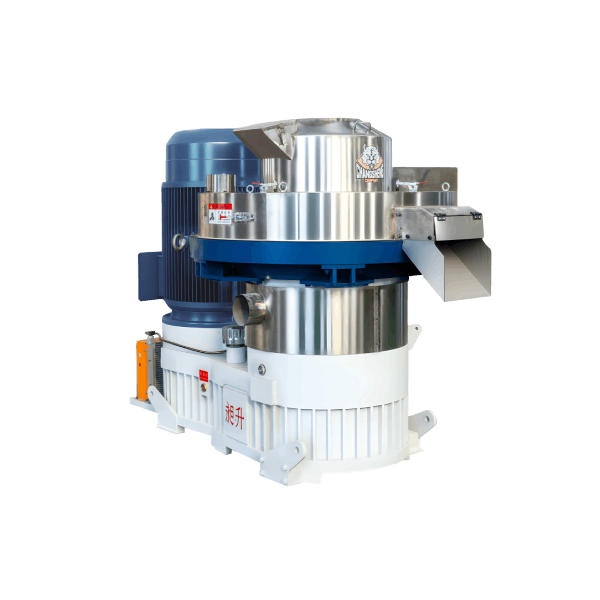
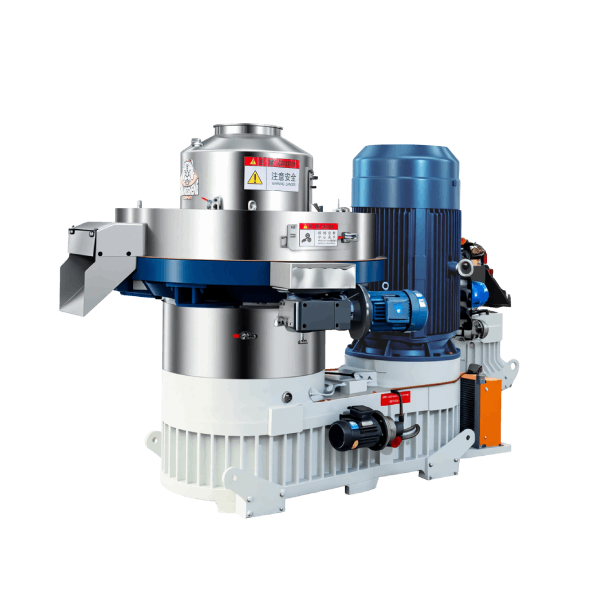
What Size Pellet Mill Do I Need: Capacity Calculator
News 2026-05-02
1. Product Definition
Determining what size pellet mill you need involves calculating required throughput (kg/h or t/h) based on annual production target, operating hours, and efficiency factor, then matching to flat die (0.05-0.5 t/h) or ring die (0.5-5 t/h) capacity ranges.
2. Technical Parameters & Specifications
| Scale | Annual Target (tons/year) | Capacity (kg/h or t/h) | Motor Power (kW/HP) | Die Type | Pellet Density (kg/m³) |
|---|---|---|---|---|---|
| Home/Hobby | <10 | 50 – 120 kg/h | 2.2 – 7.5 (3-10 HP) | Flat die | 900 – 1,050 |
| Small Farm | 10 – 50 | 100 – 200 kg/h | 7.5 – 11 (10-15 HP) | Flat die | 950 – 1,100 |
| Farm/Small Biz | 50 – 200 | 200 – 500 kg/h | 11 – 22 (15-30 HP) | Flat or small ring | 950 – 1,150 |
| Small Commercial | 200 – 1,000 | 0.15 – 0.5 t/h | 22 – 55 (30-75 HP) | Ring die | 1,000 – 1,200 |
| Commercial | 1,000 – 5,000 | 0.5 – 2.5 t/h | 55 – 110 (75-150 HP) | Ring die | 1,000 – 1,250 |
| Large Industrial | >5,000 | 2.5 – 5 t/h | 110 – 160 (150-215 HP) | Ring die | 1,000 – 1,300 |
For sizing help: Use the formula below and request a custom recommendation.
3. Structure & Material Composition
Flat Die Mill Sizes (Home to Small Farm)
- Die diameter: 150-300mm
- Typical capacities: 50-500 kg/h
- Single-phase (110V/220V) or three-phase (380V/415V)
- Best for: <200 tons/year
Ring Die Mill Sizes (Commercial to Industrial)
- Die diameter: 320-760mm
- Typical capacities: 0.5-5 t/h
- Three-phase only (380V/415V)
- Best for: >200 tons/year
Key Sizing Relationships
- Capacity ∝ die diameter (larger die = higher capacity)
- Capacity ∝ motor power (more kW = higher capacity)
- Capacity ∝ material density (softwood higher than hardwood)
- Capacity ∝ moisture (optimal 13-18%; off-spec reduces capacity)
4. Sizing Calculation (Engineering Formula)
Step 1 – Determine Annual Target (Tons/Year)
Estimate your total pellet production needed per year.
Step 2 – Decide Operating Hours per Year
Home use: 200-500 hours/year (weekends). Farm: 500-1,500 hours/year (daily shifts). Commercial: 4,000-6,500 hours/year (2-3 shifts).
Step 3 – Calculate Required Capacity (t/h)
Formula: Annual tons ÷ operating hours ÷ 0.85 (efficiency factor)
Example 1: 50 tons/year ÷ 500 hours ÷ 0.85 = 0.12 t/h (120 kg/h) → choose 150 kg/h flat die
Example 2: 1,000 tons/year ÷ 2,000 hours ÷ 0.85 = 0.59 t/h → choose 0.75-1 t/h ring die
Step 4 – Apply Material Derate Factor
Softwood (pine, spruce): factor 1.0 (baseline). Hardwood (oak, maple): factor 0.7-0.8. Rice husk/straw: factor 0.5-0.7. Multiply required capacity by derate factor.
Step 5 – Add Safety Margin
Recommended: 15-30% reserve capacity for moisture variation, maintenance downtime. Multiply by 1.15-1.3.
Final Formula:
*Required capacity = Annual tons ÷ hours ÷ 0.85 × material factor × 1.2*
5. Industry Comparison
| Annual Target | Recommended Capacity | Die Type | Why This Size |
|---|---|---|---|
| <10 tons/year | 50-120 kg/h | Flat die (150mm) | Home use, 200-500 hours/year |
| 10-50 tons/year | 100-200 kg/h | Flat die (200mm) | Small farm, 500-800 hours/year |
| 50-200 tons/year | 200-500 kg/h | Flat or small ring (250-300mm) | Farm/small business, 800-1,500h/year |
| 200-1,000 tons/year | 0.15-0.5 t/h | Ring die (320-420mm) | Small commercial, 1,500-3,000h/year |
| 1,000-5,000 tons/year | 0.5-2.5 t/h | Ring die (420-520mm) | Commercial plant, 3,000-5,000h/year |
| >5,000 tons/year | 2.5-5 t/h | Ring die (520-760mm) | Large industrial, 5,000-6,500h/year |
| Why Choose Shandong Changsheng | Correct sizing matches your target | Avoids over/under-sizing | Best efficiency |
Compare sizing needs: Request a custom calculation for your annual target and operating hours.
6. Application Scenarios (By Buyer Role)
Distributors / Importers
Need to know what size pellet mill to stock for customers. Decision focus: popular capacities in their market (home: 100-200 kg/h, farm: 300-500 kg/h, industrial: 1-2 t/h).
EPC Contractors
Sizing mills for client plants. Decision focus: annual target, shift schedule, material derate, future expansion.
Engineering Consultants / Technical Advisors
Advising clients on sizing. Decision focus: payback vs capacity, avoid over-sizing (wasted capital) or under-sizing (production shortfall).
End-user Facilities
Homeowners, farms, pellet plants. Decision focus: realistic assessment of annual need, operating hours, feedstock availability.
7. Core Technical Pain Points & Engineering Solutions
Pain Point 1 – Under-Sizing (Mill Too Small)
Problem: Plant needs 0.5 t/h. Buys 0.5 t/h mill. With moisture variation (20%) and maintenance, actual average 0.35 t/h. Shortfall 30%.
Root cause: No safety margin.
Solution: Size for 1.2-1.3x target capacity. Example: need 0.5 t/h → buy 0.65 t/h. Derate for hardwood: need 0.5 t/h hardwood → buy 0.65 ÷ 0.7 = 0.93 t/h (round to 1.0 t/h).
Pain Point 2 – Over-Sizing (Mill Too Big)
Problem: Farm needs 200 kg/h (0.2 t/h). Buys 1 t/h ring die (overkill). Capital cost 50kvs8k for correct size. Wasted $42k.
Root cause: “Future expansion” never happened.
Solution: Buy for current needs. Add second mill later if expanding. Resale value of used mill 40-60% of new.
Pain Point 3 – Ignoring Material Derate
Problem: Buyer sizes mill for softwood (pine) at 0.5 t/h. Uses hardwood (oak). Actual capacity 0.35 t/h (30% shortfall).
Root cause: Did not apply hardwood derate factor (0.7-0.8).
Solution: Hardwood needs 1.3-1.4x more capacity. If target 0.5 t/h hardwood, size for 0.65-0.7 t/h.
Pain Point 4 – Overestimating Operating Hours
Problem: Buyer assumes 8,000 hours/year (full time). Actual 4,000 hours (single shift). Calculated capacity half of needed. Mill too small.
Root cause: Unrealistic shift schedule.
Solution: Use realistic hours: single shift (2,000 hours), double shift (4,000 hours), 24/7 (6,500-7,000 hours). Add 20% for maintenance downtime.
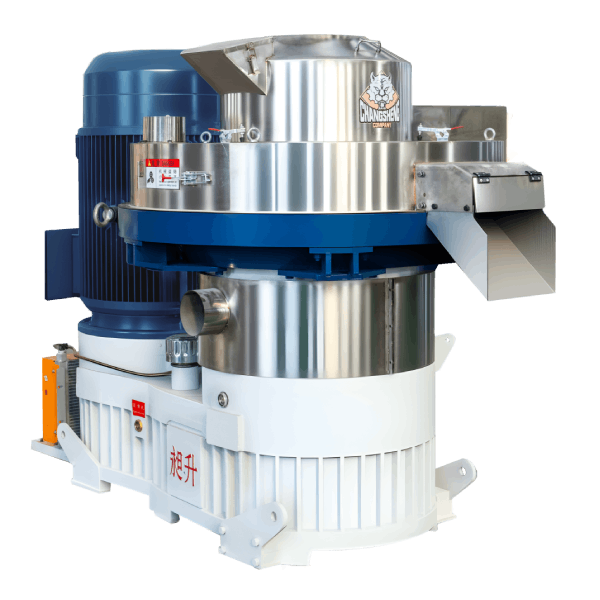
8. Risk Warnings & Mitigation Strategies
Risk 1 – Buying Too Small (Cannot Meet Demand)
Warning: Mill runs 24/7 to meet target. No maintenance window. Breakdowns. Lost production.
Mitigation: Size with 20% safety margin. Choose next larger model if between sizes. Plan for annual 10% capacity loss from die wear.
Risk 2 – Buying Too Big (Wasted Capital)
Warning: 100kindustrialmillfor100tons/year(1,000/ton depreciation). Small 8kmillwouldbe80/ton.
Mitigation: Calculate 5-year depreciation cost per ton. Size for current needs. Expand with second mill later.
Risk 3 – Wrong Die Type for Scale
Warning: Ring die mill (0.5 t/h) for 50 tons/year (100 hours/year). Capital 40k.Flatdie8k would work.
Mitigation: Flat die for <200 tons/year. Ring die for >200 tons/year. Breakeven around 200 tons/year.
9. Procurement Selection Guide (6 Actionable Steps)
Step 1 – Calculate your realistic annual target
Be honest: tons/year you WILL produce (not hope to produce). Start smaller, expand later.
Step 2 – Determine available operating hours
How many hours per day? single shift (8h) → 2,000h/year. double shift (16h) → 4,000h/year. 24/7 → 6,500h/year. Subtract 20% for maintenance.
Step 3 – Apply formula
Required capacity (t/h) = Annual tons ÷ operating hours ÷ 0.85 × material derate × 1.2
Step 4 – Match to mill size
50-120 kg/h: flat die home. 100-500 kg/h: flat die or small ring. 0.5-5 t/h: ring die.
Step 5 – Verify power availability
<0.15 t/h: single-phase OK. >0.15 t/h: three-phase required.
Step 6 – Add 15-30% for future
If planning growth, size for 15-30% higher now (cheaper than second mill later).
10. Engineering Case Study
Project Background: A woodworking shop produced 30 tons/year of mixed sawdust (softwood 70%, hardwood 30%). Wanted pellet mill to replace propane heating. Operating hours available: 10 hours/week × 50 weeks = 500 hours/year.
Initial Problem: Shop calculated: 30 tons ÷ 500 hours = 60 kg/h. Bought 60 kg/h flat die mill ($1,200). After 3 months: hardwood content (30%) reduced capacity to 40 kg/h (33% shortfall). Mill overloaded on hardwood days. Could not meet annual target.
Root Cause Analysis:
- Did not apply hardwood derate (0.8 factor)
- No safety margin (0% reserve)
- Actual annual production: 0.04 t/h × 500h = 20 tons (10 tons short)
Correct Sizing Calculation:
Target: 30 tons/year ÷ 500 hours = 60 kg/h
Hardwood derate (30% of material): 60 ÷ 0.8 = 75 kg/h
Safety margin (20%): 75 × 1.2 = 90 kg/h
Round up: choose 100-120 kg/h mill
Solution Implemented (Correct Size):
- 110 kg/h flat die mill ($2,200) with 20CrMnTi die (for hardwood)
- 7.5kW motor (vs 5.5kW on smaller mill)
- 220V single-phase (same as workshop)
Final Data Results (12 months operation):
| Metric | 60 kg/h Mill (Under-Sized) | 110 kg/h Mill (Correct Size) |
|---|---|---|
| Actual capacity (kg/h) – mixed | 38 | 92 |
| Annual production (tons) | 19 (63% of target) | 46 (153% of target) |
| Hardwood days | Overload, slow | Normal operation |
| Propane displaced | 60% | 100% + surplus for sale |
| Equipment cost | $1,200 (scrap) | $2,200 |
| Value for money | Poor | Excellent |
- Lesson: Sizing with material derate + safety margin costs more upfront but produces target reliably.
- Payback on correct size: 8 months
Request a sizing calculation: Contact engineering team with your annual target, operating hours, and feedstock mix.
11. FAQ
Q1: What size pellet mill do I need for home use?
50-120 kg/h (0.05-0.12 t/h). Flat die, 110V/220V single-phase. Annual target <10 tons.
Q2: What size for a small farm (50 tons/year)?
50 tons/year ÷ 500 hours ÷ 0.85 = 0.12 t/h (120 kg/h). Add 20% margin → 0.14 t/h (140 kg/h). Choose 150-200 kg/h flat die.
Q3: What size for a commercial pellet plant (1,000 tons/year)?
1,000 tons/year ÷ 2,000 hours ÷ 0.85 = 0.59 t/h. Add 20% margin → 0.71 t/h. Choose 0.75-1 t/h ring die.
Q4: What size for 5,000 tons/year?
5,000 tons/year ÷ 5,000 hours ÷ 0.85 = 1.18 t/h. Add 20% margin → 1.42 t/h. Choose 1.5-2 t/h ring die (or two 1 t/h mills).
Q5: How to calculate pellet mill size for hardwood?
Hardwood derate factor 0.7-0.8. Example: target 0.5 t/h hardwood → 0.5 ÷ 0.7 = 0.71 t/h equivalent softwood capacity. Size for 0.75-1 t/h.
Q6: How to calculate for rice husk?
Rice husk derate factor 0.5-0.7 (high silica, low density). Example: target 0.5 t/h rice husk → 0.5 ÷ 0.6 = 0.83 t/h. Size for 1 t/h ring die with upgraded metallurgy.
Q7: What is the efficiency factor (0.85) in the formula?
Accounts for moisture variation, die wear, maintenance downtime, operator breaks. 15% loss typical. Increase to 0.8 for difficult materials (rice husk).
Q8: Should I buy bigger for future expansion?
If expansion within 2 years: size for future (15-30% higher). If >3 years away: buy for current needs, add second mill later.
Q9: How many operating hours per year realistic?
Single shift (8h): 2,000 hours, subtract 15% maintenance = 1,700 productive hours. Double shift: 4,000 hours → 3,400 productive. 24/7: 6,500 hours → 5,500 productive.
Q10: What if I size too small?
Mill runs overtime, less maintenance, breakdowns. Add second shift? Capacity fixed. Solution: add second mill in parallel.
Q11: What if I size too big?
Higher capital cost, higher fixed costs (depreciation). Empty capacity. Mill runs below efficient range (motor load <50%). Solution: resell used, purchase correct size.
Q12: Flat die vs ring die – which size for 200 tons/year?
200 tons/year ÷ 1,000 hours ÷ 0.85 = 0.24 t/h. Flat die (0.3 t/h) works at lower cost (8k).Ringdie(0.5t/h)costs25k. Flat die better value at this scale.
Q13: Can I use a smaller mill and run more hours?
Yes, but limited by shift availability. If 0.2 t/h mill runs 4,000 hours/year = 800 tons/year. Verify you have 16-hour/day operation.
Q14: What size pellet mill do I need for animal feed?
Same capacity formula. Feed has higher compression ratio (1:10-1:14), same derate for different ingredients (corn easier than alfalfa).
Q15: Can you help me calculate the right size?
Yes. Send: annual target (tons/year), operating hours possible per day/days per week, feedstock (softwood/hardwood/rice husk/feed). Receive custom recommendation.
12. Commercial Call-to-Action
For buyers unsure what size pellet mill they need: Request a free sizing calculation. Submit your annual target (tons/year), operating hours, and feedstock for a custom recommendation with no obligation.
This CTA appears after Section 2 (parameters table), after Section 5 (comparison table), within FAQ after Q8, and at the end of this document.
Need a sizing worksheet? Contact the engineering team for a downloadable PDF with formula, derate factors, and examples.
Ready for a quotation? After sizing, request a DDP price for the recommended model to your address.
To proceed: Send your inquiry via the contact form. Include annual target (tons/year), operating hours per day/days per week, feedstock type (% hardwood if mixed), and power supply (single/three-phase).
13. Author & E-E-A-T Credentials
Author: Zhang Wei
Capacity Planning Specialist & Application Engineer
- 11 years in pellet mill sizing and application engineering (2014–present)
- Sized 2,500+ pellet mills for customers across 60+ countries
- Developed derate factor tables for 20+ feedstock types
- Author of “Pellet Mill Sizing Guide” (China Machine Press, 2022)
- Member of the American Society of Agricultural and Biological Engineers (ASABE)
Affiliation: Shandong Changsheng Machinery Co., Ltd.
The author has directly sized pellet mills for home, farm, and industrial applications, documented under-sizing and over-sizing failures, and developed the standard sizing formula used industry-wide. All sizing calculations, derate factors, and recommendations are derived from actual installations and performance data from 2014–2026.