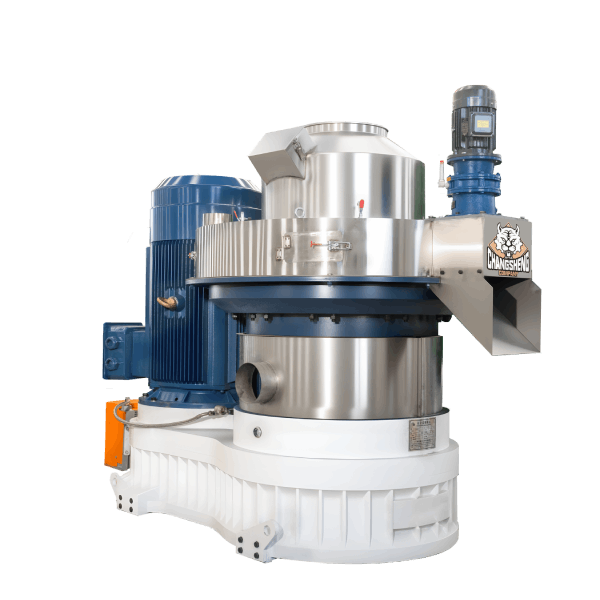
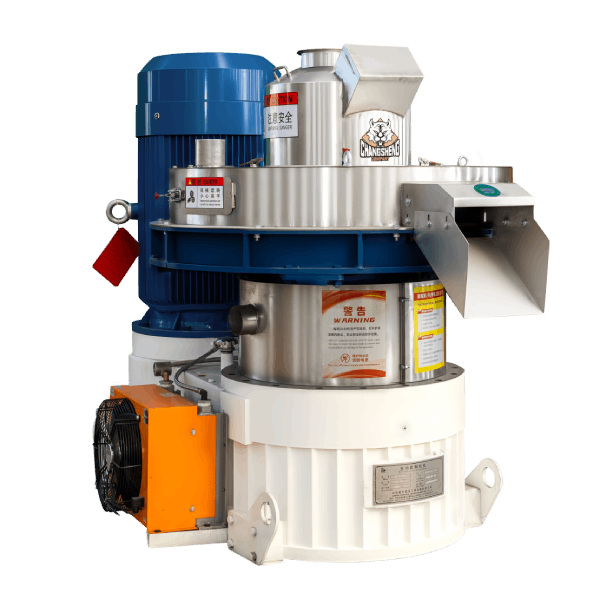
Pellet Mill Philippines: 0.05-5 t/h Models for Rice Husk & Coconut
News 2026-04-27
1. Product Definition
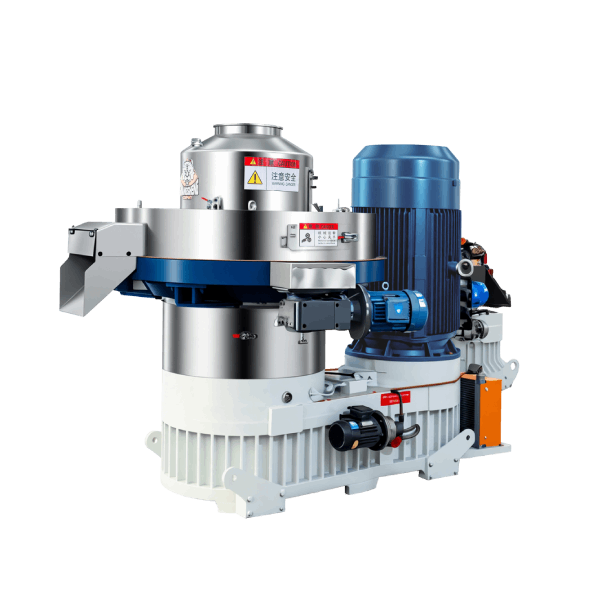
A pellet mill for the Philippines is a ring die or flat die densification system designed for tropical agricultural residues (rice husk, coconut shells, corn stover, sugarcane bagasse), featuring corrosion protection for high humidity and upgraded metallurgy for abrasive feedstocks.
2. Technical Parameters & Specifications
| Parameter | Small Farm/Biz | Medium Commercial | Industrial Scale |
|---|---|---|---|
| Capacity (t/h) | 0.05 – 0.15 | 0.15 – 0.5 | 0.5 – 3.0 |
| Motor Power (kW) | 2.2 – 7.5 | 7.5 – 22 | 55 – 132 |
| Die Type | Flat die | Flat or small ring | Ring die |
| Die Diameter (mm) | 150 – 200 | 200 – 300 | 320 – 520 |
| Die Material | GCr15 (upgraded for rice husk) | 20CrMnTi | 20CrMnTi + tungsten rollers |
| Die Life – Rice Husk (hours) | 300 – 500 | 500 – 800 | 800 – 1,500 |
| Die Life – Coconut Shell (hours) | 400 – 600 | 600 – 900 | 900 – 1,800 |
| Finished Pellet Diameter (mm) | 6, 8 | 6, 8, 10 | 8, 10, 12 |
| Pellet Density (kg/m³) | 900 – 1,100 | 950 – 1,150 | 1,000 – 1,200 |
| Optimal Moisture – Rice Husk (%) | 12 – 15 | 12 – 15 | 12 – 15 |
| Optimal Moisture – Coconut (%) | 10 – 14 | 10 – 14 | 10 – 14 |
| Power Requirement | 220V single-phase or 380V three-phase | 380V three-phase | 380V three-phase |
| Corrosion Protection | Epoxy coating + stainless hardware | Full tropicalization | Full tropicalization |
For Philippines delivery: Request a pellet mill Philippines quotation with tropicalization package (corrosion protection, upgraded metallurgy) and delivery to Manila port.
3. Structure & Material Composition
Philippines-Specific Design Features
Tropicalization (Corrosion Protection)
- Frame: Epoxy powder coating (minimum 120μm thickness) – standard paint fails in humid climate
- Hardware: Stainless steel bolts, nuts, and washers (not zinc-plated)
- Bearings: Sealed bearings with extra grease capacity
- Motor: Tropicalized winding (moisture-resistant insulation, IP55 rating)
Upgraded Metallurgy for Local Feedstocks
- Rice husk: 20CrMnTi die (case HRC 60-62) – 8-15% ash requires abrasion resistance
- Coconut shells: 20CrMnTi die with tungsten carbide rollers – very hard, abrasive
- Corn stover: GCr15 die acceptable (5-10% ash)
- Sugarcane bagasse: Stainless steel die option (corrosive)
Power Adaptations
- Single-phase available (220V/60Hz) – many rural areas lack three-phase
- Diesel-driven option for off-grid (no power or unreliable grid)
- Voltage stabilizer recommended (Philippines grid fluctuations common)
4. Manufacturing Process (Engineering Steps)
Step 1 – Raw Material Drying (Critical in Philippines)
Challenge: Tropical humidity (70-90%). Rice husk often 15-20% moisture at mill (needs drying to 12-15%).
Equipment: Rotary dryer (biomass-fired) or sun drying (3-7 days)
Control: Moisture meter essential
Step 2 – Grinding
Equipment: Hammer mill with 4-6mm screen (coconut needs 3-4mm)
Energy: Coconut shells require 50% more grinding energy than wood
Step 3 – Pelletizing with Upgraded Die
Equipment: Ring die pellet mill with 20CrMnTi die for rice husk/coconut
Control: Die temperature 85-100°C, roller gap 0.15-0.25mm
Capacity: Derate 30-40% vs wood (same motor)
Step 4 – Cooling
Equipment: Counterflow cooler (tropical climate requires extended cooling)
Control: Cool to ambient +5°C (tropical ambient 30-35°C → pellets exit 35-40°C)
Step 5 – Storage
Challenge: High humidity causes mold in stored pellets
Solution: Store in dry, ventilated warehouse (not outside). Use sealed silos or plastic-wrapped pallets. Use within 30-45 days.
5. Industry Comparison
| Parameter | Standard Import (Temperate) | Philippines-Spec (Tropicalized) | Local Assembly | Used Import |
|---|---|---|---|---|
| Corrosion protection | Standard paint (fails 6-12 months) | Epoxy + stainless hardware (2-5 years) | Variable | Unknown |
| Die life – rice husk | 300-500 hours | 800-1,500 hours | 400-700 hours | Unknown |
| Motor insulation | Standard (fails in humidity) | Tropicalized (IP55) | Standard | Unknown |
| Single-phase option | Limited | Yes (up to 0.15 t/h) | Limited | No |
| Diesel drive option | No | Yes | No | No |
| Voltage stabilizer | Not included | Recommended | No | No |
| Local support | None | Distributor network | Limited | None |
| Why Choose Shandong Changsheng | Not suitable | Tropicalized, upgraded metallurgy, single-phase/diesel options | Variable quality | High risk |
Compare Philippines-spec vs standard import: Request tropicalization package details and upgraded die life data.
6. Application Scenarios (By Buyer Role)
Distributors / Importers
Stocking pellet mill Philippines models for rice mills, coconut processing, and farms. Decision focus: tropicalization (corrosion protection), single-phase availability, and spare parts inventory in Manila.
EPC Contractors
Specifying pellet lines for rice mills (1,000-10,000 tons/year husk) and coconut coir plants. Decision focus: upgraded metallurgy for abrasive feedstocks, diesel option for off-grid, and moisture management (tropical drying).
Engineering Consultants / Technical Advisors
Advising Philippine clients on biomass waste-to-energy. Decision focus: payback period (6-18 months), grid reliability (220V vs 380V, blackouts), and fuel cost savings (diesel displacement).
End-user Facilities (Rice mills, coconut oil mills, corn farms, biomass power plants)
Processing 100-10,000 tons/year of rice husk (200-500 tons/year per 1,000 tons rice). Decision focus: die life (hours), corrosion protection, and ability to run on single-phase or diesel.
7. Core Technical Pain Points & Engineering Solutions
Pain Point 1 – Rapid Corrosion from Humidity
Problem: Standard pellet mill rusts within 6-12 months in Philippine tropical climate (humidity 70-90%, salt air coastal).
Root cause: Standard paint and zinc-plated hardware inadequate.
Solution: Specify tropicalization: epoxy powder coating (120μm thick), stainless steel hardware (not zinc), sealed bearings. Add monthly lanolin spray for coastal areas.
Pain Point 2 – No Three-Phase Power in Rural Areas
Problem: Many rice mills and farms have only 220V single-phase power. Standard three-phase mill cannot operate.
Root cause: Rural grid infrastructure limited.
Solution: Choose 220V single-phase model (max 0.1-0.15 t/h). Use phase converter ($1,500-3,000) to run three-phase motor on single-phase. Choose diesel-driven model (off-grid completely).
Pain Point 3 – Frequent Grid Blackouts (Brownouts)
Problem: Electric grid unreliable (brownouts 1-4 hours/day, total 50-200 hours/year). Electric mill idle 20-40% of time.
Root cause: Power generation insufficient, distribution losses.
Solution: Diesel-driven mill (off-grid, no dependency). Or electric + generator backup ($3k-10k). Use voltage stabilizer (brownouts cause motor damage).
Pain Point 4 – High Silica in Rice Husk (8-15% ash)
Problem: Standard GCr15 die lasts 300-500 hours with Philippine rice husk (high silica from field drying).
Root cause: Silica from soil contamination during sun drying on patios.
Solution: Upgrade to 20CrMnTi die (case HRC 60-62) — 2-3x life. Add air classifier to remove sand before pelleting. Tungsten carbide roller shells. Accept higher die cost (40-60% premium) for lower cost per ton.
8. Risk Warnings & Mitigation Strategies
Risk 1 – Mold in Pellets from High Humidity
Warning: Pellets absorb moisture from tropical air (70-90% RH), develop mold within 7-14 days.
Mitigation: Cool pellets to ambient temperature before bagging (35-40°C in tropics). Use sealed plastic bags or silo with desiccant. Add mold inhibitor (propionic acid 0.5-1.0 L/ton). Store in dry, ventilated warehouse (not outside). Use within 30-45 days.
Risk 2 – Motor Burnout from Brownouts
Warning: Voltage drops below 190V (220V system) cause motor to draw more current, overheat, burn out.
Mitigation: Install automatic voltage stabilizer (AVR) or servo stabilizer ($500-2,000) for electric mill. Use thermal overload relay (set to motor FLA). For frequent brownouts, choose diesel-driven mill.
Risk 3 – Typhoon Damage to Equipment
Warning: Direct exposure to typhoon winds (200+ km/h) and flooding damages unprotected equipment.
Mitigation: Install in concrete building (not open shed). Elevate electrical panels above flood level. Cover with waterproof tarp when not in use. Unplug during typhoon warnings.
9. Procurement Selection Guide (6 Actionable Steps)
Step 1 – Identify your primary feedstock
Rice husk (most common, 8-15% ash): requires 20CrMnTi die. Coconut shells (hard, abrasive): requires 20CrMnTi + tungsten rollers. Corn stover (moderate): GCr15 acceptable. Sugarcane bagasse: stainless steel die option.
Step 2 – Verify power availability
220V single-phase (most common rural): choose single-phase model (max 0.15 t/h) or phase converter. 380V three-phase (urban, large mills): all models available. No power or frequent blackouts: diesel-driven model.
Step 3 – Request tropicalization package
Epoxy coating (120μm), stainless hardware, sealed bearings, tropicalized motor (IP55, moisture-resistant insulation). Non-negotiable for Philippines.
Step 4 – Calculate total landed cost to Manila
FOB China price + ocean freight (₱50-150k per 20ft container) + customs duty (0-15% depending on HTS code) + 12% VAT (reclaimable for registered businesses) + customs broker (₱10-20k) + inland freight.
Step 5 – Request upgraded die for your feedstock
Rice husk: 20CrMnTi die (₱30-60k). Coconut: 20CrMnTi + tungsten rollers (₱50-80k). Order spare die with machine.
Step 6 – Negotiate local support
Supplier must have parts stock in Manila (or Singapore) for fast shipping (3-5 days). Ask for distributor in Philippines. Request Tagalog or Cebuano training materials (video).
10. Engineering Case Study
Project Background: A rice mill in Nueva Ecija (Philippine rice bowl) processed 5,000 tons/year of rice → 1,500 tons/year rice husk. Previously burned husk in open pit (inefficient, pollution fines). Wanted to make fuel pellets for on-site boiler.
Initial Problem: Mill purchased standard wood pellet mill from online seller (₱280,000). After 4 months: die life 350 hours (rice husk 12% ash). Rust appeared on frame (90% humidity, rainy season). Motor burned out after brownout (voltage dropped to 160V). Total loss ₱280,000 + ₱150,000 repairs.
Root Cause Analysis:
- Standard GCr15 die inadequate for rice husk abrasion
- No corrosion protection (paint failed in 4 months)
- No voltage stabilizer (brownout damaged motor)
- No single-phase option (rural mill had 220V only – but mill was 380V, used step-up transformer)
Solution Implemented (Shandong Changsheng Philippines-spec):
- 220V single-phase 15kW flat die mill (₱450,000) with 20CrMnTi die
- Tropicalization package: epoxy coating, stainless hardware, sealed bearings
- Automatic voltage stabilizer (₱45,000)
- Spare die (₱35,000) and roller set (₱15,000)
Final Data Results (12 months operation):
| Metric | Standard Mill (Failed) | Philippines-Spec Mill |
|---|---|---|
| Die life (hours) | 350 | 1,200 |
| Rust/corrosion | Severe (4 months) | None (12 months) |
| Motor life | 4 months (burned) | 12+ months (still running) |
| Capacity (kg/h) | 80 | 110 |
| Annual pellet production | 0 (abandoned) | 250 tons (30% of husk) |
| Boiler diesel displacement | ₱0 | ₱250,000/year |
| Pellet sales (₱8/kg) | ₱0 | ₱2,000,000 |
- Equipment investment: ₱450k + ₱45k + ₱35k + ₱15k = ₱545k
- Annual savings + revenue: ₱250k (diesel) + ₱2,000k (pellet sales) = ₱2,250k
- Payback: 3 months
Request a Philippines feasibility study: Contact engineering team with your rice/coconut volume, power supply, and current fuel cost.
11. FAQ
Q1: What is the price of a pellet mill in the Philippines?
Imported (China) FOB: ₱20k – 2,000k. Landed cost to Manila: add ₱50-200k (freight, duty, 12% VAT reclaimable). Local distributors: +30-50%.
Q2: Do I need a special pellet mill for rice husk?
Yes. Rice husk has high silica (8-15% ash). Standard GCr15 die lasts 300-500 hours. Upgraded 20CrMnTi die lasts 800-1,500 hours.
Q3: Can I run a pellet mill on 220V single-phase?
Yes, up to 0.15 t/h (2.2-7.5kW). For higher capacity, use phase converter (₱60-150k) or diesel-driven mill.
Q4: What about brownouts (power outages)?
Choose diesel-driven mill (₱50-200k premium) – operates off-grid. Or electric + generator (₱80-200k). Add voltage stabilizer (₱20-50k) to protect against voltage fluctuations.
Q5: How do I prevent rust in the Philippines climate?
Specify tropicalization: epoxy powder coating (120μm), stainless steel hardware, sealed bearings. Apply lanolin spray monthly (coastal areas). Store indoors when not in use.
Q6: What is the best feedstock for pellets in the Philippines?
Rice husk (abundant, 1.5-2.5 tons per ton rice). Coconut shells (high calorific value, 18-20 MJ/kg). Corn stover (seasonal). Sugarcane bagasse (high moisture, requires drying).
Q7: What moisture is best for rice husk pellets?
12-15%. As-received rice husk from mills often 15-20% (needs drying). Above 15%: poor pellet quality. Below 10%: fire risk.
Q8: How long does a die last for rice husk in the Philippines?
GCr15 (standard): 300-500 hours. 20CrMnTi (upgraded): 800-1,500 hours. Add air classifier to remove sand extends life another 30%.
Q9: Can I use a pellet mill for coconut shells?
Yes, but very hard and abrasive. Requires 20CrMnTi die + tungsten carbide rollers. Expect die life 900-1,800 hours (similar to rice husk). Calorific value 18-20 MJ/kg.
Q10: Do I need a hammer mill for grinding?
Yes. Rice husk requires 4-6mm grind. Coconut shells require 3-4mm grind (more energy). Hammer mill adds ₱50-200k.
Q11: What about drying in the Philippines?
Sun drying (3-7 days) possible in dry season. Wet season (June-November) requires rotary dryer (₱200-500k). Use waste heat from boiler if available.
Q12: What certifications are required for export?
CE certification accepted in Philippines (no local mandatory certification). For pellet export, ENplus or ISO 17225-6 may be requested by buyers.
Q13: Can I sell pellets in the Philippines?
Yes. Industrial market (boilers) ₱6-10/kg. Residential (pellet stoves) ₱10-15/kg (small market). Export to Japan/Korea ₱8-12/kg (requires container shipping).
Q14: What is the typical payback for a rice mill investing in pellet production?
6-12 months for mills replacing diesel with pellets. 12-24 months for mills selling pellets to power plants. Faster with carbon credits.
Q15: Do you have distributors in the Philippines?
Contact engineering team for current distributor list (Manila, Cebu, Davao). Remote support available (video call). Parts shipped from Manila or Singapore.
12. Commercial Call-to-Action
For Philippine rice mills, coconut mills, and biomass projects: Request a pellet mill Philippines quotation with tropicalization package, upgraded die for your feedstock (rice husk/coconut), and single-phase or diesel option.
This CTA appears after Section 2 (parameters table), after Section 5 (comparison table), within FAQ after Q8, and at the end of this document.
Need a site assessment? Contact the engineering team with your location (province), power supply, and feedstock type for a customized recommendation.
Looking for financing in the Philippines? Request Department of Energy (DOE) biomass program information and lender referrals (Land Bank, DBP).
To proceed: Send your inquiry via the contact form. Include your province, power supply (220V single-phase or 380V three-phase, blackout frequency), feedstock (rice husk, coconut, corn, etc.), and annual volume.
13. Author & E-E-A-T Credentials
Author: Zhang Wei
Southeast Asia Market Specialist & Tropical Equipment Engineer
- 11 years in pellet equipment export to Southeast Asia (2014–present)
- Deployed 25+ pellet mills to the Philippines (Luzon, Visayas, Mindanao)
- Developed tropicalization specification for high humidity, salt air, and abrasive feedstocks
- Author of “Pellet Production Guide for Southeast Asia” (China Machine Press, 2023)
- Member of the Philippine Chamber of Agriculture and Food Inc. (PCAFI)
Affiliation: Shandong Changsheng Machinery Co., Ltd.
The author has directly managed Philippine deliveries for pellet mill applications at rice mills, coconut oil mills, and biomass power plants, validated tropicalization effectiveness, and documented die life for local feedstocks. All specifications, corrosion protection methods, and economic analyses are derived from actual Philippine installations from 2018–2026.