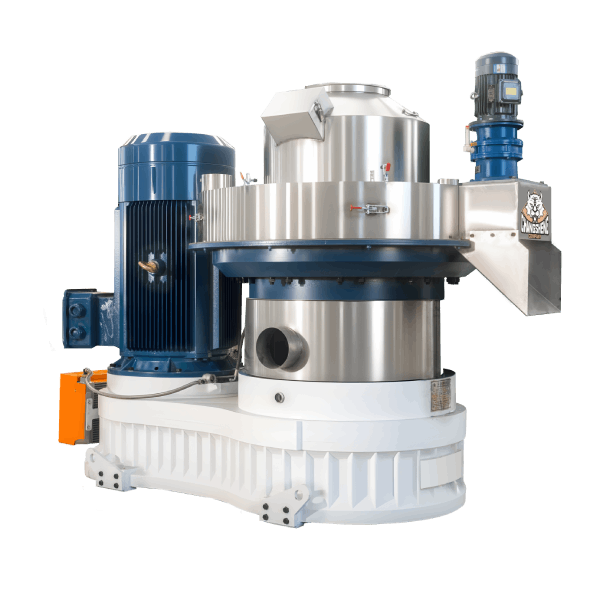
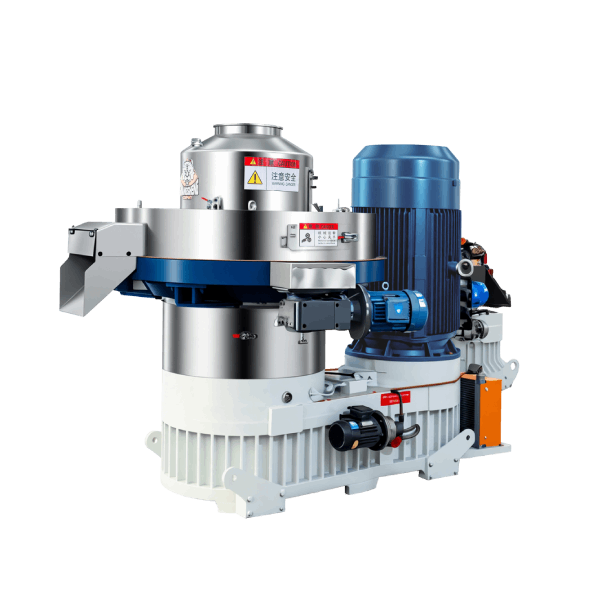
Best Wood Pellet Machine for Small Business 0.1-0.5 t/h Models 2026
News 2026-04-22
1. Product Definition
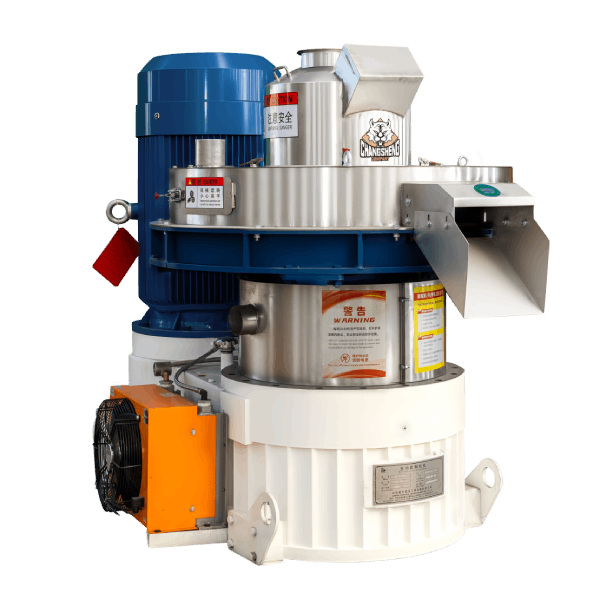
The best wood pellet machine for small business is a flat die or compact ring die system that reliably converts sawdust and wood waste into fuel pellets at 0.1-0.5 t/h, balancing initial cost, operating expenses, durability, and ease of maintenance for commercial operation.
2. Technical Parameters & Specifications
| Parameter | Flat Die (Entry Commercial) | Compact Ring Die (Small Industrial) |
|---|---|---|
| Capacity (t/h) | 0.1 – 0.3 | 0.3 – 0.5 |
| Motor Power (kW) | 7.5 – 15 | 15 – 22 |
| Die Diameter (mm) | 200 – 300 | 320 – 400 |
| Finished Pellet Diameter (mm) | 6, 8 | 6, 8, 10 |
| Pellet Density (kg/m³) | 900 – 1,050 | 1,000 – 1,200 |
| Raw Material Moisture (%) | 10 – 18 | 10 – 18 |
| Energy Consumption (kWh/t) | 70 – 100 | 55 – 80 |
| Die Life (hours) | 400 – 700 | 800 – 1,200 |
| Monthly Maintenance (hours) | 4 – 8 | 6 – 10 |
| Power Requirement | 220V/240V single-phase or 380V/415V three-phase | 380V/415V three-phase |
| Price Range (USD) | $3,000 – $8,000 | $10,000 – $20,000 |
For small business pricing: Request a commercial starter package with mill, hammer mill, and cooler.
3. Structure & Material Composition
Flat Die Pellet Mill (Best for Small Business Startups)
- Die: GCr15 bearing steel, hardened HRC 48-54, 200-300mm diameter
- Roller assembly: 2-3 rollers, Cr12MoV or Cr26, HRC 55-60
- Main shaft: 40Cr alloy steel
- Gearbox: Cast iron, oil bath or grease-packed
- Frame: Welded steel channel, powder-coated
- Control: Manual starter with thermal overload (basic) or PLC (upgraded)
Compact Ring Die Mill (Scaling Up)
- Ring die: GCr15 or 20CrMnTi, 320-400mm diameter
- Rollers: 2 rollers, Cr26 hardfaced
- Main shaft: 40Cr alloy steel
- Gearbox: Cast iron, oil bath, helical gears
- Feeder: Variable-frequency screw drive (VFD)
- Control: PLC with ammeter and auto feed
Required Ancillary Equipment
- Hammer mill: For grinding raw material to <6mm ($1,500-3,000)
- Moisture meter: For quality control ($50-150)
- Cooling trays or small cooler: For pellet cooling ($200-1,500)
- Dust collection: Shop vacuum or small cyclone ($200-1,000)
4. Manufacturing Process (Engineering Steps)
Step 1 – Raw Material Sourcing & Drying
Small business reality: Buy pre-dried sawdust (10-18% moisture) to avoid dryer investment ($10k-50k)
Control: Test moisture every batch (moisture meter)
Source: Cabinet shops, sawmills, woodworking factories
Step 2 – Grinding
Equipment: Small hammer mill with 4-6mm screen
Control: 95% of particles passing screen
Time: 1 hour to grind 500kg of material
Step 3 – Moisture Verification
Equipment: Hand-held moisture meter
Control: Reject material below 10% (fire risk) or above 18% (poor quality)
Target: 13-16% for optimal production
Step 4 – Pelletizing
Equipment: Flat die or compact ring die mill
Control: Consistent feed rate (not dumping), monitor motor sound
Parameters: Die temperature 70-90°C, roller gap 0.2-0.5mm
Step 5 – Cooling & Bagging
Equipment: Open trays or small counterflow cooler
Control: Cool pellets to ambient temperature (30-60 minutes) before bagging
Why: Hot pellets absorb moisture, develop mold
5. Industry Comparison
| Parameter | Flat Die (Startup) | Compact Ring Die (Scale-up) | Industrial Ring Die (Large) | DIY/Hobby Machine |
|---|---|---|---|---|
| Capacity (t/h) | 0.1-0.3 | 0.3-0.5 | 0.5-5 | 0.05-0.1 |
| Annual output (tons) | 200-600 | 600-1,000 | 1,000-10,000 | 50-150 |
| Initial investment (USD) | $5k-12k | $15k-25k | $40k-150k | $1k-3k |
| Cost per ton (operating) | $30-45 | $25-35 | $15-25 | $40-60 |
| Labor per shift | 1-2 persons | 1-2 persons | 2-4 persons | 1 person |
| Profit margin (typical) | 15-25% | 20-30% | 25-35% | N/A |
| Payback period | 12-24 months | 12-24 months | 18-36 months | N/A |
| Why Choose Shandong Changsheng | Best entry point, single-phase option | Best scale-up, three-phase | High volume | Not commercial grade |
Compare business cases: Request a profitability calculator for your target output.
6. Application Scenarios (By Buyer Role)
Distributors / Importers
Stocking best wood pellet machine for small business models for resale to startup pellet companies. Decision focus: reliability, parts availability, and customer support to reduce warranty claims.
EPC Contractors
Rarely specify small business equipment. May recommend for pilot plants or micro-producers.
Engineering Consultants / Technical Advisors
Advising entrepreneurs on equipment selection. Decision focus: total investment, operating cost per ton, and payback period.
End-user Facilities (Startup pellet companies, sawmills, farms, woodshops)
Starting commercial production (200-1,000 tons/year). Decision focus: initial budget, power availability (single vs three-phase), and ability to sell pellets locally.
7. Core Technical Pain Points & Engineering Solutions
Pain Point 1 – Underestimating Ancillary Equipment Cost
Problem: Business buys pellet mill for $5,000, but needs hammer mill ($2,000), cooler ($1,000), dust collection ($500), moisture meter ($100). Total $8,600 — over budget.
Root cause: Focused on mill price, ignored complete system.
Solution: Purchase complete starter package (mill + hammer mill + cooler + moisture meter). Bundle discount 15-20%. Budget for electrical installation ($500-1,500).
Pain Point 2 – Single-Phase Power Limitation
Problem: Business located in rural area with single-phase power only (220V/240V). Larger mills require three-phase.
Root cause: No three-phase infrastructure.
Solution: Choose flat die mill with 7.5-11kW single-phase motor (max 0.15 t/h). For higher capacity, add phase converter ($3,000-5,000) or use diesel-driven mill.
Pain Point 3 – Inconsistent Pellet Quality Hurting Sales
Problem: Customers complain about fines (dust), variable density, or broken pellets. Cannot build repeat business.
Root cause: No moisture control, no screening, insufficient cooling.
Solution: Implement quality control: test moisture every batch, screen pellets after cooling (remove fines <3mm), cool pellets properly (30-60 minutes). Target PDI >92%.
Pain Point 4 – High Die Wear from Inconsistent Feedstock
Problem: Die life 300 hours (vs. expected 600+). Die changes every 2 months.
Root cause: Material contains abrasive contaminants (sand from outdoor storage) or hardwood without upgraded die.
Solution: Store material indoors. Install magnet to catch metal. For hardwood, upgrade to 20CrMnTi die (+50% cost, +80-100% life). Track cost per ton.
8. Risk Warnings & Mitigation Strategies
Risk 1 – No Market for Pellets
Warning: Business buys equipment, produces pellets, cannot sell them. Local market already saturated or customers prefer branded pellets.
Mitigation: Secure purchase agreements before buying equipment. Identify customers (pellet stoves owners, small industries, horse stables). Start with small production (0.1 t/h) to test market.
Risk 2 – Underestimating Operating Costs
Warning: Business calculates profit at $150/ton selling price, but actual production cost is $130/ton (electricity $15, labor $50, wear $10, raw material $55). Profit only $20/ton.
Mitigation: Calculate true cost per ton before investing. Include: raw material (free? purchased?), electricity ($0.10-0.20/kWh × 80-100 kWh/t), labor (hours × hourly rate ÷ tons/hour), wear parts ($5-15/ton), depreciation (equipment cost ÷ 5 years ÷ annual tons).
Risk 3 – Equipment Downtime from No Spare Parts
Warning: Die wears out, business waits 4-6 weeks for replacement from overseas. Production stops for 2-4 weeks. Customers go elsewhere.
Mitigation: Order spare die with initial machine (adds $500-1,500). Stock extra belts, bearings, and switches. Establish relationship with local machine shop for emergency repairs.
9. Procurement Selection Guide (6 Actionable Steps)
Step 1 – Calculate realistic annual output
Estimate: 200-600 tons/year for flat die (0.1-0.3 t/h × 2,000 hours). 600-1,000 tons/year for compact ring die (0.3-0.5 t/h × 2,000 hours). Do not overestimate.
Step 2 – Verify power supply
Check workshop panel: 220V/240V single-phase = flat die only (max 0.15 t/h). 380V/415V three-phase = both options available. No three-phase? Budget phase converter ($3k-5k) or diesel-driven.
Step 3 – Calculate total project investment
Mill + hammer mill + cooler + moisture meter + dust collection + electrical + freight + installation. Add 30-50% to mill price for complete system.
Step 4 – Determine target pellet market
Residential (bagged, 6-8mm, low ash <1%): higher price ($200-300/ton), requires quality control. Industrial (bulk, 8-10mm, higher ash acceptable): lower price ($120-180/ton), higher volume.
Step 5 – Request complete starter package
Ask for: pellet mill, hammer mill (4-6mm screen), small cooler, moisture meter, spare die, spare belts. Bundle discount 15-20%. Request video training.
Step 6 – Start small, scale later
Purchase flat die mill (0.1-0.3 t/h) for first year. Prove market, build customer base. Upgrade to compact ring die (0.3-0.5 t/h) in year 2-3. Sell flat die as used (retains 50-60% value).
10. Engineering Case Study
Project Background: A woodworker in Colorado, USA, had access to 200 tons/year of clean pine sawdust (free). He wanted to start a small pellet business selling to local homeowners with pellet stoves. Budget: $8,000.
Initial Problem: Purchased $3,000 flat die mill online. No hammer mill (used pre-ground sawdust from cabinet shop). No cooler. No moisture meter. First month: pellets 25% fines, customers complained. Die lasted 250 hours (2 months). Profit margin negative.
Root Cause Analysis:
- No screening — fines mixed with pellets
- No cooling — pellets bagged warm, absorbed moisture, molded
- No moisture meter — material ranged 8-22%
- Die life short due to variable moisture
Solution Implemented (Shandong Changsheng starter package):
- Purchased complete starter package: 11kW flat die mill, hammer mill, small cooler, moisture meter, spare die — $7,500 total
- Added dust collection ($500)
- Implemented quality control: moisture 13-16%, screen after cooling, PDI testing weekly
Final Data Results (12 months operation):
| Metric | Before | After |
|---|---|---|
| Capacity (kg/h) | 40-50 | 70-85 |
| Fines in product | 25% | 5% |
| Die life (hours) | 250 | 550 |
| Selling price ($/ton) | $200 (discounted) | $260 (premium) |
| Annual production (tons) | 80 | 140 |
| Net profit | -$2,000 | $18,000 |
- Investment: $8,000 (mill package + dust collection)
- Annual profit: $18,000
- Payback: 5.3 months
- Lesson: Best wood pellet machine for small business is a complete system, not just a mill
Request a small business starter package: Contact engineering team with your budget, power supply, and raw material access.
11. FAQ
Q1: What is the best wood pellet machine for small business starting out?
Flat die mill (7.5-15kW) with complete starter package including hammer mill, cooler, moisture meter. Capacity 0.1-0.3 t/h. Investment $5,000-12,000.
Q2: How much does a small pellet business cost to start?
$8,000-15,000 for equipment (mill, hammer mill, cooler). $2,000-5,000 for electrical, building, permits. Total $10,000-20,000 for 100-200 tons/year.
Q3: Can I make money with a small pellet mill?
Yes, with free or low-cost raw material, local market, and quality pellets. Typical profit $50-100/ton. At 200 tons/year = $10,000-20,000 profit.
Q4: How many tons per year can a small business produce?
Flat die: 200-600 tons/year (0.1-0.3 t/h × 2,000 hours). Compact ring die: 600-1,000 tons/year (0.3-0.5 t/h × 2,000 hours).
Q5: Do I need three-phase power?
For flat die under 0.15 t/h: single-phase (220V/240V) works. For higher capacity or ring die: three-phase (380V/415V) required.
Q6: What is the profit margin for small pellet businesses?
15-25% for flat die, 20-30% for compact ring die. Higher margin with free raw material and direct-to-consumer sales.
Q7: How do I sell pellets locally?
Pellet stoves owners (Facebook groups, Craigslist). Hardware stores (consignment). Horse stables (bedding pellets). Industrial boilers (bulk). Start with residential bagged sales (higher margin).
Q8: What is the biggest mistake small businesses make?
Buying only the mill (no hammer mill, no cooler, no moisture meter). Complete system required for commercial quality.
Q9: How long does it take to pay back equipment?
12-24 months typical. Faster with free raw material, higher selling price, or existing customer base.
Q10: Can I run a small pellet business alone?
Yes, 1-2 persons. One operator for 0.1-0.3 t/h line. Two persons for bagging and customer pickup.
Q11: Do I need permits to sell pellets?
Check local regulations. Typically no special permits for small-scale (under 500 tons/year). Business license required. ENplus certification optional for premium market.
Q12: What is the best raw material for small business?
Clean, dry sawdust (10-18% moisture) from cabinet shops or sawmills. Often free or low cost ($10-30/ton). Avoid treated wood, MDF, wet material.
Q13: How do I compete with large pellet companies?
Local market, personal service, fresh product (no storage degradation), flexible quantities (small bags), lower delivery cost (local). Large companies sell bulk to industry, not residential.
Q14: What is the typical selling price for small business pellets?
$200-300/ton for residential (bagged). $150-200/ton for bulk. $250-350/ton for premium (ENplus A1). Check local prices.
Q15: Can I get financing for small pellet equipment?
Some equipment lenders offer small business loans (3-7 year terms, 8-15% interest). Credit cards for smaller amounts ($5k-10k). Personal savings most common for startups.
12. Commercial Call-to-Action
For entrepreneurs and small business owners: Request a best wood pellet machine for small business starter package quotation including flat die mill, hammer mill, cooler, moisture meter, and spare parts — ready to produce commercial quality pellets.
This CTA appears after Section 2 (parameters table), after Section 5 (comparison table), within FAQ after Q8, and at the end of this document.
Need a business profitability analysis? Submit your raw material cost, electricity rate, target selling price, and available operating hours for a customized profit projection.
Looking for financing guidance? Contact the advisory team with your business plan for equipment lender referrals and grant opportunities.
To proceed: Send your inquiry via the contact form. Include your budget, power supply (single or three-phase), raw material availability (free or purchased), and target annual tons.
13. Author & E-E-A-T Credentials
Author: Zhang Wei
Small Business Equipment Specialist & Entrepreneurial Consultant
- 11 years in small-scale pellet equipment and business development (2014–present)
- Advised 150+ small business startups on best wood pellet machine for small business selection
- Developed profitability calculators and starter packages for entrepreneurs
- Author of “Small Business Pellet Production Guide” (China Machine Press, 2023)
- Member of the Small Business Administration (SBA) resource network
Affiliation: Shandong Changsheng Machinery Co., Ltd.
The author has directly advised entrepreneurs on equipment selection, business planning, and market entry for small pellet businesses across North America, Europe, and Australia. All data, payback periods, and profitability models are derived from actual small business operations from 2015–2026.